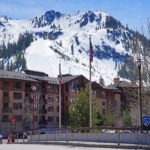
Sheep Mountain

Rising above Juneau in Southeast Alaska, Sheep Mountain is a rugged 4,245-foot summit in the Boundary Ranges of the Coast Mountains. Its relatively modest elevation can be misleading: because the surrounding landscape begins close to sea level, reaching the mountain involves substantial climbing through temperate rainforest, subalpine vegetation, and exposed alpine terrain.
Sheep Mountain is also closely tied to Juneau’s mining history and local wildlife. The name dates to the early 20th century and reflects a time when miners commonly referred to the mountain goats living on these slopes as “sheep.” Today, the mountain remains important mountain-goat habitat and forms part of a challenging ridge system extending above Juneau toward Roberts Peak and Gastineau Peak.
⚡ Fast Facts
| Fact | Details |
|---|---|
| Country | United States |
| State | Alaska |
| Region | City and Borough of Juneau |
| Mountain Range | Boundary Ranges, Coast Mountains |
| Elevation | 4,245 feet / 1,294 meters |
| Prominence | 1,045 feet / 319 meters |
| Isolation | 2.92 miles / 4.7 kilometers |
| Coordinates | 58.292791° N, 134.302330° W |
| Nearest Higher Neighbor (NHN) | Olds Mountain |
| Key Col Elevation | Approximately 3,200 feet / 975 meters |
| Nearest City | Juneau |
| Mountain System | Pacific Coast Ranges |
| Land Management | Tongass National Forest |
| Primary Recreation | Hiking, scrambling, ridge traverses, wildlife viewing |
Peakbagger gives Sheep Mountain an elevation of 4,245 feet, 1,045 feet of prominence, and 2.92 miles of isolation. Its nearest higher neighbor is Olds Mountain to the north.
🗺️ Geography and Setting
Sheep Mountain stands immediately east of Juneau in one of Southeast Alaska’s most dramatic combinations of coast and mountains.
The summit belongs to the Boundary Ranges, the northernmost major subdivision of the Coast Mountains. These ranges extend through southeastern Alaska and northwestern British Columbia, where deep fjords, heavily glaciated valleys, steep mountains, and maritime forests dominate the landscape.
Despite its proximity to Alaska’s capital, Sheep Mountain is not an urban hill.
Its upper slopes are decidedly alpine, with steep ridges, snowfields, cliffs, and largely undeveloped backcountry. The mountain rises above the Sheep Creek drainage and sits along a chain of high terrain extending inland from the mountains immediately behind downtown Juneau.
Roberts Peak lies to the west, while Olds Mountain rises roughly three miles to the north.
The position of Sheep Mountain makes it an excellent example of how quickly the landscape around Juneau changes from coastal rainforest to serious alpine terrain.
⛰️ Nearest Higher Neighbor: Olds Mountain
The Nearest Higher Neighbor (NHN) of Sheep Mountain is Olds Mountain.
Olds Mountain lies almost directly north of Sheep Mountain and forms part of the same rugged mountain environment northeast of Juneau. Peakbagger places Sheep Mountain’s true isolation at approximately 2.92 miles, with the isolation limit toward Olds Mountain.
This relationship is useful for understanding Sheep Mountain’s prominence.
Although the peak rises dramatically above the valleys surrounding Juneau, its summit is connected to a larger complex of higher terrain extending toward Olds Mountain and the increasingly glaciated interior of the Boundary Ranges.
📜 How Sheep Mountain Got Its Name
The story behind the name Sheep Mountain includes an interesting bit of early Alaska natural history.
The name was already in local use when U.S. Geological Survey topographer W. J. Peters reported it. It was subsequently published by the USGS in 1902.
According to Dictionary of Alaska Place Names, mountain goats were common in this area during the 1800s. Early miners sometimes called the animals “sheep,” leading to the name Sheep Mountain.
The distinction matters because Dall sheep are not the animal normally found around Juneau.
Southeast Alaska is instead prime habitat for mountain goats (Oreamnos americanus). The Alaska Department of Fish and Game specifically notes that mountain goats and Dall sheep are sometimes confused but that Dall sheep generally favor the drier landscapes farther inland.
So Sheep Mountain might more accurately have been called Goat Mountain—but the historical name had already taken hold.
🐐 Mountain Goats and Sheep Mountain
Few animals are more closely associated with Sheep Mountain than the mountain goat.
Mountain goats are exceptionally well adapted to the steep and wet coastal mountains of Southeast Alaska. Their hooves combine a hard outer edge with a softer inner pad, providing extraordinary traction on rock, snow, and steep slopes.
The mountains around Juneau contain important goat habitat, including winter range.
Alaska’s Juneau State Land Plan specifically identifies portions of the Sheep Mountain area as winter mountain-goat habitat, underscoring the ecological importance of the ridges surrounding the peak.
Mountain goats may use steep cliffs and rugged terrain partly because these landscapes provide protection from predators. In winter, some animals descend into forested areas where snow conditions are more manageable and vegetation remains accessible.
Anyone hiking around Sheep Mountain should observe goats from a distance and avoid pushing them away from feeding or resting areas.
🪨 Geology of Sheep Mountain
The geology beneath Sheep Mountain is closely connected with the famous Juneau Gold Belt.
The mountains surrounding Juneau consist of a complicated mixture of metamorphosed volcanic and sedimentary rocks together with intrusive rocks associated with the Coast Range batholith.
Historical geological studies of the Juneau district describe belts of greenstone, black slate, schist, diorite, and related rocks. A USGS geological profile running from Sheep Creek through the historic Glacier Mine to Sheep Mountain illustrates the close relationship between these rock units and the mountain itself.
Regional metamorphism and the later intrusion of the Coast Range batholith transformed many of the original rocks.
The broader Juneau Gold Belt contains steeply dipping volcanic, slate, and schist units that were altered by both deformation and heat associated with intrusive activity.
These geological processes helped produce both the rugged mountains visible today and the mineral deposits that brought prospectors to Juneau during the late 19th century.
⛏️ Sheep Mountain and Juneau’s Gold-Mining History
Sheep Mountain overlooks a landscape intimately connected with the development of Juneau.
Gold discoveries around Gold Creek and the surrounding mountains in 1880 triggered the growth of the settlement that became Juneau. Mining subsequently expanded into an enormous industrial operation involving underground mines, mills, tramways, tunnels, and related infrastructure.
The Juneau Gold Belt became one of Alaska’s most productive historic mining regions.
The Alaska-Juneau lode system alone developed into one of the world’s significant gold-producing districts during the first half of the 20th century.
Although Sheep Mountain was not itself the center of the enormous Alaska-Juneau operation, its slopes form part of the same geological and historical landscape.
Hikers approaching through the Sheep Creek or Perseverance areas are therefore moving through mountains shaped not only by glaciers but also by more than a century of mining exploration.
🧊 Glacial History
Ice has been one of the dominant forces shaping Sheep Mountain.
During colder periods of the Pleistocene, enormous glaciers occupied the valleys surrounding modern Juneau. Their movement widened valleys, polished bedrock, steepened mountain slopes, and transported huge quantities of rock.
Nearby geological studies have identified glacial erratics above 3,100 feet, demonstrating that ice once reached far higher than many of today’s valley glaciers.
The modern landscape still bears those signatures.
U-shaped valleys, exposed bedrock, steep-sided basins, moraines, and lingering snowfields are all reminders that the terrain surrounding Sheep Mountain was shaped by an environment very different from the forest-covered landscape visible at lower elevations today.
To the east, the terrain eventually merges into the heavily glaciated mountains surrounding the Juneau Icefield.
🌿 Flora and Fauna
Sheep Mountain passes through several ecological zones in a remarkably short distance.
Lower Forests
The lowest elevations around Juneau support part of the lush coastal temperate rainforest for which Southeast Alaska is famous.
Common plants include:
- Sitka spruce
- Western hemlock
- Mountain hemlock
- Alaska yellow cedar
- Red alder
- Salmonberry
- Blueberry
- Devil’s club
- Ferns
- Mosses and lichens
High rainfall and mild maritime temperatures create extremely productive forests.
Subalpine Zone
As elevation increases, the forest becomes shorter and more open.
Shrubs, berry-producing plants, grasses, sedges, mountain hemlock, and alpine wildflowers become increasingly important.
The official Juneau trail information specifically notes wild geraniums, columbine, shooting stars, chocolate lilies, blueberries, and salmonberries along the Sheep Creek corridor.
Alpine Zone
Near the summit, exposure to wind, snow, and cold dramatically limits plant growth.
Vegetation is dominated by low-growing alpine plants capable of surviving a short growing season and prolonged winter snowpack.
Wildlife around the mountain may include:
- Mountain goats
- Black bears
- Sitka black-tailed deer
- Hoary marmots
- Porcupines
- Red squirrels
- Spruce grouse
- Ptarmigan
- Ravens
- Bald eagles
- Other alpine and migratory birds
Black bears are known to forage for berries in the Sheep Creek valley, while mountain goats are regularly observed along the surrounding ridges.
🥾 Hiking Sheep Mountain
Sheep Mountain is a serious backcountry hike rather than a straightforward maintained-trail summit.
There are ways to approach the peak from both the Sheep Creek side and the ridge system above downtown Juneau, but substantial portions of a summit outing involve primitive trails, faint paths, or off-trail alpine travel.
The Alaska Division of Parks describes the Sheep Creek Trail as approximately three miles before a more primitive path continues along the powerline corridor toward Powerline Ridge, from which Sheep Mountain can be accessed.
This provides one of the principal approaches to the mountain.
Expect:
- Significant elevation gain
- Mud and wet vegetation
- Steep alpine terrain
- Route-finding
- Lingering snowfields
- Exposure to rapidly changing weather
- Potential avalanche terrain outside the summer season
Sheep Mountain should therefore be approached as a full mountain outing, not simply as an extension of one of Juneau’s easier trails.
🏔️ The High-Ridge Approach
Experienced hikers can also reach the Sheep Mountain area from the high country above Juneau.
The ridgeline continuing beyond Roberts Peak eventually reaches Sheep Mountain. Historical Forest Service hiking information specifically described Sheep Mountain and Sheep Creek as a possible way off the extended ridge, while warning hikers against descending through the steep side basins.
This route is substantially more demanding than simply visiting the developed Mount Roberts area.
Beyond the popular sections, trails become less obvious and the terrain becomes more rugged. Snow and cornices can remain near ridges well into the warmer months.
For experienced hikers, however, the high ridge offers some of the finest mountain scenery accessible directly from Juneau.
❄️ Snow and Avalanche Hazards
Snow can remain on Sheep Mountain long after it has disappeared from downtown Juneau.
Steep gullies and lee slopes accumulate substantial winter snow, while cornices may develop along exposed ridges.
Avalanche hazards are significant during winter and spring.
The Alaska Division of Parks specifically warns of avalanche hazards on several trails leading into Juneau’s high country, and the historic Forest Service guide notes that avalanche danger along the Roberts–Sheep Mountain ridges may persist until summer.
Early-season hikers may encounter firm, steep snow where a slip could have serious consequences.
Conditions—not the calendar—should determine whether an attempted ascent is reasonable.
🌦️ Weather on Sheep Mountain
Juneau’s maritime climate creates notoriously changeable mountain weather.
The city receives abundant precipitation, and mountains are frequently covered by low cloud, fog, rain, or snow.
Conditions on Sheep Mountain can be considerably colder and windier than near sea level.
A pleasant day downtown can become a cold, wet, low-visibility experience on the ridge.
Anyone venturing onto the upper mountain should carry:
- Waterproof outer layers
- Warm insulation
- Navigation equipment
- Extra food
- Emergency supplies
Fog deserves particular attention. A broad ridge that appears obvious in clear weather can become surprisingly difficult to follow once visibility drops.
📅 Best Time to Hike
For most hikers, July through early September provides the most practical opportunity to explore Sheep Mountain.
By midsummer, much of the seasonal snow has typically disappeared from lower and mid-elevation terrain, although snowfields can remain at higher elevations.
July and August offer long daylight hours and a better chance of mostly snow-free ridge travel.
September can bring spectacular autumn vegetation but also shorter days, colder temperatures, and increasingly unsettled weather.
There is no guaranteed dry season in Juneau.
Rain gear belongs in a pack regardless of the forecast.
👀 Views From Sheep Mountain
Clear weather transforms the summit into a superb viewpoint over Southeast Alaska.
Looking west, hikers can see the urban landscape of Juneau and Douglas Island separated by Gastineau Channel.
The surrounding ridges reveal the distinctive progression of nearby peaks rising abruptly from the coast.
Eastward, the landscape becomes considerably wilder as mountain valleys extend toward the glaciated interior of the Boundary Ranges.
Views may include portions of:
- Gastineau Channel
- Douglas Island
- Juneau
- Roberts Peak
- Olds Mountain
- Sheep Creek Valley
- Surrounding Boundary Range peaks
- Distant glaciated terrain toward the Juneau Icefield
This combination of city, ocean channels, rainforest, alpine ridges, and ice-covered mountains is what makes Juneau’s peaks so distinctive.
🧭 Why Sheep Mountain Is Special
Sheep Mountain is easy to underestimate.
At 4,245 feet, it is tiny compared with Alaska giants such as Denali or Mount Saint Elias. Yet that number tells very little about the experience of the mountain.
Sheep Mountain begins almost at the edge of the sea.
Its slopes climb from one of North America’s great coastal rainforests into genuine alpine country. Mountain goats navigate its ridges, black bears forage in the valleys below, snowbanks linger into summer, and the rocks beneath the mountain preserve evidence of the tectonic forces and mineralization that helped create Juneau’s famous gold belt.
Its name even preserves a small historical misunderstanding: the white animals miners called “sheep” were actually mountain goats.
Combined with the neighboring Olds Mountain, Roberts Peak, and the larger Coast Mountains, Sheep Mountain helps define the spectacular mountainous backdrop that makes Juneau unlike almost any other state capital in the United States.
🔗 Related Articles
📚 Sources
- Peakbagger — Sheep Mountain, Alaska
- U.S. Geological Survey — Dictionary of Alaska Place Names
- Alaska Division of Parks and Outdoor Recreation — Juneau Trail System
- Alaska Department of Fish and Game — Mountain Goat Species Profile
- Alaska Department of Fish and Game — Mountain Goat and Dall Sheep Wildlife Viewing
- U.S. Geological Survey — Geology of the Alaska-Juneau Lode System, Alaska
- U.S. Geological Survey — Geology of the Olds Mountain–Clark Peak Area, Juneau and Vicinity, Alaska
- Alaska Department of Natural Resources — Juneau State Land Plan
- U.S. Forest Service — Juneau Hiking Trails Recreation Opportunity Guide