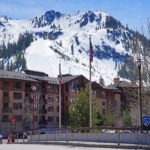
Spiller Peak

Spiller Peak is a rugged 13,134-foot summit in the La Plata Mountains of southwestern Colorado. Rising northwest of Durango between Babcock Peak and the high Hesperus Mountain–Lavender Peak complex, Spiller occupies one of the wildest and most visually dramatic corners of the southwestern San Juan Mountains.
Modern LiDAR measurements place the summit at 13,134 feet, about 11 feet higher than the older 13,123-foot elevation. Spiller has only about 199 feet of topographic prominence, so it falls below the 300-foot threshold commonly used to identify independently ranked Colorado peaks.
That modest prominence should not be confused with an easy climb. Depending on the chosen route, reaching Spiller Peak can involve loose talus, steep cross-country terrain, exposed Class 3 scrambling, difficult route-finding, and some of the most dramatic ridge terrain in the La Plata Mountains.
⚡ Fast Facts
| Feature | Details |
|---|---|
| Country | United States |
| State | Colorado |
| Counties | Montezuma and La Plata counties |
| Mountain Range | La Plata Mountains |
| Parent Range | San Juan Mountains |
| Elevation | 13,134 feet / 4,003 meters |
| Prominence | Approximately 199 feet / 61 meters |
| Isolation | Approximately 0.55 mile / 0.9 kilometer |
| Nearest Higher Neighbor (NHN) | Babcock Peak |
| Line Parent | Babcock Peak |
| Coordinates | 37.42812° N, 108.08709° W |
| USGS Topographic Map | La Plata |
| Land Management | San Juan National Forest |
| Least Technical Approach | Southeast slopes |
| Scrambling Routes | South Ridge and Babcock–Spiller traverse |
| Difficulty | Class 2+ to Class 3+, depending on route |
| Best Season | July through September |
Current LiDAR measurements give Spiller Peak an elevation of 13,134 feet, replacing the older mapped elevation of 13,123 feet.
🏔️ Fifth-Highest Summit in the La Plata Mountains
Spiller Peak is the fifth-highest named summit in the La Plata Mountains.
The range’s highest summits are remarkably close in elevation:
- Hesperus Mountain — approximately 13,238 feet
- Lavender Peak — approximately 13,234 feet
- Mount Moss — approximately 13,194 feet
- Babcock Peak — 13,161 feet
- Spiller Peak — 13,134 feet
Only about 104 vertical feet separate Spiller Peak from Hesperus Mountain, yet the peaks have dramatically different topographic characteristics.
Hesperus has nearly 2,850 feet of prominence.
Spiller has roughly 199 feet.
This compact collection of high summits is one reason the La Plata Mountains can look so formidable despite occupying a relatively small geographic area.
🧭 Nearest Higher Neighbor: Babcock Peak
Spiller Peak’s Nearest Higher Neighbor is Babcock Peak, approximately 0.44 mile to the east.
Babcock reaches 13,161 feet, making it only about 27 feet higher than Spiller.
The saddle between the two peaks remains close to 12,940 feet, leaving Spiller with roughly 199 feet of prominence.
That connection explains why Spiller is considered an unranked summit under the 300-foot Colorado prominence convention.
But the short distance between Babcock and Spiller is extremely deceptive.
A rugged ridge known as The Knife separates portions of the two mountain complexes, making a direct traverse substantially harder than simply walking the half-mile distance shown on a map.
📏 Why Spiller Peak Is Unranked
Colorado climbers commonly use 300 feet of topographic prominence to determine whether a summit qualifies as an independently ranked mountain.
Spiller falls short of that mark.
Its roughly 199 feet of prominence means it is topographically subordinate to neighboring Babcock Peak.
That does not mean Spiller Peak is insignificant.
At 13,134 feet, it rises higher than hundreds of independently ranked Colorado summits. It also has a dramatic profile, significant local relief, an official geographic name, and several serious climbing routes.
The distinction is simply a peak-listing convention.
Spiller Peak remains very much a mountain in every practical sense.
🗡️ The Knife
The most famous feature associated with Spiller Peak is The Knife, the rugged ridge connecting the Babcock massif toward Spiller.
The name is appropriate.
The ridge contains narrow sections, steep drop-offs, loose rock, exposed scrambling, and route-finding challenges.
Experienced climbers sometimes traverse from the western portion of Babcock Peak across The Knife to Spiller Peak.
This is not the easiest way to reach Spiller.
The route is instead a specialized scrambling objective for climbers comfortable with sustained exposure and unreliable La Plata rock.
It has become one of the best-known scrambling traverses in this part of the San Juan Mountains.
🧗 Babcock–Spiller Traverse
A Babcock-to-Spiller traverse creates an exceptionally adventurous mountain day.
Climbers typically ascend Babcock first before working westward toward Spiller Peak.
The ridge contains several obstacles requiring careful route selection.
Depending on the exact line, climbers may encounter:
- Class 3 scrambling
- Narrow ridge sections
- Serious exposure
- Loose rock
- Downclimbing
- Difficult route-finding
- Steep bypasses
Some climbers regard the traverse as one of the classic scrambling adventures of the La Plata Mountains.
Its difficulty comes as much from the quality of the rock as from the technical climbing grade.
⚠️ Friable La Plata Rock
The rock around Spiller Peak can be fractured and unreliable.
Blocks that appear solid may move when weighted, and small pieces can easily be dislodged onto climbers below.
This becomes particularly important on the south ridge and The Knife.
A climbing helmet is strongly advisable for parties attempting the more technical routes.
Groups should also avoid clustering directly above one another whenever possible.
Testing handholds and footholds before committing full body weight is a particularly important habit on Spiller.
The mountain is a good reminder that a modest Class 3 rating does not automatically make a route safe or straightforward.
🥾 Southeast Slopes
The southeast side is generally considered the least technical way to approach Spiller Peak.
This route avoids the sustained exposure of The Knife but still involves steep off-trail terrain.
Hikers should expect a combination of:
- Alpine tundra
- Loose gravel
- Talus
- Scree
- Steep rocky slopes
- Route-finding
The southeast face can be especially loose once summer snow has melted.
Some climbers prefer climbing it earlier in the season while continuous snow covers the loose rubble, but that transforms the outing into a snow climb requiring appropriate equipment and experience.
Neither version should be considered a maintained hiking route.
🧗 South Ridge
Another option reaches Spiller via its south ridge.
The ridge provides a more direct scrambling experience and has been described as approximately Class 3.
Exposure can become serious in places.
The rock is frequently fractured and friable, so climbers need to evaluate holds carefully rather than trusting apparently large blocks automatically.
A saddle around 12,500 feet provides access to the ridge from the Boren Creek Basin side.
From there, climbers ascend toward the summit over increasingly exposed rocky terrain.
🥾 Boren Creek Approach
Boren Creek provides one of the most useful access corridors for Spiller Peak.
The approach begins from La Plata Canyon Road northwest of Durango.
Hikers follow Forest Road 794 into the Boren Creek drainage.
The road quickly becomes much rougher than La Plata Canyon Road itself.
While capable four-wheel-drive vehicles may travel farther under favorable conditions, many climbers simply park lower and walk the road.
That is often faster and less stressful than attempting to negotiate the increasingly rocky and narrow upper sections in a vehicle.
🚙 La Plata Canyon Road
La Plata Canyon provides access to several major peaks in the range, including Babcock Peak and Spiller Peak.
The canyon begins north of U.S. Highway 160 near Hesperus.
The lower road is considerably easier than many of the primitive side roads climbing toward the higher basins.
Once climbers turn toward Boren Creek, road quality deteriorates sharply.
Anyone planning to drive beyond the main canyon road should be prepared for:
- Sharp rocks
- Deep ruts
- Steep grades
- Narrow sections
- Mud
- Snow
- Seasonal erosion
Road conditions can change considerably from year to year.
🌄 Boren Creek Basin
Above the forest, Boren Creek Basin opens into a spectacular high-country bowl beneath Babcock Peak and Spiller Peak.
This is where the scale of the surrounding terrain becomes much clearer.
Steep ridges rise on nearly every side, while talus and scree pour down from the upper peaks.
The Knife forms one particularly dramatic skyline feature between Babcock and Spiller.
The basin also provides possible access toward Burwell Peak and several lesser summits.
Despite its proximity to Durango, the upper basin has a remote and undeveloped character.
🏔️ Spiller Peak and Burwell Peak
Burwell Peak lies south of Spiller and provides another possible approach to the mountain.
Experienced hikers sometimes climb Burwell first and then continue toward Spiller.
The traverse requires a substantial descent from Burwell because a deep break in the connecting ridge prevents straightforward travel directly along the crest.
One documented approach drops roughly 400 vertical feet before traversing toward the saddle south of Spiller.
From there, climbers regain the ridge and ascend Spiller’s exposed south ridge.
The combination provides a challenging multi-summit adventure but adds considerable route-finding and loose terrain.
🪨 Geology of the La Plata Mountains
Spiller Peak belongs to the unusual geological complex that forms the La Plata Mountains.
Modern Colorado Geological Survey mapping describes the range as a mineralized Laramide igneous intrusive complex situated along the southwestern edge of the San Juan Mountains.
Millions of years ago, magma pushed upward into older layers of sedimentary rock.
Some of that magma cooled below ground rather than erupting at the surface.
The resulting intrusions warped, fractured, heated, and locally altered the surrounding rocks.
Erosion later exposed the resistant mountain core.
The result is today’s unusual collection of jagged summits, steep cliffs, banded mountainsides, couloirs, and fractured ridges.
🧱 Intrusions and Sedimentary Layers
One of the most visually striking characteristics of the La Plata Mountains is the interaction between intrusive igneous rock and older sedimentary layers.
Around Spiller Peak, Babcock Peak, Mount Moss, and Hesperus Mountain, erosion has revealed complicated relationships between these different rock types.
Hard igneous bodies form resistant cliffs and ridges.
Softer surrounding rocks weather and erode more rapidly.
This differential erosion contributes to the abrupt towers, sharp ridge crests, loose gullies, and steep faces that make the La Platas so distinctive.
It also helps explain why route-finding can be complicated even across relatively short distances.
🧊 Glacial History
The highest La Plata Mountains were extensively glaciated during the Late Pleistocene.
Glaciers occupied the headwaters surrounding the major peaks, including the basins around Spiller.
Those glaciers carved:
- Cirques
- Broad U-shaped valleys
- Steep headwalls
- Hanging basins
- Moraines
- Sharp ridges
Modern talus continues to accumulate beneath the steep cliffs as freezing and thawing break rock from the mountain.
Spiller Peak’s dramatic local relief is therefore the result of both ancient intrusion and much younger glacial erosion.
⛏️ Mining Country
Like much of the La Plata range, the Spiller Peak area has a long mining history.
Prospectors explored the surrounding canyons and basins in search of gold, silver, copper, and other valuable minerals.
Old roads and mine workings remain scattered throughout the range.
The same geological processes that built the mountains also produced their mineral deposits.
Hot fluids associated with cooling magma moved through fractures, depositing metallic minerals.
These deposits attracted prospectors and contributed to the development of the La Plata mining district.
Abandoned mines should never be entered because of unstable rock, hidden shafts, bad air, contaminated water, and deteriorated supports.
🗺️ A Major Watershed Divide
Spiller Peak stands close to an important drainage divide.
Water falling on the western side of the mountain ultimately drains toward the Mancos River system.
Water on the southeastern side flows toward the La Plata River.
The summit therefore occupies part of the divide between two major watersheds of southwestern Colorado.
Its topographic relief is considerable.
The mountain rises thousands of feet above the La Plata River valley over only a few horizontal miles.
That steep relief is one reason Spiller looks so dramatic despite having relatively little formal prominence.
👤 Who Was Spiller Peak Named For?
Spiller Peak honors J. Calvert Spiller, a topographer associated with the Wheeler Survey during the 1870s.
The Wheeler Survey—formally the U.S. Geographical Surveys West of the 100th Meridian—was one of the major government expeditions responsible for mapping the American West following the Civil War.
Spiller served as a topographical assistant during western survey expeditions.
Historical records preserved by History Colorado describe Calvert “Cal” J. Spiller as a surveyor who used a military-style saddle during Colorado fieldwork in the 1870s.
The name Spiller Peak appeared in federal geographic publications by at least 1906.
🗺️ The Wheeler Survey
The Wheeler Survey helped create some of the first systematic topographic maps of large portions of the western United States.
Survey teams traveled through extremely difficult terrain using instruments that would seem primitive compared with modern GPS and LiDAR.
Topographers measured angles, elevations, distances, river courses, mountain ridges, and other landscape features.
Pack animals carried the necessary equipment and provisions.
Spiller’s association with these surveys gives the mountain an interesting connection to the early scientific mapping of Colorado and the American West.
🌲 Forests Below Treeline
Lower portions of the Spiller Peak approach pass through montane and subalpine forest.
Depending on elevation and exposure, common trees can include:
- Engelmann spruce
- Subalpine fir
- Douglas-fir
- Quaking aspen
- Ponderosa pine at lower elevations
As elevation increases, the forest becomes increasingly sparse.
Eventually trees disappear and the landscape opens into alpine tundra and talus.
This transition also means climbers lose protection from wind, lightning, and rapidly changing weather.
🌼 Alpine Tundra and Wildflowers
Summer brings a short but colorful growing season to the La Plata high country.
Depending on snowmelt and precipitation, alpine areas may support:
- Colorado blue columbine
- Indian paintbrush
- Lupine
- Asters
- Cinquefoil
- Alpine sunflower
- Mountain bluebells
Plants growing above treeline face strong winds, intense sunlight, freezing temperatures, and an extremely short growing season.
Their slow growth also makes alpine tundra vulnerable to repeated trampling.
Climbers should use durable rock and existing paths whenever possible.
🐿️ Wildlife
The La Plata Mountains support a variety of Rocky Mountain wildlife.
Pikas inhabit high talus fields and often announce their presence with sharp calls.
Yellow-bellied marmots use alpine meadows and rocky slopes.
Elk and mule deer are common at lower elevations.
Black bears inhabit forested portions of the range, while mountain lions, coyotes, foxes, and numerous smaller mammals also occur in the region.
Golden eagles and other raptors may occasionally be seen above the high ridges.
🌩️ Summer Thunderstorms
Lightning is one of the greatest hazards on Spiller Peak.
Colorado’s summer mountain weather frequently produces afternoon thunderstorms during July and August.
The upper mountain offers no meaningful protection.
The problem is amplified on routes such as The Knife because climbers may not be able to descend quickly once committed to technical ridge terrain.
Potential hazards include:
- Lightning
- Hail
- Heavy rain
- Strong winds
- Rapidly dropping temperatures
- Slippery rock
- Reduced visibility
An early start is essential.
❄️ Snow Conditions
Snow can remain in gullies around Spiller Peak long into summer.
Some routes may actually be more pleasant when stable snow covers otherwise loose scree.
But snow introduces completely different risks.
Steep, firm snow may require:
- Ice axe
- Crampons or appropriate traction
- Self-arrest skills
- Experience evaluating snow conditions
Later in the season, the same gullies may become loose rubble chutes.
Neither condition should be approached casually.
🍂 Best Time to Climb Spiller Peak
For most climbers, July through September provides the most practical climbing window.
July
Wildflowers may be excellent, but lingering snow can complicate the gullies and ridges.
August
Most routes are likely to be more snow-free, although afternoon thunderstorms become a major concern.
September
Cooler temperatures and generally reduced thunderstorm activity can produce excellent climbing conditions.
Early snowstorms remain possible.
At more than 13,000 feet, winter conditions can occur during any month.
🌄 Views From Spiller Peak
Spiller Peak provides some of the most intimate views of the highest La Plata summits.
Babcock Peak rises immediately to the east.
To the north are Mount Moss and the distinctive towers of Lavender Peak.
Beyond them stands Hesperus Mountain, the range high point.
From the summit, climbers can also study The Knife, West Babcock, other Babcock summit points, Burwell Peak, and the complicated basins separating these rugged mountains.
Few summits provide a better overview of the central La Plata climbing terrain.
🏔️ Spiller Peak and Babcock Peak
Babcock Peak is the most important neighboring summit.
Babcock rises only about 27 feet higher, yet it possesses more than 500 feet of prominence compared with Spiller’s approximately 199 feet.
Both are serious scrambling mountains.
Babcock’s standard South Couloir combines loose rock with Class 3 climbing and difficult route-finding.
Spiller’s technical routes emphasize exposed ridges and similarly unreliable rock.
Climbers sometimes combine them via The Knife, creating one of the more committing scrambling days in the La Plata Mountains.
🏔️ Spiller Peak and Mount Moss
Mount Moss lies less than a mile north-northeast of Spiller.
Mount Moss is roughly 60 feet higher but offers substantially easier summit terrain.
Its common routes are primarily Class 2.
Spiller, by comparison, can require Class 3 scrambling and serious exposure.
Interestingly, both mountains are considered unranked under Colorado’s usual 300-foot prominence convention.
Their climbing experiences, however, are completely different.
🏔️ Looking Toward Lavender and Hesperus
The view north toward Lavender Peak and Hesperus Mountain is one of Spiller Peak’s greatest rewards.
Lavender’s distinctive summit towers stand out clearly.
Beyond them rises the much more massive Hesperus Mountain.
The relationship illustrates the extraordinary concentration of elevation in the La Plata range.
All four mountains rise above 13,100 feet, yet only Hesperus possesses the enormous topographic independence of a major range high point.
🎒 What to Bring
Spiller Peak requires equipment appropriate for serious off-trail alpine travel.
Useful gear includes:
- Climbing helmet
- Sturdy hiking boots
- Offline GPS mapping
- Paper USGS topographic map
- Compass
- Plenty of drinking water
- Water-treatment equipment
- Warm layers
- Waterproof shell
- Gloves
- Sun protection
- First-aid kit
- Headlamp
- Emergency food
- Satellite communicator
Depending on snow conditions, climbers may also need an ice axe and traction.
The more exposed ridge routes require genuine scrambling experience in addition to equipment.
⚠️ Who Should Climb Spiller Peak?
Spiller is best suited to experienced mountain hikers and scramblers.
Anyone attempting the more difficult routes should already be comfortable with:
- Class 3 terrain
- Exposure
- Downclimbing
- Loose rock
- Route-finding
- Cross-country travel
- High altitude
- Fast-changing weather
The Babcock–Spiller traverse in particular should not be selected simply because the two summits appear close together on a map.
A less technical summit in the La Plata Mountains is a better introduction for anyone without previous scrambling experience.
🌟 Why Spiller Peak Is Worth Climbing
Spiller Peak demonstrates perfectly why prominence rankings tell only part of a mountain’s story.
At 13,134 feet, it is the fifth-highest summit in the La Plata Mountains but possesses only about 199 feet of prominence. Under Colorado’s traditional 300-foot rule, it is unranked.
On the ground, nothing about it feels insignificant.
The mountain rises above steep glacial basins, forms part of a major watershed divide, carries the name of an early western topographer, and sits directly beside some of the wildest scrambling terrain in southwestern Colorado.
Its Nearest Higher Neighbor, Babcock Peak, is barely higher but separated from Spiller by a ridge formidable enough to earn the name The Knife.
For experienced climbers, Spiller offers an excellent combination of solitude, route-finding, geology, history, and genuine alpine challenge.
It may not count as a ranked Colorado thirteener, but it is one of the La Plata Mountains’ most memorable summits.
🔗 Related Articles
- Babcock Peak
- Mount Moss
- Lavender Peak
- Hesperus Mountain
- San Juan Mountains
- Grizzly Peak (San Juan Mountains)
- San Miguel Peak
📚 Sources
- 14ers.com — Spiller Peak
- SummitPost — Spiller Peak
- Earthline — Burwell Peak Traverse to Spiller Peak
- 14ers.com — Spiller Peak / Knife Ridge Trip Report
- Colorado Geological Survey — Digital Geologic Map Database of the La Plata Mountains
- U.S. Geological Survey — A Gazetteer of Colorado
- History Colorado — Saddle of Cal J. Spiller