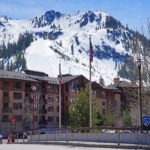
Walker Mountain

🏔️ Overview
Walker Mountain is an 11,573-foot (3,527-meter) summit in Mono County, California, in the northern Sierra Nevada. The mountain rises within the Hoover Wilderness of Humboldt-Toiyabe National Forest, southwest of the Little Walker River corridor and south of Sonora Pass.
Although less famous than many of the Sierra Nevada’s higher summits, Walker Mountain is a substantial and topographically distinct peak. Modern LiDAR-based measurements give it approximately 1,691 feet (515 meters) of topographic prominence and about 5 miles (8 kilometers) of isolation.
Walker Mountain is particularly significant as the high point of the New Range, a small group of mountains in this part of the northern Sierra Nevada. Its position above Burt Canyon and the Little Walker River drainage gives the summit considerable local relief.
Unlike popular Sierra summits reached by maintained trails, Walker Mountain is primarily a destination for experienced hikers and peakbaggers comfortable with backcountry navigation and off-trail travel.
⚡ Fast Facts
| Fact | Details |
|---|---|
| Continent | North America |
| Country | United States |
| State/Province | California |
| County/Region | Mono County |
| Mountain Range | New Range, Sierra Nevada |
| Parent Peak | Tower Peak (line parent) |
| Elevation | 11,573 ft / 3,527 m |
| Prominence | 1,691 ft / 515 m |
| Isolation | About 5.0 mi / 8.05 km |
| Nearest Higher Neighbor (NHN) | Eagle Peak, southeast |
| Coordinates | 38.23553° N, 119.47151° W |
| Protected Area | Hoover Wilderness |
| National Forest | Humboldt-Toiyabe National Forest |
| USGS Quadrangle | Buckeye Ridge |
Peakbagger’s LiDAR-based summit measurement is 11,572.5 feet using the NAVD88 vertical datum, which rounds to 11,573 feet. ListsOfJohn independently reports the same LiDAR elevation.
📍 Location
Walker Mountain stands in northern Mono County in eastern California, roughly between the Bridgeport region and Sonora Pass. It lies west of U.S. Highway 395 and south of the Highway 108 corridor through Sonora Pass.
The mountain is within the Hoover Wilderness, a rugged protected landscape along the eastern side of the Sierra Nevada. The wilderness extends across portions of the Humboldt-Toiyabe and Inyo national forests and includes alpine lakes, steep ridges, meadows, high basins, and extensive backcountry terrain.
Walker Mountain rises immediately west of the upper Little Walker River drainage. Burt Canyon runs along its western side, while Mount Emma and the upper Little Walker country lie to the north.
The mountain’s summit coordinates are approximately 38.23553° N, 119.47151° W.
The U.S. Geological Survey maps Walker Mountain on the Buckeye Ridge 1:24,000 quadrangle.
📏 Elevation & Prominence
Walker Mountain reaches approximately 11,573 feet (3,527 meters) above sea level.
Modern topographic measurements give it:
- Prominence: 1,691 feet (515 meters)
- Isolation: approximately 5 miles (8.05 kilometers)
- Key col: approximately 9,882 feet (3,012 meters)
Its prominence is substantial enough to make Walker Mountain a clearly independent summit rather than simply a minor point along a higher ridge.
The mountain is also identified as the highest point of the New Range.
Walker Mountain’s nearest higher neighbor is Eagle Peak, located to the southeast. Eagle Peak provides the nearest terrain exceeding Walker Mountain’s summit elevation.
ListsOfJohn identifies Tower Peak as Walker Mountain’s line parent while identifying Eagle Peak as its proximate parent. Parent-peak terminology can vary depending on the method used, which is why databases occasionally list different types of parent relationships.
To understand how these measurements work, see What Is Mountain Prominence?.
🪨 Geology
Walker Mountain occupies a geologically complex part of the northern Sierra Nevada.
Much of the Sierra Nevada is underlain by the enormous Sierra Nevada batholith, a collection of intrusive igneous bodies that formed when magma cooled beneath the Earth’s surface during the Mesozoic Era.
National Park Service geological summaries describe granitic rocks as the dominant bedrock across much of the Sierra Nevada, with older metamorphic rocks surviving in belts and isolated remnants between the granitic intrusions.
Geological mapping of the Hoover Wilderness and surrounding region likewise shows a complicated mixture of intrusive and metamorphic rocks rather than a landscape composed of one uniform rock type.
These rocks were later exposed through millions of years of uplift and erosion. Repeated periods of Pleistocene glaciation further reshaped the Sierra Nevada, excavating valleys, moving enormous quantities of rock, and creating many of the cirques, ridges, basins, and steep-sided canyons visible throughout the region today.
Walker Mountain therefore belongs to the broader geological story that produced the rugged northern Sierra Nevada landscape, even though its individual rock units are less widely documented than those of better-known peaks such as Mount Dana or Dunderberg Peak.
🌿 Flora & Fauna
Walker Mountain rises through several ecological zones, from forested and riparian areas around the Little Walker River to increasingly open subalpine and alpine terrain near the summit.
Lower approaches near Obsidian Campground and the Little Walker River include aspens and pines, while streams and wet meadows support denser vegetation than the exposed upper slopes.
Higher elevations become progressively more open. Short growing seasons, strong winds, snow cover, rocky soils, and cold temperatures limit vegetation near the summit.
The Hoover Wilderness includes alpine lakes and wildflower-filled meadows as well as broad areas of rugged, sparsely timbered terrain. The U.S. Forest Service notes that much of the wilderness has relatively little timber because of its steep and high-elevation landscape.
Black bears are present in the Hoover Wilderness, particularly at lower elevations where forest and meadow habitats provide more cover and food.
The surrounding northern Eastern Sierra also provides habitat for mule deer and numerous mountain birds, while small mammals occupy rocky slopes, meadows, and talus fields.
Wildlife should always be observed from a distance, and food should be stored according to current wilderness regulations when camping.
🥾 Hiking & Climbing Routes
There is no maintained trail directly to Walker Mountain’s summit.
Most summit attempts therefore combine established backcountry access with cross-country travel. Route-finding skills are important, particularly once hikers leave the trail system.
One of the principal access areas is the Little Walker River Road, reached from U.S. Highway 395 north of Bridgeport. This road leads toward Obsidian Campground and several trailheads accessing the Hoover Wilderness.
Burt Canyon Approach
The Burt Canyon Trailhead provides access to the Hoover Wilderness along the Little Walker River.
Burt Canyon runs along the western side of Walker Mountain and provides one of the most logical approaches into the mountain’s immediate surroundings. The maintained trail can be used for part of the approach, but reaching Walker Mountain itself ultimately requires leaving established trails and traveling cross-country.
A published Walker Mountain route describes a trip of approximately:
- 11.2 miles round trip
- 3,800 feet of elevation gain
Exact mileage and elevation gain vary according to the starting point, road access, and route selected.
Some peakbagging tracks are shorter or longer because experienced hikers choose different ridges and cross-country lines.
Route Difficulty
Walker Mountain is not generally considered a technical climbing objective by its easiest routes under dry summer conditions. However, that does not make it an easy hike.
Challenges include:
- Significant elevation gain
- Travel above 10,000 feet
- Off-trail navigation
- Loose rock and talus
- Steep slopes
- Remote wilderness terrain
- Limited or nonexistent cellular service
- Rapidly changing mountain weather
Snow or ice can substantially increase the difficulty.
🏔️ Field Guide Tip: Walker Mountain is better treated as a backcountry peakbagging objective than as a conventional trail hike. Carry a topographic map or offline navigation system, know your route before leaving the trail, and bring the Ten Essentials.
🌤️ Best Time to Visit
For most hikers, the most practical season for Walker Mountain is summer through early fall, after enough of the winter snowpack has melted to make high-elevation travel manageable.
Forest Service recreation facilities and trailheads in this part of the Humboldt-Toiyabe National Forest generally operate from approximately June through October, depending on weather, snowpack, road conditions, and seasonal closures.
Summer
July through September usually provides the best opportunity for relatively snow-free hiking.
Even during summer, however, thunderstorms can develop rapidly in the Sierra Nevada. Lightning is especially dangerous on exposed ridges and summits.
An early start provides more time to complete the route before afternoon weather develops.
Early Fall
September and early October can bring cooler temperatures, fewer insects, and clear mountain air.
Conditions can change quickly, however. Early-season snowfall is possible, nighttime temperatures can fall below freezing, and daylight becomes noticeably shorter.
Winter and Spring
Walker Mountain becomes a considerably more serious objective when covered with snow.
Winter and spring travel may involve avalanche terrain, snow navigation, ice, difficult road access, and the need for specialized winter skills and equipment.
These conditions can persist well into late spring or early summer following heavy Sierra Nevada winters.
🧭 Nearby Mountains & Attractions
Walker Mountain lies in a particularly scenic portion of the northern Eastern Sierra.
Eagle Peak
Eagle Peak lies southeast of Walker Mountain and is its nearest higher neighbor.
The relationship between the two peaks is also important when calculating Walker Mountain’s topographic isolation.
Mount Emma
Mount Emma rises only a few miles north of Walker Mountain.
The mountain overlooks the Little Walker River region and is accessible from the Emma Lake area, another popular destination within Humboldt-Toiyabe National Forest.
Dunderberg Peak
Farther south, Dunderberg Peak rises to more than 12,000 feet near Virginia Lakes.
Its dark metasedimentary rock and mining history make it one of the more geologically distinctive summits in this part of Mono County.
Matterhorn Peak
Matterhorn Peak rises southwest of Bridgeport near the northern boundary of Yosemite National Park.
The mountain is one of the best-known climbing objectives in the northern Sierra Nevada.
Burt Canyon
Burt Canyon provides both wilderness access and close views of Walker Mountain.
The canyon contains portions of the upper Little Walker River drainage and leads deep into the Hoover Wilderness.
Obsidian Campground
Obsidian Campground is located along the Little Walker River Road and serves as a useful base for exploring this portion of Humboldt-Toiyabe National Forest.
The campground is surrounded by aspens and pines and provides access to several nearby hiking areas.
Sonora Pass
California Highway 108 crosses the Sierra Nevada at Sonora Pass, north of Walker Mountain.
The pass provides access to another concentration of high Sierra summits, including Sonora Peak.
💡 Fun Facts
- Walker Mountain reaches approximately 11,573 feet, based on modern LiDAR measurements.
- It has approximately 1,691 feet of topographic prominence.
- Its topographic isolation is about 5 miles.
- Walker Mountain is the highest point of the New Range.
- The mountain lies entirely within Mono County, California.
- It is protected within the Hoover Wilderness.
- Walker Mountain is administered as part of Humboldt-Toiyabe National Forest.
- Its nearest higher neighbor is Eagle Peak.
- ListsOfJohn identifies Tower Peak as its line parent and Eagle Peak as its proximate parent.
- Walker Mountain appears on the USGS Buckeye Ridge 1:24,000 topographic quadrangle.
- The summit drains toward the Walker River system and ultimately into the internally drained Great Basin rather than to the Pacific Ocean.
- Unlike many heavily visited Sierra Nevada summits, Walker Mountain has no maintained trail to its summit.
- Modern LiDAR data places the summit slightly higher than some older map-derived elevations.
❓ Frequently Asked Questions
How high is Walker Mountain in California?
Walker Mountain reaches approximately 11,573 feet (3,527 meters) above sea level. Peakbagger’s LiDAR measurement is 11,572.5 feet.
Where is Walker Mountain?
Walker Mountain is in Mono County, California, in the northern Sierra Nevada. It lies within the Hoover Wilderness of Humboldt-Toiyabe National Forest, south of Sonora Pass and west of U.S. Highway 395.
What mountain range is Walker Mountain in?
Walker Mountain is the high point of the New Range, a smaller mountain group within the broader Sierra Nevada.
What is Walker Mountain’s prominence?
Walker Mountain has approximately 1,691 feet (515 meters) of topographic prominence.
What is Walker Mountain’s nearest higher neighbor?
Peakbagger identifies Eagle Peak to the southeast as Walker Mountain’s nearest higher neighbor.
What is Walker Mountain’s parent peak?
ListsOfJohn identifies Tower Peak as Walker Mountain’s line parent. Eagle Peak is listed as its proximate parent.
Different forms of parentage describe slightly different topographic relationships, so both names can appear when researching the peak.
Is there a trail to the summit of Walker Mountain?
No maintained trail reaches the summit.
Hikers can use established trails and roads to approach the mountain, but the final ascent requires cross-country travel and route-finding.
How difficult is Walker Mountain to hike?
Walker Mountain is a strenuous backcountry hike rather than a typical maintained-trail summit.
A documented route is approximately 11.2 miles round trip with around 3,800 feet of elevation gain. The main challenges are distance, altitude, off-trail navigation, rough terrain, and the mountain’s remote location.
Do you need a permit to hike Walker Mountain?
The U.S. Forest Service does not require a Hoover Wilderness permit for ordinary day hikes.
Overnight wilderness travel is subject to permit regulations, and some Hoover Wilderness trailheads operate under quota systems. Always check current Forest Service requirements before an overnight trip.
When is the best time to climb Walker Mountain?
For most hikers, July through September offers the best chance of relatively snow-free conditions.
Snow can remain late after heavy winters, and early autumn storms can bring new snow to the high country.
🔗 Related Articles
- Eagle Peak (Mono County, California)
- Dunderberg Peak
- Matterhorn Peak
- Blacksmith Peak
- Sonora Peak
- What Is Mountain Prominence?
- The Ten Essentials for Hiking
📚 Sources
- Peakbagger — Walker Mountain, California
- ListsOfJohn — Walker Mountain
- U.S. Geological Survey — Geographic Names Information System: Walker Mountain
- U.S. Forest Service — Hoover Wilderness
- U.S. Forest Service — Hoover Wilderness Permits
- U.S. Forest Service — Burt Canyon Trailhead
- U.S. Forest Service — Obsidian Campground
- National Park Service — Sierra Nevada Geodiversity Atlas
- Wilderness Connect — Hoover Wilderness
- Peakbagging — Walker Mountain, California