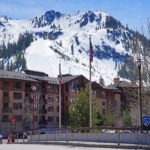
Sonora Peak

Sonora Peak rises immediately north of Sonora Pass in California’s central Sierra Nevada, forming a prominent volcanic summit on the boundary between Alpine and Mono counties. It is the highest point in Alpine County and one of the most accessible 11,000-foot peaks in this part of the Sierra.
Unlike the pale granite that defines much of the Sierra Nevada, Sonora Peak is especially notable for its thick sequence of Miocene volcanic lava flows. Its combination of unusual geology, high-elevation scenery, proximity to Highway 108, and relatively straightforward hiking routes makes it an important summit for both county highpointers and hikers exploring the Sonora Pass region.
🏔️ Overview
Sonora Peak is a high summit of the Sierra Nevada in eastern California. The mountain stands roughly two miles north of Sonora Pass, where California State Route 108 crosses the Sierra crest.
The summit lies along the Alpine–Mono county boundary and is the highest point in Alpine County. Modern LiDAR-derived measurements used by Peakbagger place the summit at approximately 11,462.8 feet (3,493.9 meters), while older topographic maps commonly show an elevation of 11,459 feet and some references round the height to 11,464 feet.
Sonora Peak also has substantial topographic independence. Peakbagger gives it approximately 1,843 feet (562 meters) of prominence and about 4.7 miles (7.6 kilometers) of isolation. Its nearest higher mountain is Leavitt Peak, located south of Sonora Pass.
The mountain overlooks an unusually diverse high-country landscape. To the north lies the Carson-Iceberg Wilderness, while the Pacific Crest Trail crosses its slopes and Highway 108 provides unusually convenient access to the Sierra crest.
⚡ Fast Facts
| Fact | Details |
|---|---|
| Continent | North America |
| Country | United States |
| State/Province | California |
| County/Region | Alpine and Mono counties |
| Mountain Range | Sierra Nevada |
| Parent Peak | Leavitt Peak |
| Elevation | 11,462.8 ft / 3,493.9 m (LiDAR-based Peakbagger figure) |
| Prominence | 1,843.2 ft / 561.9 m |
| Isolation | About 4.7 mi / 7.6 km |
| Nearest Higher Neighbor (NHN) | Leavitt Peak, south-southwest |
| Coordinates | Approximately 38.3538° N, 119.6355° W |
| USGS Quadrangle | Sonora Pass |
| County High Point | Highest point in Alpine County |
Older map-based figures commonly give Sonora Peak about 1,816 feet of prominence. The somewhat higher figure above reflects newer elevation data used by Peakbagger.
📍 Location
Sonora Peak stands near the Sierra Nevada crest approximately two miles north of Sonora Pass. The pass carries California State Route 108 across the mountains between the western Sierra foothills and the eastern side of the range near Bridgeport and U.S. Highway 395.
The summit itself marks part of the boundary between Alpine County to the west and north and Mono County to the east.
This position places Sonora Peak near the transition between several major landscapes. Forested Sierra terrain spreads westward, while the eastern slopes descend toward the drier country of Mono County and the Great Basin.
The mountain also occupies an important watershed divide. Several drainages originate on or near its slopes, including headwaters associated with the East Fork Carson River, Clark Fork of the Stanislaus River, Deadman Creek, Sardine Creek, and Wolf Creek.
The East Fork Carson River begins on the northeastern side of the mountain before flowing north through Alpine County and eventually into Nevada.
📏 Elevation & Prominence
Sonora Peak’s elevation has been reported slightly differently by various sources.
The traditional USGS topographic elevation is 11,459 feet, a figure still visible on Forest Service topographic mapping. Some references list the summit as approximately 11,464 feet.
More recent terrain analysis used by Peakbagger places the summit at:
- Elevation: 11,462.8 feet (3,493.9 meters)
- Prominence: 1,843.2 feet (561.9 meters)
- Isolation: approximately 4.7 miles (7.6 kilometers)
Its nearest higher neighbor is Leavitt Peak, which rises to more than 11,570 feet south-southwest of Sonora Peak.
Leavitt Peak also serves as Sonora Peak’s line parent in modern prominence calculations.
Sonora Peak’s prominence is enough to make it stand out clearly from the surrounding Sierra crest rather than merely forming a minor point along a ridge.
🪨 Geology
Sonora Peak is geologically unusual compared with many famous Sierra Nevada mountains.
Much of the central Sierra is dominated by granitic rock belonging to the enormous Sierra Nevada Batholith. Sonora Peak, however, is capped by an exceptionally thick sequence of volcanic rocks dating from the Miocene Epoch.
Geologic research at Sonora Peak has identified as many as 23 separate lava flows belonging to the Table Mountain Formation. Together, these flows exceed approximately 400 meters in thickness at the mountain.
The Table Mountain Formation is part of the Stanislaus Group, a collection of volcanic rocks produced during a period of intense volcanic activity in the region roughly 10 million years ago.
Radiometric dating indicates that a major episode of lava eruption occurred around 10.4 million years ago, followed by additional volcanic activity in the wider Sonora Pass region approximately 9.4 to 9.8 million years ago.
The lava flows at Sonora Peak are principally latitic to trachyandesitic volcanic rocks. Their darker colors and different erosion patterns give the Sonora Pass area a noticeably different appearance from the enormous pale granite exposures farther south in Yosemite.
Sonora Peak is therefore an excellent example of the volcanic Sierra Nevada—a landscape that can be easy to overlook because granite is so strongly associated with the range.
Erosion, frost action, snow, and repeated freeze-thaw cycles have subsequently broken much of the exposed volcanic rock into the loose scree and angular fragments found on the upper slopes.
🌿 Flora & Fauna
The slopes of Sonora Peak span subalpine and alpine environments.
At lower elevations near the trailheads, scattered Sierra conifers grow among meadows and rocky slopes. Trees become increasingly sparse with elevation as exposure, wind, cold temperatures, and a short growing season limit forest development.
During summer, snowmelt supports high-country meadows and seasonal displays of Sierra wildflowers. The U.S. Forest Service specifically highlights the Sonora Pass and Saint Mary’s Pass area as a wildflower destination, with mid- to late July often providing particularly good conditions.
Higher on the mountain, vegetation becomes much more scattered. Low-growing alpine plants survive in protected areas between rocks where they are sheltered from wind and retain moisture from melting snow.
Wildlife of the surrounding Sierra high country can include marmots, pikas, mule deer, Clark’s nutcrackers, ravens, and birds of prey. Forested terrain farther down the slopes supports a broader community of Sierra Nevada mammals and birds.
Because alpine vegetation grows slowly and has a very short growing season, hikers should avoid unnecessarily trampling plants or creating new shortcut trails.
🥾 Hiking & Climbing Routes
Sonora Peak is unusual among California’s 11,000-foot mountains because reaching its summit generally does not require technical climbing in normal dry-season conditions.
Two approaches are especially common.
Saint Mary’s Pass Route
The Saint Mary’s Pass Trailhead is located along Highway 108 west of Sonora Pass.
Hikers follow the trail toward Saint Mary’s Pass and then continue toward Sonora Peak, eventually using a faint path or use trail across open high-country terrain.
From Saint Mary’s Pass, the route approaches the summit ridge and follows it toward the top.
Under dry summer conditions, SummitPost describes this approach as essentially Class 1 hiking, although route finding may be necessary where trails become faint.
Sonora Pass and Pacific Crest Trail Route
Another popular approach begins directly at the Sonora Pass Trailhead.
From Highway 108, hikers follow the Pacific Crest Trail north as it climbs rapidly into high volcanic terrain below Sonora Peak.
The PCT does not cross the summit itself. Hikers leave the trail and follow a use trail toward the mountain’s southeastern slopes and summit.
Depending on the exact route chosen, a Sonora Peak outing is generally only several miles round trip but involves roughly 2,000 feet of climbing at elevations beginning near 9,600 feet.
That combination makes the mountain physically more demanding than its relatively short mileage might suggest.
🏔️ Field Guide Tip: Do not underestimate Sonora Peak simply because the trailhead begins close to the summit. Nearly the entire hike takes place at high elevation, and weather, lingering snow, loose volcanic rock, wind, and altitude can significantly increase the difficulty.
🌤️ Best Time to Visit
For most hikers, the most practical season for Sonora Peak is summer through early fall, generally from July through September.
July often brings lingering patches of snow along with abundant wildflowers. August usually provides the greatest likelihood of predominantly snow-free hiking, although conditions vary considerably from year to year.
September can offer clear skies, cooler temperatures, and fewer insects, but early-season snowstorms are possible.
Access is heavily influenced by Highway 108 over Sonora Pass. The highway normally closes during the snowy season and reopens after snow removal, but exact opening and closing dates vary annually.
High-elevation thunderstorms are another concern during summer. Starting early gives hikers more time to reach lower terrain before afternoon weather develops.
Snow and ice can turn an otherwise straightforward hiking route into a mountaineering problem, so current conditions should always be checked before an early- or late-season attempt.

🧭 Nearby Mountains & Attractions
Stanislaus Peak
Stanislaus Peak rises northwest of Sonora Peak and reaches more than 11,200 feet.
The two summits are sometimes combined into a longer hiking day, although Stanislaus Peak generally involves somewhat rougher terrain.
Leavitt Peak
Leavitt Peak rises south of Sonora Pass and is Sonora Peak’s nearest higher neighbor and parent peak.
At more than 11,570 feet, it is one of the highest mountains in this section of the Sierra Nevada.
Sonora Pass
Sonora Pass is one of the highest paved highway crossings of the Sierra Nevada.
California State Route 108 crosses the crest here at roughly 9,600 feet, providing access to both Sonora Peak and numerous other high-country trails.
Pacific Crest Trail
The Pacific Crest Trail crosses Highway 108 at Sonora Pass and runs along the slopes below Sonora Peak.
Northbound hikers climb toward Sonora Peak before continuing toward Wolf Creek and the Carson-Iceberg Wilderness.
Carson-Iceberg Wilderness
The Carson-Iceberg Wilderness protects a large area of rugged Sierra Nevada terrain north of Sonora Pass.
Its landscape includes volcanic peaks, granite formations, forests, meadows, river canyons, and roughly 200 miles of trails.
Farther south and southeast, hikers exploring the broader region can continue toward peaks such as Mount Conness, Mount Dana, and Dunderberg Peak.
💡 Fun Facts
- Sonora Peak is the highest point in Alpine County, California.
- Its modern LiDAR-based elevation is approximately 11,462.8 feet.
- The mountain rises only about two miles north of Sonora Pass.
- Its nearest higher neighbor and parent peak is Leavitt Peak.
- Sonora Peak has approximately 1,843 feet of prominence using newer elevation measurements.
- Its isolation is about 4.7 miles.
- The mountain contains an unusually thick sequence of approximately 23 Miocene lava flows.
- Some of these volcanic rocks erupted approximately 10.4 million years ago.
- Sonora Peak helps form the headwaters of several separate drainage systems.
- The East Fork Carson River begins on the mountain’s northeastern side.
- The Pacific Crest Trail passes close to the summit.
- Sonora Peak is considerably more accessible than many Sierra Nevada mountains of comparable elevation because Highway 108 crosses the range immediately south of it.
❓ Frequently Asked Questions
How high is Sonora Peak?
Modern LiDAR-based data used by Peakbagger places Sonora Peak at approximately 11,462.8 feet (3,493.9 meters).
The traditional topographic elevation is 11,459 feet, while some references round the mountain’s elevation to 11,464 feet.
Where is Sonora Peak?
Sonora Peak is in the Sierra Nevada of California, immediately north of Sonora Pass. Its summit lies along the boundary between Alpine and Mono counties.
Is Sonora Peak the highest mountain in Alpine County?
Yes. Sonora Peak is the highest point in Alpine County.
What is Sonora Peak’s nearest higher neighbor?
The nearest higher mountain is Leavitt Peak, approximately 4.7 miles away to the south-southwest.
What is Sonora Peak’s prominence?
Modern data used by Peakbagger gives Sonora Peak approximately 1,843 feet (562 meters) of topographic prominence.
Older map-based measurements commonly list approximately 1,816 feet.
Is Sonora Peak difficult to climb?
Sonora Peak is considered relatively straightforward for an 11,000-foot Sierra summit in dry summer conditions. Common routes are primarily hiking routes rather than technical climbs.
However, high altitude, loose volcanic terrain, steep slopes, snow, weather, and off-trail navigation can still make the outing strenuous.
Is there a trail to the summit?
There is no single major maintained trail running directly from Highway 108 to the summit.
Hikers commonly use either the Saint Mary’s Pass Trail or the Pacific Crest Trail before following use trails toward the summit.
Do you need a wilderness permit?
A wilderness permit is required for overnight travel within the Carson-Iceberg Wilderness. Day-hiking requirements differ, and hikers should check current Forest Service rules before departure.
What type of rock is Sonora Peak made of?
The upper mountain is dominated by volcanic rock associated with the Table Mountain Formation of the Stanislaus Group. Researchers have documented as many as 23 lava flows at Sonora Peak, many dating to approximately 10.4 million years ago.
When is the best time to hike Sonora Peak?
For most hikers, July through September provides the best combination of road access and relatively snow-free conditions. Mid- to late July is particularly notable for high-country wildflowers.
🔗 Related Articles
📚 Sources
- Peakbagger — Sonora Peak, California
- U.S. Forest Service — Sonora Pass and Saint Mary’s Pass
- U.S. Forest Service — Sonora Pass Trailhead
- U.S. Forest Service — St. Marys Pass Trailhead
- U.S. Forest Service — Pacific Crest Trail: Sonora Pass to Carson Pass
- U.S. Geological Survey — Preliminary Geologic Map of the Sonora Pass Quadrangle
- Pluhar et al. — Lithostratigraphy, Magnetostratigraphy, and Radiometric Dating of the Stanislaus Group
- SummitPost — Sonora Peak