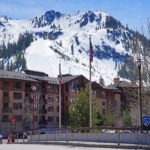
Stanislaus Peak

🏔️ Overview
Stanislaus Peak is a distinctive volcanic summit rising to approximately 11,230 feet (3,423 meters) in California’s Sierra Nevada. Located north of Sonora Pass in Alpine County, the mountain stands within the Carson-Iceberg Wilderness and occupies land administered by both the Stanislaus and Humboldt-Toiyabe national forests.
Unlike the vast granite landscapes associated with much of the Sierra Nevada, Stanislaus Peak is notable for its reddish and brown volcanic rocks. The mountain forms part of an unusually well-preserved volcanic landscape around Sonora Pass, where ancient lava flows, volcanic vents, faults, and much older granitic basement rocks are exposed close together.
Stanislaus Peak is also an appealing hiking and peak-bagging destination. The usual approach begins near Saint Marys Pass along California State Route 108. Although much of the approach follows trail or relatively straightforward open terrain, the final ascent involves steep, loose ground and Class 2 scrambling.
Nearby Sonora Peak and Leavitt Peak make this one of the most rewarding concentrations of high summits around Sonora Pass.
⚡ Fast Facts
| Fact | Details |
|---|---|
| Continent | North America |
| Country | United States |
| State/Province | California |
| County/Region | Alpine County |
| Mountain Range | Sierra Nevada |
| Local Area | Carson-Iceberg Area |
| Parent Peak | Sonora Peak |
| Elevation | 11,230.4 feet / 3,423 meters |
| Prominence | 779 feet / 237 meters |
| Isolation | 2.6 miles / 4.19 kilometers |
| Nearest Higher Neighbor (NHN) | Sonora Peak |
| Wilderness Area | Carson-Iceberg Wilderness |
| National Forests | Stanislaus National Forest / Humboldt-Toiyabe National Forest |
| Coordinates | 38.38413° N, 119.66705° W |
| USGS Topographic Map | Disaster Peak |
| Easiest Route | Hiking with Class 2 scrambling |
📍 Location
Stanislaus Peak rises in the northern Sierra Nevada near the crest of the range, approximately three miles north of the Sonora Pass area.
The summit is officially located in Alpine County, California, according to modern Peakbagger topographic data. It lies within the federally designated Carson-Iceberg Wilderness, a large protected landscape extending northward from the Sonora Pass region.
California State Route 108 crosses the Sierra immediately south of the mountain at Sonora Pass. This highway provides unusually convenient access to high-elevation terrain, allowing hikers to begin their trips already close to 10,000 feet.
The mountain’s coordinates are approximately 38.38413° N, 119.66705° W.
📏 Elevation & Prominence
Modern LiDAR-based data published by Peakbagger places the summit of Stanislaus Peak at 11,230.4 feet (3,423 meters).
Older maps and sources frequently give an elevation of 11,233 feet, which explains why that figure remains common in hiking guides and online references. The small discrepancy reflects differences in mapping and measurement methods rather than any meaningful disagreement about the summit.
Peakbagger calculates a clean topographic prominence of approximately 779 feet (237 meters). The mountain’s key col is around 10,451 feet.
Its topographic isolation is approximately 2.6 miles (4.19 kilometers). The nearest higher neighbor is Sonora Peak, which rises east-southeast of Stanislaus Peak and reaches approximately 11,463 feet.
Sonora Peak also serves as Stanislaus Peak’s topographic parent.
🪨 Geology
Stanislaus Peak is particularly interesting because its geology differs noticeably from the granite-dominated scenery found across much of the Sierra Nevada.
The Sonora Pass region preserves extensive Miocene volcanic rocks belonging to the Stanislaus Group. Geological research has identified the Sonora Peak–Stanislaus Peak ridge as an important ancient volcanic vent system.
One of the major units is the Table Mountain Latite, consisting largely of trachyandesitic lava flows. Radiometric dating of these volcanic rocks in the Sonora Peak area places their formation at approximately 10.4 million years ago.
Researchers have interpreted the ridge between Sonora and Stanislaus peaks as containing a volcanic fissure system more than five kilometers long. Lava and volcanic debris erupted along this system during a period when volcanic activity occurred along what scientists describe as the ancestral Cascades volcanic arc.
Stanislaus Peak itself preserves especially clear evidence of volcanic activity. Its eastern face contains thick deposits of red volcanic scoria, bombs, and blocks associated with an ancient volcanic vent.
These younger volcanic rocks locally rest directly on much older granitic basement belonging to the Sierra Nevada batholith. The resulting contrast between pale granite and dark or reddish volcanic rock is one of the defining visual characteristics of the area.
🌿 Flora & Fauna
Conditions around Stanislaus Peak become increasingly severe with elevation. Much of the higher mountain consists of exposed volcanic rock, talus, scree, and low alpine or subalpine vegetation.
Lower portions of the approach pass through Sierra Nevada subalpine environments where lodgepole pine and other hardy conifers occur. Whitebark pine is characteristic of high-elevation environments in the Carson-Iceberg and neighboring Emigrant wilderness areas, particularly near and above 9,000 feet.
Closer to the summit, trees become scattered or disappear entirely as exposure, cold temperatures, wind, thin soil, and a short growing season favor low-growing plants.
The wider Carson-Iceberg Wilderness provides habitat for numerous Sierra Nevada mammals and birds. Mule deer and black bears occur within the wilderness, while small mammals and mountain birds occupy the higher country.
Visitors should avoid disturbing vegetation around the mountain. High-elevation plants can grow extremely slowly, and damage to alpine and subalpine vegetation may remain visible for many years.
🥾 Hiking & Climbing Routes
Saint Marys Pass Approach
The standard route to Stanislaus Peak begins near the Saint Marys Pass Trailhead along Highway 108, roughly west of Sonora Pass.
The trail initially climbs through forest and increasingly open high-country terrain toward the shoulder northwest of Sonora Peak.
From this area, hikers continue north toward Stanislaus Peak across broad, relatively open terrain. The approach eventually reaches the southeastern side of the mountain, where maintained or obvious trail conditions largely disappear.
The final ascent becomes considerably steeper.
Loose volcanic rock and scree lead toward the upper ridge, followed by sections of Class 2 scrambling around rock bands below the summit. The scrambling is not generally considered technical climbing, but route-finding and secure footing become important.
The upper mountain has steep and cliffy terrain nearby, particularly around portions of the ridge, so hikers should not assume that every direct-looking route is safe.
Combining Stanislaus Peak and Sonora Peak
Strong hikers sometimes combine Stanislaus Peak with neighboring Sonora Peak in a single trip.
One documented combination of Stanislaus and Sonora peaks covers approximately 9.9 miles round trip with about 3,300 feet of cumulative elevation gain, although distance and gain vary considerably according to the route chosen.
Sonora Peak is generally the easier of the two summits. Stanislaus Peak requires more travel away from the main Sonora Pass corridor as well as the Class 2 scrambling near its summit.
🏔️ Field Guide Tip: Do not underestimate Stanislaus Peak simply because the trailhead begins at high elevation. The final slopes contain loose volcanic rock, route-finding can become less obvious, and most of the hike takes place above 10,000 feet. Allow extra time and carry adequate water, sun protection, navigation tools, and layers for rapidly changing mountain weather.
🌤️ Best Time to Visit
The usual hiking season for Stanislaus Peak runs from summer through early fall, after significant winter snow has melted and Highway 108 has opened across Sonora Pass.
July through September generally provides the most reliable snow-free hiking conditions, although conditions vary significantly from year to year.
Early-season hikers may encounter lingering snowfields. These can substantially increase the difficulty and risk of otherwise straightforward slopes.
Autumn can provide excellent conditions with fewer insects and generally dry trails, but temperatures fall quickly at this elevation and early-season snowstorms are possible.
Winter and spring access are significantly more complicated because the upper portion of Highway 108 over Sonora Pass is seasonally closed by snow.
Afternoon thunderstorms can also occur during the summer. Because most of the route is exposed, checking the forecast and beginning early is advisable.
🧭 Nearby Mountains & Attractions
Sonora Peak
Sonora Peak rises approximately 2.6 miles from Stanislaus Peak and is its nearest higher neighbor.
At roughly 11,463 feet, it is higher and substantially more prominent than Stanislaus Peak. It is also the high point of Alpine County.
Because both mountains can be approached from the Saint Marys Pass area, experienced hikers frequently consider climbing them together.
Leavitt Peak
South of Sonora Pass, Leavitt Peak reaches approximately 11,572 feet and is one of the highest summits in this portion of the Sierra Nevada.
Its broad volcanic terrain, high elevation, and proximity to the Pacific Crest Trail make it another important peak in the Sonora Pass region.
💡 Fun Facts
- Stanislaus Peak is volcanic rather than primarily granitic, making its appearance noticeably different from many famous Sierra Nevada summits.
- Modern LiDAR measurements place the summit at approximately 11,230 feet, slightly below the traditional 11,233-foot figure.
- The mountain’s nearest higher neighbor and topographic parent is Sonora Peak.
- Stanislaus Peak belongs to the Sierra Club Sierra Peaks Section peak list.
- The mountain stands within the Carson-Iceberg Wilderness, designated by Congress in 1984.
- Geological evidence indicates that volcanic vents once extended along the ridge between Stanislaus Peak and Sonora Peak.
- The volcanic rocks around Sonora Pass record eruptions dating to roughly 10 million years ago.
- Historic accounts indicate that the name Stanislaus Peak was already in use during the 1870s.
❓ Frequently Asked Questions
How high is Stanislaus Peak?
Modern LiDAR data places Stanislaus Peak at approximately 11,230.4 feet (3,423 meters). Older maps commonly list the summit as 11,233 feet.
Where is Stanislaus Peak?
Stanislaus Peak is in Alpine County, California, near Sonora Pass in the Sierra Nevada. It lies inside the Carson-Iceberg Wilderness.
Is Stanislaus Peak a volcano?
Stanislaus Peak is an eroded remnant of an ancient volcanic landscape, not an active volcano. The mountain contains volcanic lava and vent deposits associated with Miocene volcanism approximately 10 million years ago.
Is Stanislaus Peak difficult to climb?
The standard route is a strenuous hike culminating in Class 2 scrambling. It does not normally require technical climbing equipment under dry summer conditions, but loose rock, steep terrain, altitude, and route-finding make it more challenging than a normal trail hike.
Is there a trail to the summit?
A trail covers much of the approach, but hikers should not expect a maintained summit trail all the way to the top. The final section requires travel over loose terrain and scrambling.
What is the nearest higher mountain?
The nearest higher neighbor is Sonora Peak, approximately 2.6 miles away.
Do you need a permit to hike Stanislaus Peak?
A wilderness permit is generally not required for an ordinary day hike, but permits are required for overnight wilderness travel. Regulations can change, so visitors should check current Stanislaus National Forest rules before departing.
Can Stanislaus Peak and Sonora Peak be climbed together?
Yes. The two mountains are commonly combined into a longer day hike because their approaches overlap. The combined trip requires substantially more mileage and elevation gain than climbing either summit alone.
🔗 Related Articles
📚 Sources
- Peakbagger — Stanislaus Peak
- U.S. Forest Service — Carson-Iceberg Wilderness, Highway 108 Access
- U.S. Forest Service — Sonora Pass Trailhead
- U.S. Forest Service — Wilderness Permits
- Geosphere — Sierra Crest Graben-Vent System: A Walker Lane Pull Apart Within the Ancestral Cascades Arc
- SummitPost — Stanislaus Peak