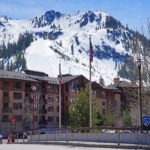
Arizona is famous for saguaros, red-rock canyons, desert sunsets, and long stretches of warm weather. A family ski vacation is probably not the first image that comes to mind.
That is precisely what makes Flagstaff, Arizona such an unexpected winter destination.
Sitting at roughly 7,000 feet above sea level beneath the towering San Francisco Peaks, Flagstaff experiences a genuine mountain winter. Just outside the city, Arizona Snowbowl climbs even higher, carrying skiers and snowboarders into a landscape of ponderosa pine, aspen, snow-covered volcanic slopes, and sweeping views across northern Arizona.
For families, the surprise goes well beyond the skiing. A Flagstaff winter trip can combine beginner-friendly days on the mountain with tubing, snow play, historic downtown Flagstaff, astronomy, Native American history, and even a winter visit to the Grand Canyon.
It is a ski vacation that feels distinctly different from the classic Colorado or Utah resort trip—and that difference is exactly what makes it memorable.
🏔️ Arizona Snowbowl at a Glance
Arizona Snowbowl occupies the western side of the San Francisco Peaks north of Flagstaff.
The resort’s base sits at approximately 9,200 feet, while lift-served terrain reaches about 11,500 feet. Hike-to terrain extends to approximately 12,000 feet.
| Feature | Arizona Snowbowl |
|---|---|
| Location | Flagstaff, Arizona |
| Mountain Area | San Francisco Peaks |
| Base Elevation | 9,200 feet |
| Lift-Served Elevation | 11,500 feet |
| Hike-To Elevation | 12,000 feet |
| Total Vertical Rise | 2,800 feet |
| Skiable Terrain | 777 acres |
| Runs | 61 |
| Longest Run | Approximately 2 miles |
| Lifts | 8 |
| Average Annual Snowfall | Approximately 260 inches |
The scale is significant enough to keep experienced skiers entertained while remaining manageable for a family that does not necessarily want the sprawling, sometimes overwhelming experience of one of the West’s enormous destination resorts.
Perhaps most importantly, families can stay in an actual mountain town rather than being limited to a purpose-built ski village.
🌵 Why Skiing in Flagstaff Feels So Unexpected
The novelty begins with the setting.
Much of Arizona is associated with the Sonoran Desert, but elevation transforms northern Arizona dramatically. Flagstaff stands amid one of the largest ponderosa pine forests in the world, and the San Francisco Peaks rise more than 12,000 feet above sea level.
Humphreys Peak, the highest summit in Arizona, reaches 12,633 feet.
Snowbowl’s elevation places its ski terrain thousands of feet above the deserts surrounding Phoenix. Families can therefore experience remarkably different environments during a single Arizona vacation.
That contrast is part of the appeal.
Drive north from the desert and the landscape gradually changes. Saguaros disappear. Pine forests become increasingly prominent. Temperatures fall. Eventually, the San Francisco Peaks appear above Flagstaff, frequently capped with snow during winter.
It does not feel like the Arizona many first-time visitors expect.
👨👩👧👦 Why Arizona Snowbowl Works Well for Families
A successful family ski trip is not simply about finding the biggest mountain. Logistics, terrain variety, cost, lessons, transportation, and activities for non-skiers can be just as important.
Flagstaff performs surprisingly well in several of these categories.
Children 12 and Younger Can Ski Free
One of Snowbowl’s most noteworthy family benefits is its Power Kids Pass.
For the 2026–2027 season, children ages 12 and younger can receive a free Power Kids season pass providing unlimited skiing at participating Power Pass mountains, including Snowbowl.
Registration is required, so families should always verify the current program before traveling.
For families with several children, however, a program like this can substantially change the economics of a ski vacation.
There Is Real Beginner Terrain
Snowbowl is not exclusively a mountain for experts.
Its terrain includes options for new skiers and snowboarders, while its Ski & Ride School provides instruction. The resort also operates Snowburners, a multiweek ski and snowboard lesson program for children ages 4–12, demonstrating the mountain’s strong emphasis on developing young skiers.
Families visiting for only a few days can check current lesson options through the resort’s ski school.
Beginners should resist the temptation to teach themselves on more difficult terrain. A professionally taught first lesson can make the difference between a child who becomes excited about skiing and one who spends the remainder of the vacation wanting to return to the hotel.
More Experienced Family Members Are Not Left Out
A family rarely consists of skiers who all have exactly the same ability.
Snowbowl’s 61 runs provide room for progression beyond the beginner slopes. Intermediate skiers can graduate to longer groomed runs, while advanced members of the family can seek out steeper terrain.
That variety makes the mountain more practical for families in which one parent is an experienced skier, another is intermediate, and the children are still learning.
❄️ Snow in Arizona Is Not a Gimmick
Visitors sometimes assume that skiing in Arizona must mean a tiny patch of manufactured snow surrounded by desert.
Snowbowl is a genuine high-elevation mountain environment.
The resort reports an average of approximately 260 inches of annual snowfall, although totals vary dramatically from one winter to another. Snowmaking also plays an important role in maintaining coverage and extending reliable operations during dry periods.
The ski season can stretch from late fall well into spring in favorable years, although opening dates, closing dates, terrain availability, and snow conditions should always be checked before making plans.
One major advantage of this high-altitude setting is sunshine. Northern Arizona regularly experiences those classic western winter days when brilliant blue skies appear above snow-covered mountains.
That combination can be particularly appealing for families whose children struggle with long days of bitter cold.
It is still a mountain environment, however, and storms can bring heavy snow, wind, ice, low visibility, and rapidly changing conditions.
🎿 What Makes Flagstaff Different From a Traditional Ski Resort Vacation
Flagstaff is not a conventional ski resort town where nearly everything revolves around the lifts.
That can be one of its greatest strengths.
Downtown Flagstaff has restaurants, coffee shops, shops, historic buildings, Route 66 heritage, Northern Arizona University, museums, and local attractions that exist independently of skiing.
That means a family does not have to ski from opening bell to closing bell to feel as though it received value from the trip.
One child can take the afternoon off.
A parent who does not ski can spend the day in Flagstaff.
Bad weather does not automatically ruin the vacation.
And if everyone’s legs are exhausted after two days on the slopes, there is still plenty to do.

🛷 Add a Snow-Play Day
Snowbowl allows skiing and snowboarding, but sledding is not permitted at the ski area.
Fortunately, the wider Flagstaff region has designated winter-recreation areas for families who simply want to play in the snow.
Flagstaff Snow Park at Fort Tuthill is one of the best-known options, with groomed tubing runs, snow-play areas, and a smaller hill designed for younger children.
The important word is designated.
After a major northern Arizona snowstorm, visitors sometimes stop along roads to play in freshly fallen snow. That can create dangerous conditions and traffic problems. Discover Flagstaff and transportation officials encourage visitors to use established snow-play areas instead.
A tubing or snow-play afternoon can also be a welcome change for young children who are not ready for several consecutive full days of skiing.
🔭 Trade Ski Goggles for Telescopes at Lowell Observatory
One of Flagstaff’s most unusual advantages as a ski destination becomes apparent after sunset.
The city has a celebrated connection to astronomy, and Lowell Observatory is one of its signature attractions.
Astronomer Clyde Tombaugh discovered Pluto at Lowell Observatory in 1930. Today, visitors can explore exhibits, attend educational programs, learn about astronomical research, and, when conditions permit, observe the night sky through telescopes.
For children, that creates quite a day:
Ski down a snowy volcano in the morning, eat dinner in a historic Route 66 town, and look at planets and stars through a telescope at night.
Few ski destinations can duplicate that combination.
🏜️ Explore Ancient Landscapes at Walnut Canyon
About 7.5 miles east of Flagstaff, Walnut Canyon National Monument offers another completely different experience.
The monument protects a dramatic canyon containing dwellings built into the cliffs by people archaeologists refer to as the Sinagua.
Families can explore the visitor center and overlooks, while trail availability depends on weather and current conditions.
Winter adds an entirely different character to the canyon, but snow and ice can also make trails slippery. Always check National Park Service conditions before visiting.
Combining skiing with places such as Walnut Canyon also gives children a broader picture of northern Arizona. The region is not simply a recreation destination—it contains thousands of years of human history surrounded by extraordinary geology.
🏞️ Turn the Trip Into a Grand Canyon Winter Adventure
The biggest bonus may be about 80 miles away.
Flagstaff is one of the principal gateways to the Grand Canyon’s South Rim, which remains open throughout the year.
Winter can transform the canyon.
Snow may collect along the rim and on shaded ledges, creating dramatic white contrasts against the canyon’s red, brown, and gold rock layers. Winter conditions also mean visitors must prepare for icy roads, snowy trails, and cold temperatures.
But for families willing to plan carefully, combining Snowbowl with a winter Grand Canyon visit creates an extraordinary Arizona itinerary.
You could spend two days skiing, one day exploring Flagstaff, and another visiting one of the most spectacular landscapes in North America.
For more trip-planning information, see our companion site: Grand Canyon National Park.
🏔️ The San Francisco Peaks Make the Experience Special
Snowbowl would not have the same character without the San Francisco Peaks.
These mountains are remnants of a massive volcanic complex and dominate the skyline north of Flagstaff.
The highest summit is Humphreys Peak, but several other major summits form the high country around it.
Mountain Field Guide readers can explore nearby Aubineau Peak and Doyle Peak to learn more about the remarkable mountain landscape surrounding Flagstaff.
The contrast between this alpine environment and Arizona’s lower deserts explains why the Flagstaff ski experience feels almost improbable.
Yet the snow, elevation, forests, and mountain weather are very real.
🌤️ When Is the Best Time for a Family Ski Trip to Flagstaff?
There is no guaranteed perfect week.
Snowfall in the Southwest can vary considerably from year to year, which makes checking current mountain conditions especially important.
For many families, January through March provides the most practical window because the season is well established and the mountain has had time to build its snowpack.
March can be particularly appealing when coverage remains strong because longer days and warmer sunshine may make skiing more comfortable for children.
Families traveling around Christmas, New Year’s, Presidents Day weekend, or spring break should expect greater demand.
Whenever possible, skiing on weekdays can provide a more relaxed experience.
🚗 The One Part Families Should Not Underestimate: Winter Driving
Arizona’s sunny reputation can create a dangerous sense of complacency.
A winter storm in Flagstaff is still a winter storm.
Snow and ice can affect Interstate 17, Interstate 40, U.S. 180, Snowbowl Road, and other routes through northern Arizona. Arizona transportation officials recommend checking road conditions before departure and carrying appropriate winter equipment.
During storms, drivers may encounter chain or traction recommendations, slow traffic, temporary closures, black ice, and snowplows.
Traffic can be especially difficult along U.S. 180 on busy winter weekends.
Discover Flagstaff also lists a free Mountain Express bus service from downtown Flagstaff to Arizona Snowbowl during operating periods, giving families an alternative to driving all the way to the ski area. Check current schedules before relying on the service.
🏔️ Field Guide Tip: Check both Snowbowl’s mountain report and Arizona’s road conditions before leaving your hotel. A blue sky over downtown Flagstaff does not guarantee that conditions several thousand feet higher on the mountain will be the same.
🧥 Pack for Altitude, Not for the Arizona Stereotype
Flagstaff itself sits at approximately 7,000 feet, and Snowbowl begins more than 2,000 feet higher.
Families coming from lower elevations should take that seriously.
Drink plenty of water, take breaks when needed, and remember that physical exertion may feel more demanding at elevation.
Sun protection also matters.
Snow reflects sunlight, and higher elevations receive stronger ultraviolet exposure. Sunscreen, sunglasses or goggles, lip protection, and covered skin remain important even when temperatures are below freezing.
Pack clothing in layers rather than relying on one extremely heavy coat.
A useful family ski kit includes:
- Moisture-wicking base layers
- Insulating midlayers
- Waterproof ski pants
- Waterproof winter jackets
- Warm gloves or mittens
- Ski socks
- Helmets
- Goggles
- Sunscreen
- Lip balm with SPF
- Water bottles
- Extra gloves and socks for children
Anyone who has skied with children knows that an extra pair of dry gloves can be worth far more than its weight in luggage.

📅 A Simple 4-Day Flagstaff Family Ski Itinerary
A balanced trip allows families to enjoy the mountain without turning the vacation into an endurance contest.
Day 1: Arrive and explore Flagstaff
Check into your hotel, walk around historic downtown Flagstaff, rent equipment if necessary, and go to bed early.
Day 2: Arizona Snowbowl
Make this the primary ski day. Beginners can schedule lessons while experienced family members explore the mountain.
Day 3: Ski plus astronomy
Return to Snowbowl for another half or full day. In the evening, visit Lowell Observatory if programs and weather conditions cooperate.
Day 4: Choose your own northern Arizona adventure
Depending on weather and the children’s energy levels, spend the final day tubing at Flagstaff Snow Park, exploring Walnut Canyon, or making a carefully planned winter day trip to the Grand Canyon’s South Rim.
That mix gives families a ski vacation without requiring every member of the group to love skiing equally.
💡 Why Flagstaff May Be Better Than Families Expect
Flagstaff’s greatest advantage is not that it beats Colorado, Utah, or California at their own game.
It does something different.
The trip combines:
- Genuine high-elevation downhill skiing
- Manageable access from a real city
- Free skiing opportunities for younger children through the Power Kids program
- Snow tubing and winter play
- Ponderosa pine forests
- Volcanic mountain scenery
- Route 66 history
- Astronomy
- Indigenous and archaeological sites
- Easy access to the Grand Canyon
The result feels less like a conventional ski-resort vacation and more like a northern Arizona winter adventure that happens to include very good skiing.
For families who enjoy doing more than one thing on vacation, that distinction matters.
❓ Frequently Asked Questions
Does Flagstaff, Arizona really get enough snow for skiing?
Yes. Flagstaff lies at approximately 7,000 feet, while Arizona Snowbowl begins at 9,200 feet. Snowbowl reports an average of about 260 inches of snowfall per year and supplements natural snowfall with snowmaking. Conditions vary significantly by season, so always check the current mountain report.
Where do you ski in Flagstaff?
The primary downhill ski area is Arizona Snowbowl, located in the San Francisco Peaks north of Flagstaff.
Is Arizona Snowbowl good for beginners?
Yes. Snowbowl provides beginner terrain and ski and snowboard instruction in addition to intermediate and advanced terrain.
Do children ski free at Arizona Snowbowl?
For the 2026–2027 season, Snowbowl’s Power Kids program provides free season passes for children ages 12 and younger. Registration and program terms should be confirmed directly with the resort before traveling.
Can you go sledding at Arizona Snowbowl?
No. Snowbowl does not permit sledding. Families should instead use designated snow-play areas around Flagstaff, including options such as Flagstaff Snow Park when operating.
How far is Arizona Snowbowl from Flagstaff?
Snowbowl is approximately 14 miles from historic downtown Flagstaff, and the resort describes the drive as roughly 15 minutes under favorable conditions. Winter storms and peak-weekend traffic can make the trip substantially longer.
Can you visit the Grand Canyon during a Flagstaff ski trip?
Yes. The Grand Canyon’s South Rim is open year-round and is approximately 80 miles from Flagstaff. Snow and icy roads are possible during winter, so visitors should check National Park Service and Arizona road conditions before making the trip.
When is the best time to ski in Flagstaff?
January through March is generally a practical period for family ski trips, although conditions vary considerably each winter. Snowbowl sometimes operates from late fall well into spring when conditions allow.
🔗 Related Articles
- Aubineau Peak
- Doyle Peak
- Mountain Ranges in the U.S.
- Santa Catalina Mountains
- Mount Baldy, Arizona
- Grand Canyon National Park
📚 Sources
- Arizona Snowbowl — Mountain Information — official resort statistics for elevation, skiable acres, runs, lifts, vertical rise, and mountain terrain.
- Arizona Snowbowl — Power Kids Season Pass — current information about the free Power Kids program for children ages 12 and younger.
- Discover Flagstaff — Winter Adventure — winter recreation, snow play, Snowbowl transportation, and visitor information.
- National Park Service — Visiting Grand Canyon During Winter — South Rim winter access, road conditions, and seasonal considerations.
- Arizona Department of Transportation — Know Snow and Ice — official Arizona winter-driving and vehicle-preparation guidance.