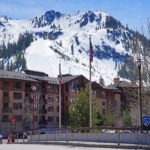
Willow Mountain

Willow Mountain is a remote 7,817-foot summit in Graham County, eastern Arizona, rising within the Natanes Mountains on the San Carlos Apache Reservation. Far removed from Arizona’s better-known hiking destinations, the mountain combines substantial topographic prominence, pine and juniper woodland, broad high-country views, and the remains of a former fire lookout.
Willow Mountain is also the highest point of the Natanes Mountains. With approximately 1,357 feet of prominence and nearly 10 miles of isolation, it stands as a comparatively independent summit despite being overshadowed on the regional skyline by much higher mountains such as Mount Graham and Mount Baldy.
The mountain lies entirely on San Carlos Apache tribal land. Visitors must obtain the appropriate recreation permit and follow current San Carlos Apache Tribe rules before hiking, driving, photographing, camping, or otherwise exploring the area.
⚡ Fast Facts
| Feature | Details |
|---|---|
| Country | United States |
| State | Arizona |
| County | Graham County |
| Mountain Range | Natanes Mountains |
| Elevation | 7,817 feet / 2,383 meters |
| Prominence | 1,357 feet / 414 meters |
| Isolation | 9.87 miles / 15.89 kilometers |
| Nearest Higher Neighbor (NHN) | Unnamed Peak |
| Key Col | Approximately 6,460 feet / 1,969 meters |
| Coordinates | 33.46185° N, 109.59390° W |
| USGS Topographic Map | Willow Mountain |
| Range High Point | Yes — Natanes Mountains |
| Land Ownership | San Carlos Apache Reservation |
| Historic Feature | Former Willow Mountain Fire Lookout |
| Recreation Permit | Required |
| Typical Route | Remote road approach followed by road/trail walking |
| Best Season | Spring and fall |
Peakbagger lists Willow Mountain at 7,817 feet, with 1,357 feet of clean prominence and 9.87 miles of isolation. It is also identified as the highest summit of the Natanes Mountains.
🏔️ Highest Point of the Natanes Mountains
Willow Mountain is the highest recognized summit in the Natanes Mountains, an extensive but relatively little-known mountain region of eastern Arizona.
The Natanes extend across a broad portion of the San Carlos Apache Reservation. Rather than forming a single sharp mountain chain, the region consists of rugged plateaus, ridges, forested uplands, mesas, canyons, and isolated summits.
Peakbagger places the Natanes Mountains across an area of roughly 1,500 square miles, with Willow Mountain at their highest point. Other significant summits include the Natanes Mountains High Point, Dry Lake Benchmark, Elevator Mountain, Turtle Mountain, Brushy Mountain, and Sawbuck Mountain.
Willow Mountain rises only moderately above the surrounding uplands when viewed from close range, but its prominence reveals its larger topographic importance.
📏 More Than 1,350 Feet of Prominence
Willow Mountain has approximately 1,357 feet of topographic prominence.
Its key saddle lies near 6,460 feet, meaning a traveler descending from Willow Mountain toward any higher summit must lose more than 1,350 vertical feet before climbing again.
That places Willow Mountain among Arizona’s peaks with at least 1,000 feet of prominence.
Prominence is particularly useful for understanding mountains like Willow Mountain.
A summit can appear rounded or modest when viewed from neighboring highlands yet still dominate a large geographic area because the surrounding connecting saddles are much lower.
🧭 Nearest Higher Neighbor: Unnamed Peak
Willow Mountain’s Nearest Higher Neighbor is an Unnamed Peak northeast of the summit.
This neighboring summit rises to approximately 7,878 feet, making it only around 60 feet higher than Willow Mountain.
Peakbagger places Willow Mountain’s true isolation at approximately 9.87 miles, so higher terrain does not occur until nearly 10 miles away.
This combination of more than 1,350 feet of prominence and almost 10 miles of isolation gives Willow Mountain a stronger topographic identity than its elevation alone might suggest.
From the summit area, the surrounding landscape unfolds across miles of sparsely developed tribal high country.
🌲 A Different Side of Arizona
Willow Mountain bears little resemblance to the saguaro-covered desert peaks surrounding Phoenix or Tucson.
At nearly 7,800 feet, the mountain occupies a much cooler ecological zone.
The approach crosses open grassland and woodland before entering increasingly dense stands of pinyon, juniper, and pine. Near the upper mountain, trees become one of the dominant features of the landscape.
The summit itself is rounded and wooded rather than a dramatic rock pinnacle.
This high-elevation setting is part of a much broader transition across eastern Arizona, where desert basins rise toward forested plateaus and eventually into the White Mountains.
Far to the north, the landscape climbs toward the much higher country surrounding Mount Baldy.
🪶 San Carlos Apache Reservation
Willow Mountain lies on the San Carlos Apache Reservation and should be understood first and foremost as part of the homeland of the San Carlos Apache Tribe.
The reservation contains an enormous diversity of landscapes, including desert, grassland, woodland, forests, mountains, rivers, springs, and lakes.
The Tribe describes more than 2,000 miles of paved and dirt roads across its lands, many of them primitive. Hiking, camping, birdwatching, photography, fishing, and general exploration are among the recreational activities regulated by the San Carlos Apache Recreation & Wildlife Department.
Visitors should not treat the reservation like ordinary federal public land.
A recreation permit is required for recreational access, and additional regulations may apply depending on the activity and destination.
Current tribal regulations should always take priority over old hiking reports, online maps, or GPS tracks.
🎟️ Permits Are Required
Anyone planning to visit Willow Mountain should contact or consult the San Carlos Apache Tribe Recreation & Wildlife Department before traveling.
The Tribe explicitly states that permits are required when visiting San Carlos Recreation & Wildlife lands.
Recreation permits cover general activities, while fishing, hunting, and certain other uses have separate requirements.
Because rules, fees, road restrictions, closures, and access conditions can change, hikers should verify current requirements rather than relying on an older trip report.
This is especially important in remote portions of the reservation where unexpected road closures or restricted areas can result in extremely long detours.
🥾 Hiking Willow Mountain
Willow Mountain does not have the kind of developed trailhead and maintained recreational trail found at many Arizona peaks.
Historically, a road provided access toward the summit because Willow Mountain once supported a fire lookout.
Peak hikers typically use the network of tribal roads to approach the mountain and then walk the remaining distance along old roads or cross-country terrain.
One documented outing involved approximately 14 miles of travel and nearly 1,900 feet of accumulated elevation gain when road conditions required parking well away from the summit.
The actual distance can vary enormously depending on where a vehicle can safely and legally travel.
For that reason, Willow Mountain is better viewed as a remote backcountry navigation outing than as a conventional trail hike.
🚙 Road Access
Road conditions are one of the most important considerations when planning a trip to Willow Mountain.
The San Carlos Apache Tribe notes that many roads across the reservation are primitive.
Trip reports from the Willow Mountain area describe rough dirt roads, stream crossings, gates, and long stretches far from services. Four-wheel drive and high clearance may be necessary depending on the chosen approach and current conditions.
A former Willow Mountain lookout guide specifically describes the destination as extremely remote and recommends four-wheel-drive access.
Rain and snow can alter these roads quickly.
A track that is easy when dry may become muddy, deeply rutted, washed out, or completely impassable after a storm.
🌲 Willow Mountain Tank
One landmark on the approach is Willow Mountain Tank, a small reservoir southwest of the summit.
The tank sits at approximately 33.443° N, 109.635° W and appears on maps of the area.
From the tank vicinity, the upper mountain becomes more apparent, although hikers may initially mistake a lower neighboring bump for the true summit.
The woodland also becomes denser as elevation increases.
Stock tanks should never be considered reliable sources of safe drinking water. Their availability and quality can vary greatly, and any natural or stored backcountry water should be appropriately treated.
🔥 The Former Willow Mountain Fire Lookout
Willow Mountain once served as a wildfire observation point.
The summit is included among Arizona’s historic fire lookout locations, and remnants of the former Willow Mountain lookout structure remain at the top.
Fire lookouts were once essential components of forest protection across Arizona.
Their elevated locations allowed observers to scan enormous areas for smoke and quickly report emerging wildfires.
Many were deliberately placed on mountains with broad visibility rather than simply choosing the highest peak available.
Willow Mountain’s nearly 10 miles of isolation and high position above the Natanes Mountains made it a logical observation point.
🪵 What Remains at the Summit
The old lookout is no longer an operating staffed tower.
Photographs from the summit show a deteriorated wooden structure, with portions of the walls, windows, floor, and framing remaining.
Historic structures in remote environments can be unstable.
Visitors should avoid climbing on damaged buildings, removing artifacts, or disturbing anything remaining at the site.
The structure is part of the mountain’s human history, and leaving it undisturbed allows future visitors to experience the same connection with Arizona’s former fire-lookout network.
🌄 Views From Willow Mountain
Although trees limit views in places, openings around the summit provide extensive panoramas across eastern Arizona.
To the south, the massive Mount Graham skyline can be visible in the distance.
To the north lies the higher country leading toward the White Mountains and Mount Baldy.
The Natanes Mountains spread across the nearer landscape as a rolling combination of forested ridges, mesas, grasslands, drainages, and remote valleys.
Few developed features interrupt the view.
That sense of space is one of Willow Mountain’s greatest attractions.
🌲 Natanes Mountains Landscape
The Natanes Mountains are not among Arizona’s most famous ranges, yet they cover an impressive area.
Peakbagger estimates their north–south extent at roughly 66 miles and their east–west span at approximately 72 miles.
Their terrain forms part of the complex geographic transition between Arizona’s central highlands, the White Mountains, the Gila River country, and southeastern Arizona’s isolated mountain ranges.
Willow Mountain occupies the highest point within this landscape.
The range contains elevations high enough to support substantial woodland while nearby valleys are considerably warmer and drier.
🌿 Plant Life
Vegetation around Willow Mountain changes with elevation, slope, moisture, and exposure.
The broader landscape includes open grassland and scattered woodland, while higher portions of the mountain support denser tree cover.
Common vegetation in this elevation zone can include:
- Pinyon pine
- Juniper
- Ponderosa pine
- Oak
- Mountain shrubs
- Native grasses
- Seasonal wildflowers
The resulting landscape can feel surprisingly lush compared with Arizona’s lower deserts.
Spring and summer moisture can transform open meadows and grasslands, while autumn brings cooler conditions and golden grasses.
🦌 Wildlife
The San Carlos Apache Reservation supports exceptional wildlife habitat.
Elk, mule deer, Coues white-tailed deer, black bears, mountain lions, wild turkeys, and numerous smaller animals occur across different parts of the reservation.
The Tribe manages these wildlife resources through its Recreation & Wildlife Department, with revenues from regulated recreational activities contributing to wildlife surveys, research, conservation, and habitat improvement.
Willow Mountain’s combination of woodland, forest, open grassland, and water sources creates useful habitat for many species.
Visitors should give wildlife plenty of space and avoid leaving food or trash behind.
🌩️ Monsoon Weather
Eastern Arizona receives significant summer thunderstorm activity.
During the monsoon season, storms can form rapidly over elevated terrain like Willow Mountain.
Possible hazards include:
- Lightning
- Heavy rain
- Hail
- Strong winds
- Flash flooding
- Muddy roads
- Rapid temperature changes
Lightning can be particularly dangerous around exposed summit clearings.
Heavy rain may create an even greater problem after the hike by making remote dirt roads difficult or impossible to drive.
Always check the weather for both the hike and the drive out.
❄️ Winter Conditions
At nearly 7,800 feet, Willow Mountain can receive snow during winter.
Snow and ice can make primitive roads significantly more difficult, while shaded forest roads may retain snow or mud long after open areas have dried.
Temperatures can fall well below freezing at night.
Because access already involves substantial remote-road travel, winter conditions can turn a relatively straightforward outing into a serious vehicle and navigation challenge.
Spring and fall are generally more predictable seasons for recreational visits.
🍂 Best Time to Visit
Spring and fall are usually the most appealing seasons for Willow Mountain.
Spring can bring mild temperatures, green grass, and wildflowers following favorable winter precipitation.
Autumn often provides cool, dry days and excellent visibility.
Summer visits are possible but require careful attention to monsoon storms and road conditions.
Winter can bring snow, ice, and difficult access.
Because elevation and weather vary across the long approach, visitors should prepare for conditions to be considerably cooler on the summit than at lower elevations near U.S. Highway 70.
🎒 Preparing for Willow Mountain
A Willow Mountain trip requires more preparation than the summit’s elevation might suggest.
This is an isolated destination with limited services and unreliable cell coverage.
Bring:
- Recreation permit and required documentation
- Plenty of water
- Extra food
- Paper map
- Offline GPS mapping
- Compass
- First-aid kit
- Headlamp
- Warm layers
- Rain protection
- Sun protection
- Emergency communication device
- Full-size spare tire
- Tire repair equipment
- Vehicle recovery equipment
- Extra vehicle water
- Adequate fuel
A satellite communicator can be particularly valuable.
Visitors should also tell someone where they are going and when they expect to return.
🚫 Respecting Tribal Land
Responsible recreation is especially important at Willow Mountain.
The San Carlos Apache Reservation is sovereign tribal land and a living homeland, not simply an outdoor recreation area.
Visitors should stay on authorized roads, respect closures, avoid cultural and archaeological sites, leave historic objects in place, pack out all trash, and follow every condition attached to their recreation permit.
The San Carlos Apache Tribe describes its land as supporting hiking, photography, birdwatching, fishing, camping, and exploration while emphasizing that permits are required for many activities.
Treating those rules with respect is part of visiting Willow Mountain responsibly.
🏔️ Willow Mountain and Mount Graham
Mount Graham provides one of the most dramatic regional comparisons with Willow Mountain.
Mount Graham rises to more than 10,700 feet in the Pinaleño Mountains southwest of Willow Mountain.
Its massive high-elevation profile can be visible from the Willow Mountain area on clear days.
The two peaks are geographically very different.
Mount Graham is an enormous ultra-prominent sky-island summit supporting spruce-fir forests and astronomical observatories, while Willow Mountain is a lower and more rounded high point within the Natanes Mountains.
Together, they illustrate the tremendous variety of eastern Arizona’s mountain landscapes.
🏔️ Looking Toward Mount Baldy
To the north lies the far higher country surrounding Mount Baldy.
At more than 11,000 feet, Mount Baldy towers over the White Mountains and represents one of Arizona’s highest mountain environments.
The distance between the peaks creates an expansive view across intervening plateaus, forests, and mountains.
Seeing both Mount Graham and Mount Baldy from the Willow Mountain area places the summit in a useful geographic context: Willow Mountain occupies the central ground between two of eastern Arizona’s great high-mountain regions.
🌟 Why Willow Mountain Is Worth Knowing
Willow Mountain will never receive the attention given to Arizona landmarks such as the San Francisco Peaks, Four Peaks, or Mount Graham.
That is part of what makes it interesting.
It is the 7,817-foot high point of the broad Natanes Mountains, possesses more than 1,350 feet of prominence, and stands nearly 10 miles from higher terrain. Its summit preserves remnants of Arizona’s fire-lookout history, while its slopes provide a transition between open high-country grasslands and wooded mountain terrain.
More importantly, Willow Mountain occupies a landscape very different from most public hiking destinations.
The mountain stands on the San Carlos Apache Reservation, where recreation occurs by permission of the Tribe and visitors must respect tribal regulations, cultural values, and land-use requirements.
For properly permitted and well-prepared travelers, Willow Mountain offers something increasingly unusual: a remote Arizona summit where the journey, solitude, landscape, and sense of place matter every bit as much as reaching the top.
🔗 Related Articles
📚 Sources
- Peakbagger — Willow Mountain
- Peakbagger — Natanes Mountains
- San Carlos Apache Tribe — Our Land
- San Carlos Apache Tribe Recreation & Wildlife
- San Carlos Apache Tribe Recreation & Wildlife — Rules & Regulations
- U.S. Geological Survey — National Gazetteer of Arizona
- HikeArizona — Willow Mountain Fire Lookout
- The Mountains of Arizona — Willow Mountain