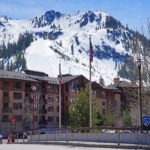
Big Slide Mountain

Big Slide Mountain is a rugged 4,252-foot (1,296-meter) summit in the Adirondack High Peaks of northern New York. Rising above Johns Brook Valley in Essex County, the mountain is known for its dramatic landslide scars, heavily forested slopes, rocky summit viewpoints, and the spectacular approach over a trio of rocky knobs known as the Brothers.
Big Slide is one of the traditional 46 Adirondack High Peaks and has long been a favorite among hikers pursuing the Adirondack 46er challenge. Its combination of open ledges and mountain scenery makes the Brothers route especially memorable, with views across Johns Brook Valley toward the Great Range long before the summit is reached.
Modern LiDAR has also refined the mountain’s topographic statistics. Big Slide reaches approximately 4,252.1 feet, has roughly 1,090.8 feet of prominence, and possesses about 2.85 miles of isolation. These figures are somewhat different from the traditional 4,240-foot elevation still commonly used on historic High Peaks lists.
⚡ Fast Facts
| Feature | Details |
|---|---|
| Mountain | Big Slide Mountain |
| Country | United States |
| State | New York |
| County | Essex County |
| Town | Keene |
| Mountain range | Adirondack Mountains |
| Region | Adirondack High Peaks |
| Elevation | Approx. 4,252.1 ft / 1,296 m |
| Traditional High Peaks elevation | 4,240 ft / 1,292 m |
| Prominence | Approx. 1,090.8 ft / 332.5 m |
| Isolation | Approx. 2.85 mi / 4.58 km |
| Line parent | Table Top Mountain – North Peak |
| Nearest Higher Neighbor (NHN) | Table Top Mountain – Middle Peak |
| Key saddle | Klondike Notch |
| Key saddle elevation | Approx. 3,161 ft / 964 m |
| Coordinates | Approx. 44.1822° N, 73.8710° W |
| Traditional High Peaks rank | 27th |
| Modern LiDAR 4,000-foot ranking | Approximately 25th |
| Adirondack 46er peak | Yes |
| Protected area | High Peaks Wilderness |
| Primary trailhead | The Garden, Keene Valley |
| Classic route | Big Slide via the Brothers |
| Classic route distance | Approx. 4 mi one way |
| Typical loop | Roughly 9–10 mi |
| First recorded ascent | 1812 |
| First recorded ascender | John Richards |
| Known for | The Brothers, landslide scars, Great Range views |
| Nearby mountain | Cascade Mountain |
| Highest nearby regional summit | Mount Marcy |
Big Slide’s traditional 27th-place ranking comes from the historic Adirondack High Peaks list using older mapped elevations. LiDAR-based measurements now place Big Slide at 4,252.1 feet, which changes its position slightly when Adirondack summits are ranked strictly by modern measured elevation.
🗺️ Where Is Big Slide Mountain?
Big Slide Mountain lies within the High Peaks Wilderness of Adirondack Park, near Keene Valley in northeastern New York.
Johns Brook Valley lies immediately east and southeast of the mountain, separating Big Slide from portions of the spectacular Great Range.
To the west and southwest, the terrain leads toward Klondike Notch, Table Top Mountain, and the broader central High Peaks.
The mountain’s position provides excellent views toward some of the highest summits in New York, including mountains surrounding Mount Marcy.
To the northeast lies Cascade Mountain, whose own topographic hierarchy leads directly to Big Slide. Modern measurements identify Big Slide as both Cascade’s line parent and nearest higher neighbor.
📏 Modern LiDAR Elevation
Older guidebooks and Adirondack High Peaks lists commonly give Big Slide an elevation of 4,240 feet.
The previous Mountain Field Guide profile used an even lower figure of 4,232 feet.
Modern LiDAR has significantly improved elevation measurements across the Adirondacks.
Peakbagger’s current LiDAR dataset places the summit at 4,252.1 feet (1,296 meters) using the NAVD88 vertical datum.
This does not change Big Slide’s status as one of the traditional Adirondack 46, but it does affect strict elevation rankings.
The traditional High Peaks list places Big Slide around 27th. When modern measured elevations are used instead, Peakbagger ranks it approximately 25th among the objective Adirondack 4,000-foot peaks.
📊 Prominence and Isolation
Big Slide Mountain has approximately 1,090.8 feet (332.5 meters) of clean topographic prominence.
Its key saddle is Klondike Notch, which lies at approximately 3,161 feet.
Prominence measures how far a climber must descend from a summit before reaching terrain connected to a higher mountain.
More than 1,000 feet of prominence makes Big Slide a relatively independent summit within the densely packed Adirondack High Peaks.
Its topographic isolation is approximately 2.85 miles (4.58 kilometers).
Higher terrain is first reached on the Table Top Mountain complex to the southwest.
🧭 Nearest Higher Neighbor
Peakbagger’s current topographic data identify Table Top Mountain – Middle Peak as Big Slide’s Nearest Higher Neighbor.
Its line parent is listed separately as Table Top Mountain – North Peak.
This distinction reflects the way modern digital topography can distinguish individual high points along complicated mountain ridges.
Table Top itself is one of the traditional Adirondack High Peaks and rises above 4,400 feet.
The connecting landscape between Table Top and Big Slide includes Klondike Notch and some of the more secluded terrain of the High Peaks Wilderness.
🏔️ One of the Adirondack 46 High Peaks
Big Slide belongs to the famous Adirondack 46 High Peaks, a historic list of mountains originally believed to exceed 4,000 feet.
Later surveys revealed an interesting problem.
Several mountains on the original list were actually slightly below 4,000 feet, while several peaks omitted from the list turned out to exceed that elevation.
Rather than continually modifying the challenge, the Adirondack 46er tradition retained the historic list.
Big Slide easily clears the 4,000-foot threshold regardless of measurement method.
Hikers who summit all 46 traditional peaks can qualify for membership in the Adirondack Forty-Sixers, an organization whose history is deeply intertwined with hiking, trail stewardship, education, and conservation in the High Peaks.
📜 The First Recorded Ascent
Big Slide has one of the earliest recorded ascents of any Adirondack High Peak.
In 1812, surveyor John Richards and companions reached the summit while surveying lot lines through Township 12 of New York’s Old Military Tract.
This occurred decades before recreational mountain climbing became established in the Adirondacks.
Richards was not climbing the mountain for sport. His ascent formed part of the practical surveying work required to map the remote interior of northern New York.
By comparison, many of the Adirondacks’ highest and more technically difficult peaks did not receive documented recreational ascents until much later in the nineteenth century.
Big Slide therefore occupies an unusually early place in Adirondack mountain history.
🪨 Why Is It Called Big Slide Mountain?
The name refers to the large landslide scars visible on the mountain.
Historical sources differ somewhat over which specific event gave Big Slide its enduring name.
An Adirondack chronology associates the name with a major 1830 freshet and landslide on the Johns Brook side of the mountain.
Other modern historical accounts emphasize a particularly dramatic slide in September 1856, after which the Big Slide name became strongly associated with the mountain.
Both events form part of a longer history of slope instability in the steep High Peaks.
Rather than imagining a single perfectly documented naming moment, it is safest to understand the mountain’s name as arising from the conspicuous landslides that repeatedly stripped vegetation and soil from its steep slopes during the nineteenth century.
The exposed scars remain part of Big Slide’s visual identity today.
⛰️ Landslides in the Adirondacks
Landslides are not unusual in the Adirondack High Peaks.
The combination of steep slopes, thin soils, fractured bedrock, heavy rainfall, rapid snowmelt, freeze-thaw cycles, and powerful storms can destabilize mountainsides.
When soil and vegetation suddenly detach, debris may rush downhill and expose large expanses of bedrock.
These scars can remain visible for decades.
Some eventually revegetate, while others continue to shed rock, water, snow, and debris.
Landslides have helped create many of the dramatic open slabs visible throughout the High Peaks and occasionally create new climbing or scrambling routes.
They are also reminders that the Adirondacks remain an actively changing mountain landscape despite the extreme age of their underlying rocks.
🪨 Ancient Adirondack Geology
Big Slide belongs to one of the most unusual geological mountain systems in eastern North America.
The Adirondack Mountains are not simply a northern extension of the Appalachians.
Their bedrock belongs to the Grenville Province, an ancient crustal region extending into Canada.
Many Adirondack rocks formed or were profoundly altered more than one billion years ago.
The High Peaks region is particularly associated with the enormous Marcy anorthosite massif, an ancient intrusive body covering thousands of square kilometers.
Anorthosite consists mainly of plagioclase feldspar and is relatively uncommon at Earth’s surface.
Related rocks across the Adirondack Highlands formed and were metamorphosed during complex mountain-building events associated with the Grenville orogeny.
🌎 Old Rocks, Younger Mountains
One of the most fascinating aspects of the Adirondacks is the difference between the age of the rock and the age of the modern landscape.
The bedrock can exceed one billion years in age.
The present Adirondack dome, however, reflects a much younger episode of uplift.
The region has been rising relative to surrounding landscapes in comparatively recent geological time.
Streams and rivers have cut downward as the dome rose, creating the modern pattern of deep valleys radiating away from the central High Peaks.
Erosion then exposed ancient crystalline rocks that had once formed deep within the crust.
Big Slide is therefore a relatively modern landform constructed from extraordinarily old geological material.
❄️ Ice Age Glaciation
Continental glaciers repeatedly covered the Adirondacks during the Pleistocene.
At the height of glaciation, ice buried much of northern New York beneath an enormous ice sheet.
Moving ice scoured exposed rock, stripped weathered material from ridges, deepened valleys, transported boulders, and altered drainage systems.
When the glaciers eventually retreated, they left behind smoothed bedrock, glacial till, erratic boulders, wetlands, lakes, and steep-sided valleys.
Johns Brook Valley and the valleys surrounding Big Slide owe part of their present form to this glacial history.
The combination of Ice Age erosion and later landslides has helped expose the rocky ledges that now provide many of Big Slide’s finest viewpoints.
🌲 Forests of Big Slide Mountain
Most of Big Slide is covered by forest.
Lower elevations support northern hardwood communities, including sugar maple, American beech, yellow birch, and other cold-tolerant hardwood species.
As elevation increases, conifers become increasingly important.
Red spruce and balsam fir become characteristic of the colder upper slopes, along with mountain ash, striped maple, ferns, mosses, and dense evergreen understory.
Unlike the highest summits around Mount Marcy, Big Slide does not possess an extensive natural alpine tundra zone.
Its summit remains primarily forested, with views opening through rock ledges and areas where vegetation is thin or absent.
🌿 Flora and Fauna
Big Slide lies within a vast protected wilderness supporting an impressive diversity of northeastern wildlife.
The New York State Department of Environmental Conservation records more than 50 species of mammals and hundreds of bird species within the broader Adirondack region.
Mammals of the High Peaks include black bears, moose, white-tailed deer, eastern coyotes, river otters, beavers, and numerous smaller mammals.
The forests also support red squirrels, snowshoe hares, porcupines, fishers, and other species adapted to northern woodland.
Birdlife includes warblers, thrushes, ravens, woodpeckers, owls, and raptors.
Peregrine falcons nest in portions of the High Peaks where suitable cliffs occur.
Wildlife should always be given plenty of space, particularly in heavily visited corridors such as Johns Brook Valley.
🥾 Hiking Big Slide via the Brothers
The classic route to Big Slide begins at The Garden trailhead in Keene Valley and climbs over the Brothers.
This is arguably one of the most scenic approaches to any Adirondack High Peak.
The trail quickly gains elevation from the valley before reaching First Brother, Second Brother, and Third Brother, a sequence of rocky high points along the northeastern ridge.
The first two Brothers in particular provide exceptional open views.
Big Slide rises dramatically ahead, while the Great Range fills much of the southern and southeastern skyline.
These viewpoints make the route feel rewarding long before the summit.
The distance from the Garden to Big Slide via the Brothers is approximately four miles one way, with roughly 2,800 feet of climbing.
🏔️ The Brothers
The Brothers are one of the defining features of a Big Slide hike.
They are not major independent mountains in the same sense as Big Slide, but instead form a series of rocky knobs along the approach ridge.
Peakbagger recognizes several of these features individually, including Third Brother.
Open bedrock allows far broader views than the heavily forested slopes would otherwise provide.
The sequence creates an unusual rhythm for an Adirondack hike: forest climbing alternates with scenic ledges where hikers can look across deep valleys toward higher peaks.
For many hikers, the Brothers route is more memorable than the actual summit because of the number and quality of its viewpoints.
🥾 Slide Mountain Brook Route
Big Slide can also be reached through Johns Brook Valley.
From the Garden, hikers follow the approach toward Johns Brook Lodge and the DEC Interior Outpost before turning onto the Slide Mountain Brook Trail.
This route approaches Big Slide from below rather than following the scenic Brothers ridge.
It is longer but can be used to create an excellent loop.
A popular itinerary climbs the Brothers, reaches Big Slide, then descends through Slide Mountain Brook and Johns Brook Valley back toward the Garden.
The resulting outing is generally around 9–10 miles, depending on the exact connections used.
This arrangement provides considerably more variety than simply retracing the Brothers route.
🥾 Big Slide and Yard Mountain
A longer alternative links Big Slide with Yard Mountain.
Yard rises above 4,000 feet but is not included among the traditional Adirondack 46 High Peaks because it lacks sufficient separation from Big Slide under the criteria historically used to compile the list.
Routes through Klondike Notch and the Johns Brook region can connect the two mountains.
This variation is considerably longer than the direct Brothers ascent and is better suited to hikers seeking a more extensive wilderness day.
Although Yard is less famous, the combined route provides an interesting look at the difference between a named 4,000-foot mountain and an official member of the historic High Peaks list.
🌄 Views from Big Slide
Big Slide provides some of the finest mountain views in the northern High Peaks.
The Great Range dominates much of the panorama.
Gothics is particularly striking from the mountain, while additional summits include Saddleback, Basin, Upper and Lower Wolfjaw, and portions of the Mount Marcy region.
Giant Mountain rises prominently to the east.
Algonquin Peak and other mountains of the MacIntyre Range can be visible farther away.
Big Slide itself is also an important part of the view from Cascade Mountain.
Because Big Slide is Cascade’s nearest higher neighbor, the two mountains form an interesting visual as well as topographic relationship.
🌦️ Adirondack Mountain Weather
Big Slide is not extremely high by western North American standards, but its weather can still become severe.
Storms can arrive quickly, particularly during summer afternoons.
Lightning, heavy rain, strong winds, fog, and rapidly dropping temperatures are possible even when conditions in Keene Valley initially appear pleasant.
Autumn can bring freezing temperatures surprisingly early.
Winter completely transforms the hike.
Deep snow, ice, short daylight hours, high winds, and extreme cold turn an ordinary summer hiking route into a substantially more serious mountain journey.
Snow may remain at high elevations well into spring.
🍂 When Is the Best Time to Hike?
Summer and early autumn are the most popular seasons for Big Slide.
Summer provides long daylight hours and generally snow-free trails, although humidity, mud, thunderstorms, and crowds can be significant.
Early autumn offers cooler temperatures and spectacular foliage throughout the surrounding valleys.
The contrast between dark spruce-fir forest, brilliant hardwood color, and exposed rock can be exceptional.
Spring is often the least desirable period for ordinary hiking because melting snow and saturated soils create the Adirondacks’ notorious mud season.
Walking on muddy trails rather than around them helps prevent trail widening and vegetation damage.
Winter offers solitude and extraordinary scenery but requires winter hiking experience and appropriate snow and ice equipment.
🎒 High Peaks Wilderness Regulations
Big Slide lies within the heavily protected High Peaks Wilderness Complex.
Visitors should review current New York State Department of Environmental Conservation regulations before traveling, particularly if planning an overnight trip.
Bear-resistant food canisters are required for overnight users in the Eastern High Peaks during the regulated season from April 1 through November 30.
Food, garbage, toiletries, and other scented items must be stored appropriately.
Other regulations address camping locations, fires, group sizes, dogs, and winter travel.
Access and parking arrangements around popular High Peaks trailheads can also change, so current information should always take precedence over an older guidebook or trip report.
🐻 Black Bear Safety
Black bears occur throughout the Adirondacks.
The High Peaks have a particularly long history of bears learning to associate camps and hikers with food.
Proper food storage protects both visitors and wildlife.
Bears that repeatedly obtain human food can become increasingly bold and may eventually have to be removed or killed.
Day hikers should keep food under control and never intentionally feed wildlife.
Overnight users should follow all current canister rules and keep cooking and food-storage areas separated from sleeping areas where regulations and terrain permit.
🛡️ Protecting the High Peaks
The High Peaks Wilderness is one of the most heavily visited mountain landscapes in New York.
That popularity creates substantial conservation challenges.
Trail erosion, vegetation trampling, litter, wildlife disturbance, invasive species near trailheads, and widening of muddy trails are all concerns identified by the Department of Environmental Conservation.
Big Slide’s rocky overlooks and the Brothers are particularly attractive places for hikers to stop, which makes staying on durable surfaces important.
Where vegetation grows in cracks and shallow soils, even repeated footsteps can produce lasting damage.
Following Leave No Trace principles helps preserve both the ecological integrity of the wilderness and the quality of the hiking experience.
🏔️ Big Slide and Cascade Mountain
Big Slide Mountain and Cascade Mountain provide an interesting comparison.
Cascade is lower, reaching approximately 4,099 feet in modern LiDAR data.
Big Slide rises to approximately 4,252 feet.
Cascade is more accessible and has a much shorter standard route, making it one of the most popular introductory Adirondack High Peaks.
Big Slide requires a longer outing but offers a remarkable sequence of viewpoints from the Brothers.
Topographically, Big Slide is especially important to Cascade because Big Slide is both Cascade Mountain’s line parent and nearest higher neighbor.
🏔️ Nearby Mountains
Table Top Mountain lies southwest of Big Slide and provides its nearest higher terrain.
Yard Mountain rises immediately south and can be combined with Big Slide on a longer hike.
The Great Range stands across Johns Brook Valley and contains some of the most dramatic summits in the Adirondacks.
Farther south, Mount Marcy rises to approximately 5,344 feet and is the highest mountain in New York.
To the northeast, Cascade Mountain offers one of the shortest routes to an Adirondack High Peak and has Big Slide as its nearest higher neighbor.
Together, these mountains form the core of one of the great hiking landscapes in the northeastern United States.
🌄 Why Big Slide Mountain Stands Out
Big Slide Mountain offers an unusually complete Adirondack experience.
Its rocks preserve a geological history extending back more than a billion years. Continental glaciers later sculpted the surrounding valleys, while powerful floods and landslides exposed the mountain’s famous rock scars.
Human history reaches unusually far back as well.
Surveyor John Richards reached the summit in 1812, making Big Slide one of the earliest documented High Peaks ascents.
Today, hikers approach through forests of hardwood, spruce, and fir before crossing the rocky viewpoints of the Brothers and reaching the 4,252-foot summit.
The mountain is not among the ten highest Adirondack peaks, yet its 1,091 feet of prominence, dramatic landslide history, scenic Brothers route, and outstanding views of the Great Range give it a much stronger personality than elevation rankings alone suggest.
For hikers exploring the Adirondack Mountains, Big Slide is one of the best places to experience the combination of rugged trails, ancient geology, wilderness forest, and expansive High Peaks scenery that makes northern New York’s mountains so distinctive.
🔗 Related Articles
📚 Sources
- Peakbagger — Big Slide Mountain
- New York State DEC — High Peaks Wilderness Complex
- New York State DEC — Adirondack Backcountry Information
- New York State DEC — High Peaks Wilderness Area Unit Management Plan
- U.S. Geological Survey — Geology of the New York Region
- U.S. Geological Survey — Syn-Collisional Exhumation of the Adirondack Mountains
- Official Adirondack Region — Adirondack High Peaks
- Hike ADK — Big Slide Mountain
- Protect the Adirondacks — An Adirondack Chronology