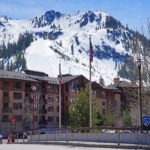
The Adirondack Mountains form one of the most distinctive mountain landscapes in the northeastern United States. Rising across northern New York, the Adirondacks contain rugged summits, vast forests, thousands of lakes and ponds, and some of the most challenging hiking terrain in the East.
At the center of the range is the High Peaks region, home to Mount Marcy, the highest mountain in New York. Yet the Adirondacks are much more than their tallest summits. The surrounding Adirondack Park encompasses roughly six million acres of public and private land, creating an unusual landscape where wilderness areas, small communities, working forests, lakes, and mountains exist within the same enormous park boundary.
Although they are sometimes grouped casually with the mountains of the northeastern United States, the Adirondacks are not geologically part of the Appalachian Mountains. Their rocks and geologic history are associated with the much older Grenville Province of the North American continent.
🏔️ Overview
The Adirondack Mountains occupy a large portion of northern New York, particularly within the boundaries of Adirondack Park. Rather than forming a long, narrow chain of ridges, the mountains rise as a broad dome-shaped massif.
The highest and most rugged terrain lies primarily in the eastern Adirondacks, where the celebrated High Peaks include Mount Marcy, Algonquin Peak, Mount Haystack, Mount Skylight, Whiteface Mountain, Dix Mountain, Gothics, and many others.
Beyond these high summits, the Adirondacks contain an enormous variety of landscapes. Visitors encounter forested mountains, wetlands, rocky ridges, glacial valleys, waterfalls, lakes, ponds, rivers, and extensive backcountry wilderness.
The region is also unusual because Adirondack Park is not a national park. Roughly half of the approximately six-million-acre park is publicly owned, while the remainder includes privately owned forests, communities, farms, businesses, homes, and other lands.
⚡ Fast Facts
| Fact | Details |
|---|---|
| Continent | North America |
| Country | United States |
| State | New York |
| Mountain System | Adirondack Mountains |
| Highest Point | Mount Marcy |
| Highest Elevation | 5,344 feet / 1,629 meters |
| Second-Highest Peak | Algonquin Peak |
| Second-Highest Elevation | 5,114 feet / 1,559 meters |
| Major Region | Adirondack High Peaks |
| Protected Landscape | Adirondack Park |
| Adirondack Park Size | Approximately 6 million acres |
| Underlying Geologic Province | Grenville Province |
| Traditional High Peaks Challenge | 46 Adirondack High Peaks |
| Popular Activities | Hiking, backpacking, paddling, camping, climbing, skiing and snowshoeing |
📍 Where Are the Adirondack Mountains?
The Adirondack Mountains are located entirely within New York State, occupying much of the northern part of the state.
Lake Champlain and the Vermont border lie to the east, while the St. Lawrence River and Canada are to the north. The Mohawk Valley lies toward the south, and the Adirondack landscape gradually transitions toward lower terrain in western and northwestern New York.
Important gateway communities include:
- Lake Placid
- Keene
- Keene Valley
- Saranac Lake
- Tupper Lake
- Old Forge
- Lake George
- North Creek
- Long Lake
- Speculator
Lake Placid and Keene are particularly important gateways to the High Peaks.
One important geographic distinction is that the Adirondacks are separate from the Green Mountains across Lake Champlain in Vermont. The Green Mountains belong to the Appalachian system, while the Adirondacks have a different geological origin.
🪨 Geology of the Adirondack Mountains
The Adirondacks expose some remarkably old rocks.
Much of the underlying bedrock belongs to the Grenville Province, an ancient region of continental crust that extends northward into Canada. Rocks exposed in parts of the Adirondacks are more than one billion years old and include strongly metamorphosed gneisses and other rocks transformed by intense heat, pressure, deformation, and mountain-building events.
The Grenville mountain-building events occurred hundreds of millions of years before the formation of today’s Appalachian Mountains.
This is why calling the Adirondacks an Appalachian subrange is geologically misleading.
The rocks themselves are ancient, but the modern Adirondack topography is considerably younger. The region has experienced relatively recent uplift, producing the broad Adirondack dome and exposing deeply buried ancient rocks at the surface.
Scientists continue to study the forces responsible for this uplift.
Glaciers Reshaped the Landscape
The Ice Age dramatically altered the Adirondacks.
Large continental glaciers covered the region during the Pleistocene. Moving ice eroded mountain slopes and valleys while transporting enormous quantities of rock and sediment.
As the glaciers retreated, they left behind many of the features that characterize the Adirondacks today, including:
- Glacially carved valleys
- Lakes and ponds
- Wetlands
- Moraines and other sediment deposits
- Exposed bedrock
- Steep mountain cirques
- Boulder-strewn landscapes
The combination of ancient bedrock, relatively recent uplift, erosion, and glaciation created the rugged landscape hikers see today.
⛰️ The Adirondack High Peaks
The most famous mountains in the Adirondacks are collectively known as the High Peaks.
The traditional Adirondack High Peaks list contains 46 mountains. Early surveyors believed each of these summits exceeded 4,000 feet in elevation. More accurate modern surveys later showed that several fall below the 4,000-foot mark, while other mountains not included on the original list actually exceed it.
Despite those discoveries, the historical list of 46 remained intact.
Hikers who climb all 46 traditional summits can become part of the Adirondack Forty-Sixers tradition.
Some of the best-known High Peaks include:
| Peak | Traditional Elevation |
|---|---|
| Mount Marcy | 5,344 ft |
| Algonquin Peak | 5,114 ft |
| Mount Haystack | 4,960 ft |
| Mount Skylight | 4,926 ft |
| Whiteface Mountain | 4,867 ft |
| Dix Mountain | 4,857 ft |
| Gray Peak | 4,840 ft |
| Iroquois Peak | 4,840 ft |
| Basin Mountain | 4,826 ft |
| Gothics | 4,736 ft |
Elevations can vary slightly among modern surveys and mapping sources.
Mount Marcy
At 5,344 feet, Mount Marcy is both the highest summit in the Adirondack Mountains and the highest point in New York State.
Marcy lies within the High Peaks Wilderness and is reached entirely on foot. The most commonly used approach begins near Heart Lake and follows the Van Hoevenberg Trail.
Despite being modest in elevation compared with major western American mountains, Mount Marcy is a serious hike. Adirondack trails tend to be rocky, wet, steep, and direct, making mileage considerably more strenuous than the numbers alone may suggest.
Algonquin Peak
Algonquin Peak is the second-highest mountain in New York at approximately 5,114 feet.
Its exposed upper slopes and sweeping views make it one of the best-known Adirondack summits. Algonquin is part of the MacIntyre Range and is frequently combined with Wright Peak or Iroquois Peak by experienced hikers.
Big Slide Mountain
Another popular High Peak is Big Slide Mountain.
At a little over 4,200 feet, Big Slide is lower than the giants surrounding Mount Marcy, but its approaches offer outstanding views of the Great Range and other High Peaks.
🥾 Hiking in the Adirondack Mountains
Hiking is one of the primary reasons people visit the Adirondacks, but the region offers everything from easy nature walks to extremely demanding backcountry routes.
A few well-known destinations include:
Mount Marcy — New York’s highest summit and one of the classic Adirondack hiking objectives.
Cascade Mountain — Traditionally considered one of the more approachable High Peaks and included in our guide to starter mountains to climb in the United States.
Algonquin Peak — A strenuous summit with extensive exposed terrain near the top.
Gothics — Famous for dramatic ridges and outstanding High Peaks scenery.
Giant Mountain — A popular eastern High Peak with substantial climbing and expansive views.
Big Slide Mountain — A rewarding High Peak with excellent views toward the Great Range.
Mount Haystack — One of the most spectacular but strenuous major summits in the Adirondacks.
The Adirondacks also contain hundreds of lower-elevation hikes, waterfalls, fire towers, lakes, ridges, and forest trails. You do not need to climb one of the 46 High Peaks to experience the region.
Adirondack Trails Can Be Deceptively Difficult
Visitors accustomed to smoother western trails are sometimes surprised by Adirondack hiking.
Many trails climb directly over:
- Exposed bedrock
- Loose stones
- Tree roots
- Mud
- Boulder fields
- Steep rock slabs
- Stream crossings
Heavy rain can dramatically change trail conditions and water levels.
Distance should therefore never be the only factor used when judging the difficulty of an Adirondack hike.
🏔️ Field Guide Tip: Check the New York State Department of Environmental Conservation’s current Adirondack backcountry conditions before every major hike. Trail closures, high water, washed-out bridges, mud, storm damage, and seasonal access restrictions can significantly alter a planned route.

🛶 Lakes, Rivers and Paddling
Mountains may dominate the skyline, but water is equally important to the Adirondack landscape.
Adirondack Park contains thousands of lakes and ponds along with an enormous network of rivers, streams, and wetlands.
Famous waters include:
- Lake Placid
- Saranac Lakes
- Lake George
- Long Lake
- Raquette Lake
- Blue Mountain Lake
- Cranberry Lake
- Tupper Lake
Canoeing and kayaking are major Adirondack traditions. Some backcountry routes combine paddling with portages between lakes and rivers, allowing visitors to travel deep into areas that contain few roads.
The Adirondack Canoe Route also forms part of the much longer Northern Forest Canoe Trail.
🌿 Flora and Fauna
The elevation differences and enormous size of the Adirondacks create a broad range of habitats.
Lower elevations contain extensive northern hardwood forests where species such as sugar maple, American beech, and yellow birch are common.
Higher elevations transition toward colder spruce-fir forests. Near the summits of a small number of the highest mountains, conditions become severe enough to support rare alpine plant communities.
These fragile high-elevation plants survive in thin soils, strong winds, heavy snow, ice, and short growing seasons.
Hikers should remain on exposed rock or designated routes around alpine vegetation. A single misplaced step can damage plants that may take many years to recover.
Adirondack Wildlife
The Adirondacks support a large and diverse wildlife community.
Animals found in the region include:
- American black bears
- White-tailed deer
- Moose
- Beaver
- River otters
- Snowshoe hares
- Coyotes
- Bobcats
- Porcupines
The park also provides habitat for hundreds of bird species during at least part of the year.
Common or notable birds include loons, ravens, various woodpeckers, hawks, owls, and peregrine falcons.

🌤️ Best Time to Visit the Adirondack Mountains
There is no single best season because the Adirondacks offer recreation throughout the year.
Summer
Summer provides the longest daylight hours and generally the easiest access to high-elevation trails.
July through early September is particularly popular for hiking, camping, paddling, and climbing.
Thunderstorms, heavy rainfall, humidity, insects, and rapidly changing mountain weather are still possible.
Fall
September and early October can bring spectacular autumn colors to the Adirondacks.
Cooler temperatures also make fall an excellent hiking season, but popular trails and scenic areas may become crowded during peak foliage periods.
Temperatures can drop rapidly at higher elevations.
Winter
Winter transforms the High Peaks into serious mountain terrain.
Snowshoeing, cross-country skiing, ice climbing, and winter mountaineering are popular, but hikers must be prepared for deep snow, ice, extreme cold, short daylight hours, and rapidly deteriorating weather.
Winter ascents of the High Peaks require appropriate equipment and experience.
Spring
Spring can be one of the most challenging seasons for Adirondack hiking.
Melting snow, high stream levels, lingering ice, and deep mud frequently affect high-elevation trails. New York officials may issue seasonal recommendations asking hikers to avoid vulnerable trails during mud season.
Checking current trail conditions is particularly important before a spring trip.
🌲 Adirondack Park and the “Forever Wild” Legacy
The Adirondack Mountains sit within one of America’s most unusual conservation landscapes.
Adirondack Park encompasses approximately six million acres, making it roughly comparable in area to the state of Vermont.
Unlike most major parks, however, Adirondack Park contains a mixture of public and private land.
Nearly half belongs to the people of New York and is protected as part of the state’s Forest Preserve. The remainder includes private forests, homes, businesses, farms, camps, and more than 100 communities.
New York’s constitution provides extraordinary protection to Forest Preserve lands through its famous “Forever Wild” provision.
This combination allows large wilderness areas to exist alongside long-established Adirondack communities.
🧭 Other Things to Do in the Adirondacks
The Adirondack Mountains offer considerably more than peak climbing.
Visitors can also explore:
- Scenic drives
- Fire tower trails
- Canoe and kayak routes
- Waterfalls
- Historic sites
- Fishing areas
- Campgrounds
- Backcountry campsites
- Cross-country ski trails
- Snowshoe routes
- Rock and ice climbing areas
- Mountain biking trails
- Wildlife-watching areas
Whiteface Mountain is especially unusual because visitors can experience the mountain through hiking as well as developed recreational facilities associated with the Whiteface ski area and seasonal scenic access.
Lake Placid also has a major place in winter-sports history, having hosted the Winter Olympic Games in both 1932 and 1980.
💡 Interesting Facts About the Adirondack Mountains
- Mount Marcy is the highest point in New York, reaching approximately 5,344 feet.
- The Adirondacks are not geologically part of the Appalachian Mountains.
- Much of the exposed bedrock belongs to the ancient Grenville Province.
- Adirondack Park encompasses approximately six million acres.
- The park contains both public Forest Preserve land and privately owned communities and working lands.
- The traditional Adirondack High Peaks challenge includes 46 mountains.
- Modern measurements have shown that not all of the original 46 actually exceed 4,000 feet.
- Continental glaciers played an enormous role in shaping today’s lakes, valleys, cliffs, and mountain terrain.
- Rare alpine vegetation survives on some of the highest Adirondack summits.
- The Adirondacks offer year-round recreation, from summer hiking and canoeing to winter mountaineering and skiing.

❓ Frequently Asked Questions
Where are the Adirondack Mountains?
The Adirondack Mountains are located in northern New York State. Much of the mountain region lies within the approximately six-million-acre Adirondack Park.
What is the highest mountain in the Adirondacks?
Mount Marcy is the highest mountain in the Adirondacks at approximately 5,344 feet. It is also the highest point in New York State.
Are the Adirondack Mountains part of the Appalachians?
No. Although the Adirondacks are close to the Appalachian Mountains, they are geologically distinct. Adirondack bedrock belongs primarily to the ancient Grenville Province and represents an extension of ancient continental rocks found farther north in Canada.
How many Adirondack High Peaks are there?
The traditional list contains 46 Adirondack High Peaks. The list dates from older surveys that were believed to identify all Adirondack summits over 4,000 feet. Modern measurements have shown that some traditional High Peaks are actually below 4,000 feet.
The historical list remains the standard used by hikers pursuing the Adirondack 46.
What is the second-highest Adirondack mountain?
Algonquin Peak is the second-highest mountain in the Adirondacks and New York State, reaching approximately 5,114 feet.
Are the Adirondacks difficult to hike?
Difficulty varies enormously. The region offers easy nature walks and short fire-tower hikes as well as extremely strenuous High Peaks routes.
High Peaks trails are often rocky, steep, muddy, and rugged, so hikers should not judge difficulty by mileage alone.
Is Adirondack Park a national park?
No. Adirondack Park is a New York State park region rather than a unit of the National Park Service.
Its approximately six million acres contain a mixture of publicly protected Forest Preserve lands and privately owned land, including towns and communities.
Can you hike the Adirondacks in winter?
Yes, but winter High Peaks hiking requires appropriate preparation. Snow, ice, extreme cold, strong winds, and short daylight hours can turn familiar summer routes into serious winter mountaineering trips.
When is the best time to hike the Adirondack High Peaks?
Summer through early fall generally provides the most accessible conditions, although weather and trail conditions can change quickly. Spring can bring severe mud and high water, while winter requires specialized cold-weather equipment and experience.
Always check current DEC backcountry conditions before beginning a major hike.
🔗 Related Articles
Explore more mountain guides from Mountain Field Guide:
- Mount Marcy
- Big Slide Mountain, New York
- Starter Peaks: Nine Easy Mountains to Climb in the U.S.
- Green Mountains
- Appalachian Mountains
📚 Sources
- Adirondack Park Agency — About the Adirondack Park
- New York State Department of Environmental Conservation — High Peaks Wilderness Complex
- U.S. Geological Survey — Preliminary Bedrock Geologic Map of the Port Henry Quadrangle, Essex County, New York
- New York State Department of Environmental Conservation — Adirondack Backcountry
- Official Adirondack Region — Adirondack High Peaks