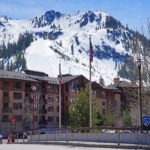
The Rila Mountains rise across southwestern Bulgaria in a dramatic landscape of granite summits, glacial cirques, deep valleys, conifer forests, and clear alpine lakes. Crowned by Musala at 2,925.4 meters (9,598 feet), Rila is the highest mountain range in Bulgaria and the entire Balkan Peninsula.
Rila is much more than a collection of high peaks. The range is an important source of water for southeastern Europe, shelters extensive protected ecosystems, contains some of Bulgaria’s best-known hiking destinations, and surrounds one of the country’s most important cultural landmarks: the centuries-old Rila Monastery.
🏔️ Overview
The Rila Mountains form part of the larger Rila–Rhodope mountain system of southeastern Europe. The range covers roughly 2,629 square kilometers (1,015 square miles) and extends approximately 75 kilometers (47 miles) from west to east and 50 kilometers (31 miles) from north to south.
Rila’s average elevation is about 1,487 meters (4,879 feet), and a substantial portion of the range lies above 1,600 meters. More than 140 principal summits exceed 2,000 meters.
The landscape is distinctly alpine at higher elevations. Ancient glaciers carved cirques, steep-sided valleys, ridges, and lake basins into the mountains, leaving behind one of the most impressive glacial landscapes in the Balkans.
Much of this environment is protected by Rila National Park, while the western part of the range around Rila Monastery is protected separately within Rila Monastery Nature Park.
⚡ Fast Facts
| Feature | Details |
|---|---|
| Continent | Europe |
| Country | Bulgaria |
| Region | Southwestern Bulgaria |
| Mountain System | Rila–Rhodope Massif |
| Highest Peak | Musala |
| Highest Elevation | 2,925.4 m / 9,598 ft |
| Musala Prominence | Approximately 2,473 m / 8,114 ft |
| Musala Isolation | Approximately 810.8 km / 503.8 mi |
| Musala Nearest Higher Neighbor | Uyluk Tepe |
| Approximate Range Area | 2,629 km² / 1,015 mi² |
| Major Protected Area | Rila National Park |
| Notable Lakes | Seven Rila Lakes, Musala Lakes, Marichini Lakes, Ribni Lakes |
| Major Rivers Originating in Rila | Maritsa, Iskar, Mesta |
| Notable Cultural Landmark | Rila Monastery |
📍 Where Are the Rila Mountains?
The Rila Mountains are located in southwestern Bulgaria, south of Sofia and north of the Pirin Mountains.
Several valleys define the edges of the massif, including the Samokov Valley to the north, Dupnitsa Valley to the northwest, Razlog Valley to the south, and Blagoevgrad Valley to the southwest.
Mountain saddles connect Rila with surrounding ranges. Predel Saddle separates and connects Rila with Pirin to the south, while saddles along the southeastern side link Rila with the Rhodope Mountains.
The range is traditionally divided into four sections:
- East Rila, or Musala Rila, contains the highest summits.
- Central Rila has particularly rugged alpine terrain.
- Northwest Rila, or Malyovitsa Rila, includes the Seven Rila Lakes and some of the range’s most dramatic climbing terrain.
- Southwest Rila is generally lower and more heavily forested.
Together, these areas create a remarkably diverse mountain landscape within a relatively compact region.

⛰️ Musala: The Highest Mountain in the Balkans
At 2,925.4 meters (9,598 feet), Musala is the highest mountain not only in Rila and Bulgaria but anywhere on the Balkan Peninsula.
Its topographic prominence of roughly 2,473 meters makes it one of Europe’s most prominent mountains. Musala is also remarkably isolated: terrain of equal elevation is not encountered again for roughly 811 kilometers.
Other notable high summits of the Rila Mountains include:
| Peak | Approximate Elevation |
|---|---|
| Musala | 2,925 m / 9,598 ft |
| Malka Musala | 2,902 m / 9,521 ft |
| Irechek | 2,852 m / 9,357 ft |
| Bezimennia Vrah | 2,792 m / 9,160 ft |
| Deno | 2,790 m / 9,154 ft |
| Malyovitsa | 2,729 m / 8,954 ft |
East Rila contains most of the range’s very highest summits, while the Malyovitsa area is especially known for steep ridges, rocky walls, glacial lakes, and mountaineering routes.
🪨 Geology of the Rila Mountains
The Rila Mountains are dominated by ancient metamorphic and intrusive rocks, particularly granite, gneiss, crystalline schist, and amphibolite.
Geologically, Rila forms part of the Rhodope Metamorphic Complex, a region with a complicated history of crustal deformation, uplift, extension, and erosion. Granite is particularly widespread in the higher parts of the range.
Later uplift raised these resistant rocks high above the surrounding valleys. During the Pleistocene, glaciers dramatically reshaped the mountains.
The effects of this glaciation remain visible everywhere in high Rila. Classic glacial landforms include:
- Cirques
- U-shaped valleys
- Moraines
- Steep headwalls
- Rocky pyramidal summits
- Hanging valleys
- Glacial lake basins
These features give Rila much of the rugged alpine appearance seen today.
💧 Glacial Lakes and Rivers
Water is one of Rila’s defining natural features. Numerous high-altitude lakes occupy glacial basins throughout the range.
The most famous are the Seven Rila Lakes, a group of lakes positioned in a series of cirques and terraces in Northwest Rila. They are among Bulgaria’s most recognizable natural landscapes.
Other important lake groups include the Musala Lakes, Marichini Lakes, Urdini Lakes, and Ribni Lakes.
The mountains also form one of Bulgaria’s major hydrological centers. Several large rivers have headwaters in Rila, including the:
- Maritsa River
- Iskar River
- Mesta River
The main mountain ridge forms part of the watershed between rivers flowing toward the Black Sea drainage system and those flowing toward the Aegean Sea.
Rila’s snowfields, springs, alpine lakes, streams, and forests therefore have importance far beyond the mountains themselves.

🌲 Rila National Park
Established in 1992, Rila National Park protects approximately 81,046 hectares, or about 810 square kilometers, of the range.
It is Bulgaria’s largest national park.
The protected landscape stretches from montane forests into high alpine terrain and includes Musala, numerous glacial lakes, important watersheds, and extensive wildlife habitat.
Several strict nature reserves provide additional protection to particularly valuable ecosystems.
The park is also a major hiking destination. Visitors should remember that this is a protected landscape rather than simply a recreation area. Park regulations require hikers to remain on designated routes in applicable areas, while camping and fires are permitted only at designated locations.
🌿 Flora of the Rila Mountains
Rila’s considerable elevation range creates several distinct vegetation zones.
Lower and middle slopes support broadleaf and mixed forests, while higher elevations contain extensive coniferous woodland. Norway spruce, fir, Scots pine, and other mountain trees occur within the range.
With increasing elevation, forests gradually give way to dwarf vegetation, mountain grasslands, alpine meadows, rocky slopes, and exposed summit environments.
The combination of geographic isolation, elevation, climate, and varied habitats allows Rila to support numerous Balkan and mountain plant species, including rare, relict, and locally important populations.
Summer brings a brief but colorful alpine growing season, particularly around high meadows and lake basins.
🐻 Wildlife of the Rila Mountains
Large, relatively undisturbed areas of forest and mountain habitat make Rila important for wildlife conservation.
Mammals found within the broader Rila ecosystem include species such as:
- Brown bear
- Gray wolf
- Red deer
- Roe deer
- Wild boar
- Balkan chamois
- Fox
- Various smaller mammals
Birdlife ranges from forest species to raptors and specialized high-mountain birds.
Visitors should observe wildlife from a distance and avoid feeding animals. Encounters with large mammals are uncommon on busy trails, but hikers traveling through quieter forest areas should remember that Rila remains genuine wildlife habitat.

🥾 Hiking in the Rila Mountains
Rila offers everything from relatively accessible lake walks to long alpine traverses and demanding summit climbs.
Among the best-known hiking areas are:
Musala
The classic ascent of Bulgaria’s highest mountain usually begins near the resort of Borovets. Many hikers use the gondola system to reach higher terrain before continuing toward Musala Hut, the Musala Lakes, Ledeno Ezero shelter, and the summit.
Seven Rila Lakes
This is one of Bulgaria’s most popular mountain destinations. Trails pass a chain of distinctive glacial lakes surrounded by steep slopes and broad highland views.
Its popularity also makes responsible hiking particularly important. Heavy visitor use has placed ecological pressure on parts of the lake basin.
Malyovitsa
Malyovitsa is one of Bulgaria’s traditional mountaineering centers. The surrounding terrain is noticeably more rugged, with steep valleys, rocky ridges, and climbing routes.
Long-distance trails
Sections of European long-distance routes E4 and E8 cross the Rila region, making longer mountain journeys possible for experienced trekkers.
🏔️ Field Guide Tip: Even popular Rila hikes enter genuine alpine terrain. Carry waterproof layers, insulation, food, water, navigation tools, and appropriate footwear. Start early and be prepared to change plans if cloud, thunderstorms, strong winds, or poor visibility develop.
🌤️ Best Time to Visit
For most hikers, the best period for visiting the high Rila Mountains is summer through early autumn, generally from late June through September.
July and August usually provide the greatest access to snow-free high trails, although thunderstorms and abrupt weather changes remain possible.
September can be particularly rewarding, with cooler temperatures, fewer visitors, and clearer autumn conditions.
Snow may remain around high cirques well into the warmer season, and winter conditions can arrive early.
From late autumn through spring, many high routes require winter mountaineering experience. Snow, ice, avalanche terrain, severe wind, and rapidly changing visibility can turn otherwise straightforward summer hikes into serious undertakings.
🏛️ Rila Monastery
Natural history is only part of Rila’s importance.
Deep within the western mountains stands Rila Monastery, founded in the 10th century and closely associated with Saint John of Rila.
The monastery became a major religious, educational, literary, and cultural center and later played an important symbolic role in Bulgaria’s National Revival.
UNESCO inscribed Rila Monastery on the World Heritage List in 1983.
Its combination of architecture, frescoes, mountain setting, and centuries of cultural history makes it one of Bulgaria’s most significant landmarks.

🧭 Nearby Mountains and Attractions
Rila lies at the center of one of southeastern Europe’s most interesting mountain regions.
To the south are the rugged Pirin Mountains, whose highest summit, Vihren, reaches 2,914 meters.
Southeast of Rila lie the more extensive and generally lower Rhodope Mountains, known for forests, caves, gorges, and long-established mountain communities.
Farther north, Bulgaria’s Balkan Mountains stretch across the country. Their highest summit is Botev Peak at 2,376 meters.
Other places of interest around Rila include:
- Borovets
- Sapareva Banya
- Rila Monastery
- Stob Earth Pyramids
- Samokov
- Blagoevgrad
- Seven Rila Lakes
- Malyovitsa Valley

💡 Fun Facts About the Rila Mountains
- Rila contains the highest point in the Balkan Peninsula.
- Musala rises higher than Greece’s famous Mount Olympus.
- The range contains more than 140 principal summits above 2,000 meters.
- Ancient glaciers produced much of Rila’s present-day alpine scenery.
- Three major Bulgarian rivers—the Maritsa, Iskar, and Mesta—originate in the Rila region.
- The Seven Rila Lakes are among Bulgaria’s best-known natural landmarks.
- Rila National Park was established in 1992.
- Rila Monastery has been a UNESCO World Heritage Site since 1983.
- Musala has more than 2,470 meters of topographic prominence, making it one of Europe’s major ultra-prominent peaks.
- Rila and neighboring Pirin contain some of the most alpine terrain in southeastern Europe.
❓ Frequently Asked Questions
What is the highest mountain in the Rila Mountains?
Musala is the highest peak in Rila at approximately 2,925.4 meters (9,598 feet). It is also the highest mountain in Bulgaria and the Balkan Peninsula.
Where are the Rila Mountains?
The Rila Mountains are in southwestern Bulgaria, south of Sofia and north of the Pirin Mountains.
Are the Rila Mountains part of the Balkan Mountains?
No. Rila and the Balkan Mountains are separate mountain systems. The Balkan Mountains run predominantly east–west across central Bulgaria, while Rila lies farther southwest.
What are the Seven Rila Lakes?
The Seven Rila Lakes are a famous group of glacial lakes in Northwest Rila. They occupy high-altitude basins carved by former glaciers and are connected by streams and waterfalls.
Can you hike to the top of Musala?
Yes. Musala is a popular hiking objective during suitable summer conditions. The commonly used approach begins from Borovets, with many hikers using the gondola to shorten the ascent.
Is Rila National Park protected?
Yes. Rila National Park has protected much of the high mountain environment since 1992, and several nature reserves within the broader Rila region receive additional protection.
Is Rila higher than Pirin?
Yes. Musala in Rila reaches about 2,925 meters, while Vihren, the highest mountain in Pirin, reaches about 2,914 meters.
Is Rila higher than Mount Olympus?
Yes. Musala reaches approximately 2,925 meters, making it slightly higher than Mount Olympus in Greece.
🔗 Related Articles
- Musala
- Pirin Mountains
- Rhodope Mountains
- Balkan Mountains
- Botev Peak
- Mount Olympus
- The World’s Top 100 Mountain Ranges
📚 Sources
- Rila National Park Directorate — Official Website — information on the national park, protection, tourism, and establishment.
- Rila National Park — Water — glacial lakes, rivers, and hydrology of the park.
- Rila National Park — Rules and Prohibitions — official visitor and conservation regulations.
- UNESCO World Heritage Centre — Rila Monastery — history and World Heritage significance of Rila Monastery.
- Kounov et al. — Late Alpine multistage exhumation of the northwestern Rhodope Metamorphic Complex (northern Rila Mountains, Bulgaria) — geological and tectonic context for the Rila Mountains.
- Rila — Wikipedia — range dimensions, geographic divisions, elevations, geology, glacial landforms, and major peaks, cross-checked against the sources above.
- Musala — Wikipedia — elevation, prominence, and isolation figures for Musala.