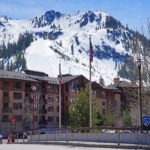
Musala

Musala is the highest mountain in Bulgaria and the entire Balkan Peninsula, rising above the alpine landscapes of the Rila Mountains in southeastern Europe. At approximately 2,925.4 meters (9,598 feet), the summit stands only slightly higher than Greece’s famous Mount Olympus, but its extraordinary topographic prominence and isolation make it one of the most significant mountains in Europe.
Despite its importance, Musala is relatively accessible compared with many major European summits. During the summer hiking season, the classic route from Borovets can be shortened considerably by using the gondola toward Yastrebets. From there, a marked trail passes mountain huts, glacial lakes, rocky slopes, and increasingly exposed alpine terrain before reaching the summit.
Musala is also protected within Rila National Park, an extensive mountain landscape of coniferous forests, alpine meadows, glacial landforms, lakes, high ridges, and important wildlife habitat.
🏔️ Overview
Musala forms the highest point of the Rila Mountains, the highest mountain range in Bulgaria.
The mountain rises in the eastern part of Rila, where several of Bulgaria’s highest summits cluster around broad glacial valleys and high alpine ridges. Nearby peaks include Malka Musala, Irechek, and Deno.
Musala is particularly notable because three important geographic distinctions come together at its summit:
- It is the highest mountain in Bulgaria.
- It is the highest mountain in the Balkan Peninsula.
- It is one of the most prominent and isolated major mountains in continental Europe.
Although the summit is well below the elevations of the Alps or Caucasus, Musala rises dramatically above the surrounding terrain. Its approximately 2,473 meters of topographic prominence qualifies it as an ultra-prominent mountain, meaning it has at least 1,500 meters of prominence.
Its isolation is even more remarkable. The nearest terrain rising higher than Musala is approximately 810–811 kilometers away in the mountains of southwestern Turkey.
⚡ Fast Facts
| Fact | Details |
|---|---|
| Continent | Europe |
| Country | Bulgaria |
| State/Province | Sofia Province |
| County/Region | Samokov Municipality / Rila National Park |
| Mountain Range | Rila Mountains |
| Parent Peak | Mont Blanc (island parent) |
| Elevation | Approximately 2,925.4 m / 9,598 ft |
| Prominence | Approximately 2,473 m / 8,114 ft |
| Isolation | Approximately 810–811 km / 503 mi |
| Nearest Higher Neighbor (NHN) | Uyluk Tepesi, Turkey |
| Coordinates | Approximately 42.179° N, 23.585° E |
| Highest Point | Bulgaria and the Balkan Peninsula |
| Protected Area | Rila National Park |
| Classification | Ultra-prominent peak |
| Common Hiking Gateway | Borovets |
📍 Location
Musala is located in southwestern Bulgaria within the eastern section of the Rila Mountains.
The summit stands within Rila National Park, south of the town of Samokov and close to the mountain resort of Borovets. Sofia, Bulgaria’s capital, lies farther to the north.
This part of Rila is sometimes called Musala Rila because the mountain dominates the eastern section of the range.
Musala lies among a concentration of high summits. Malka Musala reaches approximately 2,902 meters nearby, while Irechek rises to roughly 2,852 meters.
The mountain’s location also places it near an important divide between major river systems. Headwaters associated with the broader Rila Mountains contribute to several of Bulgaria’s most important rivers, including the Iskar, Maritsa, and Mesta.
📏 Elevation & Prominence
Musala reaches approximately 2,925.4 meters (9,598 feet) above sea level.
That makes it the highest mountain in Bulgaria and the entire Balkan Peninsula.
For comparison, the highest summit of Mount Olympus in Greece reaches approximately 2,918 meters. Musala therefore exceeds Olympus by only about eight meters.
Musala’s elevation, however, tells only part of its geographic story.
Its topographic prominence is approximately 2,473 meters (8,114 feet). That places it among Europe’s major ultra-prominent mountains.
The mountain is also extraordinarily isolated.
Its nearest higher terrain lies approximately 810–811 kilometers (503 miles) away toward Uyluk Tepesi in southwestern Turkey. Peakbagger identifies Uyluk Tepe as the nearest higher neighbor associated with Musala’s isolation measurement.
PeakVisor similarly identifies Uyluk Tepesi, at approximately 3,016 meters, as Musala’s nearest higher neighbor.
Under an island-parent hierarchy, Musala’s parent mountain is Mont Blanc in the Alps.
🪨 Geology
Musala forms part of the ancient geological core of the Rila Mountains.
Much of the high Rila landscape is composed of intrusive and metamorphic rocks, particularly granite, gneiss, crystalline schist, and related rock types.
Granite is especially prominent across the highest sections of the range.
The modern landscape has been heavily influenced by glaciation.
During colder periods of the Pleistocene, glaciers occupied many of Rila’s upper valleys and cirques. Moving ice helped create:
- glacial cirques
- U-shaped valleys
- steep headwalls
- moraine deposits
- rocky ridges
- alpine basins
- numerous glacial lakes
These features remain among the defining characteristics of the Musala area.
The Musala Lakes below the summit occupy a series of glacially shaped basins, creating one of the most distinctive landscapes encountered on the standard hiking route.
A rock glacier composed largely of granitic material also occurs high on the northern side of the Musala area, illustrating the continuing influence of cold-climate geomorphic processes.
🌿 Flora & Fauna
The enormous elevation difference between Rila’s valleys and Musala’s summit creates a series of distinct ecological zones.
Lower slopes contain extensive forests. Species found within the broader Rila landscape include Norway spruce, Scots pine, fir, Macedonian pine, and other trees adapted to cool mountain environments.
As elevation increases, forests become thinner and eventually disappear.
Above the tree line, the landscape changes to:
- subalpine shrubs
- mountain grasslands
- alpine meadows
- rocky slopes
- boulder fields
- sparse summit vegetation
Plants surviving near Musala’s summit must tolerate powerful winds, prolonged snow cover, freezing temperatures, intense sunlight, and a very short growing season.
The wider Rila ecosystem also supports a rich community of mountain wildlife.
Animals found in the range include:
- brown bears
- gray wolves
- Balkan chamois
- red deer
- roe deer
- wild boar
- foxes
- martens
- numerous smaller mammals
Rila also supports a diverse bird population, ranging from forest species to raptors and specialized high-mountain birds.
One particularly interesting bird associated with the Musala area is the wallcreeper, an unusual cliff-dwelling species recognized by its striking red-and-black wings.
🥾 Hiking & Climbing Routes
Musala is one of the most popular high-mountain hiking objectives in Bulgaria.
The standard summer approach usually begins at Borovets, a major ski and mountain resort north of the summit.
Borovets to Yastrebets
Hikers can begin directly in Borovets, but doing so adds substantial distance and roughly another 1,000 meters of climbing.
When operating, the gondola toward Yastrebets allows hikers to begin much higher on the mountain.
This makes Musala achievable as a long day hike for many fit and experienced walkers during good summer conditions.
Yastrebets to Musala Hut
From the upper lift area, the trail crosses relatively gentle mountain terrain toward Musala Hut.
This section provides excellent views of the surrounding Rila landscape while gradually approaching the main Musala massif.
Musala Hut stands beside one of the glacial lakes beneath the summit and provides an important landmark along the route.
Musala Hut to Ledeno Ezero
Beyond Musala Hut, the terrain becomes steeper and increasingly alpine.
The trail passes additional glacial lakes while climbing through rocky terrain toward Ledeno Ezero, meaning “Ice Lake.”
A small shelter near the lake provides another useful landmark before the final summit climb.
Ledeno Ezero to Musala Summit
The final section is the steepest part of the standard summer route.
A zigzagging trail climbs from the Ice Lake basin toward the broad summit area. Under normal snow-free summer conditions, this section does not usually require technical climbing equipment, but hikers need good balance, suitable footwear, and confidence on uneven rocky terrain.
Snow and ice can remain well into the warmer season.
From the upper Yastrebets area, hikers should generally expect a substantial mountain day of several hours, with exact distances and times depending on the starting point, route, lift availability, trail conditions, and individual pace.
🏔️ Field Guide Tip: The standard Musala route may be popular, but the summit is nearly 3,000 meters high. Start early, carry waterproof and insulating layers, and be prepared to turn around if thunderstorms, strong winds, fog, snow, or rapidly falling temperatures develop.
❄️ Winter Climbing
Musala is an entirely different mountain during winter.
Deep snow, ice, strong winds, avalanche terrain, extremely low temperatures, poor visibility, and short daylight hours can turn the standard summer walk into a serious alpine journey.
Winter visitors may require:
- crampons or other traction equipment
- an ice axe
- avalanche equipment
- winter navigation skills
- appropriate insulated clothing
- knowledge of snow conditions and avalanche terrain
Inexperienced winter hikers should consider traveling with a qualified local mountain guide.
Conditions can remain wintry well into spring.
🌤️ Best Time to Visit
For most hikers, the principal season for climbing Musala is summer through early autumn.
June
Snow may still cover high portions of the trail, particularly around the Ice Lake and summit slopes.
Conditions vary greatly from year to year.
July and August
These are usually the most straightforward months for a standard hiking ascent.
Longer daylight and generally warmer temperatures make summer popular, but afternoon thunderstorms remain an important hazard.
September
September can offer cooler temperatures, clearer air, and fewer hikers.
However, days become shorter and lift schedules may change outside the main summer season.
October through May
Snow, ice, and winter conditions become increasingly likely.
During this period, Musala should be treated as a winter mountain rather than an ordinary hiking destination.
🌲 Rila National Park
Musala stands within Rila National Park, one of Bulgaria’s most important protected mountain landscapes.
The park was established on February 24, 1992, to protect Rila’s forests, watersheds, alpine habitats, wildlife, glacial landscapes, and cultural traditions associated with the mountains.
It encompasses enormous variations in elevation and habitat, from dense mountain forests to exposed alpine summits.
The park protects numerous glacial lakes, including the Musala Lakes as well as other famous lake systems elsewhere in Rila.
Hikers should remain on established routes where required, protect fragile alpine vegetation, avoid disturbing wildlife, and follow current park regulations.
🧭 Nearby Mountains & Attractions
Musala can easily form the centerpiece of a longer exploration of the Rila Mountains and southwestern Bulgaria.
Malka Musala
Malka Musala, or Little Musala, rises to approximately 2,902 meters.
Despite its name, it is one of Bulgaria’s highest summits.
Irechek
Irechek rises to approximately 2,852 meters near Musala and forms another prominent summit of eastern Rila.
Musala Lakes
The glacial lakes beneath Musala are an important part of the classic summit landscape.
Several occupy successive cirque terraces between Musala Hut and the summit.
Borovets
Borovets is the principal gateway for the standard Musala climb.
The resort offers accommodations, restaurants, skiing, hiking access, and mountain transportation.
Seven Rila Lakes
The Seven Rila Lakes are among Bulgaria’s best-known natural attractions.
They lie in another part of the Rila Mountains and occupy a spectacular sequence of glacial basins.
Rila Monastery
Rila Monastery lies among the forested valleys of western Rila.
Founded in the Middle Ages and designated a UNESCO World Heritage Site, it is one of Bulgaria’s most important historic and religious landmarks.
Pirin Mountains
South of Rila rise the rugged Pirin Mountains.
Their highest summit, Vihren, reaches approximately 2,914 meters—only about 11 meters lower than Musala.
🔭 Science on the Summit
Musala is more than a hiking destination.
Its high elevation, clean mountain air, and exposed position have made the summit valuable for scientific observation.
Meteorological and environmental research has been conducted on Musala for decades.
Scientific work in the summit area has included atmospheric monitoring, radiation studies, cosmic-ray research, meteorology, and environmental observations.
A cosmic-ray station was established on the mountain during the 20th century, while modern research facilities continue the long tradition of high-altitude scientific observation.
💡 Fun Facts
- Musala is the highest mountain in Bulgaria.
- It is also the highest mountain on the entire Balkan Peninsula.
- Musala is only about eight meters higher than the highest summit of Mount Olympus.
- Its prominence of approximately 2,473 meters qualifies it as an ultra-prominent peak.
- Its nearest higher terrain is more than 800 kilometers away.
- Uyluk Tepesi in southwestern Turkey is the mountain associated with Musala’s nearest higher terrain.
- The mountain stands within Rila National Park.
- Numerous glacial lakes lie below the summit.
- The standard hiking route often begins near the Borovets resort.
- Scientific and meteorological observations have been conducted on the summit for decades.
- The name Musala is generally traced through Ottoman Turkish to the Arabic musalla, a term associated with a place of prayer.
- Musala is the highest point of the Rila Mountains, while nearby Pirin’s Vihren falls only about 11 meters short of its elevation.
❓ Frequently Asked Questions
How high is Musala?
Musala rises to approximately 2,925.4 meters (9,598 feet) above sea level.
Is Musala the highest mountain in Bulgaria?
Yes. Musala is the highest mountain in Bulgaria.
It is also the highest mountain in the entire Balkan Peninsula.
Is Musala higher than Mount Olympus?
Yes.
Musala reaches approximately 2,925 meters, while Mytikas, the highest summit of Mount Olympus in Greece, reaches approximately 2,918 meters.
Musala is therefore about eight meters higher.
What is Musala’s prominence?
Musala has approximately 2,473 meters (8,114 feet) of topographic prominence.
This makes it an ultra-prominent mountain.
What is Musala’s isolation?
Musala has approximately 810–811 kilometers (about 503 miles) of topographic isolation.
This makes it one of the most isolated major mountains in continental Europe.
What is Musala’s nearest higher neighbor?
The nearest higher terrain is associated with Uyluk Tepesi in southwestern Turkey.
Uyluk Tepesi rises to roughly 3,016 meters and lies approximately 810–811 kilometers southeast of Musala.
Is Musala difficult to climb?
Under good snow-free summer conditions, the standard route is primarily a strenuous hike rather than a technical climb.
It still requires good fitness, suitable footwear, mountain clothing, and preparation for rapid weather changes.
Winter ascents are significantly more serious.
Can Musala be climbed in one day?
Yes.
Many hikers complete Musala as a day hike from the Borovets area, especially when the gondola toward Yastrebets is operating.
Starting entirely from Borovets makes the journey substantially longer.
Where is Musala located?
Musala is in the Rila Mountains of southwestern Bulgaria, within Rila National Park and Sofia Province.
What is the best time to hike Musala?
For most hikers, July through September provides the most favorable chance of snow-free conditions.
June can also be suitable, although snow may linger around the summit.
Is Musala inside a national park?
Yes.
Musala lies within Rila National Park, which has protected much of the high Rila landscape since 1992.
🔗 Related Articles
📚 Sources
- Peakbagger — Most Isolated Peak of Europe Countries — isolation and nearest-higher-terrain data.
- PeakVisor — Musala — elevation, prominence, island parent, nearest higher neighbor, protected area, and summit geography.
- Rila National Park — Official Website — national park history, protection, and visitor information.
- Visit Bulgaria — The Musala Lakes — Musala Lakes, glacial landscape, and Rila National Park context.
- Visit Bulgaria — Rila National Park — Musala, high-mountain climate, and park geography.
- ScienceDirect — Glaciation in the Rila Mountains (Bulgaria) During the Last Glacial Maximum — scientific research on the glacial history and landforms of the Rila Mountains.