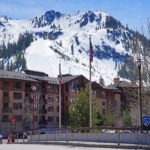
Aiguille du Tour

Straddling the border between France and Switzerland, Aiguille du Tour is one of the more approachable high-alpine summits in the Mont Blanc massif. Rising above the Glacier du Tour on the French side and the broad Plateau du Trient on the Swiss side, the mountain combines glaciers, snowfields, granite ridges, and tremendous views across some of the highest peaks in the Alps.
Aiguille du Tour is especially popular as an introduction to classical Alpine mountaineering. Its normal routes are less technically demanding than those on neighboring giants such as Aiguille Verte and Aiguille du Dru, but reaching the summit still requires genuine mountaineering skills. Climbers must travel roped across glaciers, negotiate crevasses, use crampons and an ice axe, and finish with exposed scrambling or easy rock climbing near the summit.
The mountain actually consists of two closely spaced summits, creating the double-headed profile that gives the peak much of its distinctive character.
⚡ Fast Facts
| Feature | Details |
|---|---|
| Mountain | Aiguille du Tour |
| Country | France and Switzerland |
| French Region | Auvergne-Rhône-Alpes |
| Swiss Canton | Valais |
| Mountain Range | Mont Blanc massif, Alps |
| Elevation | Approximately 11,618 feet / 3,541 meters |
| Prominence | Approximately 853 feet / 260 meters for the North Summit |
| Isolation | Approximately 1.4 miles / 2.25 kilometers |
| Nearest Higher Neighbor | Grande Fourche |
| Summits | North Summit and South Summit |
| Rock Type | Primarily granite |
| First Recorded Ascent | August 1864 |
| First Ascenders | Charles Gilbert Heathcote and Moritz Andermatten |
| Normal Route Grade | F (Facile/Easy) in Alpine grading |
| French Base | Refuge Albert 1er |
| Swiss Base | Cabane du Trient |
| Major Glaciers | Glacier du Tour and Glacier du Trient |
| Nearest Village | Le Tour, Chamonix-Mont-Blanc |
| Best Known For | Introductory glacier mountaineering and panoramic Mont Blanc massif views |
🏔️ A Border Summit in the Mont Blanc Massif
Aiguille du Tour rises directly along the international border separating Haute-Savoie in France from the canton of Valais in Switzerland. This position places the mountain near the northern end of the Mont Blanc massif, where the rugged granite peaks surrounding Chamonix gradually transition toward the Swiss Alps.
On the French side, Aiguille du Tour towers above the Glacier du Tour and the small village of Le Tour at the upper end of the Chamonix Valley. To the east, the mountain overlooks the Glacier du Trient and Plateau du Trient in Switzerland.
Its position gives climbers exceptional views toward nearby peaks such as Aiguille du Chardonnet, Aiguille Verte, and Aiguille du Dru. Farther south, Mont Blanc dominates the skyline.
⛰️ Two Summits of Aiguille du Tour
Aiguille du Tour has two main summits separated by a shallow saddle. Modern measurements place them at almost identical elevations.
The North Summit reaches approximately 3,541 meters, while the South Summit is approximately 3,541 meters as well, depending on the particular mapping source and measurement method. Older references commonly give Aiguille du Tour an elevation of about 3,544 meters.
The South Summit is generally considered the easier and more frequently climbed of the two. Many parties reach it as their primary objective, although experienced climbers can continue across the intervening terrain toward the North Summit.
Peakbagger lists the North Summit with approximately 260 meters of prominence and identifies Grande Fourche as its nearest higher neighbor.

🪨 Geology
Like many of the famous aiguilles around Chamonix, Aiguille du Tour is composed primarily of granite associated with the Mont Blanc massif.
This granite was formed deep within Earth’s crust when molten rock cooled and crystallized. Later tectonic forces associated with the formation of the Alps uplifted the massif, exposing the resistant crystalline rock at the surface.
Glaciers then played an enormous role in shaping the mountain visible today. Repeated periods of glaciation carved away surrounding rock, deepened valleys, and helped isolate steep ridges and towers.
The Glacier du Tour and Glacier du Trient continue this process, although both exist within an Alpine environment undergoing rapid climatic change. Freeze-thaw action, erosion, and rockfall also continually modify the exposed upper mountain.
📜 The First Ascent
One of the earliest recorded ascents of Aiguille du Tour was made by British climber Charles Gilbert Heathcote with Swiss mountain guide Moritz Andermatten in August 1864.
A contemporary account published in the Alpine Journal described Heathcote and Andermatten climbing the mountain while crossing the Col du Tour. The report noted that Aiguille du Tour rose as a double-headed summit above the plateau feeding the Orny and Trient glaciers.
The ascent was significant because it demonstrated that the peak could be incorporated into a broader high-mountain journey rather than approached only as an isolated climbing objective.
Sources differ slightly on the precise date. The contemporary Alpine Journal account gives August 17, 1864, while the Swiss Alpine Club records the ascent as August 18, 1864.
🧗 Normal Route
The normal route on Aiguille du Tour is generally graded F, meaning Facile or easy within the International French Adjectival System.
That classification can be misleading to hikers unfamiliar with Alpine climbing. An “easy” mountaineering route is still very different from a hiking trail.
The normal route involves glacier travel where crevasses may be hidden beneath snow, and parties typically travel roped together. Crampons, ice axes, harnesses, ropes, and knowledge of crevasse rescue procedures are normally required.
On the French approach, climbers generally leave the Refuge Albert 1er and travel onto the Glacier du Tour. The route continues toward the Col Supérieur du Tour, allowing climbers to cross toward the Swiss side before approaching the summit rocks.
The final section involves relatively straightforward scrambling and easy rock climbing under good conditions. Although the technical difficulties are modest by Mont Blanc standards, exposure, altitude, weather, glaciers, and changing snow conditions make the ascent a true alpine undertaking.
🇨🇭 Climbing from Switzerland
Aiguille du Tour can also be approached from Switzerland using the Cabane du Trient, situated at approximately 3,170 meters.
From the hut, climbers cross the Plateau du Trient and travel toward the Col Purtscheller before reaching the mountain’s eastern side. The South Summit can then be gained by following the south-southeast ridge or easier terrain on its eastern flank.
The Swiss Alpine Club describes the route as involving glacier travel followed by comparatively easy rock climbing.
From the South Summit, mountaineers can continue toward the North Summit by descending into the saddle between them and climbing through additional rocky and snowy terrain.
🛖 Refuge Albert 1er
The Refuge Albert 1er is the primary base for ascents from the French side.
Situated at approximately 2,707 meters, the refuge stands high above the Glacier du Tour. Unlike many huts in the Mont Blanc massif, it can be reached without crossing a glacier, making it accessible to experienced mountain hikers as well as climbers.
The full approach from Charamillon involves approximately 1,250 meters of elevation gain and normally takes around three hours under favorable conditions.
The refuge provides access to several classic mountaineering objectives, including Aiguille du Tour, Aiguille du Chardonnet, and neighboring high passes. Because of this concentration of relatively accessible alpine terrain, the area is frequently used for mountaineering courses.
🧗 A Popular First Alpine Summit
Aiguille du Tour has developed a reputation as one of the classic introductory mountaineering peaks of the Chamonix region.
Its attraction comes from the combination of serious mountain terrain and comparatively moderate technical difficulty. Climbers can practice many fundamental alpine skills on a single outing, including roped glacier travel, crampon technique, ice-axe use, route-finding, scrambling, and movement at altitude.
The summit also provides the psychological rewards of a much more difficult climb. Deep glaciers surround the mountain, enormous peaks fill the horizon, and the upper ridge feels remote despite the relative proximity of Chamonix.
For climbers progressing toward larger objectives elsewhere in the Mont Blanc massif, Aiguille du Tour can therefore serve as an important stepping stone.
🧊 Glacier du Tour
The Glacier du Tour occupies the western and northwestern side of Aiguille du Tour and drains toward the upper Chamonix Valley.
For mountaineers following the French normal route, the glacier is a major part of the ascent. Climbers travel across its upper reaches while working toward the Col Supérieur du Tour.
Crevasse patterns vary considerably with snow accumulation, summer temperatures, and seasonal glacier movement. What appears to be a straightforward snowfield can conceal deep openings beneath thin snow bridges.
Glacier retreat is also changing traditional approaches throughout the Alps. Route descriptions from previous decades may no longer correspond precisely to modern terrain, making recent local information particularly valuable.
🧊 Plateau du Trient
On the Swiss side lies the broad Plateau du Trient, an elevated glacial basin beneath Aiguille du Tour and surrounding mountains.
Its comparatively open terrain contrasts dramatically with the sharp granite peaks rising around it. The plateau is crossed by several important mountaineering routes and provides access between the Cabane du Trient and numerous surrounding summits and passes.
From the upper mountain, climbers can look across this immense field of snow and ice toward the Valais Alps.
⚠️ Hazards and Safety
Although Aiguille du Tour is often described as a beginner-friendly Alpine peak, it should never be treated as an ordinary hike.
Crevasses are among the greatest hazards. Glacier travelers should understand roped travel and crevasse rescue techniques and carry appropriate equipment.
Rockfall can occur on steeper rocky sections, particularly during periods of rapid warming. Snow bridges can weaken as temperatures rise during the day, while fresh snow can obscure both crevasses and established tracks.
Weather is another major concern. Fog or cloud can make navigation across relatively featureless glacier terrain extremely difficult, while thunderstorms, strong winds, and sudden temperature drops can transform conditions rapidly.
Climbers without appropriate glacier and alpine experience commonly undertake the mountain with a professional guide.
🌿 Flora and Fauna
Aiguille du Tour’s summit lies far above the elevation where extensive plant communities can survive. The highest slopes consist largely of granite, snow, and ice, with only hardy lichens able to colonize some exposed surfaces.
Much richer ecosystems appear lower on the mountain. Alpine meadows around Le Tour can support gentians, saxifrages, alpine clovers, grasses, and numerous small flowering plants adapted to short growing seasons.
Lower elevations contain larch and spruce woodland as the landscape descends toward the Chamonix Valley.
Wildlife in the wider Mont Blanc region includes Alpine ibex, chamois, marmots, mountain hares, and numerous alpine birds. Golden eagles may occasionally be seen soaring above the valleys, while smaller species occupy rocky slopes and alpine grasslands.
The contrast between these productive lower ecosystems and the nearly lifeless summit environment illustrates how rapidly ecological conditions change with elevation in the Alps.
👀 Seeing Aiguille du Tour
Visitors do not need to climb Aiguille du Tour to appreciate the mountain.
The village of Le Tour, situated at the upper end of the Chamonix Valley, provides excellent perspectives toward the Glacier du Tour and surrounding mountains. Hiking and lift-accessed viewpoints around Charamillon can provide even broader views.
The trail toward Refuge Albert 1er offers particularly impressive scenery. As hikers gain elevation, the Glacier du Tour becomes increasingly prominent and the surrounding granite peaks begin to dominate the landscape.
These viewpoints offer an excellent way to experience the northern Mont Blanc massif without committing to glacier travel or technical climbing.
🏔️ Nearby Mountains
Aiguille du Tour stands among an extraordinary concentration of Alpine peaks.
Immediately nearby is Aiguille du Chardonnet, another striking summit rising above the Glacier du Tour.
Farther south are Aiguille Verte and Aiguille du Dru, two of the most celebrated mountaineering peaks overlooking Chamonix.
Beyond them rise the enormous granite walls and needles surrounding Mont Blanc, the highest mountain in the Alps.
Together these peaks make the upper Chamonix Valley one of the most historically significant mountaineering landscapes in the world.
🌄 Why Aiguille du Tour Is Special
Aiguille du Tour may lack the extreme height of Mont Blanc or the intimidating granite walls of Aiguille du Dru, but that accessibility is precisely what makes it important.
For generations of climbers, the mountain has provided an introduction to the fundamental experiences of Alpine mountaineering: an early start from a high refuge, crampons biting into frozen snow, a rope stretching between partners across a glacier, and a rocky summit surrounded by some of Europe’s greatest mountains.
It also occupies a beautiful geographic position between France and Switzerland, with glaciers descending on both sides and an enormous panorama stretching across the Mont Blanc massif and Valais Alps.
For experienced hikers looking toward their first true glacier summit—and for seasoned alpinists seeking a classic day in the mountains—Aiguille du Tour remains one of the enduring introductory summits of the Alps.

🔗 Related Articles
📚 Sources
- Peakbagger — Aiguille du Tour, Sommet Nord
- Peakbagger — Aiguille du Tour, Sommet Sud
- Swiss Alpine Club — Aiguilles du Tour: South and North Summits
- Fédération Française des Clubs Alpins et de Montagne — Refuge Albert 1er
- Fédération Française des Clubs Alpins et de Montagne — Refuge Albert 1er Access
- Larousse — Aiguille du Tour
- Alpine Journal — Summary of New Expeditions, 1864