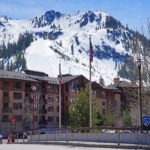
Tucked into the Sangre de Cristo Mountains of northern New Mexico, Angel Fire Resort combines high-elevation Rocky Mountain skiing with a relaxed, family-oriented atmosphere. The resort has grown substantially since opening in 1966 and now offers 96 trails, 627 skiable acres, a 2,077-foot vertical drop, extensive snowmaking, glade skiing, terrain parks, and New Mexico’s only night skiing and snowboarding.
Angel Fire is particularly appealing to families and mixed-ability groups. Nearly three-quarters of its marked trails are rated easier or intermediate, while advanced skiers still have access to steeper backside terrain, black diamonds, double-black runs, and around 40 acres of designated glades.
For the 2026–27 winter season, Angel Fire is also entering a new era with the completion of Angel Express, New Mexico’s first high-speed six-person chairlift.
Whether you’re planning your first family ski vacation, looking for intermediate cruisers, or simply want to experience skiing beneath the stars, here’s what to know before heading to Angel Fire.
⚡ Angel Fire Resort Quick Facts
| Feature | Details |
|---|---|
| Resort | Angel Fire Resort |
| Location | Angel Fire, New Mexico |
| Mountain Range | Sangre de Cristo Mountains |
| Parent Range | Rocky Mountains |
| Base Elevation | 8,600 feet |
| Summit Elevation | 10,677 feet |
| Vertical Drop | 2,077 feet |
| Skiable Terrain | 627 acres |
| Operational Area | 1,253 acres |
| Trails | 96 |
| Easier Terrain | 23% |
| More Difficult Terrain | 48% |
| Most Difficult Terrain | 25% |
| Expert / Extra-Caution Terrain | 4% |
| Average Annual Snowfall | 210 inches |
| Snowmaking | 52% of mountain |
| Beginner Terrain With Snowmaking | 85% |
| Glade Skiing | Approximately 40 acres |
| Terrain Parks | Liberation Park, Sweet Street, Tank 9 |
| Day Skiing Hours | Generally 9 a.m.–4 p.m. |
| Night Skiing | Select nights, generally 4–7 p.m. |
| Night Skiing Terrain | Approximately 50 acres |
| Nordic Trails | More than 12 km |
| Founded | 1966 |
| 2026–27 Scheduled Opening Day | December 11, 2026 |
Trail counts, snow totals, operating schedules, and open terrain can change with weather and mountain operations. Always check Angel Fire’s current snow report before traveling.
🏔️ Where Is Angel Fire Resort?
Angel Fire Resort is in the village of Angel Fire in Colfax County, northern New Mexico.
The ski area sits in the Sangre de Cristo Mountains, the southernmost major subrange of the Rocky Mountains.
This spectacular range extends from southern Colorado into northern New Mexico and contains the state’s highest mountains, including Wheeler Peak, which rises to 13,161 feet.
Angel Fire lies in the broad Moreno Valley, with mountain terrain rising steeply around the community.
Nearby mountain destinations include:
- Taos
- Red River
- Eagle Nest
- Wheeler Peak
- Taos Ski Valley
The combination makes northern New Mexico one of the most concentrated mountain recreation regions in the southern Rockies.

🗻 How High Is Angel Fire?
Angel Fire’s base elevation is 8,600 feet, while the ski area’s summit reaches 10,677 feet.
That creates a substantial 2,077-foot vertical drop.
For comparison, many visitors arriving from Texas, Oklahoma, or lower elevations elsewhere in the Southwest may gain thousands of feet of elevation in a single day of travel.
The altitude contributes to:
- Colder winter temperatures
- Better snow preservation
- Lower atmospheric oxygen
- Intense ultraviolet radiation
- Rapid dehydration
Visitors coming from near sea level should take the elevation seriously, especially during their first day.
Drink plenty of water, limit alcohol, get enough sleep, and consider starting gradually rather than attempting an exhausting full day immediately after arriving.
🎿 How Big Is Angel Fire Resort?
Angel Fire currently lists 627 skiable acres within a broader 1,253-acre operational area.
Its 96 named trails provide considerably more variety than the resort’s older trail counts suggested.
Terrain is divided approximately as follows:
- 23% Easier
- 48% More Difficult
- 25% Most Difficult
- 4% Most Difficult — use extra caution
That means 71% of the marked trail system is classified as easier or intermediate terrain.
This distribution is one of the biggest reasons Angel Fire works particularly well for families and groups containing skiers of different abilities.
🟢 Beginner Skiing at Angel Fire
Angel Fire has earned a strong reputation as a beginner-friendly New Mexico ski resort.
Wide learning areas, ski-school terrain, relatively gentle green runs, and substantial snowmaking give beginners several places to build confidence.
One of its signature beginner trails is Heading Home, a remarkably long green run stretching more than 3.5 miles.
Rather than forcing beginners down a short practice slope repeatedly, a long green trail allows new skiers to experience more of the mountain while remaining on manageable terrain.
Other benefits for beginners include:
- Dedicated ski-school areas
- Conveyor lifts
- Wide groomed trails
- Group lessons
- Private lessons
- Children’s programs
- Extensive beginner snowmaking
Approximately 85% of the resort’s beginner terrain has snowmaking coverage, helping maintain learning terrain during periods when natural snowfall is limited.
🔵 Intermediate Terrain
Intermediate skiers make up perhaps the ideal audience for Angel Fire.
Nearly 48% of the mountain is rated More Difficult, making blue runs the largest individual terrain category.
Intermediate skiers can explore long groomed cruisers across both sides of the mountain rather than remaining confined to one small zone.
The terrain provides opportunities to progress from wide groomed runs toward:
- Steeper blues
- Narrower trails
- Ungroomed snow
- Trees
- Terrain park features
- Introductory advanced terrain
Several additional blue groomers were introduced during the 2025–26 expansion, further increasing the resort’s intermediate options.
For families containing confident intermediate skiers, Angel Fire offers enough variety for multiple days without requiring everyone to move into expert terrain.
⚫ Advanced and Expert Skiing
Angel Fire should not be dismissed as merely a beginner resort.
Approximately 29% of its terrain falls within the most difficult or extra-caution categories.
Advanced terrain becomes especially interesting on the backside of the mountain, where steeper runs and tree skiing offer a very different experience from the broad beginner slopes near the base.
Recent terrain expansion added new:
- Black-diamond runs
- Double-black glades
- Advanced lift access
The Rakes Rider fixed-grip quad improved access to steeper backside terrain beginning with the 2025–26 season.
Experienced skiers looking for challenge should pay particular attention to snow conditions because New Mexico’s variable snowfall can dramatically affect ungroomed and expert terrain.
🌲 Glade Skiing
Angel Fire currently identifies around 40 acres of designated glade terrain.
Named glade areas include:
- Bear Glade
- Deer Glade
- Elk Glade
- Shane’s Glade
- Eagle Glade
The resort also includes difficult gladed runs such as:
- Hell’s Gate
- Turbulence
These tree runs are classified as Most Difficult, with some designated for extra caution.
Glade skiing requires greater control than ordinary groomed trails.
Trees, hidden obstacles, changing snow depth, tight turns, and ungroomed surfaces can make these areas considerably more difficult than nearby pistes.

❄️ How Much Snow Does Angel Fire Get?
Angel Fire reports an average of approximately 210 inches of natural snowfall per year.
That works out to around 17.5 feet of snow during an average season.
However, averages can conceal enormous year-to-year variation.
New Mexico ski seasons can include periods of:
- Heavy storms
- Long sunny stretches
- Wind
- Dry conditions
- Freeze-thaw cycles
- Rapidly changing snow quality
Natural snowfall is therefore only part of Angel Fire’s snow strategy.
💦 Snowmaking at Angel Fire
Angel Fire currently has snowmaking across approximately 52% of the ski mountain.
Coverage is particularly strong where it matters most for less experienced visitors: about 85% of beginner terrain can receive machine-made snow.
Snowmaking allows the resort to:
- Establish an early-season base
- Maintain high-traffic trails
- Recover from dry periods
- Preserve beginner areas
- Improve holiday-season reliability
Machine-made snow cannot completely replace natural storms, particularly on advanced glades and ungroomed terrain.
For that reason, visitors interested primarily in tree skiing and expert terrain should pay closer attention to recent natural snowfall than guests planning to stay mainly on groomers.
📅 When Is the Best Time to Ski Angel Fire?
Angel Fire’s ski season generally runs from December into March.
For 2026–27, the resort has announced a planned December 11, 2026 opening day, subject to weather and snow conditions.
Different parts of the season offer different advantages.
December
December brings holiday atmosphere and the excitement of opening season.
Snowmaking helps establish the early base, but natural terrain may remain limited during drier years.
Christmas and New Year’s periods can also be among the busiest times of the season.
January
January often brings colder temperatures and improving base depth.
It can be an excellent month for groomed skiing, although very cold mornings are possible.
February
February often provides a good combination of established snowpack, continued storm potential, and longer daylight.
For visitors prioritizing skiing conditions over holiday schedules, February can be an excellent choice.
March
March is popular with families, particularly during spring break.
Days become longer and sunnier, but snow conditions can change substantially between cold mornings and warm afternoons.
Late-season operations depend on snow coverage and weather.
🌙 Night Skiing at Angel Fire
One feature truly separates Angel Fire from other New Mexico resorts: night skiing.
Angel Fire describes itself as New Mexico’s only ski resort offering night skiing and snowboarding.
Approximately 50 acres of front-side terrain can be illuminated for skiing after the regular mountain closes.
Current mountain information lists night operations generally from 4 p.m. to 7 p.m. on select nights, particularly weekends and holiday periods.
The exact calendar changes each season.
A separate night-skiing ticket is generally required, although day-ticket holders may have an option to purchase an upgrade.

✨ What Is Night Skiing Like?
Night skiing offers a completely different experience from daytime riding.
Under the lights, the lower mountain can feel quieter and more intimate.
Visitors may ski beneath clear New Mexico skies while looking toward the lights of Angel Fire village.
Night skiing terrain generally favors easier and intermediate skiing rather than the resort’s most difficult backside runs.
Certain terrain-park features may also operate during selected night sessions.
The atmosphere makes night skiing particularly attractive for:
- Families
- Teenagers
- Couples
- Visitors arriving late in the day
- Skiers wanting extra slope time
Because operations are offered only on selected dates, always confirm the current schedule before building a vacation around it.
🚡 Angel Fire’s Lifts
Angel Fire’s lift system has undergone substantial modernization.
The resort currently lists eight uphill transportation systems, including:
- 1 high-speed six-person chair
- 2 high-speed quad chairs
- 1 fixed-grip quad
- 2 double chairs
- 2 Sunkid conveyor lifts
One conveyor is available to the public, while another primarily serves ski-school operations.
🚠 Angel Express: New Mexico’s First High-Speed Six-Pack
One of Angel Fire’s biggest recent upgrades is Angel Express, completed in July 2026 for the 2026–27 winter season.
The lift is New Mexico’s first high-speed six-person chairlift.
The project increases uphill capacity and replaces an important component of the mountain’s existing lift infrastructure.
Angel Fire has a history of introducing high-speed lift technology to New Mexico. In 1996, it installed the state’s first high-speed four-person chair.
With Angel Express, the resort now has three high-speed chairlifts.
For skiers, the practical benefit is straightforward: increased uphill capacity means the potential for shorter waits and more runs during busy periods.
🏂 Terrain Parks
Freestyle skiers and snowboarders have several terrain-park options.
Angel Fire currently lists:
- Liberation Park
- Sweet Street
- Tank 9
Features change according to snow coverage, maintenance, and the stage of the season.
Depending on the park and conditions, visitors may encounter:
- Boxes
- Rails
- Jumps
- Small progression features
- Larger freestyle features
The resort emphasizes a progression-based approach, allowing newer freestyle riders to begin on smaller features before advancing.
As with all terrain parks, features should be inspected before use because their shape and difficulty change continuously.
🏁 NASTAR Racing
Angel Fire also offers NASTAR racing when conditions and operations permit.
NASTAR provides recreational skiers and snowboarders with a timed race experience.
Instead of requiring participation in a formal competitive ski program, visitors can test themselves against a race course and compare times.
This makes it an entertaining addition for families and groups looking to add some friendly competition to a ski day.
🎓 Ski and Snowboard School
Angel Fire places substantial emphasis on ski instruction.
Programs include:
- Children’s ski lessons
- Children’s snowboard lessons
- Adult group lessons
- Beginner programs
- Private ski lessons
- Private snowboard lessons
Group lesson packages may include lift access depending on the current program, while private lessons generally require lift tickets and rentals to be purchased separately.
Reservations are particularly important during:
- Christmas
- New Year’s
- Presidents’ Day weekend
- Spring break
Visitors traveling during those periods should book lessons well before arrival.
👨👩👧👦 Is Angel Fire Good for Families?
Yes — family skiing is one of Angel Fire’s strongest advantages.
Several features work particularly well for families:
- Extensive beginner terrain
- 85% snowmaking coverage on beginner slopes
- Ski-school programs
- Long green trails
- Large intermediate network
- Tubing
- Children’s sledding
- Nordic skiing
- Snowshoeing
- Night skiing
- Lodging near the slopes
- Equipment rentals at the resort
A family containing a first-time skier, an intermediate teenager, and an advanced parent can usually find suitable terrain without splitting between different resorts.
The relatively compact base area also makes logistics easier than at some sprawling destination ski areas.
🛷 Tubing
Visitors who want snow without skis can try the resort’s three-lane tubing hill.
Sessions typically operate during the main winter season, although schedules depend on weather and snow conditions.
Tubing can be especially useful for:
- Families with non-skiers
- Rest days
- Younger visitors
- Afternoon activities
- Groups wanting an alternative to skiing
Tickets and operating dates vary by season, so advance planning is recommended during busy holiday periods.
🛷 Kids’ Sledding
Angel Fire also operates a sledding hill near the Nordic Center.
It provides a simpler winter activity for younger children.
The resort has offered shuttle transportation between The Lodge at Angel Fire and the sledding area when the hill is operating.
This is another advantage for multigenerational families where not everyone wants to spend the entire day skiing.
🎿 Nordic Skiing and Snowshoeing
The Angel Fire Resort Nordic Center provides more than 12 kilometers of groomed trails.
The network accommodates:
- Classic cross-country skiing
- Skate skiing
- Snowshoeing
Nordic skiing provides a very different experience from downhill skiing.
Instead of lift-served trails, visitors move through rolling mountain terrain under their own power.
The Nordic Center can also be a good choice during a rest day from downhill skiing or for visitors who prefer quieter winter recreation.
Operations depend on natural snow and weather.
🎿 Ski and Snowboard Rentals
Angel Fire operates multiple rental locations.
The Slopeside Rental Shop is located at the base area and provides skis, snowboards, accessories, repairs, and related services.
Winter Sports near The Lodge offers another full-service rental location and includes equipment suitable for various ability levels.
Available brands have included:
- Rossignol
- K2
- Nordica
- Völkl
- Salomon
- Fischer
Higher-performance demo equipment may also be available.
During busy periods, reserving equipment in advance can save considerable time.
The resort may allow guests to pick up equipment the afternoon before their first ski day, which can make the following morning substantially easier.
🏨 Where to Stay
Angel Fire offers both resort-operated lodging and a substantial collection of vacation rentals around the village.
The Lodge at Angel Fire Resort provides one of the most convenient options for visitors who want to remain close to mountain facilities.
Other accommodations around Angel Fire include:
- Condominiums
- Vacation homes
- Cabins
- Townhouses
- Independent lodging
For families, proximity to the base area can make a major difference.
Carrying skis, boots, helmets, and children’s equipment becomes much easier when lodging is within walking or shuttle distance.
Visitors booking private rentals should check the actual distance to the lifts rather than assuming every Angel Fire property is slopeside.
🍽️ Dining at Angel Fire
The resort and surrounding village provide several places to eat before, during, and after a ski day.
Options vary seasonally but may include:
- Quick-service mountain food
- Après-ski restaurants
- Bars
- Coffee
- Casual family dining
- Country Club dining
Visitors staying in condos frequently combine restaurant meals with self-catering.
During major holidays and spring break, dinner reservations can be useful where available.
🚗 Getting to Angel Fire
Angel Fire’s relative isolation is part of its appeal, but it requires more planning than skiing at a resort next to a major interstate.
Travelers can reach the area by road from several New Mexico cities.
Albuquerque
Albuquerque International Sunport is the largest major airport commonly used for trips to Angel Fire.
The drive crosses northern New Mexico and eventually enters the Sangre de Cristo high country.
Winter road conditions can significantly affect travel time.
Santa Fe
Santa Fe Regional Airport provides another option and places visitors considerably closer to northern New Mexico’s mountains.
Taos
Taos Regional Airport is closer still, depending on available flights.
Angel Fire Airport
Angel Fire also has its own Angel Fire Airport (KAXX).
Scheduled service varies, so travelers should check current flight availability rather than assuming direct commercial flights will operate during every season.
🚙 Winter Driving
Anyone driving to Angel Fire should prepare for mountain winter conditions.
Possible hazards include:
- Snow-covered roads
- Black ice
- Blowing snow
- Reduced visibility
- Rapid temperature changes
- Mountain passes
A sunny afternoon in Albuquerque or Santa Fe does not guarantee dry roads in the Sangre de Cristo Mountains.
Check the current New Mexico road conditions and weather forecast before leaving.
Visitors unfamiliar with mountain winter driving may want to consider an appropriate rental vehicle and available shuttle services.
☀️ New Mexico Sunshine
One of the major appeals of skiing in New Mexico is the combination of snow and frequent sunshine.
The high elevation can produce cold enough temperatures for good snow preservation, while the southern Rocky Mountain latitude often delivers brilliantly clear winter days.
However, that sunlight is powerful.
At elevations above 10,000 feet, ultraviolet exposure is considerably greater than at sea level.
Skiers should use:
- Sunscreen
- Goggles or sunglasses with UV protection
- Lip balm with sun protection
- Face covering where appropriate
Sunburn can occur surprisingly quickly, particularly when sunlight reflects from snow.
🌲 The Sangre de Cristo Mountains
Angel Fire’s setting is part of what makes the resort special.
The Sangre de Cristo Mountains form a spectacular southern extension of the Rockies through Colorado and New Mexico.
Northern New Mexico’s highest mountains rise nearby.
The range contains forests of:
- Ponderosa pine
- Douglas-fir
- Aspen
- Engelmann spruce
- Subalpine fir
With increasing elevation, these forests eventually transition into alpine environments around the highest peaks.
Skiers at Angel Fire spend much of their day moving through these beautiful high-elevation conifer and aspen forests.
🦌 Wildlife Around Angel Fire
Wildlife inhabits the forests and valleys surrounding the resort throughout the year.
Possible species in the broader Sangre de Cristo region include:
- Elk
- Mule deer
- Black bears
- Coyotes
- Bobcats
- Mountain lions
- Red foxes
- Abert’s squirrels
- Snowshoe hares
- Wild turkeys
- Ravens
- Golden eagles
Elk and deer are particularly important considerations for drivers around dawn, dusk, and nighttime.
Wildlife should never be approached or fed.
🌡️ High-Altitude Health
Angel Fire’s base is already at 8,600 feet, and the ski summit exceeds 10,600 feet.
Visitors arriving from much lower elevations sometimes experience:
- Headache
- Fatigue
- Poor sleep
- Shortness of breath
- Mild nausea
- Reduced exercise tolerance
These may be signs of altitude adjustment.
Helpful strategies include:
- Hydrating well
- Eating normally
- Sleeping adequately
- Limiting alcohol
- Taking the first day moderately
- Descending if symptoms become serious
Severe or worsening altitude symptoms require medical attention.
🎒 What to Bring
A typical Angel Fire ski day calls for standard mountain winter gear.
Consider packing:
- Waterproof ski jacket
- Waterproof ski pants
- Base layers
- Insulating midlayer
- Ski socks
- Gloves or mittens
- Helmet
- Goggles
- Neck gaiter
- Sunscreen
- Lip protection
- Water
Conditions may vary enormously between the sheltered base and exposed upper mountain.
Layering makes it easier to adjust as temperatures change.
💰 Lift Tickets and Planning Ahead
Angel Fire uses date-dependent pricing, so lift-ticket costs may vary during the season.
Purchasing in advance can offer advantages compared with waiting until arrival.
This is particularly true during:
- Christmas week
- New Year’s
- Presidents’ Day weekend
- Spring-break periods
The same applies to rentals, ski school, lodging, and tubing.
Because prices and promotions change regularly, an evergreen guide like this should avoid treating one season’s ticket price as permanent.
Check the resort directly when planning a trip.

👍 What Angel Fire Does Best
Angel Fire’s strongest characteristics include:
- Excellent beginner terrain
- Extensive intermediate skiing
- Family-focused facilities
- 2,077 feet of vertical
- 96 trails
- Strong snowmaking
- Glade skiing for advanced riders
- Multiple terrain parks
- Night skiing
- Ski school
- Tubing and sledding
- Nordic skiing
- Convenient resort lodging
- Beautiful Sangre de Cristo scenery
Its greatest advantage may simply be variety without overwhelming scale.
There is enough mountain for experienced skiers to explore while still remaining approachable for first-time visitors.
👎 Things to Consider Before Booking
No resort is ideal for every skier.
Before choosing Angel Fire, consider a few limitations.
Natural Snow Varies
The resort averages 210 inches annually, but snowfall can fluctuate substantially between seasons.
If advanced natural-snow terrain is your priority, check current coverage before traveling.
High Elevation
Visitors arriving from low elevations may notice the altitude immediately.
Expert Terrain Is More Limited
Angel Fire has legitimate advanced terrain, but expert skiers seeking enormous bowls, extreme steeps, or very large off-piste zones may prefer a different mountain.
Holiday Crowds
Family-friendly resorts become especially popular during school vacations.
Booking early is worthwhile.
Night Skiing Isn’t Every Night
Night skiing is one of Angel Fire’s signature experiences, but it operates only on selected dates.
Verify the calendar before your trip.
🆚 Angel Fire vs. Taos Ski Valley
Visitors to northern New Mexico sometimes compare Angel Fire with Taos Ski Valley.
They appeal to somewhat different audiences.
Angel Fire is particularly strong for:
- Families
- Beginners
- Intermediate skiers
- Night skiing
- Mixed-ability groups
- Accessible resort activities
Taos Ski Valley is especially famous for:
- Steep terrain
- Expert skiing
- High-alpine terrain
- Challenging hike-to runs
- Strong skiing culture
Advanced skiers may prefer Taos, while families and intermediate-heavy groups may find Angel Fire easier to navigate.
Some longer northern New Mexico trips can include both.
⭐ Is Angel Fire Worth It?
For the right skier, Angel Fire is absolutely worth considering.
It is particularly appealing if you want:
- A family-oriented ski vacation
- Plenty of beginner and intermediate terrain
- A substantial 2,077-foot vertical
- Lower-pressure skiing than some major destination resorts
- Night skiing
- Off-slope winter activities
- Northern New Mexico scenery
Advanced skiers have enough terrain to remain interested, especially when natural snow opens the glades and more difficult backside runs.
The resort’s continuing investment in lifts, snowmaking, grooming, and new trails also makes the mountain considerably more substantial than older descriptions suggest.
💡 Interesting Facts About Angel Fire Resort
- Angel Fire Resort opened in 1966.
- The ski summit reaches 10,677 feet.
- The base sits at 8,600 feet.
- The mountain has a 2,077-foot vertical drop.
- Angel Fire currently lists 96 trails.
- The resort offers 627 skiable acres.
- About 71% of its terrain is rated easier or intermediate.
- Average annual snowfall is approximately 210 inches.
- Snowmaking covers about 52% of the mountain.
- Approximately 85% of beginner terrain has snowmaking.
- Angel Fire offers roughly 40 acres of designated glade skiing.
- The resort has multiple terrain parks.
- It operates New Mexico’s only night skiing and snowboarding.
- Night skiing covers roughly 50 acres on selected evenings.
- The Nordic Center offers more than 12 kilometers of groomed trails.
- Angel Fire completed New Mexico’s first high-speed six-person chairlift in 2026.
- The resort is located in the Sangre de Cristo Mountains of the southern Rockies.
❓ Frequently Asked Questions
How high is Angel Fire Ski Resort?
Angel Fire’s base elevation is 8,600 feet, while the summit reaches 10,677 feet.
How much vertical does Angel Fire have?
The resort has a 2,077-foot vertical drop.
How many trails does Angel Fire have?
Angel Fire currently lists 96 ski trails.
How many skiable acres does Angel Fire have?
The resort currently reports 627 skiable acres within a 1,253-acre operational area.
How much snow does Angel Fire get?
Angel Fire reports an average of approximately 210 inches of natural snow per year.
Does Angel Fire make snow?
Yes. Snowmaking covers approximately 52% of the mountain and 85% of beginner terrain.
Is Angel Fire good for beginners?
Yes. About 23% of the marked terrain is rated easier, the resort has extensive ski-school facilities, and beginner terrain receives particularly strong snowmaking coverage.
Is Angel Fire good for intermediate skiers?
Yes. Intermediate terrain accounts for approximately 48% of the trail network, making Angel Fire particularly well suited to intermediate skiers and snowboarders.
Does Angel Fire have expert skiing?
Yes. Around 29% of its terrain falls within the resort’s most difficult categories, including steep runs and glades.
Does Angel Fire have tree skiing?
Yes. The resort lists approximately 40 acres of designated gladed terrain, along with additional difficult tree runs.
Does Angel Fire have night skiing?
Yes. Angel Fire offers New Mexico’s only night skiing and snowboarding, generally on selected weekends and holiday dates. Current mountain information lists typical night operations from approximately 4–7 p.m.
Is night skiing included with a regular lift ticket?
A separate night-skiing ticket is generally required. Day skiers may be able to purchase an upgrade depending on the current ticket program.
Does Angel Fire have a terrain park?
Yes. Current terrain parks include Liberation Park, Sweet Street, and Tank 9.
Does Angel Fire have tubing?
Yes. Angel Fire operates a three-lane tubing hill during the winter season when conditions permit.
Can you cross-country ski at Angel Fire?
Yes. The Angel Fire Nordic Center offers more than 12 kilometers of groomed trails for cross-country skiing, and snowshoeing is also permitted.
When does Angel Fire open for the 2026–27 ski season?
The resort has announced a planned opening date of December 11, 2026, subject to weather and snow conditions.
What mountain range is Angel Fire in?
Angel Fire Resort lies in the Sangre de Cristo Mountains, the southernmost major subrange of the Rocky Mountains.
🔗 Related Articles
- Sangre de Cristo Range
- Wheeler Peak
- Mountains in New Mexico
- Rocky Mountains
- Highest Peaks of the Rocky Mountains
📚 Sources
- Angel Fire Resort — Mountain Stats
- Angel Fire Resort — Skiing & Snowboarding
- Angel Fire Resort — Lift Tickets and Night Skiing
- Angel Fire Resort — Terrain Parks
- Angel Fire Resort — Ski & Snowboard Rentals
- Angel Fire Resort — Nordic Skiing and Snowshoeing
- Angel Fire Resort — Winter Activities
- Angel Fire Resort — Getting Here
- Angel Fire Resort — New Mexico’s First High-Speed Six-Pack
- Angel Fire Resort — What’s New for Winter 2025–26