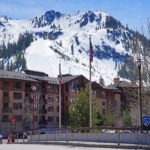
Jepson Peak

Jepson Peak rises along the lofty crest of California’s San Bernardino Mountains, just west of San Gorgonio Mountain. Reaching approximately 11,210 feet (3,417 meters) above sea level, it is one of the highest named summits in Southern California and an important landmark within the San Gorgonio Wilderness.
Despite its impressive elevation, Jepson Peak has relatively little topographic prominence. It is connected to neighboring San Gorgonio by a high ridge that remains above 11,000 feet for much of the distance between them. As a result, Jepson provides an excellent example of the difference between a mountain’s elevation and its topographic prominence.
The peak is also a rewarding destination for experienced hikers. Routes from Vivian Creek and South Fork involve substantial mileage, thousands of feet of climbing, high-altitude conditions, and sections of cross-country travel.
🏔️ Overview
Jepson Peak is located in San Bernardino County, California, within the San Bernardino National Forest and the federally protected San Gorgonio Wilderness.
It occupies the high San Bernardino Divide between San Gorgonio Mountain and Charlton Peak. This ridge contains some of the highest terrain in Southern California and forms the mountainous heart of the eastern Transverse Ranges.
Jepson is commonly described as the second-highest named summit in Southern California, behind San Gorgonio Mountain. However, it is not usually regarded as a fully independent mountain under prominence-based classification systems because its summit rises only about 159 feet above its key saddle.
Its elevation nevertheless places Jepson well above nearly every other summit in Southern California.
The mountain is included on the Sierra Club Hundred Peaks Section list and has long attracted hikers and peakbaggers exploring the San Gorgonio high country.
⚡ Fast Facts
| Fact | Details |
|---|---|
| Continent | North America |
| Country | United States |
| State/Province | California |
| County/Region | San Bernardino County |
| Mountain Range | San Bernardino Mountains |
| Larger Range | Transverse Ranges |
| Parent Peak | San Gorgonio Mountain |
| Elevation | 11,209.7 ft / 3,416.7 m |
| Prominence | 158.6 ft / 48.3 m |
| Isolation | 0.52 mi / 0.83 km |
| Nearest Higher Neighbor (NHN) | San Gorgonio Mountain – northwest slope |
| Coordinates | 34.1016° N, 116.84314° W |
| Protected Area | San Gorgonio Wilderness |
| National Forest | San Bernardino National Forest |
| Typical Summer Difficulty | Class 1, strenuous, with cross-country travel |
Modern LiDAR-based measurements place Jepson Peak slightly higher than the traditional 11,205-foot elevation found on older maps and peak lists.
Its relatively small prominence is a reminder that elevation and prominence measure very different characteristics. For more information, see What Is Mountain Prominence? and Mountain Elevation vs. Prominence.
📍 Location
Jepson Peak rises in the eastern portion of the San Bernardino Mountains, one of the major ranges forming Southern California’s east-west-oriented Transverse Ranges.
The summit lies approximately one mile west of San Gorgonio Mountain and along the San Bernardino Divide between San Gorgonio and Charlton Peak.
This is exceptionally high terrain by Southern California standards. Several nearby peaks exceed 10,000 feet, creating a compact concentration of subalpine mountain country surrounded by much lower desert and inland valleys.
Jepson Peak lies entirely within the San Gorgonio Wilderness, a protected wilderness area administered primarily by the U.S. Forest Service, with additional lands managed by the Bureau of Land Management.
The summit’s position deep within the wilderness means there is no road access to the mountain itself. Reaching Jepson requires a long hike from one of the established trailheads surrounding the San Gorgonio high country.
📏 Elevation & Prominence
Jepson Peak reaches a LiDAR-measured elevation of 11,209.7 feet (3,416.7 meters).
Older topographic sources commonly list an elevation of 11,205 feet, which is why that figure continues to appear in hiking guides and older mountain databases.
Peakbagger currently calculates the mountain’s prominence at approximately 158.6 feet (48.3 meters).
Its isolation is approximately 0.52 mile (0.83 kilometer), meaning higher terrain is found less than a mile from the summit.
The nearest higher terrain is on the northwest slope of San Gorgonio Mountain, immediately east of Jepson.
This relationship explains why Jepson is generally considered a subsidiary summit rather than a fully independent mountain.
A mountain can reach an extremely high elevation while possessing limited prominence if it is connected to a higher summit by an equally high ridge. Jepson Peak is a particularly clear Southern California example of this principle.
🪨 Geology
Jepson Peak forms part of the geologically complex San Bernardino Mountains.
The range contains an ancient foundation of igneous and metamorphic rocks, including gneiss and granitic rocks formed during several widely separated periods of Earth’s history.
Some of the oldest rocks exposed in the San Bernardino Mountains are Precambrian crystalline rocks more than a billion years old. These ancient formations were later intruded by younger granitic bodies and affected by repeated periods of deformation.
The modern San Bernardino Mountains owe much of their elevation and rugged form to tectonic activity associated with the broader San Andreas Fault system.
Unlike volcanic mountains built primarily through eruptions, the San Bernardino Mountains have been shaped largely by faulting, uplift, erosion, and the exposure of ancient crystalline bedrock.
Evidence of colder climates also survives in the upper San Gorgonio region. Glacial and morainal deposits occur in portions of the high mountains, recording periods during the Pleistocene when local glaciers occupied parts of the range.
Today, freezing temperatures, snow, running water, gravity, and physical weathering continue reshaping the rocky high country surrounding Jepson Peak.
🌿 Flora & Fauna
The enormous elevation range of the San Bernardino Mountains creates a remarkable succession of ecosystems.
Lower slopes of the region support chaparral, oak woodland, and dry mountain vegetation. As elevation increases, these communities transition into coniferous forests.
High-elevation areas near Jepson Peak support subalpine environments characterized by cold winters, short growing seasons, persistent winds, and relatively sparse vegetation.
White fir, lodgepole pine, limber pine, Jeffrey pine, and other conifers occur in the broader high San Gorgonio region, although vegetation becomes increasingly scattered near the highest exposed ridges.
The surrounding wilderness also provides habitat for a diverse collection of wildlife.
Animals found within the greater San Gorgonio Wilderness include:
- Mule deer
- Black bears
- Mountain lions
- Bighorn sheep
- Numerous mountain and forest bird species
- Small mammals adapted to high-elevation environments
Plants and animals living near the upper limits of the range face demanding conditions. Winter snow, strong winds, freezing temperatures, summer drought, and intense sunlight all influence the ecosystem.
The elevation change from the surrounding desert environment to the San Gorgonio high country helps make this one of Southern California’s most ecologically diverse mountain landscapes.
🥾 Hiking & Climbing Routes
Jepson Peak does not normally require technical climbing during dry, snow-free conditions, but it should not be mistaken for an easy hike.
The mountain is remote, high, and accessible only after substantial mileage and elevation gain.
Two primary approaches are recognized by the Sierra Club Hundred Peaks Section.
Vivian Creek Route
The Vivian Creek approach is the shorter of the two commonly described routes.
Approximate statistics are:
- Distance: 15 miles round trip
- Elevation gain: 5,360 feet
- Estimated time: 7–8 hours
- Difficulty: Class 1, strenuous
- Terrain: Trail plus cross-country travel
The route begins from the Vivian Creek area near Forest Falls and climbs steeply into the San Gorgonio Wilderness.
Hikers follow the established trail system toward the high ridge leading to San Gorgonio Mountain before leaving the primary route and following the ridge toward Jepson.
Because San Gorgonio lies so close to Jepson, strong hikers sometimes combine the two summits during a single trip.
The resulting outing is considerably more demanding than climbing Jepson alone.
South Fork and Dollar Lake Route
A second approach begins at the South Fork Trailhead.
Approximate statistics are:
- Distance: 17 miles round trip
- Elevation gain: 4,450 feet
- Estimated time: 8–9 hours
- Difficulty: Class 1, very strenuous
- Terrain: Trail plus cross-country travel
This route follows the South Fork Trail toward Dollar Lake Saddle.
From Dollar Lake Saddle, hikers continue along the high-country trail system before leaving the maintained trail at approximately 10,880 feet and following the ridge northeast toward Jepson Peak.
The approach provides access to an especially scenic portion of the San Bernardino Divide and can be combined with other nearby peaks by experienced hikers.
🏔️ Field Guide Tip: A Class 1 rating describes the technical nature of the terrain under normal dry conditions—not the overall difficulty of the trip. Jepson Peak still requires a long wilderness hike, major elevation gain, high-altitude travel, navigation away from maintained trails, and preparation for rapidly changing mountain weather.
Wilderness Permits
A wilderness permit is currently required for both day hiking and overnight trips in the San Gorgonio Wilderness.
Permits are free but limited and are issued online through the San Gorgonio Wilderness Association.
Group size is limited to 12 people.
Because permit procedures, fire restrictions, trail closures, and wilderness regulations can change, hikers should always check current information before beginning their trip.
🌤️ Best Time to Visit
For hikers who want predominantly snow-free conditions, summer through early fall is generally the most straightforward time to attempt Jepson Peak.
Even during summer, conditions at more than 11,000 feet can be dramatically different from those in nearby valleys.
Hikers should be prepared for:
- Strong winds
- Cold temperatures
- Rapid weather changes
- Intense sun exposure
- Afternoon thunderstorms
- Limited water
- Early or late-season snowfall
Late spring can be particularly unpredictable because snow may remain on shaded slopes, gullies, saddles, and northern aspects even when lower trails are dry.
Winter transforms Jepson Peak into a much more serious objective.
Snow and ice can cover trails and obscure cross-country routes. Steep slopes that present few technical problems during summer may become dangerous when frozen or snow-covered.
Winter travel may require specialized equipment, navigation experience, snow assessment skills, and mountaineering knowledge.
Conditions should always be checked immediately before visiting.
🧭 Nearby Mountains & Attractions
Jepson Peak sits within an exceptional collection of high Southern California summits.
San Gorgonio Mountain
San Gorgonio Mountain lies immediately east of Jepson.
At roughly 11,500 feet, San Gorgonio is the highest summit in Southern California and the highest mountain in the entire Transverse Ranges.
Its close proximity also explains Jepson Peak’s low topographic prominence.
Charlton Peak
Charlton Peak stands northwest of Jepson along the same high divide.
It is another Sierra Club Hundred Peaks Section summit and is sometimes combined with Jepson by hikers traveling through the South Fork and Dollar Lake area.
San Bernardino Peak
San Bernardino Peak lies farther west along the high crest.
The summit is another major hiking destination within the San Gorgonio Wilderness and gives its name to part of the divide extending through the high country.
Anderson Peak
Anderson Peak is another prominent summit along the ridge system west of Jepson.
Together with San Bernardino Peak, Charlton Peak, Jepson, and San Gorgonio Mountain, it helps create one of Southern California’s most impressive concentrations of high summits.
San Jacinto Peak
Farther south across San Gorgonio Pass lies San Jacinto Peak and the San Jacinto Mountains.
The dramatic separation between the San Bernardino and San Jacinto ranges creates one of the defining mountain landscapes of inland Southern California.
💡 Fun Facts
- Jepson Peak is one of the highest named summits in Southern California.
- Its modern LiDAR elevation is 11,209.7 feet, slightly higher than the traditional 11,205-foot figure.
- Despite exceeding 11,000 feet, Jepson has only about 159 feet of topographic prominence.
- Its nearest higher terrain is found on nearby San Gorgonio Mountain.
- Jepson is included on the Sierra Club Hundred Peaks Section list.
- The mountain appeared on the original Hundred Peaks Section peak list created in 1946.
- The name Jepson Peak honors California botanist Willis Linn Jepson.
- Jepson studied plant life in the San Bernardino Mountains during the early 20th century.
- He was a University of California professor, botanist, author, conservationist, and charter member of the Sierra Club.
- The name first appeared on a San Bernardino National Forest map in 1965.
- Jepson Peak can be combined with San Gorgonio Mountain, although doing so creates a considerably longer and more strenuous outing.
❓ Frequently Asked Questions
How high is Jepson Peak?
Jepson Peak reaches 11,209.7 feet (3,416.7 meters) according to modern LiDAR-based measurements. The elevation is commonly rounded to 11,210 feet.
Older maps frequently list the summit as 11,205 feet.
Where is Jepson Peak?
Jepson Peak is located in the San Bernardino Mountains of San Bernardino County, California.
It lies within the San Gorgonio Wilderness of San Bernardino National Forest, immediately west of San Gorgonio Mountain.
Is Jepson Peak the second-highest mountain in Southern California?
Jepson Peak is commonly described as the second-highest named summit in Southern California.
However, because it has less than 300 feet of prominence, many mountain classification systems treat it as a subsidiary summit of the San Gorgonio massif rather than a fully independent mountain.
What is the prominence of Jepson Peak?
Jepson Peak has approximately 158.6 feet (48.3 meters) of topographic prominence.
Its low prominence results from the high ridge connecting it to San Gorgonio Mountain.
What is Jepson Peak’s isolation?
Peakbagger currently calculates Jepson Peak’s topographic isolation at approximately 0.52 mile (0.83 kilometer).
What is Jepson Peak’s nearest higher neighbor?
The nearest higher terrain is identified by Peakbagger as the northwest slope of San Gorgonio Mountain, east of Jepson Peak.
What is Jepson Peak’s parent mountain?
San Gorgonio Mountain is Jepson Peak’s line and proximate parent.
Can you hike to Jepson Peak?
Yes.
Jepson Peak can be reached by long hiking routes from either the Vivian Creek or South Fork areas.
The traditional approaches are considered Class 1 under normal summer conditions, but both involve strenuous hiking and portions of cross-country travel.
How long is the hike to Jepson Peak?
The Hundred Peaks Section describes the Vivian Creek route as approximately 15 miles round trip with 5,360 feet of elevation gain.
The South Fork route is approximately 17 miles round trip with 4,450 feet of elevation gain.
Do you need a permit to hike Jepson Peak?
Yes.
A San Gorgonio Wilderness permit is currently required for both day hiking and overnight use. Permits are obtained online through the San Gorgonio Wilderness Association.
Who was Jepson Peak named after?
Jepson Peak was named for Willis Linn Jepson, an influential California botanist who studied the vegetation of the San Bernardino Mountains.
Jepson was a professor at the University of California and a charter member of the Sierra Club.
When was Jepson Peak named?
The name first appeared on a 1965 San Bernardino National Forest map.
Is Jepson Peak difficult to climb?
In normal dry conditions, reaching Jepson is primarily a strenuous hiking challenge rather than a technical climb.
Distance, elevation gain, altitude, wilderness navigation, weather, and cross-country travel make the hike demanding despite its Class 1 rating.
Snow and ice can dramatically increase the difficulty.
🔗 Related Articles
- San Gorgonio Mountain
- San Bernardino Mountains
- San Bernardino Peak
- Transverse Ranges
- What Is Mountain Prominence?
- Mountain Elevation vs. Prominence
📚 Sources
- Peakbagger — Jepson Peak
- Hundred Peaks Section — Jepson Peak
- Hundred Peaks Section — Jepson Peak Name History
- Lists of John — Jepson Peak
- San Gorgonio Wilderness Association — Permits
- U.S. Forest Service — San Bernardino National Forest
- U.S. Forest Service Research — Horse Meadow
- Bureau of Land Management — San Gorgonio Wilderness