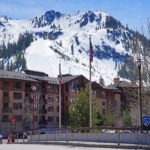
San Gabriel Mountains

The San Gabriel Mountains rise dramatically above the Los Angeles metropolitan area, forming one of Southern California’s most recognizable natural landscapes. Stretching roughly 60 miles from Newhall Pass in the west to Cajon Pass in the east, the range separates the Los Angeles Basin and surrounding valleys from the Mojave Desert.
Part of California’s unusual east-west-trending Transverse Ranges, the San Gabriels contain deep canyons, steep fault-controlled slopes, chaparral-covered foothills, conifer forests, and peaks high enough to receive substantial winter snow. Their highest summit, Mount San Antonio—better known as Mount Baldy—reaches 10,064 feet (3,068 meters).
Despite standing beside one of the largest metropolitan regions in North America, much of the range remains protected public land within Angeles National Forest, the San Gabriel Mountains National Monument, and several designated wilderness areas.
🏔️ Overview
The San Gabriel Mountains occupy portions of Los Angeles County and San Bernardino County in Southern California. Their steep southern slopes rise abruptly above communities including Pasadena, Altadena, Sierra Madre, Monrovia, Azusa, Glendora, and Rancho Cucamonga.
To the north, the mountains descend toward the high desert and communities such as Acton, Valyermo, and Wrightwood. Cajon Pass separates the eastern San Gabriels from the San Bernardino Mountains, while the western end approaches Newhall Pass and the Santa Susana Mountains.
The range is especially notable because of its orientation. Much of California’s mountain-and-fault geography trends northwest to southeast, but the San Gabriel Mountains run predominantly east to west as part of the Transverse Ranges.
The combination of steep relief, active tectonics, diverse elevations, and Mediterranean climate has produced an unusually varied landscape remarkably close to dense urban development.
⚡ Fast Facts
| Fact | Details |
|---|---|
| Continent | North America |
| Country | United States |
| State | California |
| Counties | Los Angeles and San Bernardino |
| Mountain System | Transverse Ranges |
| Highest Point | Mount San Antonio (Mount Baldy) |
| Highest Elevation | 10,064 feet / 3,068 meters |
| Approximate Length | About 60 miles / 97 kilometers |
| Maximum Width | Approximately 25 miles / 40 kilometers |
| Western Boundary | Newhall Pass area |
| Eastern Boundary | Cajon Pass |
| Major National Forest | Angeles National Forest |
| Protected Area | San Gabriel Mountains National Monument |
| Major Rivers & Watersheds | San Gabriel River, Los Angeles River tributaries, Santa Ana River tributaries, Santa Clara River tributaries |
| Major Scenic Road | Angeles Crest Highway / California State Route 2 |

📍 Location
The San Gabriel Mountains form a prominent wall immediately north and northeast of the Los Angeles Basin.
They extend approximately 60 miles from Newhall Pass to Cajon Pass, reaching their greatest elevations toward the eastern portion of the range. The southern mountain front is particularly dramatic because the terrain rises thousands of feet over relatively short horizontal distances.
The range also creates a major geographic divide between Southern California’s coastal valleys and the Mojave Desert.
Several important passes and transportation corridors define its boundaries. Interstate 5 passes near Newhall Pass at the western end, while Interstate 15 crosses Cajon Pass at the eastern end.
Angeles Crest Highway travels through much of the high country, providing access to trailheads, campgrounds, viewpoints, Mount Wilson, and numerous peaks.
📏 Highest Peaks of the San Gabriel Mountains
The San Gabriels contain several summits above 8,000 and 9,000 feet, particularly in the eastern and central portions of the range.
Mount San Antonio — 10,064 feet
Mount San Antonio, commonly called Mount Baldy, is the highest summit in the San Gabriel Mountains and the highest point in Los Angeles County.
Its broad, relatively treeless upper summit gives the mountain its familiar nickname. Mount Baldy is one of Southern California’s best-known hiking and mountaineering destinations, although winter conditions can make its upper slopes extremely hazardous.
Pine Mountain — about 9,650 feet
Pine Mountain rises immediately west of Mount San Antonio and forms part of the rugged high-elevation terrain surrounding the Baldy massif.
Mount Baden-Powell — about 9,400 feet
Mount Baden-Powell is one of the major summits of the central San Gabriels. The Pacific Crest Trail crosses its slopes, and ancient limber pines grow near the mountain’s upper elevations.
Cucamonga Peak — 8,862 feet
Cucamonga Peak rises above the Inland Empire and lies within the Cucamonga Wilderness. Its summit provides extensive views across Southern California on clear days.
Ontario Peak — 8,696 feet
Ontario Peak stands west of Cucamonga Peak and is commonly approached through Icehouse Canyon.
Other important San Gabriel summits include Telegraph Peak, Dawson Peak, Mount Harwood, Mount Islip, Strawberry Peak, Mount Wilson, Condor Peak, and Mount Lukens.

🪨 Geology
The San Gabriel Mountains are geologically complex and occupy an especially active section of Southern California’s crust.
They form part of the Transverse Ranges, whose east-west orientation contrasts with the generally northwest-southeast structural pattern found across much of coastal California.
The mountains are situated within a complicated network of faults associated with the broader San Andreas system. The San Andreas Fault lies along the northern side of the region, while the Sierra Madre-Cucamonga fault system helps define portions of the southern mountain front.
Modern geological studies show that uplift of the San Gabriel Mountains continues as Earth’s crust is compressed across Southern California. At the same time, erosion continually cuts steep canyons into the rising terrain.
The range exposes a complex assortment of ancient crystalline rocks, including igneous and metamorphic units. Geological studies beneath the mountains have also documented the widespread Pelona Schist and complex structures extending deep into the crust.
This combination of tectonic uplift and rapid erosion helps explain the San Gabriels’ unusually steep slopes, deeply incised canyons, landslides, and extensive debris-producing watersheds.
💧 Rivers and Watersheds
Water is one of the most important natural resources associated with the San Gabriel Mountains.
The range forms the headwaters of the San Gabriel River, while other drainages contribute to the Los Angeles River, Santa Ana River, and Santa Clara River systems. Lytle Creek, Cucamonga Creek, San Antonio Creek, Big Tujunga Creek, Arroyo Seco, and numerous smaller streams descend from the mountains.
Protecting these watersheds was one of the major reasons the federal government began setting aside lands in the San Gabriels during the late 19th and early 20th centuries.
Mountain precipitation, winter snow, streams, groundwater recharge, and reservoirs all contribute to Southern California’s complicated water system.

🌿 Flora & Fauna
A striking range of habitats occurs between the hot foothills and the 10,000-foot summit of Mount San Antonio.
Chaparral and Coastal Slopes
Chaparral dominates large portions of the lower and middle elevations. Typical plants include:
- Chamise
- Manzanita
- Ceanothus
- Scrub oak
- Toyon
- Mountain mahogany
These communities are adapted to Southern California’s Mediterranean climate, with wet winters and long, dry summers.
Oak Woodlands and Riparian Habitats
Canyons and wetter slopes support oak woodland and riparian vegetation. Willows, alders, cottonwoods, oaks, and other moisture-loving plants occur along streams and shaded canyon bottoms.
Conifer Forests
Higher elevations support forests containing species such as Jeffrey pine, sugar pine, white fir, incense cedar, and limber pine.
The vegetation can therefore change dramatically during a single hike from a low-elevation canyon to a high summit.
Wildlife
The San Gabriels support an impressive range of wildlife, including:
- Mule deer
- Black bears
- Mountain lions
- Bobcats
- Coyotes
- Nelson’s bighorn sheep
- California spotted owls
- Golden eagles
- Numerous reptiles, amphibians, and smaller mammals
The broader monument landscape also provides habitat for the endangered California condor and numerous sensitive, threatened, rare, or locally restricted plant and animal species.
Some plants have exceptionally limited ranges. Gleason’s paintbrush, for example, is endemic to a small portion of the western San Gabriel Mountains.

🏞️ San Gabriel Mountains National Monument
A large portion of the range receives additional federal protection as the San Gabriel Mountains National Monument.
President Barack Obama established the monument in 2014, initially protecting approximately 346,177 acres of federal land.
On May 2, 2024, President Joe Biden enlarged the monument by approximately 105,919 acres, bringing the protected total to roughly 452,096 acres.
The expansion added lands along portions of the southern and western San Gabriels and recognized their ecological, geological, recreational, and cultural importance.
The monument remains administered by the U.S. Forest Service as part of Angeles National Forest rather than by the National Park Service.
The protected landscape also has deep cultural connections to Indigenous peoples, including people identified today with Gabrielino, Kizh, Tongva, Tataviam, Serrano, Kitanemuk, Chumash, and other communities connected to Southern California.
🥾 Hiking & Climbing Routes
The San Gabriel Mountains contain hundreds of miles of trails, ranging from short canyon walks to strenuous high-elevation summit climbs.
Mount Baldy
Routes to Mount San Antonio are among the most famous hikes in Southern California.
The mountain is a serious undertaking despite its proximity to Los Angeles. Snow and ice can transform summer hiking trails into technical mountaineering terrain during winter and spring.
Mount Baden-Powell
Mount Baden-Powell is reached from the Vincent Gap area and is crossed by the Pacific Crest Trail. Its high forest and extensive views make it one of the classic San Gabriel summits.
Cucamonga Peak and Ontario Peak
Icehouse Canyon provides access to both Cucamonga Peak and Ontario Peak, as well as several surrounding ridges and wilderness trails.
Strawberry Peak
At 6,167 feet, Strawberry Peak is the highest summit of the prominent front range overlooking the Los Angeles area.
Mount Wilson
Mount Wilson combines mountain hiking with scientific history. Several trails climb toward its summit, which is home to the internationally important Mount Wilson Observatory.
Pacific Crest Trail
The Pacific Crest National Scenic Trail crosses a substantial portion of the San Gabriel Mountains as it travels through Southern California toward the Sierra Nevada.
🏔️ Field Guide Tip: Never assume that a San Gabriel Mountains hike is easy simply because the trailhead is close to Los Angeles. Extreme summer heat, winter snow and ice, steep terrain, wildfire closures, rockfall, and limited cell service can create serious hazards. Check current Angeles National Forest conditions before setting out.

🌤️ Best Time to Visit
The best season depends heavily on elevation and activity.
Spring is excellent for lower- and middle-elevation hiking, particularly when winter rainfall produces wildflowers and flowing streams. Snow can persist on the highest peaks.
Summer generally provides easier access to high elevations, but lower canyons and exposed trails can become dangerously hot. Wildfire danger also becomes an important consideration.
Fall often brings cooler hiking temperatures and relatively stable conditions, making it one of the most comfortable seasons for exploring much of the range.
Winter can blanket Mount Baldy, Mount Baden-Powell, and other high peaks in snow. These conditions create beautiful scenery but can also turn ordinary trails into serious alpine routes requiring appropriate experience and equipment.
Roads and trails are periodically closed because of wildfire damage, storms, landslides, snow, or restoration work, so visitors should always check Forest Service alerts before traveling.
🔭 Mount Wilson and the History of Astronomy
One of the San Gabriels’ most important landmarks is not their highest summit but Mount Wilson.
Mount Wilson Observatory became one of the world’s leading astronomical research centers during the early 20th century. Its exceptionally important telescopes were used in research that changed humanity’s understanding of the universe.
Astronomer Edwin Hubble used observations made with the observatory’s 100-inch Hooker Telescope while studying galaxies beyond the Milky Way and the relationship between their distances and motions.
The observatory remains one of the most historically significant scientific sites in any American mountain range.
🔥 Fire, Floods, and a Constantly Changing Landscape
Wildfire is a major ecological and human concern throughout the San Gabriel Mountains.
Chaparral vegetation is adapted to periodic fire, but severe fires can remove vegetation from extremely steep slopes. When intense winter rain later reaches burned terrain, floods and debris flows can transport enormous quantities of rock, sediment, and woody material into foothill communities.
This interaction between fire, erosion, steep topography, and intense rainfall has shaped both the natural landscape and the extensive flood-control infrastructure along the base of the mountains.
Large modern fires—including the Station, Bobcat, Bridge, and Eaton fires—have affected different portions of the San Gabriels and their foothills.
🧭 Nearby Mountains & Attractions
Beyond the major summits, visitors can explore numerous distinctive areas throughout the range.
Crystal Lake Recreation Area provides access to trails around the central San Gabriels, including routes toward Mount Islip and Windy Gap.
Angeles Crest Highway offers one of the most scenic drives in Southern California when fully open, crossing high ridges and connecting numerous trailheads and recreation areas.
Wrightwood, near the northeastern San Gabriels, serves as a gateway to Mount Baden-Powell, the Pacific Crest Trail, and nearby winter recreation areas.
The Cucamonga Wilderness protects rugged terrain surrounding Cucamonga and Ontario Peaks.
Farther west, Condor Peak and Mount Lukens overlook heavily populated portions of the Los Angeles region while retaining surprisingly rugged surroundings.
💡 Fun Facts
- The San Gabriel Mountains run primarily east to west, unlike many of California’s better-known northwest-to-southeast mountain systems.
- Their highest summit, Mount San Antonio, rises to 10,064 feet despite being only a relatively short distance from the Los Angeles metropolitan area.
- The mountains contain the headwaters of several important Southern California drainage systems.
- The Pacific Crest Trail crosses the range.
- Mount Wilson played an important role in some of the most significant astronomical discoveries of the 20th century.
- Chaparral foothills can transition to snowy conifer-covered mountains within only a few miles.
- Much of the range is contained within one of America’s most urban-adjacent national forests.
- The San Gabriel Mountains National Monument now protects roughly 452,000 acres following its 2024 expansion.

❓ Frequently Asked Questions
Where are the San Gabriel Mountains?
The San Gabriel Mountains are in Southern California, primarily in Los Angeles County with their eastern portion extending into San Bernardino County. They lie north and northeast of the Los Angeles Basin.
What is the highest mountain in the San Gabriel Mountains?
Mount San Antonio, commonly called Mount Baldy, is the highest point at approximately 10,064 feet (3,068 meters).
Are the San Gabriel Mountains part of the Sierra Nevada?
No. The San Gabriel Mountains are part of the Transverse Ranges, a separate mountain system in Southern California.
Why do the San Gabriel Mountains run east to west?
Their unusual orientation reflects the complicated tectonic deformation associated with the bend in the San Andreas Fault system and compression across Southern California’s Transverse Ranges.
Does it snow in the San Gabriel Mountains?
Yes. Snow regularly falls at higher elevations during winter storms. Peaks including Mount San Antonio and Mount Baden-Powell can develop substantial snow and ice.
Are the San Gabriel Mountains a national park?
No. Much of the range lies within Angeles National Forest, and a large portion is additionally protected as San Gabriel Mountains National Monument. The monument is managed by the U.S. Forest Service.
Can you hike in the San Gabriel Mountains year-round?
Recreation is possible throughout the year, but conditions vary greatly. Summer heat and wildfire danger can be significant, while high-elevation winter routes may require mountaineering skills and equipment. Temporary fire, storm, and restoration closures are also common.
What separates the San Gabriel and San Bernardino Mountains?
Cajon Pass marks the major geographic divide between the San Gabriel Mountains to the west and the San Bernardino Mountains to the east.
🔗 Related Articles
- Mount San Antonio
- Mount Wilson (California)
- Mount Baden-Powell
- Cucamonga Peak
- Ontario Peak
- Strawberry Peak
- Pine Mountain (California)
- Condor Peak
- Mount Lukens
📚 Sources
- USDA Forest Service — San Gabriel Mountains National Monument Fact Sheet
- USDA Forest Service — San Gabriel Mountains National Monument
- USDA Forest Service — Southern California Mountains and Foothills Assessment, Chapter 1
- U.S. Geological Survey — Fault Activity in the San Gabriel Mountains, Southern California
- U.S. Geological Survey — Crustal Structure and Tectonics from the Los Angeles Basin to the Mojave Desert
- Federal Register — Proclamation 10746, Boundary Enlargement of the San Gabriel Mountains National Monument
- National Park Service — San Gabriel Watershed and Mountains Special Resource Study