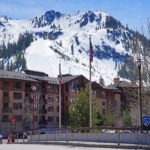
Mount Thom

🏔️ Overview
Mount Thom is a modest but distinctive summit in the Verdugo Mountains of Los Angeles County, California, rising above the city of Glendale near the southeastern end of the range. Although its elevation is only about 2,440 feet (744 meters), the mountain offers surprisingly expansive views over one of the most densely developed metropolitan areas in the United States.
The summit belongs to the rugged chain of hills separating portions of the San Fernando Valley, Crescenta Valley, and Los Angeles Basin. Mount Thom lies south of Tongva Peak and southeast of the higher Verdugo Mountain, the dominant summit of the range.
Unlike many remote mountain summits, Mount Thom is surrounded by urban development. Its slopes nevertheless preserve extensive chaparral habitat, and a network of fire roads and trails provides recreational access for hikers and mountain bikers.
The summit itself is occupied by communications facilities, so the highest ground is partly enclosed by fencing. Trails around the summit still provide broad views toward downtown Los Angeles, Glendale, Griffith Park, the Santa Monica Mountains, San Rafael Hills, and San Gabriel Mountains.
Mount Thom is an informally named summit rather than one of California’s major officially recognized mountains, but it is well established in local hiking and peakbagging use.
⚡ Fast Facts
| Fact | Details |
|---|---|
| Continent | North America |
| Country | United States |
| State/Province | California |
| County/Region | Los Angeles County |
| City | Glendale |
| Mountain Range | Verdugo Mountains, Transverse Ranges |
| Parent Peak | Verdugo Peak / Verdugo Mountain |
| Elevation | Approximately 2,440 feet / 744 meters |
| Prominence | Approximately 40 feet / 12 meters |
| Isolation | Approximately 0.38 miles / 0.61 kilometers |
| Nearest Higher Neighbor (NHN) | Tongva Peak |
| Coordinates | Approximately 34.18717° N, 118.25596° W |
| Summit Features | Communications towers and fenced facilities |
| Primary Hiking Access | Las Flores Motorway |
| Typical Terrain | Chaparral-covered ridges and fire roads |
📍 Location
Mount Thom stands near the southeastern end of the Verdugo Mountains within the city of Glendale in Los Angeles County.
The Verdugo Mountains are a relatively small mountain range surrounded almost completely by urban development. They extend northwest to southeast between the San Fernando Valley and the Crescenta Valley, with the San Gabriel Mountains immediately to the north and northeast.
Mount Thom occupies the southern portion of this chain at approximately 34.18717° N, 118.25596° W.
Immediately north of Mount Thom is Tongva Peak, which rises to roughly 2,656–2,661 feet depending on the source. Farther northwest is Verdugo Mountain, the range’s highest summit at approximately 3,126 feet.
The mountain’s position creates excellent sightlines across the Los Angeles Basin. On clear days, hikers can look south and southwest toward downtown Los Angeles, Griffith Park, the Santa Monica Mountains, and sometimes the Pacific Ocean.
📏 Elevation & Prominence
Peakbagger records Mount Thom at approximately 2,440 feet (744 meters) above sea level. Some recreational hiking sources give slightly different elevations, commonly around 2,460 feet. These small discrepancies can result from different maps, elevation models, contour interpretations, and rounding.
Mount Thom has only about 40 feet (12 meters) of topographic prominence.
That low figure means the summit rises only slightly above the saddle connecting it with higher terrain to the north. Prominence should not be confused with the amount of climbing required to reach a summit. A hike from Glendale to Mount Thom can involve well over 1,000 feet of elevation gain even though the summit itself has only about 40 feet of prominence.
You can read more about this distinction in What Is Mountain Prominence?.
Mount Thom’s topographic isolation is approximately 0.38 mile (0.61 kilometer). Its nearest higher neighbor is Tongva Peak, located just north-northwest along the Verdugo Mountains ridge.
PeakVisor identifies the higher Verdugo Peak as Mount Thom’s island parent. Parent-peak terminology can vary somewhat among topographic databases, particularly for small, closely connected ridge summits. For more on this concept, see What Is a Parent Peak?.
🪨 Geology
Mount Thom shares the geology of the broader Verdugo Mountains, which form part of California’s Transverse Ranges.
The Verdugos are an uplifted fault block containing predominantly crystalline igneous and metamorphic rocks. Rocks documented within the range include:
- Gneiss
- Gneissic diorite
- Quartz diorite
- Granodiorite
- Other granitic rocks
- Pegmatite and aplite
These rocks are broadly similar to crystalline basement rocks exposed in the nearby San Gabriel Mountains.
The Verdugo Mountains are bounded and influenced by several faults, particularly the Verdugo Fault along their southern side. Regional compression associated with Southern California’s complicated fault system has uplifted the range while erosion has carved its steep canyons and ridges.
Mount Thom’s present appearance therefore reflects a combination of tectonic uplift, faulting, weathering, erosion, landslides, and the removal of material by seasonal drainage systems.
Despite its comparatively low elevation, the mountain’s steep slopes make the rugged geological structure of the Verdugos readily visible.
🌿 Flora & Fauna
Mount Thom is part of the characteristic Southern California chaparral environment.
The surrounding slopes are dominated by drought-resistant shrubs adapted to hot summers, limited rainfall, and periodic wildfire. Plants documented throughout the Verdugo Mountains include:
- Chamise
- Toyon
- Laurel sumac
- California lilac, or ceanothus
- Poison oak
Shadier canyons and locations with greater soil moisture can support native trees such as coast live oak, California sycamore, California bay laurel, willow, and California walnut.
Spring can be particularly attractive following a wet winter, when grasses, flowering shrubs, and seasonal wildflowers add considerable color to the otherwise brown and green hillsides.
The broader Verdugo Mountains also function as an important patch of wildlife habitat surrounded by the Los Angeles metropolitan area.
Animals recorded within the range include coyotes, mule deer, rabbits, rodents, rattlesnakes, lizards, and numerous bird species. Mountain lions and black bears have also occasionally entered the wider Verdugo Mountains, although sightings are uncommon.
Hikers should never approach or feed wildlife.
🥾 Hiking & Climbing Routes
Mount Thom is primarily a hiking and mountain-biking summit rather than a climbing objective. Its main routes use fire roads and steep trails rather than technical rock.
Las Flores Motorway
One of the best-known routes begins from the Las Flores Motorway near Sunshine Drive in Glendale.
The motorway climbs steadily across the southeastern slopes of the Verdugo Mountains before reaching Beaudry Motorway close to Mount Thom.
The standard outing is approximately:
- 5.3 miles round trip from the beginning of the trail
- About 1,260 feet of elevation change
- Roughly 2½ to 3 hours for many hikers
Because roadside parking is restricted immediately beside the trailhead, hikers commonly park farther down Sunshine Drive. Including that additional walking can make the complete outing approximately 5.6 miles round trip with around 1,310 feet of climbing.
Near the top, the route reaches a short road leading toward the fenced communications installations. Paths around the enclosure provide access to viewpoints near the summit.
Continuing to Tongva Peak
Mount Thom can easily be combined with Tongva Peak.
From the junction near Mount Thom, hikers can continue north along Beaudry Motorway for roughly another 0.6 mile toward Tongva Peak.
This extension turns a relatively short Mount Thom outing into a longer ridge hike and provides additional views over the interior of the Verdugo Mountains.
Brand Park and Brand Canyon Approaches
Steeper routes also approach Mount Thom from the Glendale side near Brand Park and Brand Canyon.
These alternatives can involve significantly steeper grades than Las Flores Motorway and are popular with hikers seeking a more strenuous workout.
Trail conditions and access can change after wildfire, heavy rain, erosion, maintenance work, or emergency closures, so visitors should confirm current conditions before starting.
🏔️ Field Guide Tip: Mount Thom’s relatively low elevation can make the hike look easier than it is. Much of the terrain is exposed to direct Southern California sun, and climbing more than 1,000 feet on a warm day can require considerably more water than expected. Start early during warm weather and carry adequate water and sun protection.
🌤️ Best Time to Visit
The most comfortable season for hiking Mount Thom is generally late fall through spring.
Southern California’s winter weather often provides cool temperatures ideal for climbing the exposed fire roads. Winter storms can occasionally produce muddy trails, however, and exceptionally cold storms may even bring brief snow to the higher Verdugo ridges.
Spring
Spring is one of the best times to visit, especially following substantial winter rain. Vegetation becomes greener, wildflowers may appear, and temperatures are usually more comfortable than in summer.
Summer
Summer hiking can be extremely hot.
Much of the route has limited shade, and the combination of dry air, direct sunlight, and sustained climbing can lead to dehydration or heat illness. Early-morning starts are strongly preferable during hot weather.
Fall
Temperatures usually become more comfortable as autumn progresses, although wildfire danger can remain high during hot, dry, and windy periods.
Whenever visiting, hikers should check local weather, fire restrictions, and trail closures before departure.
🧭 Nearby Mountains & Attractions
Tongva Peak
Tongva Peak is Mount Thom’s nearest higher neighbor and rises immediately north along the same ridge system. Because the two peaks are connected by fire roads, they are often climbed during the same outing.
Verdugo Mountain
Verdugo Mountain is the highest summit in the Verdugo Mountains, reaching approximately 3,126 feet. It lies northwest of Mount Thom and provides another excellent hiking objective within the range.
Brand Park
Brand Park sits below the southern Verdugo Mountains in Glendale and provides recreational facilities as well as access to several mountain routes.
Griffith Park
Looking southwest from Mount Thom, hikers can see Griffith Park and the eastern Santa Monica Mountains. Griffith Park contains an extensive trail network and some of the best-known urban mountain scenery in Los Angeles.
San Gabriel Mountains
The much higher San Gabriel Mountains rise northeast of the Verdugos. Their rugged skyline forms one of the most impressive parts of the panorama from Mount Thom on clear days.
Downtown Los Angeles
One of the mountain’s most distinctive attractions is the view toward downtown Los Angeles. The combination of chaparral-covered mountainsides and the distant city skyline emphasizes Mount Thom’s unusual position as a wild summit surrounded by metropolitan development.
💡 Fun Facts
- Mount Thom stands near the southern end of the Verdugo Mountains.
- Its summit elevation is commonly listed at approximately 2,440 feet.
- Some hiking guides use an elevation of roughly 2,460 feet, reflecting minor differences between mapping sources.
- Mount Thom has only about 40 feet of topographic prominence.
- Its nearest higher neighbor is Tongva Peak.
- The summit is only about 0.4 mile from the nearest higher terrain.
- Communications towers and associated facilities occupy part of the summit.
- The name Mount Thom is considered informal rather than an officially established federal geographic name.
- The mountain provides views of both natural ranges and the heavily urbanized Los Angeles Basin.
- On exceptionally clear days, visibility can extend toward the Pacific Ocean.
- Mount Thom and Tongva Peak can conveniently be combined into a longer ridge hike.
- Despite Mount Thom’s small prominence, common approaches require more than 1,000 feet of actual hiking elevation gain.
❓ Frequently Asked Questions
How high is Mount Thom?
Mount Thom is approximately 2,440 feet (744 meters) above sea level. Some hiking sources give an elevation closer to 2,460 feet.
Where is Mount Thom?
Mount Thom is in the Verdugo Mountains in Glendale, Los Angeles County, California.
What mountain range is Mount Thom in?
It belongs to the Verdugo Mountains, a small range within Southern California’s broader Transverse Ranges system.
What is Mount Thom’s prominence?
Its topographic prominence is approximately 40 feet (12 meters).
What is Mount Thom’s isolation?
Its topographic isolation is approximately 0.38 mile (0.61 kilometer).
What is Mount Thom’s nearest higher neighbor?
The nearest higher neighbor is Tongva Peak, located north-northwest of the summit.
Is Mount Thom the highest mountain in the Verdugo Mountains?
No. The highest summit is Verdugo Peak, commonly called Verdugo Mountain, at approximately 3,126 feet.
Can you hike to the summit?
Yes. Several hiking routes approach Mount Thom. Las Flores Motorway is one of the most straightforward and commonly described routes.
Are there towers on Mount Thom?
Yes. Communications facilities occupy the flattened summit area, and portions of the highest ground are fenced.
Is Mount Thom a difficult hike?
The primary fire-road route is not technically difficult, but it involves substantial elevation gain and extensive sun exposure. Heat can make the hike considerably more strenuous.
Can Mount Thom and Tongva Peak be climbed together?
Yes. The two summits are close together and connected by the Verdugo Mountains fire-road network.
🔗 Related Articles
- Verdugo Mountain
- What Is Mountain Prominence?
- What Is a Parent Peak?
- Mountain Ranges
- Hiking & Climbing
🔗 Related Hiking and Safety Guides
📚 Sources
- Peakbagger — San Gabriel Mountains Complete
- PeakVisor — Mount Thom
- Hikespeak — Las Flores Motorway to Mount Thom
- City of Glendale — Verdugo Mountains Trail Map
- Verdugo Mountains — Wikipedia
- Hike Los Angeles — Mt. Thom Hike