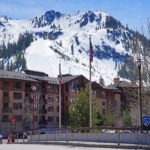
Mount Wrightson

Towering above the desert and grasslands of southern Arizona, Mount Wrightson is the highest summit in the Santa Rita Mountains and one of the most prominent peaks in the state. Its distinctive pyramid-shaped summit rises to 9,457 feet (2,882 meters), nearly a vertical mile above some of the surrounding valleys.
Located about 40 miles southeast of Tucson in Coronado National Forest, Mount Wrightson is the centerpiece of the Mount Wrightson Wilderness and one of southern Arizona’s classic “sky island” mountains. Hikers climbing from Madera Canyon pass through oak woodland, pine forest, mixed conifers, and exposed high-country ridges before reaching a summit with immense views across southeastern Arizona and into Mexico.
Mount Wrightson is also a serious hike. The most popular summit routes gain close to 4,000 feet, summer thunderstorms can develop quickly, and winter snow and ice can turn the upper mountain into an alpine challenge.
For hikers prepared for those conditions, however, Mount Wrightson offers one of the finest summit experiences in Arizona.
⚡ Fast Facts
| Feature | Details |
|---|---|
| Mountain | Mount Wrightson |
| Alternate Name | Old Baldy |
| Elevation | 9,457 ft (2,882 m) |
| Prominence | 4,590 ft (1,399 m) |
| Isolation | 38.83 mi (62.5 km) |
| Coordinates | 31.69613° N, 110.84808° W |
| Location | Santa Cruz County, Arizona |
| Mountain Range | Santa Rita Mountains |
| Range High Point | Yes |
| County High Point | Santa Cruz County |
| Nearest Higher Neighbor (NHN) | Miller Peak |
| Key Col | Near Arizona State Route 82 |
| Protected Area | Mount Wrightson Wilderness |
| Land Manager | Coronado National Forest |
| Popular Approach | Madera Canyon |
| Main Trails | Old Baldy Trail #372, Super Trail #134, Crest Trail #144 |
| Best Hiking Seasons | Spring and fall; conditions vary year-round |
🏔️ Where Is Mount Wrightson?
Mount Wrightson rises in the Santa Rita Mountains of southeastern Arizona, approximately 40 miles southeast of Tucson and north of the communities of Patagonia and Sonoita.
The peak dominates much of the surrounding landscape.
From the valleys west of the range, Mount Wrightson appears as a steep, sharply defined pyramid towering above lower ridges. Its summit stands thousands of feet above the desert grasslands and oak-covered foothills surrounding the Santa Ritas.
The mountain lies entirely within Coronado National Forest, with its highest country protected as part of the Mount Wrightson Wilderness.
Nearby Mount Hopkins rises northwest of Wrightson and is easily recognized by the astronomical observatory facilities near its summit.
Farther across southern Arizona are other major sky-island summits, including Miller Peak and Carr Peak in the Huachuca Mountains.
📏 One of Arizona’s Most Prominent Mountains
Mount Wrightson’s elevation is impressive, but its topographic prominence is even more remarkable.
Peakbagger gives the mountain approximately 4,590 feet of prominence, placing it among Arizona’s major ultra-independent summits.
Its true isolation is approximately 38.83 miles, meaning a traveler must go nearly 39 miles before reaching terrain higher than the summit.
That combination of elevation, prominence, and isolation explains why Wrightson looks so enormous from the surrounding valleys.
Although it is considerably lower than Arizona’s 12,000-foot San Francisco Peaks, Wrightson rises much more abruptly from the landscape immediately around it.
It is also the highest point in Santa Cruz County and the undisputed high point of the Santa Rita Mountains.
⛰️ Nearest Higher Neighbor
Mount Wrightson’s Nearest Higher Neighbor is Miller Peak in Arizona’s Huachuca Mountains.
Miller Peak rises to approximately 9,468 feet—only slightly higher than Mount Wrightson—but is separated from it by almost 39 miles of lower terrain.
This makes Wrightson very different from a high summit embedded in a continuous mountain ridge.
The surrounding land drops thousands of feet before rising again toward the Huachucas, giving Mount Wrightson its exceptional prominence.
Other major peaks visible or geographically connected to the southern Arizona sky-island landscape include Carr Peak, Baboquivari Peak, Kitt Peak, and Mount Hopkins.

🌄 What Is a Sky Island?
Mount Wrightson is one of the finest examples of a Madrean Sky Island.
Sky islands are isolated mountain ranges surrounded by much lower and warmer desert or grassland. Because temperature decreases and precipitation patterns change with elevation, climbing one of these mountains can be somewhat like traveling hundreds of miles northward through different climate zones.
Around the Santa Rita Mountains, lower country may support desert scrub, grassland, mesquite, and oak.
Higher slopes become increasingly forested.
Near Mount Wrightson’s upper elevations, hikers encounter ponderosa pine, Douglas-fir, and other trees associated with much cooler mountain environments.
These forests are isolated from similar habitats on neighboring ranges by broad valleys.
The result is extraordinary biological diversity—and, in some cases, isolated populations of plants and animals found in only a small portion of the Southwest.
🌲 Mount Wrightson Wilderness
The summit lies within the Mount Wrightson Wilderness, one of the original wilderness areas associated with the Wilderness Act era.
The protected area encompasses roughly 25,000 acres of rugged mountain terrain, including deep canyons, rocky ridges, oak woodland, pine-oak forest, mixed conifer habitat, grasslands, and riparian corridors.
According to the Coronado National Forest management plan, the wilderness contains seven of the region’s nine major vegetation communities.
Oak woodland dominates many lower and middle elevations, while ponderosa pine and Douglas-fir become increasingly important higher on the mountain.
Stream-fed canyons provide cooler, wetter habitats where numerous plants and animals thrive.
The area’s biological richness is one of the main reasons Madera Canyon and the Santa Rita Mountains have become internationally known among birders and naturalists.

🦜 Wildlife and Birding
Mount Wrightson rises above one of the premier birding destinations in the United States.
Madera Canyon, on the mountain’s northwestern side, attracts birdwatchers from around the world.
Its unusual combination of desert, oak woodland, riparian habitat, and high-elevation forest supports an exceptional variety of species.
Depending on season and elevation, visitors may encounter hummingbirds, woodpeckers, flycatchers, warblers, jays, raptors, and numerous birds with strong connections to the mountains of Mexico.
The spectacular elegant trogon is one of the signature birds sought by visitors to southern Arizona’s sky islands.
Larger wildlife in the Santa Ritas can include white-tailed deer, mule deer, black bear, mountain lion, bobcat, coyote, coati, and smaller mammals.
Wildlife should always be observed from a distance, particularly in heavily visited areas around Madera Canyon.
🪨 Geology of Mount Wrightson
The Santa Rita Mountains have a far more complicated geological history than a simple volcanic cone or single uplifted block.
U.S. Geological Survey mapping has identified igneous, metamorphic, volcanic, and sedimentary rocks ranging from Precambrian to Miocene age throughout the range.
One important geological unit is even called the Mount Wrightson Formation.
This sequence contains thousands of feet of ancient volcanic and sedimentary rocks associated with the Mesozoic history of southern Arizona.
Other portions of the Santa Ritas contain granite, monzonite, volcanic deposits, sedimentary formations, intrusive rocks, and much older basement material.
The modern mountain range was further shaped by the crustal extension that created the Basin and Range Province.
Beginning roughly 17 million years ago in southeastern Arizona, blocks of crust were faulted and tilted while adjacent basins subsided.
Erosion then carved the uplifted mountains into the steep ridges and deep canyons visible today.
🥾 Hiking Mount Wrightson
Mount Wrightson is a demanding but extremely popular hiking objective.
Most summit attempts begin at the Mount Wrightson Trailhead in Madera Canyon.
Two principal trails provide approaches toward the upper mountain:
- Old Baldy Trail #372
- Super Trail #134
The routes offer very different hiking experiences.
Old Baldy is generally the shorter and steeper option, while the Super Trail takes a longer, more gradual route around the mountain.
The Forest Service describes summit routes from Madera Canyon as reaching as much as approximately 6 miles one way with roughly 4,200 feet of elevation gain, depending on the exact combination of trails used.
Many hikers climb by Old Baldy and descend via the Super Trail, creating a long loop that provides different views on each half of the trip.
🥾 Old Baldy Trail
The Old Baldy Trail #372 is the classic direct approach.
Beginning in Madera Canyon, the trail climbs steadily through increasingly cool forest toward Josephine Saddle.
From there, the route continues upward toward the high country beneath Mount Wrightson.
The climb is persistent.
GPS measurements vary according to exactly how the summit route is recorded, but a typical Old Baldy approach is approximately 5.3 to 5.5 miles one way with close to 4,000 feet of elevation gain.
The forest provides welcome shade on portions of the lower route, but the upper mountain becomes increasingly exposed.
Eventually hikers reach Baldy Saddle, just below the summit ridge.
⛰️ Baldy Saddle and the Final Summit Climb
Baldy Saddle sits at roughly 8,750 feet and provides the gateway to the final climb.
From the saddle, the summit route follows the southern end of Crest Trail #144.
The trail traverses high slopes before beginning the final switchbacks toward Mount Wrightson’s summit.
This upper section offers some of the mountain’s most dramatic scenery.
The terrain drops away sharply, neighboring ridges spread across the horizon, and the surrounding valleys seem increasingly distant.
The summit itself is broad enough for hikers to rest and enjoy panoramic views, although there is little shelter from wind, lightning, or severe weather.
🥾 Super Trail
The Super Trail #134 provides a longer and generally more gradual alternative.
Rather than climbing as directly as Old Baldy, it makes a broad traverse around portions of the mountain.
The Super Trail is roughly 7 miles long as a complete point-to-point trail segment, although the distance to the Mount Wrightson summit depends on where hikers join connecting trails.
Its gentler grades make it particularly popular as a descent route.
A common strategy is therefore:
Old Baldy Trail up → summit → Super Trail down.
This creates a substantial day hike with around 4,000 feet of elevation change while allowing hikers to experience more of the Mount Wrightson Wilderness.
🌄 Views From the Summit
Few summits in southern Arizona provide a panorama comparable to Mount Wrightson.
On a clear day, the view stretches across enormous portions of the Basin and Range landscape.
Madera Canyon lies far below to the northwest.
Nearby Mount Hopkins and its observatory facilities are clearly visible.
To the southwest, the isolated profile of Baboquivari Peak can stand above the desert.
To the southeast lie the Huachuca Mountains, including Wrightson’s higher parent, Miller Peak, and neighboring Carr Peak.
Mountain ranges continue south across the international border into Sonora.
The ability to see one forested “island” after another rising from arid valleys makes the summit an ideal place to understand the geography of the Madrean Sky Islands.

🔥 Fire and the Changing Landscape
Wildfire is an important part of the modern story of Mount Wrightson.
The Florida Fire of 2005 burned extensively across portions of the Santa Rita Mountains, including areas crossed by hiking trails around Wrightson.
Fire has left visible scars in parts of the upper mountain, where standing dead trees and open slopes contrast with surviving forest.
Over time, new shrubs, grasses, young trees, and wildflowers have begun reclaiming burned terrain.
This mixture of old forest, burn scars, oak woodland, and regenerating vegetation gives modern hikers a close look at how Southwestern mountain ecosystems respond to disturbance.
❄️ Winter on Mount Wrightson
Southern Arizona does not necessarily mean snow-free hiking.
At nearly 9,500 feet, Mount Wrightson can receive significant winter snow.
North-facing slopes can retain snow and ice long after lower elevations have dried out, and portions of the upper trail may become considerably more hazardous.
Traction devices, winter navigation skills, and appropriate cold-weather clothing may be necessary depending on conditions.
Storms can also arrive quickly.
Hikers accustomed to warm temperatures in Tucson should not assume conditions will be similar on the summit.
The temperature difference between Madera Canyon, the surrounding valleys, and the top of Mount Wrightson can be dramatic.
⛈️ Summer Monsoon Hazards
Summer creates a different problem: lightning.
Arizona’s monsoon season typically brings increased thunderstorm activity during July and August.
Storm clouds can build rapidly over the Santa Rita Mountains, sometimes producing lightning, hail, heavy rain, strong winds, and flash flooding.
The exposed upper ridge of Mount Wrightson is a dangerous place to be during a thunderstorm.
An early start is especially important during monsoon season, allowing hikers to reach the summit and descend from exposed terrain before afternoon storm development becomes likely.
Weather forecasts should always be checked immediately before beginning the hike.
🔥 The Old Fire Lookout
Visitors reaching the summit may notice a concrete foundation, a reminder of Mount Wrightson’s former role in wildfire detection.
A rudimentary lookout existed on the summit in the early twentieth century.
The Forest Service subsequently built increasingly substantial lookout structures, including one constructed in 1928 with living and working space for fire observers.
The summit lookout was eventually removed during the late 1950s.
Today only remnants remain, leaving the summit largely open and unobstructed.
The old foundation has become part of the mountain’s hiking history and a familiar landmark for people reaching the top.
📜 Why Is It Called Mount Wrightson?
Before the name Mount Wrightson became firmly established, the peak was widely known as Old Baldy.
The modern name honors William Wrightson, a nineteenth-century mining entrepreneur associated with the Santa Rita mining district.
Wrightson was also connected with early Arizona journalism and served as an editor and publisher during Arizona’s territorial era.
He and Gilbert Hopkins were killed in the Santa Rita Mountains in 1865.
Nearby Mount Hopkins was named for Gilbert Hopkins, while the highest peak of the range came to bear Wrightson’s name.
“Old Baldy” remains a familiar historical name and survives in the name of the popular Old Baldy Trail.
🪶 Indigenous Landscape
The history of the Santa Rita Mountains extends thousands of years before modern mining, ranching, trails, or mapped summit names.
The Forest Service notes that the Santa Rita Mountains are known as Ce:wi Duag, or “Long Mountain,” to the Tohono O’odham.
Indigenous peoples have lived in and used the region since time immemorial, and multiple tribes continue to maintain cultural connections with these mountains.
Traditional activities include gathering native plants and participating in ceremonies connected with the land.
For visitors, recognizing this deeper history adds an important dimension to a landscape that might otherwise be viewed only as a hiking destination.
☀️ Best Time to Hike Mount Wrightson
Spring and fall generally offer the most dependable conditions for hiking Mount Wrightson.
Spring can bring pleasant temperatures at lower elevations, blooming plants, active birdlife, and cool conditions higher on the mountain.
Fall often provides crisp air and relatively stable weather after the summer monsoon.
Summer hiking is possible but requires careful management of heat and thunderstorm risk.
Winter can be spectacular, particularly when snow covers the upper ridges, but hikers should be prepared for ice, cold, and potentially serious mountain conditions.
Regardless of season, an early start is wise.
🎒 Preparing for the Hike
Mount Wrightson should be treated as a major mountain day rather than a casual desert walk.
Hikers attempting the summit should be prepared for:
- Roughly 10–14 miles of hiking depending on route
- About 4,000 feet of elevation gain
- Rapidly changing weather
- Strong summit winds
- Limited water availability
- Snow or ice during colder months
- Lightning during monsoon season
- Significant temperature differences between trailhead and summit
Carry sufficient water, food, sun protection, layers, navigation tools, and appropriate footwear.
Seasonal springs exist along some routes, but hikers should never assume that natural water will be available or safe to drink.
Current trail, road, fire, and weather conditions should be checked with Coronado National Forest before departure.
🌟 Why Mount Wrightson Is Special
Mount Wrightson combines nearly everything that makes Arizona’s sky islands extraordinary.
It rises from desert and grassland to cool mountain forest. Its slopes contain exceptionally diverse wildlife habitat. Its rocks preserve a complicated geological history stretching across hundreds of millions of years.
Its nearly 4,600 feet of prominence make it one of Arizona’s great independent summits.
And unlike many high mountains, its geography can be understood in a single day’s climb.
Hikers beginning in Madera Canyon experience an ecological journey as they ascend through oak woodland, pine forest, mixed conifers, exposed ridges, and finally a summit overlooking an archipelago of mountains stretching across southern Arizona and northern Mexico.
For anyone exploring the major peaks of Arizona, Mount Wrightson deserves a place near the top of the list.

🔗 Related Articles
📚 Sources
- Peakbagger — Mount Wrightson, Arizona
- U.S. Forest Service — Madera Canyon Recreation Guide
- U.S. Forest Service — Santa Rita Mountains / Mount Wrightson Wilderness Map
- U.S. Forest Service — Coronado National Forest Land and Resource Management Plan
- U.S. Geological Survey — Geologic Setting of the Upper Santa Cruz River Valley
- U.S. Geological Survey — Road Log for the Southern Santa Rita Mountains
- U.S. Geological Survey — Structural Geology of the Santa Rita Mountains