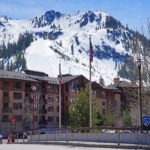
Plain View Peak

Tucked into the high country of southeastern Arizona, Plain View Peak rises to 10,370 feet (3,161 meters) in the Pinaleño Mountains of Graham County. Although it has only about 50 feet of topographic prominence, its elevation places it among the highest named summits in Arizona and makes it the third-highest named peak in the Pinaleño Mountains, behind Mount Graham and Hawk Peak.
Plain View Peak is part of the extraordinary Mount Graham “sky island,” where the terrain rises thousands of feet from hot desert valleys to cool spruce-fir forests. That vertical change creates one of the most biologically distinctive mountain environments in the Southwest.
The peak is also surrounded by exceptionally sensitive habitat. Plain View Peak lies within the Mount Graham Red Squirrel Refugium, where public access is restricted to protect the endangered Mount Graham red squirrel. For that reason, Plain View Peak is better regarded as an important geographic and ecological summit than as an ordinary recreational hiking destination.
⚡ Fast Facts
| Feature | Details |
|---|---|
| Mountain | Plain View Peak |
| Elevation | 10,370 ft (3,161 m) |
| Prominence | 50 ft (15 m) |
| Isolation | 0.27 mi (0.43 km) |
| Coordinates | 32.69272° N, 109.86491° W |
| Location | Graham County, Arizona |
| Mountain Range | Pinaleño Mountains |
| Land Manager | Coronado National Forest |
| Nearest Higher Neighbor (NHN) | Mount Graham |
| Key Col Elevation | About 10,320 ft |
| Arizona Elevation Rank | Among the state’s highest 25 named summits |
| Access | Restricted within the Mount Graham Red Squirrel Refugium |
| USGS Quadrangle | Mount Graham |
🏔️ Where Is Plain View Peak?
Plain View Peak is located in the Pinaleño Mountains of southeastern Arizona, southwest of Safford and immediately southeast of Mount Graham.
The summit lies near the crest of the range at more than 10,000 feet above sea level. This puts it in a dramatically different environment from the deserts and agricultural valleys thousands of feet below.
The Pinaleños are one of southeastern Arizona’s famous Madrean Sky Islands—isolated mountain ranges separated from one another by expanses of much warmer desert and grassland.
Because of this isolation, the high country around Plain View Peak contains plants and animals more characteristic of considerably more northerly climates.
🥉 One of Arizona’s Highest Peaks
At 10,370 feet, Plain View Peak is remarkably high by Arizona standards.
Peakbagger’s elevation rankings place it among the 25 highest named summits in the state. Within the Pinaleño Mountains, only Mount Graham and Hawk Peak rise higher.
Nearby Heliograph Peak reaches just over 10,000 feet, while Webb Peak is another major summit within the same high mountain complex.
What Plain View Peak lacks is independence from the surrounding ridge.
Its summit rises only about 50 feet above its key col, giving it very low prominence despite its impressive absolute elevation.
This makes Plain View Peak a classic example of the difference between elevation and prominence. A mountain can be extremely high above sea level without standing very far above the terrain immediately surrounding it.
⛰️ Nearest Higher Neighbor
Plain View Peak’s Nearest Higher Neighbor is Mount Graham.
The two summits are separated by only a short stretch of high terrain, giving Plain View Peak a true isolation of approximately 0.27 mile.
Mount Graham reaches about 10,700 feet and is the highest mountain in the Pinaleño range.
Because the connecting saddle between the two mountains remains above roughly 10,300 feet, Plain View Peak has only about 50 feet of clean topographic prominence.
The peaks are therefore geographically distinct but closely connected parts of the same high ridge.
🗺️ Why Is It Called Plain View Peak?
The name appears to be wonderfully literal.
The summit has also been referred to as Plainview Point, and historical geographic-name information attributes the name to the broad, unobstructed views available from the high peak toward the valleys below.
From this part of the Pinaleño crest, the land drops dramatically toward the Gila Valley and San Simon Valley.
That difference in elevation is enormous. A visitor traveling from the desert around Safford into the Mount Graham high country can climb thousands of vertical feet while passing through a succession of completely different landscapes.
The openness created by wildfire and forest disturbance during recent decades has also changed views from portions of the high ridge.
🪨 Geology of Plain View Peak
Unlike Arizona landmarks such as Sunset Crater, Plain View Peak is not a young volcanic cone.
The Pinaleño Mountains contain some extremely old bedrock.
Arizona Geological Survey mapping identifies much of the range as Pinaleño Mountains gneiss, together with granitic rocks that intruded the older metamorphic formations.
Granite has also been recorded as parent rock in scientific forest plots near Plain View Peak.
These ancient rocks were later uplifted as part of the widespread faulting that created the Basin and Range Province of southeastern Arizona.
Large blocks of crust rose to form mountains while neighboring areas dropped and gradually filled with sediment.
Erosion then cut canyons and valleys into the uplifted range, producing the steep slopes and tremendous vertical relief visible today.
🏜️ A Classic Arizona Sky Island
Few mountains demonstrate the concept of a sky island as dramatically as the Pinaleños.
The lower slopes rise from desert environments where summers are intensely hot and vegetation is adapted to limited moisture.
As elevation increases, temperatures decrease and precipitation generally increases.
Vegetation gradually changes from desert scrub and grassland into oak woodland, pine forest, mixed-conifer forest, and eventually the cool high-elevation forest found around Plain View Peak and Mount Graham.
The effect is somewhat like traveling hundreds of miles north without leaving the mountain.
These isolated upper-elevation habitats provide refuge for species that could not survive in the surrounding desert valleys.
🌲 High-Elevation Forest
At more than 10,000 feet, Plain View Peak lies within the highest forest zone of the Pinaleño Mountains.
The upper range contains the southernmost significant spruce-fir forest in North America.
Engelmann spruce and corkbark fir are characteristic trees of these cool, moist environments. Douglas-fir and other conifers also occur in adjoining mixed-conifer forests.
Historically, portions of the summit region supported dense mature forest, including stands hundreds of years old.
Wildfire, drought, insects, and changing climate conditions have substantially altered some of these forests, however, leaving areas of dead trees, fallen timber, and recovering vegetation.
The result is a landscape that continues to change.
🐿️ The Mount Graham Red Squirrel
Plain View Peak is especially important because of one tiny resident: the Mount Graham red squirrel.
This endangered subspecies occurs only in the Pinaleño Mountains.
Its isolation from other red squirrel populations is a product of the same sky-island geography that makes the range so biologically interesting. As the Southwest became warmer and drier following the last Ice Age, populations adapted to cooler forest environments became stranded on high mountain ranges.
The spruce-fir and mixed-conifer forests near Plain View Peak became one of the Mount Graham red squirrel’s last refuges.
The squirrel depends heavily on mature conifer forest for food, cover, nesting areas, and the storage of cones in large middens.
Protecting that habitat has had a direct influence on recreational access to the peak.
🚫 Can You Hike Plain View Peak?
Plain View Peak should not currently be treated as an ordinary public summit hike.
The peak is inside the Mount Graham Red Squirrel Refugium, an approximately 1,700-acre protected area surrounding Plain View Peak, Mount Graham, and Hawk Peak.
Public entry into the refugium is restricted, and roads and trails within it are not generally open for unrestricted recreational access.
Older trip reports describe hikers using Forest Road 507 and short cross-country approaches to reach Plain View Peak. Those reports should not be interpreted as evidence that the summit is currently open to ordinary public hiking.
Current access rules should always be confirmed directly with the Coronado National Forest’s Safford Ranger District before planning any trip into this part of the mountain.
The restrictions are particularly important because the summit lies within federally designated critical habitat for the endangered Mount Graham red squirrel.
🛣️ Swift Trail and the Mount Graham High Country
Visitors can still experience much of the extraordinary landscape surrounding Plain View Peak without entering restricted areas.
The primary approach into the Pinaleño Mountains is the Swift Trail, Arizona State Route 366.
The scenic road climbs more than 7,000 vertical feet over roughly 35 miles, beginning in the dry lower country and winding upward into dense forests.
The first portion is paved, while the upper stretch includes dirt road. The U.S. Forest Service recommends high-clearance vehicles for the unpaved portion and warns of narrow sections, steep drop-offs, and blind curves.
The high road is also seasonal.
The upper portion normally closes to motor vehicles from November 15 through April 15, with snow and weather potentially affecting access outside those dates as well.
🥾 Hiking Near Plain View Peak
Although access to Plain View Peak itself is restricted, the broader Mount Graham area contains numerous established recreation opportunities.
Popular destinations elsewhere in the Pinaleños include developed campgrounds, picnic areas, scenic overlooks, Riggs Flat Lake, and Forest Service hiking trails.
Nearby Heliograph Peak is a particularly useful alternative for hikers interested in exploring the high country.
At approximately 10,024 feet, Heliograph is another of the highest peaks in the range and provides a more conventional recreational mountain destination.
Webb Peak and other summits around the Pinaleños also illustrate the extraordinary topographic complexity of the range.
Always check current Forest Service closures before traveling, since wildfire, snow, restoration projects, wildlife protection, and seasonal road closures can affect access.
🔥 Fire and a Changing Forest
Wildfire has dramatically altered the upper Pinaleño Mountains.
Large fires have burned through portions of the spruce-fir and mixed-conifer forests around Mount Graham and Plain View Peak, killing mature trees and reshaping habitat.
The effects are especially significant because the upper mountain forests are so geographically limited.
Unlike species living in continuous forests stretching across hundreds of miles, plants and wildlife isolated on a sky island have few places to retreat when habitat is lost.
Fire is a natural ecological process in many Southwestern forests, but severe wildfire combined with drought, insect outbreaks, and warming temperatures can create exceptionally difficult conditions for high-elevation species.
The changing forest around Plain View Peak has therefore become an important area for scientific research and conservation.
🦌 Wildlife of the Pinaleño Mountains
The broader Mount Graham landscape supports an impressive range of wildlife.
Depending on elevation and habitat, animals can include black bears, mule deer, Coues white-tailed deer, mountain lions, squirrels, raptors, woodpeckers, and numerous forest songbirds.
High-elevation habitats also provide important territory for species such as the Mexican spotted owl and northern goshawk.
The enormous biological diversity results partly from the mountain’s extraordinary elevation range.
Animals adapted to hot desert conditions can live only a few miles horizontally from species normally associated with cool Rocky Mountain forests.
🪶 Cultural Importance of Mount Graham
Plain View Peak is part of a mountain landscape that has profound cultural importance to Indigenous peoples.
Mount Graham is known as Dził Nchaa Si’an, often translated as “Big Seated Mountain,” to the Western Apache.
The mountain has been home to and used by Indigenous people for thousands of years and remains spiritually and culturally significant today.
The history of the mountain also includes displacement. During the late nineteenth century, Apache people who had long lived in and used the region were forcibly restricted to reservations, limiting access to traditional lands, resources, and sacred places.
Understanding Plain View Peak therefore requires looking beyond elevation and topography. It belongs to a larger landscape shaped by geology, ecology, history, and living cultural traditions.
❄️ Weather at 10,000 Feet
Conditions around Plain View Peak can bear little resemblance to the weather in the valleys below.
Winter brings significant snow, freezing temperatures, and icy roads.
Snow can remain in shaded areas well into spring.
During summer, temperatures are considerably cooler than in Safford, making the Mount Graham high country a popular escape from desert heat.
Summer also coincides with Arizona’s monsoon season, however.
Thunderstorms can form rapidly over the mountains during July and August, bringing lightning, heavy rain, hail, strong winds, and sudden temperature changes.
Anyone exploring the legal recreation areas around the mountain should bring appropriate layers and be prepared for rapidly changing mountain weather.
🍂 Best Time to Visit the Mount Graham Area
The best season for exploring the publicly accessible areas near Plain View Peak is generally late spring through fall.
Access to the upper mountain normally becomes easier after the seasonal winter road closure ends in April, although late snow can still affect conditions.
Summer offers cool high-country temperatures but brings afternoon thunderstorms.
Early autumn can be especially beautiful as deciduous trees scattered among the conifer forests turn yellow and gold.
By late fall, snow and freezing temperatures become increasingly likely.
Because access rules and road conditions can change, visitors should check current information from the Safford Ranger District immediately before traveling.
📏 Elevation vs. Prominence
Plain View Peak provides a particularly good lesson in mountain topography.
Its 10,370-foot elevation sounds imposing—and it is. Yet the mountain has only 50 feet of clean prominence.
Prominence measures how far a summit rises above the lowest saddle connecting it to higher terrain.
Because Plain View Peak sits on a very high ridge connecting directly toward Mount Graham, a traveler descending from its summit toward Mount Graham loses only around 50 feet before beginning to climb again.
Compare that with Heliograph Peak, which is slightly lower in absolute elevation but has roughly 956 feet of prominence.
Heliograph therefore stands much more independently from neighboring high ground.
Neither measurement is inherently more important—they simply describe different characteristics of a mountain.
🌄 Why Plain View Peak Is Special
Plain View Peak is easy to overlook beside the higher and better-known Mount Graham.
Yet the summit occupies one of the most remarkable environments in Arizona.
At more than 10,000 feet, it stands within an isolated high-elevation forest surrounded by desert lowlands. Its ancient rocks record the geological development of southeastern Arizona. Its forests contain some of the southernmost spruce-fir habitat on the continent.
Most importantly, the mountain forms part of the protected home of the endangered Mount Graham red squirrel.
That conservation significance means Plain View Peak is not a summit where reaching the top should necessarily be the goal.
Sometimes the most responsible way to appreciate a mountain is to understand why parts of it are protected—and to enjoy the extraordinary surrounding landscape while leaving its most sensitive habitat undisturbed.
🔗 Related Articles
📚 Sources
- Peakbagger — Plain View Peak, Arizona
- U.S. Forest Service — Mount Graham Visitor Guide
- U.S. Forest Service Research — Mount Graham Red Squirrel Habitat in the Pinaleño Mountains
- U.S. Forest Service — Coronado National Forest Biological Opinion and Mount Graham Red Squirrel Critical Habitat
- Arizona Geological Survey — Geologic Map of the Artesia Quadrangle and Pinaleño Mountains
- Mount Graham International Observatory — Information for the Visiting Public