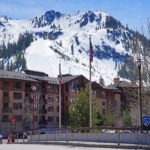
The terms mountain chain and mountain range are often used interchangeably. Both describe groups of mountains connected by geography, geology, or a shared pattern of uplift.
However, the two terms can emphasize slightly different characteristics. A mountain chain usually highlights a long, narrow, or visibly linear sequence of mountains. A mountain range is the more common general term for a connected group of mountains and may include several ridges, chains, valleys, massifs, and subranges.
The distinction is not governed by one universal scientific naming system. In many cases, whether a feature is called a chain, range, system, belt, or cordillera depends on local tradition, mapmaking conventions, language, and the scale at which the mountains are being studied. The U.S. Geological Survey notes that generic terms for geographical features do not always have strict official definitions.
🏔️ Overview
A mountain range is a group of mountains connected by high ground, geographical proximity, or a related geological history.
A mountain chain is generally a row or sequence of mountains that follows a recognizable line. The word chain draws attention to the way the summits appear linked together, much like the individual links of a physical chain.
In everyday geography:
- Mountain range is the broader and more commonly used term.
- Mountain chain emphasizes a long, connected alignment.
- The same mountain region may correctly be described using either term.
- A chain may sometimes form part of a larger range or mountain system.
- Neither term has a universally fixed size requirement.
The key difference is therefore usually one of emphasis rather than strict classification.
⚡ Mountain Chain vs. Mountain Range at a Glance
| Feature | Mountain Chain | Mountain Range |
|---|---|---|
| Basic meaning | A sequence of mountains arranged in a long line | A connected group or region of mountains |
| Main emphasis | Linear shape and continuity | Geographical and geological unity |
| Typical form | Long, narrow, or visibly linked | May be narrow, broad, branching, or divided |
| Possible components | Peaks, ridges, volcanoes, or smaller ranges | Peaks, ridges, chains, valleys, massifs, and subranges |
| Typical scale | May describe one line of mountains or an entire mountain region | May describe a small local group or a vast continental feature |
| Common usage | Descriptive geography, geology, volcanic chains, and seamount chains | Maps, atlases, geographical names, and general reference works |
| Example | A chain of volcanoes within the Cascades | The Cascade Range |
| Can the terms overlap? | Yes | Yes |
🏔️ Field Guide Tip: Do not assume that a mountain chain is always smaller than a mountain range. The terminology is flexible, and some writers use “chain” for an entire mountain system.
⛰️ What Is a Mountain Range?
A mountain range is a connected group of mountains occupying the same general geographical region. Its mountains are commonly linked by ridges, highlands, passes, valleys, or a shared geological origin.
National Geographic describes a mountain range as a series or chain of mountains located close together.
A range does not have to be a perfectly continuous wall of high ground. It may be interrupted by:
- River valleys
- Mountain passes
- Glaciers
- Plateaus
- Fault basins
- Low saddles
- Eroded gaps
- Broad areas of foothills
The boundaries of a mountain range can also be difficult to define. Geologists may draw boundaries according to rock structure or tectonic history, while cartographers may use watersheds, valleys, political borders, or established geographical names.
Mountain ranges can vary greatly in size
Some ranges are compact and occupy a relatively small area. Others extend through several countries and contain hundreds of named peaks.
Examples include:
- The Teton Range in the United States
- The Southern Alps of New Zealand
- The Alps of Europe
- The Himalayas of Asia
- The Andes of South America
A very large range may contain numerous smaller divisions known as subranges. These divisions may have their own distinctive geology, highest summits, climates, and established names.
🔗 What Is a Mountain Chain?
A mountain chain is a group of mountains forming a long line or connected sequence. Merriam-Webster defines the term as a group of mountains that forms a long line.
The word often describes the visible arrangement of summits rather than establishing a separate category of landform.
A mountain chain may consist of:
- A row of connected summits
- A long ridge containing several peaks
- A sequence of parallel ridges
- A line of volcanoes
- A series of related mountain ranges
- An underwater line of seamounts
The term is especially useful when mountains have a strong directional pattern. Fold-and-thrust mountains, volcanic arcs, and fault-controlled uplifts frequently form long alignments.
A chain can exist within a range
A broad mountain range may contain several individual chains.
For example, a large region of folded mountains may include parallel lines of ridges separated by longitudinal valleys. Each line could be described as a mountain chain, while the entire region is treated as one mountain range or system.
This means the following arrangement is possible:
Individual peaks → ridge or chain → subrange → mountain range → mountain system or cordillera
This hierarchy is helpful for understanding scale, but it is not a universal naming rule. In some geographical traditions, the words chain and range are applied at the same level.
🧭 The Main Differences Between a Mountain Chain and a Mountain Range
1. A chain emphasizes linear shape
The clearest difference is that chain suggests a line.
A mountain chain often appears as an elongated sequence of summits extending in one dominant direction. The mountains may be connected by high ridges or separated by relatively low saddles while remaining part of the same alignment.
A mountain range may also be long and narrow, but it does not have to be. Some ranges are broad, branching, curved, or divided into several parallel sections.
2. A range emphasizes a geographical unit
The word range generally treats the mountains as one recognizable geographical region.
A named range may include:
- Several major ridges
- Smaller mountain chains
- Individual massifs
- Foothills
- Interior valleys
- Glaciers
- High plateaus
- Separate clusters of peaks
For this reason, mountain range is usually the more useful term on maps and in general geographical descriptions.
3. A chain may be part of a range
A chain can describe one line of peaks within a larger mountainous region.
For example, a volcanic range may contain a distinct chain of volcanic cones. The entire landscape includes older mountains, deeply eroded terrain, lava fields, valleys, and nonvolcanic ridges, while the active or recently active volcanoes form a more obvious linear chain.
4. The words may describe the same feature
The difference is not absolute.
The Alps may be called:
- The Alps
- The Alpine mountain range
- The Alpine chain
- The Alpine mountain system
Each expression can be correct, depending on what the writer wants to emphasize.
“Alpine chain” highlights the long arc of connected mountains. “Alpine range” treats the Alps as a geographical region. “Alpine system” emphasizes the numerous ranges, massifs, valleys, and structural zones that make up the wider mountain area.
5. Range is generally more common in modern English geography
English-language maps and reference works more frequently use range in formal geographical names:
- Alaska Range
- Cascade Range
- Teton Range
- Brooks Range
- Great Dividing Range
- Karakoram Range
The word chain appears more frequently in descriptive writing or when discussing a particularly linear sequence of mountains, volcanoes, islands, or underwater peaks.
🌍 Examples from Around the World
The Andes
The Andes are commonly described as the world’s longest continental mountain range.
However, the term Andean chain is also widely understandable because the mountains form an enormous north–south alignment along western South America.
At the continental scale, the Andes are more than a single narrow row of summits. They include multiple cordilleras, volcanic zones, plateaus, basins, valleys, massifs, and branches.
Therefore:
- Andes mountain range is correct.
- Andean mountain chain is correct.
- Andean mountain system may be more precise when emphasizing its many components.
The Himalayas
The Himalayas form a great curving mountain range across southern Asia.
They are sometimes called the Himalayan chain, especially when describing their sweeping arc between the Indian subcontinent and the Tibetan Plateau.
The wider Himalayan region contains several roughly parallel geographical divisions, including the high mountain axis, lower Himalayan ranges, foothills, valleys, and adjoining mountain systems.
The Himalayas formed as the Indian and Eurasian continental plates converged, compressing, faulting, thickening, and uplifting the crust.
The Alps
The Alps are both a mountain range and a complex mountain system.
They extend in a great arc across Europe and contain numerous named groups and massifs, including the:
- Bernese Alps
- Pennine Alps
- Graian Alps
- Lepontine Alps
- Julian Alps
- Dolomites
- Mont Blanc Massif
- Monte Rosa Massif
The phrase Alpine chain emphasizes the mountains’ long, curved alignment. The word Alps, however, includes a much broader and more complicated collection of ranges, valleys, massifs, and foothills.
The Rocky Mountains
The Rocky Mountains illustrate why the word system can sometimes be more accurate than either range or chain.
The USGS describes the Rockies as a belt containing more than 100 individually named ranges and extending for over 5,000 kilometers.
The Rockies are commonly called a mountain range in everyday language, but they are actually an enormous collection of ranges, including the:
- Front Range
- Sawatch Range
- Wind River Range
- Bitterroot Range
- Absaroka Range
- Canadian Rockies
- Sangre de Cristo Mountains
For broad geographical discussions, Rocky Mountain system or Rocky Mountain belt may therefore communicate the region’s complexity more precisely.
The Cascade Range
The Cascade Range extends through parts of northern California, Oregon, Washington, and British Columbia.
It contains a famous line of major volcanoes, including:
- Mount Shasta
- Mount Hood
- Mount St. Helens
- Mount Rainier
- Mount Baker
- Glacier Peak
These volcanoes form part of the Cascade Volcanic Arc. They may be described as a volcanic chain within the broader Cascade Range.
Not every mountain in the Cascades is an individual volcanic cone. The complete range also includes older volcanic rocks, eroded uplands, intrusive rock bodies, ridges, valleys, and glaciated peaks.
The Hawaiian–Emperor Seamount Chain
The word chain is especially common for long sequences of islands and underwater mountains.
The Hawaiian–Emperor system consists of volcanic islands, atolls, and submerged seamounts extending across the Pacific Ocean. Its strongly linear arrangement records the movement of the Pacific Plate over a long-lived source of volcanic activity.
Calling it a seamount chain emphasizes the line of related volcanic features. It is not normally described as a continental mountain range because most of the mountains are underwater and separated by deep ocean.
🪨 Do Mountain Chains and Mountain Ranges Form Differently?
Not necessarily.
The words chain and range primarily describe the arrangement and grouping of mountains. They do not identify one specific mountain-building process.
Both mountain chains and ranges can form through:
Continental collision
Two continental plates converge, compressing and thickening the crust.
Examples include the:
- Himalayas
- Alps
- Zagros Mountains
- Caucasus Mountains
Subduction
An oceanic plate moves beneath another tectonic plate, producing compression, uplift, magma generation, and volcanism.
Examples include the:
- Andes
- Cascade Range
- Aleutian Range
Faulting
Large blocks of crust move along faults, creating elevated mountain fronts and neighboring basins.
Examples include the:
- Teton Range
- Sierra Nevada
- Numerous Basin and Range mountains
Volcanic activity
Repeated eruptions build individual volcanoes that may form clusters, arcs, or long chains.
Examples include:
- The Cascades
- The Aleutian Islands
- The Hawaiian Islands
- Volcanic chains of Indonesia and Japan
Regional uplift and erosion
Broad regions may rise and then be carved by rivers, glaciers, weathering, and gravity.
Erosion can divide an uplifted area into individual ridges and peaks, eventually producing terrain that resembles a conventional mountain range.
Most major mountain regions have experienced several of these processes rather than just one.
🗺️ Mountain Range, Chain, System, Belt, and Cordillera
Several related terms are used to describe groups of mountains.
| Term | General meaning |
|---|---|
| Mountain | An individual elevated landform rising prominently above its surroundings |
| Peak or summit | The highest point of a mountain or a distinct high point |
| Ridge | A long, narrow crest or strip of elevated ground |
| Mountain chain | A linear sequence of connected or related mountains |
| Mountain range | A connected group of mountains forming a recognizable geographical unit |
| Subrange | A smaller named range forming part of a larger range or system |
| Massif | A compact, distinct block or cluster of mountains |
| Mountain system | A large group of related ranges, subranges, massifs, and highlands |
| Mountain belt | An elongated geological zone affected by mountain building and crustal deformation |
| Cordillera | An extensive series or network of mountain ranges |
| Volcanic arc | A curved or linear belt of volcanoes, usually associated with subduction |
| Divide | Elevated ground separating neighboring drainage basins |
What is a cordillera?
A cordillera is a large system or network of mountain ranges.
The term is particularly common in North and South America. National Geographic describes a cordillera as a long series of mountain ranges and identifies the western mountains of North America as part of a much larger Cordilleran system.
The American Cordillera includes mountain regions extending through western North America, Central America, and South America.
What is a mountain system?
A mountain system is generally larger and more complex than one individual range.
It may contain:
- Several parallel ranges
- Intervening valleys
- High plateaus
- Volcanic zones
- Massifs
- Foothills
- Fault basins
- Separate geological provinces
The Rocky Mountains, Appalachian Mountains, and Andes may all be discussed as mountain systems when their complete geographical and geological complexity is being considered.
What is a mountain belt?
A mountain belt is primarily a geological term.
It refers to a long zone of crust that has undergone mountain building, deformation, folding, faulting, metamorphism, magmatism, or uplift.
A mountain belt may include several geographical ranges. It can also extend beneath sedimentary basins, coastal plains, or oceans where the geological structure is no longer expressed as high mountains at the surface.
What is a massif?
A massif is a compact and relatively distinct mountain block.
A massif may contain:
- One dominant mountain
- Several major summits
- Connected ridges
- Glaciers
- High passes
- A shared bedrock structure
Examples include the Mont Blanc Massif, Monte Rosa Massif, Vinson Massif, and Annapurna Massif.
Unlike a chain, a massif is usually compact rather than extremely long and narrow.
📐 Is a Mountain Chain Smaller Than a Mountain Range?
Sometimes—but not always.
A chain may describe one linear section within a larger range. In this usage, the order might be:
- Individual mountain
- Ridge or mountain chain
- Subrange
- Mountain range
- Mountain system
- Cordillera or mountain belt
However, this is only a helpful model. It is not a universal law.
Some dictionaries and geographical traditions use mountain chain for a series of mountain ranges. In those cases, the chain may be larger than any individual range it contains.
The intended meaning must therefore be determined from context.
🧩 Why Mountain Terminology Varies
Mountain names developed over centuries and often predate modern geology.
Terminology may reflect:
- Local languages
- Traditional regional names
- Early exploration
- Political boundaries
- Mapmaking history
- Geological research
- Translation choices
- Different ideas about where one range ends and another begins
The Spanish word cordillera, for example, may be translated as range, chain, or mountain system depending on context.
The word sierra originally refers to a saw and is often used for a jagged mountain range or ridge. It appears in names such as the Sierra Nevada, Sierra Madre, and Sierra de Guadarrama.
Because geographical names are influenced by history and language, two mountain areas with similar physical forms may carry very different labels.
💡 Why the Difference Matters
Understanding mountain terminology helps readers interpret maps, guidebooks, geological reports, and peak classifications.
The distinction can reveal whether a writer is discussing:
- A single line of summits
- A named geographical range
- A collection of several ranges
- A compact mountain massif
- A volcanic alignment
- A continental-scale geological belt
Using the correct scale also prevents misleading statements.
For example, calling the Rockies one simple chain can hide the fact that they contain more than 100 named ranges. Calling every linear series of volcanoes a mountain range may also overlook the distinction between an individual volcanic arc and the broader terrain surrounding it.
❓ Frequently Asked Questions
Are a mountain chain and a mountain range the same thing?
They can be.
Both terms describe groups of connected or related mountains. A mountain chain normally emphasizes a long linear arrangement, while a mountain range emphasizes the entire geographical group.
Because there is no universal boundary between the terms, the same mountains may be described as either a chain or a range.
Which is larger, a mountain chain or a mountain range?
Neither term is always larger.
A chain may be one line of peaks inside a larger range. In other contexts, a mountain chain may include several ranges and function as a synonym for a mountain system.
Is the Himalayas a mountain chain or a mountain range?
The Himalayas can correctly be described as both.
Himalayan mountain range is the more common general expression. Himalayan chain emphasizes the long arc of mountains extending across southern Asia.
When discussing the many ranges, foothills, valleys, and geological zones of the wider region, Himalayan mountain system may be more precise.
Are the Andes a chain or a range?
The Andes are commonly classified as a mountain range and are generally recognized as the world’s longest continental mountain range.
They may also be called a mountain chain because of their long north–south alignment. At the largest scale, the Andes are a complex mountain system containing multiple cordilleras, plateaus, basins, volcanic zones, and branches.
Can a mountain chain be inside a mountain range?
Yes.
A broad mountain range may contain one or more distinct chains of summits or volcanoes. Parallel chains may be separated by valleys, plateaus, glaciers, or fault-controlled basins.
Is a mountain ridge the same as a mountain chain?
Not exactly.
A ridge is a narrow strip or crest of elevated ground. It may connect several summits and form part of a chain.
A mountain chain can contain numerous ridges, peaks, saddles, and valleys extending across a much larger distance.
What is the difference between a mountain range and a mountain system?
A mountain range is one connected geographical group of mountains.
A mountain system usually contains several related ranges, subranges, massifs, valleys, and highlands. The term is useful for very large and geologically complicated mountain regions.
What is the difference between a mountain chain and a cordillera?
A mountain chain emphasizes a long alignment of mountains.
A cordillera is generally an extensive network or series of mountain ranges. Cordilleras often cover enormous regions and contain multiple parallel or branching ranges.
Can volcanoes form a mountain chain?
Yes.
Volcanoes commonly form linear or curved chains above subduction zones, rifts, or hotspots. Examples include the Cascade volcanoes, the Aleutian Islands, and the Hawaiian–Emperor Seamount Chain.
Are all mountains part of a chain or range?
No.
Some mountains are comparatively isolated. Free-standing volcanoes, erosional remnants, and individual uplifted blocks may rise far from other major mountains.
Mount Kilimanjaro, Mount Elgon, and Mount Monadnock are examples of mountains that appear relatively isolated from a continuous high mountain range.
🔗 Related Articles
- Mountain Ranges
- How Are Mountains Formed?
- Types of Mountains: How the World’s Mountains Form
- Mountain vs. Hill: What Is the Difference?
- The World’s Top 100 Mountain Ranges
- Mountains by Country
- Mountain Elevation vs. Prominence
Sources
- U.S. Geological Survey — What Is the Difference Between a Mountain, Hill, and Peak?
- Merriam-Webster — Mountain Chain Definition
- National Geographic — What Is a Mountain and How Do Mountains Form?
- National Geographic Education — North America: Physical Geography
- U.S. Geological Survey — Rocky Mountains
- U.S. Geological Survey — The Himalayas: Two Continents Collide