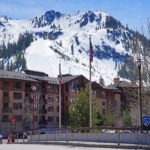
Italy’s mountains are among the most varied and culturally significant landscapes in Europe. The snow-covered Alps rise along the country’s northern frontier, while the Apennines form a rugged backbone extending through the Italian Peninsula. Additional mountain systems shape Sicily and Sardinia, where volcanic summits, limestone plateaus, deep gorges, and forested ridges create landscapes distinct from those of mainland Italy.
From Mont Blanc and the Matterhorn to the dramatic towers of the Dolomites and the wild highlands of Abruzzo, Italy offers exceptional opportunities for hiking, climbing, skiing, wildlife watching, and scenic travel.
🏔️ Overview
Italy contains portions of two major European mountain systems: the Alps and the Apennines.
The Italian Alps stretch across the northern regions of Valle d’Aosta, Piedmont, Lombardy, Trentino-Alto Adige/South Tyrol, Veneto, and Friuli-Venezia Giulia. They include some of the highest summits in Europe, many of which lie directly on Italy’s borders with France, Switzerland, and Austria.
The Apennines begin near the Ligurian coast and extend southeast through the length of the peninsula. They continue for approximately 1,350 kilometers before reaching the Strait of Messina, with related mountain landscapes appearing in northern Sicily.
Italy’s mountains are not limited to these two systems. Sicily contains major volcanic and limestone mountains, while Sardinia has ancient granite massifs and rugged uplands. Together, these regions make Italy one of Europe’s most geographically diverse mountain countries.
⚡ Fast Facts
| Category | Details |
|---|---|
| Continent | Europe |
| Primary Mountain Systems | Alps and Apennines |
| Highest Summit Associated with Italy | Mont Blanc, 4,808.73 m (15,776 ft) |
| Highest Mountain Entirely Within Italy | Gran Paradiso, 4,061 m (13,323 ft) |
| Highest Apennine Summit | Corno Grande, 2,912 m (9,554 ft) |
| Highest Dolomite Summit | Marmolada, 3,343 m (10,968 ft) |
| Major Mountain Regions | Valle d’Aosta, Piedmont, Lombardy, South Tyrol, Trentino, Veneto, Abruzzo |
| Famous Mountain Activities | Hiking, mountaineering, skiing, via ferrata, cycling, and wildlife watching |
🗺️ Major Mountain Ranges in Italy
The Italian Alps
The Alps form a broad arc across northern Italy. Their Italian portion can be divided into western, central, and eastern sections.
The Western Alps contain Italy’s loftiest mountains. Valle d’Aosta is surrounded by the Mont Blanc, Monte Rosa, Gran Paradiso, and Matterhorn massifs. Piedmont includes the Cottian, Graian, Maritime, and Ligurian Alps.
The Central Alps rise north of Lombardy. Important groups include the Bernina Range, Ortler Alps, Adamello-Presanella Alps, and Bergamasque Alps. This region contains extensive glacial terrain, deep valleys, and some of Italy’s best-known mountain passes.
The Eastern Alps extend through Trentino-Alto Adige, Veneto, and Friuli-Venezia Giulia. They include the Dolomites, Carnic Alps, Julian Alps, and several limestone mountain groups.
The Dolomites
The Dolomites are part of the Southern Limestone Alps and are famous for their pale rock towers, sheer walls, isolated pinnacles, and broad alpine meadows.
The mountains are composed largely of carbonate rocks formed from ancient marine environments. Erosion, tectonic uplift, and glaciation gradually transformed these rocks into the distinctive cliffs and spires visible today.
Major Dolomite groups include:
- Marmolada
- Sella
- Brenta Dolomites
- Pale di San Martino
- Tre Cime di Lavaredo
- Tofane
- Sassolungo
- Puez-Odle
- Dolomiti di Sesto
Nine areas of the Dolomites are protected as a UNESCO World Heritage Site. The designated property contains 18 peaks exceeding 3,000 meters and some of the world’s most impressive limestone walls.
The Apennines
The Apennines form the mountainous spine of the Italian Peninsula. They are traditionally divided into northern, central, and southern sections.
The Northern Apennines extend through Liguria, Tuscany, and Emilia-Romagna. They include the Ligurian Apennines, Tuscan-Emilian Apennines, and the striking marble mountains of the Apuan Alps.
The Central Apennines contain the range’s highest and most dramatic landscapes. Abruzzo is especially mountainous, with the Gran Sasso, Majella, Sirente-Velino, and Monti della Laga massifs.
The Southern Apennines continue through Campania, Basilicata, and Calabria. Important groups include the Matese Mountains, Lucanian Apennines, Pollino Massif, Sila, and Aspromonte.
Although lower than the Alps, the Apennines contain high plateaus, karst landscapes, steep limestone walls, isolated forests, and extensive wildlife habitat.
Mountains of Sicily
Sicily’s mountains include the Madonie, Nebrodi, and Peloritani ranges. These systems form a mountainous arc across the northern part of the island.
Mount Etna dominates eastern Sicily. Its summit elevation changes as eruptions reshape its craters, making it difficult to assign a permanent height. Etna is both an active volcano and one of the most prominent mountains in the Mediterranean region.
Mountains of Sardinia
Sardinia’s mountains are generally lower than those of mainland Italy but are geologically ancient and exceptionally rugged.
The Gennargentu Massif contains Punta La Marmora, Sardinia’s highest summit. Other important mountain regions include the Supramonte, Limbara Massif, and Iglesiente mountains.
The island’s interior is characterized by granite ridges, limestone plateaus, deep canyons, caves, and remote pastoral landscapes.
⛰️ Top Ten Highest Mountains in Italy
The following ranking uses the UIAA’s official classification of recognized Alpine summits. It includes summits located within Italy or on Italy’s international borders.
| Rank | Mountain | Elevation | Range |
|---|---|---|---|
| 1 | Mont Blanc — Monte Bianco | 4,808.73 m (15,776 ft) | Mont Blanc Group |
| 2 | Mont Blanc de Courmayeur | 4,748 m (15,577 ft) | Mont Blanc Group |
| 3 | Nordend | 4,609 m (15,121 ft) | Monte Rosa Massif |
| 4 | Zumsteinspitze — Punta Zumstein | 4,563 m (14,970 ft) | Monte Rosa Massif |
| 5 | Signalkuppe — Punta Gnifetti | 4,554 m (14,941 ft) | Monte Rosa Massif |
| 6 | Liskamm, Eastern Summit | 4,527 m (14,852 ft) | Pennine Alps |
| 7 | Liskamm, Western Summit | 4,479 m (14,695 ft) | Pennine Alps |
| 8 | Matterhorn — Monte Cervino | 4,478 m (14,692 ft) | Pennine Alps |
| 9 | Picco Luigi Amedeo | 4,469 m (14,662 ft) | Mont Blanc Group |
| 10 | Mont Maudit | 4,465 m (14,649 ft) | Mont Blanc Group |
The location of the international boundary around the summit of Mont Blanc has long been interpreted differently by French and Italian cartographers. The UIAA classifies both Mont Blanc and Mont Blanc de Courmayeur as French-Italian summits.
Dufourspitze is the highest summit of the Monte Rosa massif, but it is not included in this table because the UIAA lists the summit itself as being in Switzerland. Gran Paradiso is the highest mountain located entirely within Italy.
🏔️ Famous Mountains in Italy
Mont Blanc
Known as Monte Bianco in Italian, Mont Blanc is the highest mountain in the Alps. Its great snow dome rises above the French town of Chamonix and the Italian resort of Courmayeur.
The Italian side is particularly steep and rugged, with enormous rock walls, glaciers, and technically demanding climbing routes.
Monte Rosa
Monte Rosa is a vast glaciated massif on the border between Italy and Switzerland. It contains numerous summits above 4,000 meters, including Nordend, Zumsteinspitze, Signalkuppe, and several peaks of the Liskamm ridge.
The Italian valleys of Alagna Valsesia, Gressoney, and Macugnaga provide access to different sides of the massif.
The Matterhorn
The Matterhorn, called Monte Cervino in Italian, is one of the world’s most recognizable mountains. Its steep pyramidal summit rises above Breuil-Cervinia in Valle d’Aosta and Zermatt in Switzerland.
The Italian Lion Ridge was used during the first successful ascent from the Italian side in 1865, shortly after the mountain’s first ascent from Switzerland.
Gran Paradiso
Gran Paradiso rises to 4,061 meters between Valle d’Aosta and Piedmont. It is the only Alpine four-thousander whose summit lies entirely within Italy.
Although its normal route is often considered one of the more approachable climbs above 4,000 meters in the Alps, the ascent still involves glacier travel, crevasse hazards, altitude, and exposed terrain.
Marmolada
Marmolada is the highest mountain in the Dolomites and is sometimes called the Queen of the Dolomites. Its highest point, Punta Penia, reaches 3,343 meters.
The mountain has a massive southern rock wall and a glacier on its northern side. Its slopes also contain tunnels and historic remains associated with fighting during World War I.
Corno Grande
Corno Grande is the highest summit in the Apennines. It rises within the Gran Sasso massif of Abruzzo and reaches 2,912 meters.
Its multiple summits, limestone walls, high plateaus, and alpine appearance make Gran Sasso one of the most important climbing and hiking areas in central Italy.
🪨 Geology
Italy’s mountain geology records the complex interaction of the African, Adriatic, and Eurasian tectonic plates.
The Alps developed through the closure of ancient ocean basins and the collision of continental crust. This process folded, faulted, uplifted, and metamorphosed enormous masses of rock.
The Dolomites preserve carbonate platforms and fossil reef systems that formed in tropical seas during the Mesozoic Era. Their exposed rock layers provide an unusually detailed record of Triassic marine environments.
The Apennines are a younger and still tectonically active fold-and-thrust mountain system. Limestone is widespread, particularly in the central and southern ranges, resulting in caves, sinkholes, underground drainage systems, and broad karst plateaus.
Volcanism has also shaped Italy’s mountains. Etna, Vesuvius, and several volcanic districts of central and southern Italy reflect ongoing tectonic processes beneath the Mediterranean region.
🌿 Flora and Fauna
Italy’s mountains support habitats ranging from Mediterranean scrub and beech forest to alpine tundra, glaciers, and exposed rock.
Common Alpine trees include larch, Norway spruce, silver fir, Swiss stone pine, and mountain pine. At higher elevations, forests give way to dwarf shrubs, grasslands, and small flowering plants adapted to cold, wind, and short growing seasons.
Notable mountain animals include:
- Alpine ibex
- Alpine chamois
- Apennine chamois
- Alpine marmot
- Golden eagle
- Bearded vulture
- Eurasian lynx
- Gray wolf
- European brown bear
- Marsican brown bear
Gran Paradiso National Park played an especially important role in protecting the Alpine ibex. The species survived in the region when it had disappeared from much of the rest of the Alps.
The central Apennines provide habitat for several rare animals, including the Marsican brown bear and Apennine chamois. Wolves have also recolonized large areas of both the Apennines and the Alps.
🥾 Hiking and Climbing
Italy contains thousands of kilometers of mountain trails, ranging from short valley walks to technical high-altitude traverses.
Popular hiking and mountaineering areas include:
Dolomites Alta Via Routes
The Dolomites contain several long-distance high routes known as Alte Vie. Alta Via 1 is famous for its scenery and generally moderate walking, while Alta Via 2 crosses more difficult and rugged terrain.
Via Ferrata Routes
The Dolomites have one of the world’s greatest concentrations of via ferrata routes. These protected climbing routes use fixed cables, ladders, bridges, and metal steps to cross exposed mountain terrain.
Some routes originated from military access systems constructed during World War I. Modern via ferrata travel requires a helmet, climbing harness, approved energy-absorbing lanyard, and the ability to move safely over exposed rock.
Gran Paradiso
Gran Paradiso is a popular introductory mountaineering objective, but it is not a hiking summit. Climbers must travel over glaciers and should possess appropriate rope, crampon, ice-axe, and crevasse-rescue skills.
Gran Sasso
The Gran Sasso massif offers hiking, scrambling, climbing, and winter mountaineering. Routes range from walks across the Campo Imperatore plateau to exposed ascents of Corno Grande.
Sentiero Italia CAI
The Sentiero Italia CAI is an extensive national trail network linking the Alps, Apennines, Sicily, and Sardinia. It provides a way to experience Italy’s mountain regions through a series of shorter stages or ambitious long-distance journeys.
🎿 Skiing and Winter Sports
The Italian Alps contain some of Europe’s most famous winter destinations. Major ski areas include:
- Cortina d’Ampezzo
- Val Gardena
- Alta Badia
- Cervinia
- Courmayeur
- Livigno
- Madonna di Campiglio
- Sestriere
- Bormio
- Arabba and Marmolada
Cross-country skiing, snowshoeing, ski touring, and ice climbing are also popular. Winter conditions can create serious avalanche hazards, even on slopes that appear gentle or familiar.
The Apennines have smaller ski areas, particularly around Abruzzo, Emilia-Romagna, Lazio, and Molise. Their snow conditions are generally more variable than those of the high Alps.
🌤️ Best Time to Visit
The best time to explore Italy’s mountains depends on the activity and elevation.
June through September is the main hiking season in the Alps and Dolomites. High passes and north-facing trails may retain snow into early summer.
July and August generally provide the widest access to high-elevation trails and mountain huts, but these are also the busiest months.
September often brings cooler temperatures, clearer air, and fewer visitors. Some huts and lifts begin closing later in the month.
December through March is the primary skiing season, although snow conditions vary by elevation, region, and year.
Spring and late autumn are quieter but less predictable. Trails may be muddy, snow-covered, or damaged, while mountain huts and cableways may be closed between their summer and winter seasons.
🧭 Mountain Parks and Protected Areas
Italy has numerous national and regional parks protecting mountain environments.
Gran Paradiso National Park
Established in 1922, Gran Paradiso was Italy’s first national park. It protects alpine valleys, glaciers, wildlife habitat, and the mountains surrounding the Gran Paradiso massif.
Stelvio National Park
Stelvio National Park protects a vast section of the Central Alps in Lombardy and Trentino-Alto Adige. Its landscapes include glaciers, high passes, conifer forests, and the Ortler-Cevedale mountain group.
Dolomiti Bellunesi National Park
This park protects rugged mountain terrain in Veneto, including cliffs, remote valleys, forests, and species-rich alpine habitats.
Gran Sasso and Monti della Laga National Park
Located primarily in Abruzzo, this park contains Corno Grande, Campo Imperatore, the Monti della Laga, and numerous historic mountain villages.
Majella National Park
Majella National Park protects a broad limestone massif crossed by deep ravines, high plateaus, caves, and traditional pastoral routes.
Abruzzo, Lazio and Molise National Park
One of Italy’s oldest protected areas, this park is particularly important for the conservation of the Marsican brown bear, Apennine wolf, and Apennine chamois.
Monti Sibillini National Park
The Sibillini Mountains rise between Umbria and Marche. The park contains Monte Vettore, glacial landforms, high grasslands, limestone ridges, and historic villages.
💡 Fun Facts
- The Alps form Italy’s northern boundary with France, Switzerland, Austria, and Slovenia.
- Gran Paradiso is the highest mountain located entirely within Italy.
- The Dolomites contain rock formations that developed from ancient marine carbonate platforms.
- Italy has both glaciated Alpine summits and active volcanic mountains.
- Many places in South Tyrol have both Italian and German names, while Ladin is also spoken in several Dolomite valleys.
- The central Apennines contain some of the wildest and least densely populated landscapes in Italy.
- Numerous Dolomite via ferrata routes follow or incorporate access lines created during World War I.
- Italy’s mountain huts are known as rifugi and often provide meals, sleeping accommodations, and information about local trail conditions.
❓ Frequently Asked Questions
What is the highest mountain in Italy?
Mont Blanc, or Monte Bianco, reaches 4,808.73 meters and is listed by the UIAA as a French-Italian summit. However, French and Italian maps have historically represented the boundary around the summit differently.
What is the highest mountain entirely within Italy?
Gran Paradiso is the highest mountain located entirely within Italy. Its summit reaches 4,061 meters.
What is the highest mountain in the Apennines?
Corno Grande is the highest summit in the Apennines, reaching 2,912 meters in the Gran Sasso massif.
Are the Dolomites part of the Alps?
Yes. The Dolomites form part of the Southern Limestone Alps in northeastern Italy.
Do the Apennines extend through all of Italy?
The main Apennine chain extends through most of the Italian Peninsula, from northwestern Italy to Calabria. Related mountain systems continue across northern Sicily.
What is the best mountain region in Italy for hiking?
The Dolomites are among the most popular regions because of their extensive trails, mountain huts, cableways, and dramatic scenery. Gran Paradiso, the Ortler Alps, Gran Sasso, Majella, and the Sibillini Mountains also offer excellent hiking.
Does Italy have glaciers?
Yes. Glaciers remain in several high Alpine regions, including the Mont Blanc, Monte Rosa, Ortler-Cevedale, Adamello-Presanella, and Bernina areas. Many have retreated significantly as temperatures have risen.
Is hiking in the Italian mountains difficult?
Italy has routes for nearly every ability level. However, high-elevation trails may involve snow, exposed ledges, loose rock, thunderstorms, rapid weather changes, or difficult route-finding. Trail length alone does not indicate difficulty.
🏔️ Field Guide Tip
Mountain conditions in Italy can change quickly, especially above the tree line. Check local forecasts and trail reports, carry warm and waterproof layers, and do not assume that a route is safe simply because it is popular. Glacier climbs, technical summits, and unfamiliar via ferrata routes are best attempted with appropriate training or a qualified local guide.
🔗 Related Articles
- Mountains in France
- Mountains in Austria
- Mountains in Germany
- Mountains in Croatia
- Mountains in Greece
- Mountains by Country
- Highest Mountains
- Mountain Ranges
- How Are Mountains Formed?
- What Is Mountain Prominence?
- Mountain Elevation vs. Prominence
🔗 Related Hiking and Safety Guides
- The Ten Essentials for Hiking
- What to Do If You Get Lost Hiking
- Hiking Boots
- Rain Gear
- Hiking Maps
- Trekking Poles
- First-Aid Kits
📚 Sources
- UIAA — 4,000m Summits in the Alps (UIAA)
- UNESCO World Heritage Centre — The Dolomites (UNESCO World Heritage Centre)
- Gran Paradiso National Park — The National Park (PNGP)
- Gran Sasso and Monti della Laga National Park — Territory and Nature (Gran Sasso Laga Park)
- Italia.it — Mountain Holidays in Italy (Italia.it)
- ISPRA Geological Survey of Italy — Geological and Geothematic Maps (ISPRA)
- Treccani — The Apennines (treccani.it)