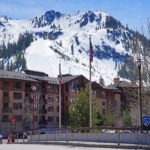
Palisades Tahoe Ski Resort

Palisades Tahoe Ski Resort combines Olympic history, immense Sierra Nevada scenery, and some of the most challenging lift-served terrain in the United States. Located near Lake Tahoe in Placer County, California, the resort encompasses two distinct ski mountains—Palisades and Alpine—connected by the Base-to-Base Gondola.
Together, the two mountains provide approximately 6,000 acres of skiable terrain, 288 marked trails, 23 bowls, and nearly 40 lifts. The resort is especially renowned for its steep chutes, open bowls, cliff-lined faces, moguls, and freeride terrain, although it also offers extensive intermediate cruising and several designated beginner areas.
The Palisades side hosted the 1960 Winter Olympics and later became closely associated with American extreme skiing. Alpine, meanwhile, developed a quieter reputation centered on natural snow, open bowls, varied aspects, and a less village-oriented mountain experience. Visitors can now explore both areas using a single lift ticket and the gondola linking their base areas.
🏔️ Overview
Palisades Tahoe is situated in the northern Sierra Nevada, northwest of Lake Tahoe and south of Truckee. Its terrain extends across eight named mountain peaks and two major base areas.
The resort’s two sides have distinctly different personalities:
- Palisades offers the larger base village, extensive lift infrastructure, historic Olympic terrain, high-alpine bowls, terrain parks, and many of the resort’s best-known expert zones.
- Alpine provides a more traditional and understated ski-area atmosphere, with open bowls, tree-lined slopes, natural terrain, and numerous routes spreading across Ward Peak and Scott Peak.
The Palisades side rises from approximately 6,200 feet to a highest elevation of 9,050 feet. Alpine begins slightly higher, at approximately 6,835 feet, and reaches 8,637 feet on Ward Peak.
Palisades Tahoe receives an official average of about 400 inches of snow each winter. Pacific storms moving inland from the California coast can deliver enormous snowfall totals, although the Sierra Nevada’s relatively mild climate can also produce heavy snow, wind, rain at lower elevations, and rapidly changing surface conditions.
⚡ Fast Facts
| Fast Fact | Details |
|---|---|
| Continent | North America |
| Country | United States |
| State | California |
| County | Placer County |
| Nearest Communities | Olympic Valley and Alpine Meadows |
| Mountain Range | Sierra Nevada |
| Lowest Base Elevation | 6,200 ft / 1,890 m |
| Highest Elevation | 9,050 ft / 2,758 m |
| Maximum Vertical Rise | 2,850 ft / 869 m |
| Skiable Terrain | 6,000 acres / 2,428 hectares |
| Marked Trails | 288 |
| Bowls | 23 |
| Lifts | 39 |
| Average Annual Snowfall | 400 in / 1,016 cm |
| Longest Run | Mountain Run—3.2 miles / 5.15 km |
| Beginner Terrain | 25% |
| Intermediate Terrain | 43% |
| Advanced Terrain | 24% |
| Expert Terrain | 9% |
| Palisades Opened | 1949 |
| Alpine Opened | December 28, 1961 |
| Mountains Combined | November 2011 |
| Base-to-Base Gondola Opened | December 2022 |
| Parent Company | Alterra Mountain Company |
| Season Pass Network | Ikon Pass |
| Typical Winter Season | November to May |
📍 Location
Palisades Tahoe is located on the western side of North Lake Tahoe between Tahoe City and Truckee. The Palisades base is in Olympic Valley, while the Alpine base is reached through the neighboring community of Alpine Meadows.
The resort is approximately:
- 10 miles northwest of Tahoe City
- 12 miles south of Truckee
- 42 miles from Reno
- 96 miles from Sacramento
- 196 miles from San Francisco
California State Route 89 provides the main regional access. Olympic Valley Road leads from the highway to the Palisades base, while Alpine Meadows Road climbs west toward Alpine Lodge.
The resort is outside the official Lake Tahoe Basin boundary, but its mountains, access roads, communities, and visitor economy are closely connected with the Tahoe region. Lake Tahoe can be seen from numerous upper-mountain viewpoints, particularly on the Alpine side.
Palisades Tahoe lies within the ancestral territory of the Washoe people, who have lived throughout the Lake Tahoe region for thousands of years.

🕰️ History of Palisades Tahoe
The Founding of the Palisades Side
The original ski area opened in 1949 under the direction of Alexander Cushing and several early partners. At the time, the valley contained little infrastructure, and the new resort began with limited lodging and a single chairlift.
Cushing soon pursued the ambitious idea of bringing the Winter Olympics to the valley. Despite competing against far more established European destinations, the California resort was selected to host the 1960 Winter Games.
The Olympic decision transformed the area. Roads, lodging, athletic facilities, ski lifts, and supporting infrastructure were constructed in preparation for the Games. The event helped introduce the Lake Tahoe region to an international audience and accelerated the growth of skiing throughout Northern California.
The 1960 Games were also notable for introducing women’s speed skating and biathlon to the Winter Olympic program. Alpine skiing events were held on resort terrain, including courses around KT-22.
The Development of Alpine
Alpine Meadows opened on December 28, 1961. Its original development focused on Ward Peak and the surrounding natural bowls.
Unlike the increasingly elaborate village at the neighboring Olympic resort, Alpine retained a relatively simple base area. It attracted skiers who valued open terrain, quieter slopes, natural snowfall, and a mountain layout that rewarded exploration.
Additional lifts gradually opened terrain around Scott Peak, Lakeview, Sherwood, Alpine Bowl, and the backside of Ward Peak.
Combining the Two Mountains
After decades of separate operation, the Palisades and Alpine ski areas came under common ownership in November 2011. A shared lift ticket gave visitors access to a combined 6,000 acres, although reaching the second mountain initially required driving or taking a shuttle.
The resort adopted the name Palisades Tahoe in September 2021. The change removed a former name widely recognized as derogatory toward Indigenous women. The Washoe Tribe of Nevada and California supported the decision, and the resort has since worked with tribal representatives on cultural education and public recognition of Washoe history.
The Base-to-Base Gondola
The Base-to-Base Gondola opened in December 2022. The approximately 2.4-mile lift connects the Village at Palisades Tahoe with Alpine Lodge, allowing visitors to travel between the two mountains without driving.
The gondola takes roughly 16 minutes under normal operating conditions. It is primarily a transportation connection rather than a conventional ski run between the mountains. Weather, wind, maintenance, and operational restrictions can affect its availability.
🎿 Ski Terrain and Mountain Layout
The Palisades Side
The Palisades side contains approximately 3,600 acres, 187 trails, 16 bowls, and 26 lifts. It is the more developed of the two mountains and includes the Village at Palisades Tahoe, the Aerial Tram, the Funitel, Gold Coast, High Camp, and several celebrated expert zones.
KT-22
KT-22 is perhaps the resort’s most famous mountain zone. The chairlift rises directly from the base and accesses steep terrain with minimal traversing.
Notable areas around KT-22 include:
- The Fingers
- Chute 75
- West Face
- Olympic Lady
- Rock Garden
- Saddle
- Moseley’s Run
Much of the terrain is steep, exposed, and ungroomed. Cliffs, rock bands, moguls, narrow entrances, and variable snow conditions make KT-22 best suited to advanced and expert skiers.
Headwall and Granite Chief
The Headwall area provides steep bowls, chutes, cornices, and broad upper-mountain faces. Terrain openings can depend on avalanche-control work, wind, visibility, and snow coverage.
Granite Chief occupies the western side of the Palisades mountain. Its wooded slopes, bowls, and technical terrain often preserve snow after storms. The area feels more remote than the central upper mountain, and some exits require traversing or careful route selection.
Siberia and Emigrant
Siberia Express accesses open upper-mountain terrain that includes groomed pistes, bowls, moguls, and routes leading toward the backside of the resort.
The Emigrant area provides a mixture of intermediate and advanced skiing around one of the resort’s highest lift-served ridges. Strong winds can scour exposed slopes while depositing deep snow in nearby gullies and leeward pockets.
Gold Coast and High Camp
Gold Coast is an important central hub reached by the Funitel. It offers access to intermediate terrain, restaurants, services, terrain parks, and lifts continuing toward several upper-mountain zones.
High Camp is reached by the Aerial Tram and includes beginner facilities, sightseeing opportunities, seasonal dining, and access to surrounding trails. It is one of the most approachable places for new skiers to experience the resort’s upper elevations.
The Alpine Side
Alpine contains approximately 2,400 acres, 109 trails, seven bowls, and 13 lifts. Its terrain spreads across Ward Peak, Scott Peak, Alpine Bowl, Lakeview, Sherwood, and several adjoining ridges.
Summit and Alpine Bowl
Summit Express provides access to Ward Peak, the highest point on the Alpine side. From the upper station, skiers can choose among groomed runs, open bowls, steep faces, and routes leading toward the backside of the mountain.
Alpine Bowl contains a mixture of intermediate and advanced terrain. Snow and visibility can change rapidly because much of the upper mountain is open and exposed.
Scott Peak
Scott Peak is known for steep chutes, trees, gullies, and natural snow. Routes around Scott Chair can become heavily moguled, and entrances may narrow considerably when coverage is limited.
The area is particularly popular with advanced skiers seeking shorter laps on technical terrain.
Lakeview
The Lakeview area offers some of the resort’s most memorable views of Lake Tahoe. Terrain ranges from intermediate groomers to ungroomed slopes and tree skiing.
Because several runs receive significant sunlight, snow can soften quickly during spring. Conditions may progress from firm in the morning to soft corn snow in the afternoon.
Sherwood
Sherwood lies on the mountain’s western and southwestern side. It has a quieter, more remote character and includes intermediate cruising, trees, and open slopes.
Its sunnier aspect makes Sherwood especially enjoyable during cold winter mornings and suitable spring conditions. However, the same exposure can lead to thin or rapidly softening snow during warm weather.
🟢 Is Palisades Tahoe Good for Beginners?
Palisades Tahoe has beginner terrain, learning areas, and ski-school programs, but its reputation is primarily built around advanced skiing. New skiers should begin in designated learning zones rather than attempting to travel widely across the resort.
On the Palisades side, beginner facilities are available around SnoVentures, High Camp, and parts of the upper mountain. High Camp allows beginners to learn at elevation without immediately descending the full mountain.
Alpine also has introductory slopes near its base. However, some green runs and connecting routes can feel more challenging when they are crowded, icy, narrow, or affected by changing weather.
First-time visitors may benefit greatly from a lesson. In addition to teaching basic technique, an instructor can identify appropriate terrain and explain how to navigate the resort’s complicated layout.
🔵 Intermediate Skiing
Intermediate skiers have access to a large portion of Palisades Tahoe. The resort officially classifies approximately 43% of its terrain as intermediate, representing more than 2,500 acres.
Popular intermediate zones include:
- Gold Coast
- Shirley Lake
- Big Blue
- Mountain Run
- Siberia
- Resort Chair
- Alpine Bowl
- Lakeview
- Sherwood
- Roundhouse
The Palisades side generally provides more lift-served groomers and convenient access to services. Alpine offers a more natural mountain experience, with scenic runs that follow ridges, bowls, and forested slopes.
Intermediate visitors should still study the trail map carefully. Some blue trails contain steep pitches, moguls, narrow connections, or long traverses. A route’s difficulty can also increase substantially during storms, flat light, or icy conditions.
⚫ Advanced and Expert Terrain
Palisades Tahoe is one of North America’s best-known destinations for advanced and expert skiing. Its landscape includes steep bowls, cliff bands, narrow chutes, cornices, couloirs, moguls, trees, gullies, and exposed high-alpine faces.
Expert zones include portions of:
- KT-22
- Headwall
- Granite Chief
- Silverado
- Broken Arrow
- The Palisades
- Scott Peak
- Keyhole
- Beaver Bowl
- Estelle Bowl
- High Yellow
- Promised Land
Many famous lines are marked only as large zones rather than conventional trails. Entrances may not be obvious, and conditions can vary considerably within the same area.
A run that is manageable in deep snow may become extremely difficult when firm, moguled, wind-scoured, or thinly covered. Visitors should observe all signs, closures, ropes, and patrol instructions.

❄️ Snow and Best Time to Ski
Palisades Tahoe reports average annual snowfall of approximately 400 inches. Individual seasons vary dramatically, with some winters producing exceptionally deep snow and others experiencing extended dry or warm periods.
December
December marks the beginning of the main winter season. Early storms can produce excellent skiing, but many bowls, chutes, and lower-elevation routes may still need additional coverage.
January and February
January and February generally provide colder temperatures and the best chance of midwinter powder. These months can also bring high winds, heavy snowfall, road closures, delayed lift openings, and avalanche-control work.
Major storms may prevent upper-mountain lifts from operating even when snow conditions appear excellent.
March
March often combines a deep seasonal snowpack with longer days. Visitors may experience everything from cold powder to sunny spring skiing during the same trip.
April and May
Spring skiing can continue through April and sometimes into May, depending on snowfall and temperatures. Conditions are often firm in the morning before softening in the sun.
The Palisades side commonly hosts the resort’s latest-season skiing because its upper mountain can retain deeper snow and provide lift access from the base without requiring continuous coverage on lower trails.
🏔️ Field Guide Tip: Palisades Tahoe is too large to understand in a single morning. Spend one full day exploring the Palisades side and another on Alpine. Attempting to cover both mountains immediately can result in more time spent navigating lifts and gondolas than skiing.
🚡 Lifts and Base Areas
The Village at Palisades Tahoe
The Village is the resort’s largest base area. It contains lodging, restaurants, shops, equipment rentals, ski-school meeting areas, and access to several major lifts.
Important mountain-access lifts include:
- Aerial Tram
- Funitel
- Red Dog
- Exhibition
- KT-22
- Base-to-Base Gondola
The village provides the most extensive collection of visitor services, but it can also become extremely busy during holidays, powder days, and major events.
Alpine Lodge
Alpine Lodge is smaller and more utilitarian. It provides ticketing, rentals, food, lessons, guest services, and direct access to the Alpine mountain.
The base has fewer shops and lodging options than the Palisades Village. Many visitors stay elsewhere in North Lake Tahoe and drive or use public transportation to reach Alpine.
Base-to-Base Gondola
The gondola allows passengers to travel between the two base areas. It may operate as separate sections when conditions require, and service can be interrupted by high winds or other operational limitations.
Visitors should check its status before leaving their original base, especially late in the afternoon.
🎟️ Lift Tickets and the Ikon Pass
Palisades Tahoe is part of the Ikon Pass network. Access may be included with selected Ikon Pass products, although holiday restrictions and other conditions vary by pass type and season.
The resort also sells date-specific lift tickets, multi-day products, lessons, rentals, and special packages. Prices generally change according to demand and the selected date.
Purchasing tickets in advance is usually preferable to buying them at the mountain. Visitors should confirm whether their ticket provides access to both mountains and whether any blackout dates apply.
🏘️ Lodging and Dining
The Village at Palisades Tahoe offers the most convenient lodging for visitors who want to walk to lifts. Accommodation primarily consists of condominium-style units, hotel rooms, and vacation rentals surrounded by restaurants, shops, and plazas.
Additional lodging can be found in:
- Olympic Valley
- Alpine Meadows
- Tahoe City
- Truckee
- Sunnyside
- Kings Beach
- Incline Village
Staying in Tahoe City or Truckee provides a wider range of restaurants and accommodations, but visitors must account for winter driving and traffic.
Dining ranges from quick-service mountain restaurants to sit-down establishments in the village. Operating hours vary, particularly during early season, late season, storms, and weekdays.
🚗 Getting to Palisades Tahoe
Reno-Tahoe International Airport is the nearest major commercial airport. Sacramento International Airport provides another common arrival point, while travelers from the San Francisco Bay Area generally reach the resort by driving east on Interstate 80.
Winter travel can be difficult. Interstate 80, State Route 89, Olympic Valley Road, and Alpine Meadows Road may experience snow, ice, chain controls, accidents, closures, and severe congestion.
Parking procedures can change by season and day of the week. Reservations or fees may apply on selected dates, so visitors should check current resort information before departing.
Regional buses and resort transportation may provide alternatives to driving. Public transit can be particularly valuable during busy weekends when parking areas and access roads fill early.
☀️ Palisades Tahoe in Summer
Palisades Tahoe operates as a summer recreation destination after the ski season ends. Available activities may include:
- Aerial Tram sightseeing
- Hiking
- Mountain biking
- Bike rentals
- High Camp activities
- Scenic dining
- Yoga
- Children’s programs
- Festivals and organized events
The upper mountain provides expansive views of the Sierra Nevada and Lake Tahoe. Summer hiking routes pass through forests, meadows, rocky ridges, and high-elevation terrain once covered by winter ski runs.
Visitors should remember that mountain weather can change quickly. Thunderstorms, smoke, heat, snowfields, and strong winds may affect summer activities.

🧭 Nearby Mountains and Attractions
Lake Tahoe
Lake Tahoe is one of North America’s largest and highest major alpine lakes. Beaches, overlooks, hiking trails, boating opportunities, and historic sites surround its California and Nevada shores.
Tahoe City
Tahoe City sits at the lake’s outlet into the Truckee River. It offers restaurants, lodging, shopping, beaches, and access to trails around North Lake Tahoe.
Truckee
Truckee is a historic mountain town north of the resort. Its downtown contains preserved buildings, restaurants, shops, museums, and lodging.
Granite Chief Wilderness
The Granite Chief Wilderness borders parts of the resort and protects rugged Sierra Nevada terrain containing forests, meadows, streams, and high ridges.
Lift-served resort terrain should not be confused with the adjoining wilderness. Anyone entering undeveloped backcountry needs avalanche education, appropriate equipment, navigation skills, and knowledge of current conditions.
Freel Peak
Freel Peak is the highest mountain in the Lake Tahoe Basin. The summit offers far-reaching views across the lake and surrounding Sierra Nevada.
Pyramid Peak
Pyramid Peak rises southwest of Lake Tahoe in the Desolation Wilderness. Its broad granite summit is one of the region’s most recognizable high points.
💡 Fun Facts
- The Palisades side opened in 1949 with only one chairlift.
- The resort hosted the 1960 Winter Olympics less than eleven years after opening.
- Alpine Meadows began operating on December 28, 1961.
- The Palisades and Alpine mountains joined under common ownership in November 2011.
- The resort adopted the Palisades Tahoe name in September 2021.
- The Base-to-Base Gondola opened in December 2022.
- The combined resort contains eight named mountain peaks and 23 bowls.
- Mountain Run is the longest marked trail at approximately 3.2 miles.
- KT-22 is commonly nicknamed “The Mothership” because of the amount and quality of expert terrain reached by a single lift.
- The resort has produced or served as a home mountain for numerous Olympic athletes, World Cup racers, freeride competitors, and influential extreme skiers.
- The 1960 Winter Games helped establish the Lake Tahoe region as an internationally recognized winter destination.
❓ Frequently Asked Questions
How large is Palisades Tahoe?
Palisades Tahoe has approximately 6,000 skiable acres across the Palisades and Alpine mountains. The resort lists 288 trails, 23 bowls, and 39 lifts.
Are Palisades and Alpine connected?
Yes. The Base-to-Base Gondola connects the Village at Palisades Tahoe with Alpine Lodge. The two sides can also be reached by road, but they do not have a conventional ski trail running directly between their base areas.
Is Palisades Tahoe suitable for beginners?
Yes, but beginners should remain in designated learning areas. The resort is famous for difficult terrain, and navigating between beginner zones can be confusing for first-time visitors.
Which side is better for beginners?
The Palisades side has more extensive learning facilities and convenient access to beginner terrain around High Camp and SnoVentures. Alpine also has beginner terrain near its base but offers fewer village services.
Which side is better for expert skiers?
Both sides have excellent expert skiing. Palisades is known for KT-22, Headwall, Granite Chief, Silverado, and the Palisades. Alpine offers steep bowls, chutes, trees, and technical terrain around Scott Peak, Keyhole, Beaver, and Estelle.
What is the highest point at Palisades Tahoe?
The resort lists a highest elevation of 9,050 feet on the Palisades side. Granite Chief itself reaches approximately 9,006 feet.
How much snow does Palisades Tahoe receive?
The resort reports an average of approximately 400 inches of snowfall each winter. Annual totals vary considerably.
When is the best time to ski Palisades Tahoe?
January through March generally offers the best chance of widespread terrain coverage. January and February are colder, while March often combines a deep snowpack with longer days and milder temperatures.
Did Palisades Tahoe host the Winter Olympics?
Yes. The Palisades side hosted the 1960 Winter Olympics. Alpine skiing events took place on the mountain, while other venues were constructed throughout the valley.
Why was the resort renamed?
The resort changed its name in 2021 to remove a former term recognized as derogatory and offensive toward Indigenous women. The new name was adopted following consultation and relationship-building with the Washoe Tribe of Nevada and California.
Is Palisades Tahoe on the Ikon Pass?
Yes. Palisades Tahoe participates in the Ikon Pass network. Access conditions depend on the specific pass product and season.
Does Palisades Tahoe operate during summer?
Yes. Summer offerings commonly include Aerial Tram sightseeing, hiking, mountain biking, dining, children’s activities, and special events. Exact operations vary annually.
🔗 Related Articles
📚 Sources
- Palisades Tahoe — Mountain Statistics (Palisades Tahoe)
- Palisades Tahoe — Our History (Palisades Tahoe)
- Palisades Tahoe — Trail Maps (Palisades Tahoe)
- Palisades Tahoe — Snowfall Tracker (Palisades Tahoe)
- Palisades Tahoe — Our New Name and Vision (Palisades Tahoe)
- Washoe Tribe of Nevada and California — Palisades Tahoe Renaming Statement (Washoe Tribe)
- Olympics — Squaw Valley 1960 (Olympics)
- San Francisco Chronicle — Tahoe Resort Opens Transformative New Ski Gondola (sfchronicle.com)