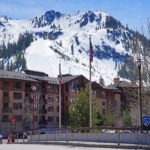
Puu Nianiau

Puʻu Nianiau is an ancient volcanic cone on the northwestern flank of Haleakalā on the island of Maui, Hawaiʻi. Rising to approximately 6,849 feet (2,088 meters), the modest summit sits near the entrance to the Summit District of Haleakalā National Park, not far from Hosmer Grove and the road that climbs toward the 10,023-foot summit of Haleakalā.
Compared with the enormous volcanic mountain beneath it, Puʻu Nianiau is a small feature. Its prominence is only about 89 feet (27 meters), and higher terrain lies almost immediately to the southeast. Yet the cone has an unusually rich story.
Puʻu Nianiau preserves evidence of an older phase of Haleakalā volcanism, appears in the early boundary history of the national park, stood beside a World War II military base camp, and occupies a fascinating ecological transition between Maui’s native montane forest and the increasingly dry subalpine landscapes of the upper volcano.
⚡ Fast Facts
| Feature | Details |
|---|---|
| Mountain | Puʻu Nianiau |
| Alternative spellings | Puu Nianiau, Puʻunianiau |
| Country | United States |
| State | Hawaiʻi |
| Island | Maui |
| County | Maui County |
| Protected area | Haleakalā National Park |
| Volcano | Haleakalā / East Maui Volcano |
| Greater region | Mountains in Hawaiʻi |
| Elevation | Approx. 6,849 ft / 2,088 m |
| Prominence | Approx. 89 ft / 27 m |
| Isolation | Approx. 0.07 mi / 0.11 km |
| Line parent | Kilohana |
| Nearest Higher Neighbor (NHN) | Puʻu o ʻIli |
| Key saddle | Approx. 6,760 ft / 2,060 m |
| Coordinates | Approx. 20.7724° N, 156.2449° W |
| Landform type | Volcanic cinder cone |
| Volcanic unit | Kula Volcanics |
| Broader volcano type | Hawaiian shield volcano |
| Nearby landmark | Hosmer Grove |
| Nearby major summit | Haleakalā |
| Nearby Maui mountain | Puʻu Kukui |
| Notable history | Site of a World War II military base camp nearby |
| Ecological setting | Montane forest and subalpine shrubland transition |
| Park significance | Historic survey point used in defining Haleakalā park boundaries |
Puʻu Nianiau is a genuine named volcanic cone, but its 89 feet of prominence show that it rises only slightly above the surrounding slope of Haleakalā. It is best understood as part of the enormous East Maui volcanic massif rather than as a deeply independent mountain.
📍 Where Is Puʻu Nianiau?
Puʻu Nianiau rises on the northwestern slope of Haleakalā, the huge shield volcano forming most of eastern Maui.
The cone is situated close to the entrance area of Haleakalā National Park’s Summit District, at roughly the elevation where visitors transition from the greener Upcountry slopes into the colder and increasingly open highlands of the volcano.
Nearby Hosmer Grove lies just below 7,000 feet.
From this general area, Haleakalā Highway continues climbing southeast toward the enormous summit depression and the 10,023-foot high point of Haleakalā.
The location gives Puʻu Nianiau an interesting geographic position. It stands below the stark alpine-desert environment of the highest summit but above much of the lush forest and agricultural landscape characteristic of lower Upcountry Maui.
📏 Elevation and Topography
Peakbagger gives Puʻu Nianiau an elevation of 6,849 feet (2,087.6 meters).
Its topographic prominence is approximately 89 feet (27 meters), based on a key saddle at roughly 6,760 feet.
Its isolation is particularly small—only about 0.07 mile, or 0.11 kilometer.
The Nearest Higher Neighbor (NHN) in Peakbagger’s database is Puʻu o ʻIli, located immediately southeast.
Puʻu Nianiau’s line parent is listed as Kilohana.
These figures reveal the nature of the summit particularly well. Puʻu Nianiau is not an isolated volcanic mountain comparable with Haleakalā itself. Instead, it is a small volcanic cone perched high on the flank of a vastly larger volcano.
🌋 An Ancient Cinder Cone
Puʻu Nianiau is a cinder cone, a type of volcanic landform created when gas-rich magma erupts explosively from a localized vent.
During this type of eruption, blobs and fragments of molten rock are thrown into the air. They cool as they fall around the vent, gradually constructing a conical hill of volcanic cinders, scoria, ash, and other fragmented material.
Older National Park Service descriptions specifically identified Puʻu Nianiau as an ancient cinder cone.
Scientific work on Haleakalā has also associated Puʻu Nianiau with the Kula volcanic series, now generally called the Kula Volcanics.
This makes it substantially older than many of the fresh-looking cinder cones that dot the summit depression of Haleakalā.
🪨 The Kula Volcanics
The volcanic rocks of East Maui record several major stages in the development of Haleakalā.
The earliest exposed rocks belong to the Honomanu Basalt, representing the later part of Haleakalā’s shield-building phase.
Beginning roughly 900,000 years ago, East Maui transitioned into its post-shield stage.
Lava and other volcanic deposits from much of this period are grouped into the Kula Volcanics, which generally range from approximately 950,000 to 150,000 years old.
Puʻu Nianiau has been identified as one of the cinder cones associated with this older Kula phase.
Later volcanic activity produced the much younger Hana Volcanics, including lava flows and cinder cones that formed within the summit region and along Haleakalā’s major rift zones.
Some of those younger eruptions occurred only centuries ago.
Puʻu Nianiau therefore represents an older chapter in a volcanic history that is still not considered finished.
🌎 How Haleakalā Formed
Like the rest of the Hawaiian Islands, Maui formed above the Hawaiian hotspot.
Magma rising from deep beneath the Pacific Plate produced repeated basaltic eruptions.
Over enormous spans of time, lava accumulated on the seafloor until gigantic volcanic mountains rose above the Pacific Ocean.
Two principal volcanoes eventually combined to create modern Maui.
The older West Maui Volcano forms the western part of the island. Its eroded high point is Puʻu Kukui.
The much larger East Maui Volcano, better known as Haleakalā, forms most of the island’s eastern half.
East Maui began growing roughly two million years ago.
Today Haleakalā reaches 10,023 feet above sea level, but approximately 97% of the volcano’s enormous volume lies below the surface of the Pacific.
Puʻu Nianiau is therefore only a tiny feature on the exposed upper portion of an immense submarine volcano.
🌋 Haleakalā Is Still an Active Volcano
The weathered appearance of Puʻu Nianiau might suggest that volcanism on Maui ended long ago.
It did not.
The U.S. Geological Survey classifies Haleakalā as an active volcano in the post-shield stage of Hawaiian volcanism.
At least ten eruptions have occurred on East Maui during approximately the past 1,000 years.
The youngest lava flow originated on the lower southwest rift zone sometime during the fifteenth or seventeenth centuries, depending on the dating interpretation.
Future eruptions are expected eventually, although scientists cannot predict exactly when or where the next eruption will occur.
Puʻu Nianiau itself is an ancient vent and is not regarded as an indication that an eruption is imminent there.
Instead, it records one piece of Haleakalā’s long and complicated eruptive history.
🏜️ A Dramatic Ecological Transition
One of the most interesting things about the Puʻu Nianiau area is how quickly the environment changes with elevation.
Lower slopes of Haleakalā receive enough moisture to support forests, farms, and extensive vegetation.
Near Puʻu Nianiau and Hosmer Grove, native montane vegetation mixes with drier subalpine shrubland.
Continuing higher toward the summit, trees become increasingly scarce.
Above roughly 7,000 feet, visitors begin entering the harsh high-elevation environment for which Haleakalā is famous.
The landscape eventually becomes a cold volcanic desert of cinders, bare lava, low shrubs, and highly specialized native plants.
Within only a few miles, the road past Puʻu Nianiau therefore crosses ecological zones that would normally be separated by enormous geographic distances elsewhere.
🌲 Hosmer Grove
Hosmer Grove lies near Puʻu Nianiau and provides one of the most accessible places for experiencing the unusual forests of upper Haleakalā.
The grove has a complicated environmental history.
In 1909, territorial forester Ralph S. Hosmer established experimental tree plantations on the slopes of Haleakalā. Introduced conifers and eucalyptus were planted in an attempt to determine which species might grow successfully in Hawaiʻi’s uplands.
Several of these trees survived and became the forest now known as Hosmer Grove.
Today, a short nature trail passes through both the introduced forest and native shrubland.
The contrast is striking.
Towering non-native trees stand beside native Hawaiian plants and habitats that evolved in extreme isolation.
The site has become both a recreational area and a place for interpreting the profound ecological changes that followed human settlement and the introduction of non-native species.
🌿 Flora and Fauna
Puʻu Nianiau occupies an elevation where native montane and subalpine vegetation can include ʻōhiʻa lehua, māmane, ʻōhelo, pukiawe, native geraniums, ferns, and species of Dubautia.
Historical botanical collections specifically record native plants from the Puʻu Nianiau area.
One particularly notable species is Geranium arboreum, the rare Hawaiian red-flowered geranium. National Park Service collection records include specimens from Puʻu Nianiau.
Bishop Museum botanical records also document species of Dubautia from the mountain and its surrounding slopes.
These plants belong to ecosystems containing an exceptionally high proportion of species found nowhere else on Earth.
Higher on Haleakalā, the vegetation becomes even more specialized.
The famous ʻāhinahina, or Haleakalā silversword, occupies the alpine desert above approximately 7,000 feet. Individual plants can survive for decades before producing a spectacular flowering stalk and then dying.
🐦 Native Hawaiian Forest Birds
The forests and shrublands around Hosmer Grove and Puʻu Nianiau are excellent habitat for native Hawaiian forest birds.
Visitors may encounter the bright red ʻapapane, which feeds extensively on nectar from ʻōhiʻa lehua flowers.
The remarkable ʻiʻiwi is another possibility. Its scarlet plumage and long curved orange bill make it one of Hawaiʻi’s most recognizable honeycreepers.
Hawaiʻi ʻamakihi also occur in the area, feeding on nectar and insects.
The Maui ʻalauahio is particularly special because it is endemic to East Maui.
These birds are survivors of an extraordinary evolutionary radiation that occurred after ancestral birds reached the remote Hawaiian Islands.
Unfortunately, many Hawaiian forest birds face severe threats from habitat loss, introduced predators, invasive species, and avian malaria spread by non-native mosquitoes.
High-elevation refuges such as Haleakalā have therefore become increasingly important for their survival.
🌺 What Does Puʻu Nianiau Mean?
The interpretation of the Hawaiian name Puʻu Nianiau is not entirely straightforward.
Puʻu commonly means hill, mound, peak, or volcanic cone.
Historical park literature states that nianiau is a Hawaiian term for a type of swordfern, suggesting an interpretation such as “swordfern hill.”
A later cultural-resources evaluation prepared in connection with work on Haleakalā instead gives the meaning as “Peaceful Hill.”
These differing interpretations demonstrate why Hawaiian place names should be handled carefully.
A name may preserve meanings, pronunciations, cultural associations, or older vocabulary that cannot always be captured reliably through a simple modern translation.
For that reason, retaining the Hawaiian name Puʻu Nianiau is more meaningful than forcing a single English equivalent.
📜 An Early Landmark in Haleakalā National Park
Puʻu Nianiau played an interesting role in the administrative history of Haleakalā.
In 1927, the U.S. Congress changed the boundary of what was then the Haleakalā section of Hawaiʻi National Park.
The legal boundary description began at a government survey triangulation station located on Puʻu Nianiau.
Surveyors then used bearings and distances from this point to establish the park boundary across surrounding lands and toward Koʻolau Gap.
Puʻu Nianiau was therefore more than simply a geographic landmark.
Its recognizable summit and survey station helped define the legal geography of what would eventually become Haleakalā National Park.
🎖️ Puʻu Nianiau During World War II
Puʻu Nianiau also became part of the military history of Maui during World War II.
From 1941 to 1948, portions of the Haleakalā section of Hawaiʻi National Park were used by the U.S. military.
The high summit provided an exceptional location for surveillance and communications because of its elevation and unobstructed views.
A fixed radar installation associated with the Aircraft Warning Service operated near the summit at Red Hill.
The Army also constructed a six-acre base camp near Puʻu Nianiau for personnel stationed higher on the mountain.
The Puʻu Nianiau base camp was returned to the National Park Service in 1946, while the summit area itself remained under military use until 1948.
Military buildings and antennas persisted on portions of Haleakalā for years afterward.
This history adds an unexpected human layer to a landscape now best known for volcanic geology, rare wildlife, hiking, sunrise views, and astronomy.
🥾 Visiting the Puʻu Nianiau Area
Puʻu Nianiau is not generally promoted as a conventional standalone summit hike.
Its significance is better appreciated as part of the Haleakalā Summit District.
Visitors driving toward the summit pass through the general area and can explore nearby Hosmer Grove, where a short loop trail travels through introduced forest and native shrubland.
From there, the road continues upward toward viewpoints, trailheads, and the dramatically different environment of the upper volcano.
Because Puʻu Nianiau itself lies within protected national park terrain, visitors should follow established park access rules and avoid creating informal routes through fragile native vegetation.
Hawaiian volcanic soils can be extremely vulnerable to erosion, and high-elevation plants may grow very slowly.
🌦️ Weather and Conditions
At nearly 6,850 feet above sea level, Puʻu Nianiau experiences much cooler conditions than Maui’s beaches.
Temperatures can change rapidly with cloud cover, wind, elevation, and time of day.
The slopes may be sunny one moment and enveloped in cloud or mist soon afterward.
Strong winds are common.
Visitors continuing toward the Haleakalā summit will encounter even colder temperatures, greater ultraviolet exposure, and occasionally near-freezing or freezing conditions.
The dramatic temperature difference between sea level and the upper mountain is one reason visitors should carry warm clothing even when starting their trip in tropical coastal weather.
☀️ High-Elevation Sun Exposure
The strong Hawaiian sun becomes especially intense at elevation.
Higher terrain has less atmosphere above it to absorb ultraviolet radiation, while clouds can create a false sense of protection.
Sunburn can occur quickly.
Visitors should consider sunscreen, protective clothing, sunglasses, adequate drinking water, and layers suitable for rapid changes in temperature.
Those continuing above Puʻu Nianiau toward the 10,023-foot Haleakalā summit should also remember that strenuous activity may feel more difficult because of reduced atmospheric oxygen.
🌱 Conservation
The ecosystems surrounding Puʻu Nianiau have experienced enormous change since human arrival on Maui.
Introduced grazing animals damaged native vegetation, while non-native trees and shrubs altered forest structure.
Invasive plants continue to threaten native habitats.
Haleakalā National Park now uses fencing, invasive-species removal, native-plant propagation, wildlife management, and habitat restoration to protect remaining ecosystems.
The Hosmer Grove area illustrates both sides of this environmental history.
Introduced trees planted more than a century ago remain conspicuous, while surrounding native shrublands support endemic plants and birds.
Park restoration efforts increasingly focus on preventing invasive pines and other species from spreading into vulnerable native communities.
🏔️ Puʻu Nianiau and Haleakalā
The contrast between Puʻu Nianiau and Haleakalā demonstrates how summit height and geological importance are not always the same thing.
Haleakalā reaches 10,023 feet and possesses thousands of feet of topographic prominence.
Puʻu Nianiau rises only slightly above the surrounding flank and has 89 feet of prominence.
Yet Puʻu Nianiau helps reveal the internal history of the larger volcano.
Its cinders record an older eruptive vent. Its location shows how volcanic activity has occurred across Haleakalā rather than exclusively at one summit crater. Its vegetation records the changing climate zones found with increasing elevation.
The small cone is therefore one of countless individual features that together tell the enormous geological story of East Maui.
🏔️ Nearby Mountains and Volcanic Features
Haleakalā rises southeast of Puʻu Nianiau to 10,023 feet and is the dominant mountain of eastern Maui.
Puʻu o ʻIli is the nearest higher neighboring summit in Peakbagger’s topographic database.
Kilohana is listed as Puʻu Nianiau’s line parent.
Across Maui, Puʻu Kukui rises to 5,788 feet in the much older West Maui Mountains.
Farther across the channels separating the Hawaiian Islands, peaks such as Kamakou on Molokaʻi, Kaʻala on Oʻahu, and Mauna Kea on Hawaiʻi Island reveal different stages in the evolution of the Hawaiian volcanic chain.
🌄 Why Puʻu Nianiau Is Worth Knowing
Puʻu Nianiau is easy to overlook beside a mountain as enormous and famous as Haleakalā.
Its elevation of roughly 6,849 feet sounds substantial, but most of that height belongs to the giant shield volcano beneath it. The cone itself rises only about 89 feet above its key saddle.
Yet Puʻu Nianiau holds an unusually concentrated collection of stories.
It preserves an older eruptive vent from Haleakalā’s geological past. Native plants and birds survive in its high-elevation surroundings. Its survey station helped define an early national park boundary. A military camp stood nearby during World War II. And neighboring Hosmer Grove records an important chapter in Hawaiʻi’s changing approach to forestry and native-ecosystem conservation.
Puʻu Nianiau is therefore an excellent example of why even a small volcanic cone can have significance far beyond its topographic prominence.
For anyone exploring the mountains of Hawaiʻi, it offers a fascinating window into the geology, ecology, history, and cultural landscape of Haleakalā.
🔗 Related Articles
📚 Sources
- Peakbagger — Puʻu Nianiau
- U.S. Geological Survey — Haleakalā
- U.S. Geological Survey — Geology and History of Haleakalā
- National Park Service — Geology of Haleakalā
- National Park Service — Haleakalā Summit District
- National Park Service — Hosmer Grove
- National Park Service — Hosmer Grove Trailhead
- National Park Service — Native Hawaiian Forest Birds
- National Park Service — Plants of the Summit District
- National Park Service — Plant Communities of Haleakalā
- National Park Service — The Military During World War II in the Park
- GovInfo — 1927 Haleakalā National Park Boundary Legislation