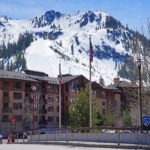
🏔️ Overview
The Taurus Mountains, known in Turkish as the Toros Dağları or simply Toroslar, form one of the great mountain systems of southern Türkiye. Rising between the Mediterranean coast and the Anatolian interior, the range creates a dramatic wall of limestone summits, forested slopes, high plateaus, deep gorges, caves, and alpine valleys.
Rather than being a single continuous ridge, the Taurus Mountains are an extensive complex of mountain groups stretching across southern Anatolia. They include the Western Taurus around Antalya, the rugged Central Taurus with the Bolkar and Aladağlar mountains, and eastern extensions reaching toward the upper Euphrates and Tigris drainage basins.
The range is especially famous for its limestone geology. Water has dissolved and sculpted the carbonate rock into extensive karst landscapes filled with sinkholes, underground drainage systems, caves, springs, poljes, and steep-sided valleys. At higher elevations, jagged pale-gray summits rise well above 3,000 meters.
The highest part of the system is found in the Aladağlar, where Kızılkaya reaches approximately 3,767 meters (12,359 feet). Nearby Demirkazık, at 3,756 meters, was traditionally listed as the range’s highest summit and remains one of Türkiye’s best-known mountaineering peaks.
Far below these alpine summits, forests of cedar, pine, fir, oak, and juniper demonstrate just how ecologically varied the Taurus Mountains can be.
🏔️ Field Guide Tip: The Taurus Mountains cover an enormous area, so travelers should choose a specific subrange rather than thinking of the Toros as a single hiking destination. The Aladağlar are the premier choice for serious alpine trekking and climbing, while the western Taurus offers easier access to Mediterranean scenery, forests, plateaus, and historic sites.
⚡ Fast Facts
| Fact | Details |
|---|---|
| Continent | Asia |
| Country | Türkiye |
| Region | Southern Anatolia |
| Major Geographic Regions | Mediterranean Region and adjoining parts of Central and Southeastern Anatolia |
| Range | Taurus Mountains / Toros Dağları |
| Mountain System | Alpide mountain belt |
| Highest Point | Kızılkaya |
| Highest Elevation | Approximately 3,767 m / 12,359 ft |
| Other Major Summit | Demirkazık — 3,756 m / 12,323 ft |
| Major Divisions | Western Taurus, Central Taurus, Southeastern Taurus |
| Major Subranges | Bey Mountains, Geyik Mountains, Bolkar Mountains, Aladağlar and associated eastern ranges |
| Dominant Rock | Limestone, with dolomite, ophiolitic rocks and other formations locally present |
| Landscape Type | Folded mountains, karst plateaus, gorges, caves, alpine valleys and rugged peaks |
| Major Ecosystems | Mediterranean woodland, cedar and conifer forest, montane forest, steppe and alpine grassland |
| Notable Protected Area | Aladağlar National Park |
| Famous Mountain Pass | Cilician Gates / Gülek Pass |
| Best High-Mountain Season | Generally June through September |
📍 Location
The Taurus Mountains extend across southern Türkiye, forming a vast mountainous zone roughly parallel to the Mediterranean coast. Their position creates a natural divide between the warm coastal lowlands and the considerably higher Anatolian interior.
In the west, the Taurus Mountains curve around the Gulf of Antalya. Mountain groups such as the Bey Mountains and Geyik Mountains rise steeply behind the Mediterranean coast, creating the impressive mountain backdrop visible from Antalya and many nearby resort communities.
Farther east, the system becomes increasingly rugged. The Central Taurus Mountains contain the Bolkar Mountains and Aladağlar, where many of the Toros’ highest summits are concentrated.
The eastern parts of the wider mountain system extend toward the watersheds of the Euphrates and Tigris rivers.
This geography has made the Taurus Mountains both a barrier and a corridor throughout human history. Crossing from the Anatolian Plateau to the Mediterranean coast was often difficult except through a limited number of mountain passes.
One of the most important was the Cilician Gates, today generally associated with the Gülek Pass area north of Tarsus. For thousands of years, this corridor helped channel armies, merchants, travelers, and trade between inland Anatolia and Cilicia.
📏 Elevation & Highest Peaks
Elevation varies enormously across the Taurus Mountains. Lower foothills rise from near the Mediterranean coast, while numerous Central Taurus summits exceed 3,000 meters.
The range’s highest terrain occurs in the Aladağlar.
Kızılkaya
Modern Turkish cultural-tourism information lists Kızılkaya at approximately 3,767 meters (12,359 feet), making it the highest summit of the Aladağlar and, by extension, the Taurus Mountains.
The mountain is part of an exceptionally rugged group containing several peaks above 3,700 meters.
Demirkazık
Demirkazık, rising to approximately 3,756 meters (12,323 feet), is only slightly lower.
Older references frequently identify Demirkazık as the highest Taurus summit, which explains why the mountain still appears as the range’s high point in many guides and reference works. It is also one of the most recognizable and historically important mountaineering peaks in Türkiye.
Mount Medetsiz
Farther west in the Bolkar Mountains, Mount Medetsiz rises to approximately 3,524 meters (11,562 feet).
Medetsiz is the highest summit of the Bolkar group and another major landmark of the Central Taurus.
Kızlar Sivrisi
In the Western Taurus, Kızlar Sivrisi reaches approximately 3,086 meters (10,125 feet) in the Bey Mountains.
Although lower than the great Aladağlar peaks, it demonstrates that substantial alpine terrain continues far west toward Antalya.
🪨 Geology
The Taurus Mountains belong to the much larger Alpide mountain belt, the vast zone of mountain building that includes systems extending from southern Europe through western and southern Asia.
Their geological history is complicated because southern Anatolia has been affected by the long-term convergence and interaction of the African, Arabian, and Eurasian tectonic realms.
Compression associated with the Alpine orogenic system folded, faulted, uplifted, and displaced enormous sequences of rock. Later tectonic movements, erosion, and continued regional deformation helped produce the mountains seen today.
One of the most recognizable geological characteristics of the Taurus Mountains is the abundance of limestone and other carbonate rocks.
The northern part of the Aladağlar, for example, contains exceptionally thick Jurassic–Cretaceous limestone and dolomitic limestone sequences. Other parts of the range expose older carbonate formations as well as ophiolitic rocks representing fragments associated with ancient oceanic crust and upper mantle environments.
A Landscape Built by Karst
Limestone reacts slowly with mildly acidic water. Over immense periods of time, rainwater and groundwater exploit joints and fractures, gradually dissolving the rock.
The result is karst topography, and the Taurus Mountains contain some of Türkiye’s finest examples.
Common karst features include:
- Sinkholes and dolines
- Large closed depressions known as poljes
- Caves and vertical shafts
- Underground streams
- Springs
- Dry valleys
- Limestone pavements
- Steep gorges
- Disappearing streams
The Taşeli Plateau is particularly well known for its karst landscape.
Karst also has enormous practical importance. Because water can vanish underground rather than remain in surface streams, understanding the geology is essential for settlements, farming, forestry, and water management.
🌿 Flora & Fauna
The Taurus Mountains occupy one of the biologically richest parts of the western Palearctic. Dramatic changes in elevation, rainfall, slope direction, geology, and distance from the Mediterranean create many different habitats within a relatively compact geographic region.
Forests
Lower Mediterranean-facing slopes can support Calabrian pine, evergreen woodland, shrub communities, and other vegetation adapted to hot, dry summers.
At higher elevations, increasingly montane forests appear.
Characteristic trees include:
- Lebanon cedar
- Turkish black pine
- Taurus fir
- Juniper
- Oak
- Hornbeam
The Taurus Mountains are particularly important for Lebanon cedar (Cedrus libani). Some of the species’ most extensive remaining forests survive in southern Türkiye.
Cedar forests occur especially well on limestone terrain, where roots can penetrate cracks containing pockets of soil and moisture.
At still higher elevations, trees become sparse and eventually give way to alpine grasslands, rocky slopes, scree, and exposed summit terrain.
Wildlife
The rugged mountains provide habitat for a varied community of wildlife.
Animals found within the wider Taurus region include:
- Wild goats
- Wild boar
- Brown bears
- Lynx
- Foxes
- Numerous small mammals
- Raptors and other mountain birds
Aladağlar National Park is particularly important for conserving high-mountain habitats and wildlife.
The combination of Mediterranean, montane, steppe, and alpine ecosystems also contributes to high levels of plant diversity and endemism.
🥾 Hiking & Climbing Routes
The enormous scale of the Taurus Mountains means outdoor experiences range from gentle woodland walks to serious alpine climbing.
Aladağlar National Park
For mountaineers, Aladağlar National Park is arguably the most important destination in the entire Taurus system.
The national park spreads across parts of Niğde, Kayseri, and Adana provinces and protects some of Türkiye’s most dramatic limestone mountain scenery.
Trekkers can explore deep valleys, high plateaus, alpine lakes, waterfalls, forests, and rocky basins, while climbers can attempt some of the highest Taurus summits.
Popular objectives include Kızılkaya, Demirkazık, Emler, and Kaldı.
Demirkazık
Demirkazık is a major mountaineering objective rather than an ordinary hiking summit.
A traditional approach begins near the villages of Çukurbağ and Demirkazık, with Sokullupınar commonly serving as a base for summit attempts.
Depending on the route, climbing Demirkazık can involve steep, exposed, and technically demanding terrain.
Yedigöller
The high Yedigöller, or Seven Lakes, area provides another classic Aladağlar trekking destination.
Seasonal snowmelt creates numerous high-altitude lakes and pools across the plateau. The landscape combines limestone summits, alpine terrain, and broad mountain views.
The area is often used as a base for extended trekking and summit excursions.
Taşeli Plateau
Travelers interested in karst landscapes can explore the Taşeli Plateau, extending through parts of Antalya and Mersin.
Rather than towering alpine peaks, the attraction here is the extraordinary interaction between limestone and water: caves, shafts, plateaus, underground drainage, and deeply eroded terrain.
Bolkar Mountains
The Bolkar Mountains provide another excellent destination for trekkers and mountaineers. Their best-known summit is Mount Medetsiz, but the surrounding highlands also contain broad plateaus and dramatic limestone scenery.
Conditions in the high Taurus should never be underestimated. Snow can linger well into the warmer months, water sources may be unreliable, and summer thunderstorms or rapid temperature changes can create hazards.
🌤️ Best Time to Visit
The best season depends heavily on elevation.
For high-altitude climbing in the Aladağlar, Turkish tourism authorities generally recommend June through September. During this period, access is usually easier and much of the winter snow has disappeared from standard summer routes.
Spring can be an excellent season at lower elevations, when temperatures remain moderate and mountain vegetation is active.
Autumn is likewise attractive for lower and middle elevations, particularly for hiking, photography, and exploring villages or historic sites.
Winter transforms the highest Taurus Mountains into a serious snowy environment. Climbers attempting high peaks during winter need appropriate experience with snow, ice, navigation, avalanche terrain, and rapidly changing mountain weather.
Another important factor is the difference between the coast and interior. Mediterranean-facing slopes experience comparatively mild, wet winters and hot, dry summers, while high mountains and inland areas can experience much colder continental conditions.
🏛️ History & the Cilician Gates
Humans have lived, traveled, traded, grazed livestock, mined, and fought in the Taurus Mountains for thousands of years.
Because the mountains form such a strong barrier between Mediterranean Cilicia and interior Anatolia, passes through the range became strategically important.
The best-known is the Cilician Gates.
The pass connected the Cilician plain around Tarsus and Adana with the Anatolian Plateau and became one of the most famous routes through the Taurus.
Ancient armies used the corridor, and its control carried enormous military importance because alternative crossings were difficult.
The pass is particularly associated with events in the ancient Persian, Hellenistic, Roman, and later Byzantine worlds. Alexander the Great passed through the Taurus toward Cilicia during his campaign against the Persian Empire.
Modern roads and railways have dramatically changed transportation across the mountains, but the fundamental geography remains obvious: steep ridges and narrow valleys still funnel movement through relatively limited corridors.

🧭 Nearby Mountains & Attractions
The Taurus Mountains contain so many distinct landscapes that several areas could justify separate trips.
Aladağlar National Park
The premier destination for high alpine scenery, trekking, mountaineering, limestone walls, waterfalls, and remote valleys.
Kapuzbaşı Waterfalls
Located near the Aladağlar region, the Kapuzbaşı waterfalls are among the area’s best-known natural attractions and can be combined with exploration of the surrounding mountain landscape.
Taşeli Plateau
A major karst plateau stretching through Antalya and Mersin, particularly interesting for travelers fascinated by caves and limestone geology.
Cilician Gates
The historic mountain passage north of Tarsus provides an opportunity to connect the physical geography of the Taurus with thousands of years of Anatolian history.
Antalya
The Mediterranean city of Antalya sits beneath the dramatic western Taurus and provides one of the easiest gateways to the range.
Cappadocia and Central Anatolia
Travelers continuing north from the Central Taurus can also reach the volcanic landscapes of Central Anatolia, including Mount Hasan and Mount Erciyes.
💡 Fun Facts
- The Taurus Mountains are called Toros Dağları in Turkish.
- Much of the range is dominated by limestone, producing enormous karst landscapes.
- The mountains form a major physical barrier between the Mediterranean coast and the Anatolian interior.
- Kızılkaya is currently listed at approximately 3,767 meters, making it slightly higher than the traditionally recognized high point, Demirkazık.
- Demirkazık remains one of the most famous mountaineering peaks in Türkiye.
- The Taurus Mountains contain important surviving forests of Lebanon cedar.
- Aladağlar National Park protects many of the range’s highest peaks.
- The Cilician Gates have been one of Anatolia’s most important mountain crossings since ancient times.
- Some high Taurus landscapes hold snow long after warm weather has returned to the Mediterranean coast.
- Caves, sinkholes, underground streams, springs, and large closed depressions are common throughout the range’s karst regions.
❓ FAQ
Where are the Taurus Mountains?
The Taurus Mountains are in southern Türkiye. They extend broadly parallel to the Mediterranean coast and separate the coastal regions from much of the Anatolian interior.
What is the highest mountain in the Taurus Mountains?
Current information from the Niğde Provincial Directorate of Culture and Tourism lists Kızılkaya at approximately 3,767 meters (12,359 feet), making it the highest summit of the Aladağlar and Taurus Mountains.
Isn’t Demirkazık the highest peak?
Many older references identify Demirkazık at 3,756 meters as the highest summit. More recent figures place Kızılkaya slightly higher, at about 3,767 meters. Demirkazık nevertheless remains one of the most famous peaks of the range.
How were the Taurus Mountains formed?
The mountains developed through complex tectonic processes associated with the Alpine orogeny and the convergence of tectonic plates in the eastern Mediterranean region. Folding, faulting, uplift, erosion, and later tectonic activity helped create the modern range.
Why are there so many caves in the Taurus Mountains?
Much of the range consists of limestone and other carbonate rocks. Groundwater slowly dissolves these rocks, creating karst features such as caves, sinkholes, underground rivers, shafts, and springs.
Can you hike in the Taurus Mountains?
Yes. Hiking ranges from relatively easy lower-elevation walks to long, remote alpine treks. Aladağlar National Park, Yedigöller, the Bolkar Mountains, and the Taşeli Plateau are among the most notable destinations.
When is the best time to hike the Taurus Mountains?
For the highest peaks, June through September is generally the most favorable period. Spring and autumn can be excellent for lower elevations, while winter conditions in the high mountains require specialized mountaineering skills.
What trees grow in the Taurus Mountains?
Major trees include Lebanon cedar, Turkish black pine, Calabrian pine, Taurus fir, juniper, and several oak species. Vegetation changes substantially with elevation and exposure.
What is the Cilician Gates?
The Cilician Gates are a historically important pass through the Taurus Mountains connecting the Cilician coastal plain with the Anatolian interior. The corridor has served travelers, traders, and armies since ancient times.

🔗 Related Articles
- Kızılkaya
- Mount Medetsiz
- Kızlar Sivrisi
- Mount Hasan
- Mount Erciyes
- Mount Süphan
- The World’s Top 100 Mountain Ranges
📚 Sources
- Republic of Türkiye Ministry of Culture and Tourism — Niğde Aladağlar National Park
- Niğde Provincial Directorate of Culture and Tourism — Aladağlar National Park
- Republic of Türkiye Ministry of Culture and Tourism — Niğde Aladağlar
- GoTürkiye — Mountains of the Mediterranean
- GoTürkiye — Aladağlar National Park Walking Guide
- GoTürkiye — 3-Day Taurus Mountains Exploration Route
- Springer — Geomythology in the Central Taurus Mountains
- Turkish Journal of Forest Science — The Effects of Karstic Areas on Agriculture and Forestry in the Western Mediterranean Region of Türkiye
- Diversity — The Taurus Mountains, the Hotspot of Western Palearctic Biodiversity
- Journal of Geomorphological Researches — Classification of Poljes With Examples From Taurus Mountains
- Livius — Cilician Gate