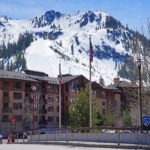
Stretching across Alberta and British Columbia, the Canadian Rockies contain some of North America’s most spectacular mountain landscapes. Immense limestone walls rise above turquoise lakes, glaciers spill from high icefields, and dozens of summits exceed 11,000 feet (3,353 meters).
Yet the Canadian Rockies do not contain Canada’s highest mountains.
Those are found much farther northwest in the Saint Elias Mountains of Yukon, where Mount Logan reaches 5,959 meters.
The highest summit of the Canadian Rockies is Mount Robson, reaching nearly 4,000 meters on the western side of the range.
Behind it comes an extraordinary group of peaks clustered around the Columbia Icefield, including Mount Columbia, North Twin, Twins Tower, Mount Alberta, and South Twin.
Other giants—including Mount Clemenceau, Mount Forbes, Mount Assiniboine, and Mount Goodsir—rise across the protected mountain landscapes of Alberta and British Columbia.
Together, these summits represent the highest reaches of one of the world’s most famous mountain systems.
⚡ Canadian Rockies Fast Facts
| Feature | Details |
|---|---|
| Countries | Canada |
| Provinces | Alberta and British Columbia |
| Parent System | Rocky Mountains |
| Highest Mountain | Mount Robson |
| Highest Elevation | Approx. 3,959 m / 12,988 ft using current Peakbagger data |
| Highest Alberta Mountain | Mount Columbia |
| Highest Mountain Entirely in Alberta | North Twin |
| Most Famous Icefield | Columbia Icefield |
| Major Protected Areas | Banff, Jasper, Yoho and Kootenay national parks; Mount Robson and Mount Assiniboine provincial parks |
| World Heritage Site | Canadian Rocky Mountain Parks |
| Number of Traditional 11,000ers | About 58 when recognized subsidiary summits are included |
| Primary Rocks | Mostly sedimentary limestone, dolomite, shale and related formations |
| Major Mountain-Building Event | Laramide Orogeny |
| Major Landscape Processes | Folding, thrust faulting, uplift, glacial erosion and river erosion |
| Major Wildlife | Grizzly bear, black bear, mountain goat, bighorn sheep, elk, caribou and numerous alpine birds |
📊 Ranking the Highest Canadian Rockies Peaks
Mountain elevations in the Canadian Rockies are surprisingly complicated.
Older maps, government surveys, GPS measurements, modern digital elevation models and LiDAR-derived data sometimes give different figures for the same summit.
Differences of several meters are common.
The problem becomes even greater with The Twins massif, where North Twin, Twins Tower and South Twin are closely connected but individually named summits.
For consistency, the main ranking below follows the current Peakbagger Canadian Rockies major-peaks dataset.
That produces this top ten:
| Rank | Mountain | Elevation | Province |
|---|---|---|---|
| 1 | Mount Robson | 3,959 m / 12,988 ft | British Columbia |
| 2 | Mount Columbia | 3,741 m / 12,273 ft | Alberta / British Columbia |
| 3 | North Twin | 3,733 m / 12,247 ft | Alberta |
| 4 | Mount Clemenceau | 3,664 m / 12,021 ft | British Columbia |
| 5 | Twins Tower | 3,627 m / 11,899 ft | Alberta |
| 6 | Mount Alberta | 3,618 m / 11,870 ft | Alberta |
| 7 | Mount Forbes | 3,617 m / 11,866 ft | Alberta |
| 8 | Mount Assiniboine | 3,616 m / 11,863 ft | Alberta / British Columbia |
| 9 | South Twin | 3,581 m / 11,748 ft | Alberta |
| 10 | Mount Goodsir | 3,567 m / 11,702 ft | British Columbia |
📝 Why Does This List Look Different from Older Rankings?
You may see slightly different lists elsewhere.
For example:
- BC Parks continues to list Mount Robson at 3,954 m.
- Natural Resources Canada and older Canadian surveys commonly list Mount Columbia at 3,747 m.
- North Twin is often listed at approximately 3,730 m.
- South Twin has appeared under several substantially different historical elevations.
- Some traditional lists omit Twins Tower because it has only about 107 meters of topographic prominence.
- Some lists treat South Twin as part of the larger Twin massif rather than as a separate mountain.
If Twins Tower and other low-prominence subsidiary summits are excluded, Mount Temple enters the top ten.
Neither approach is inherently wrong.
The important thing is to define the ranking method rather than mixing summit classifications from different lists.
🥇 1. Mount Robson — 3,959 m / 12,988 ft

Mount Robson is the undisputed giant of the Canadian Rockies.
Rising in eastern British Columbia immediately west of the Alberta boundary, it forms the highest point of Mount Robson Provincial Park.
Depending on the mapping source, its elevation is commonly given between approximately 3,954 and 3,959 meters.
What makes Robson especially impressive is not merely its summit elevation.
The mountain rises nearly 3,000 vertical meters above the Fraser River valley, producing one of the greatest continuous mountain rises in the Canadian Rockies.
Its summit is often hidden behind cloud.
Heavy snowfall, glaciers, avalanches, icefall and rapidly changing weather make Mount Robson one of the most serious major mountaineering objectives in Canada.
🧭 Mount Robson Fast Facts
| Feature | Details |
|---|---|
| Elevation | Approx. 3,959 m / 12,988 ft |
| Traditional Published Elevation | 3,954 m / 12,972 ft |
| Province | British Columbia |
| Range | Rainbow Range / Canadian Rockies |
| Protected Area | Mount Robson Provincial Park |
| Prominence | Approx. 2,819 m / 9,249 ft |
| First Confirmed Ascent | July 31, 1913 |
| First Ascenders | William W. Foster, Albert H. McCarthy and Conrad Kain |
Mount Robson’s approximately 2,800 meters of topographic prominence also makes it one of the most independent mountains in Canada.
The mountain is much more isolated and geographically dominant than most of the other summits in this ranking.
🧊 Berg Glacier
One of Mount Robson’s defining features is the Berg Glacier, which descends from high on the mountain toward Berg Lake.
Ice frequently breaks from the glacier into the lake.
This spectacular landscape helped make the Berg Lake Trail one of British Columbia’s best-known backcountry routes.
The trail does not climb Mount Robson.
Instead, it provides access to extraordinary viewpoints beneath the mountain.
The summit itself is reserved for highly experienced alpinists.
🥈 2. Mount Columbia — 3,741 m / 12,273 ft

Mount Columbia rises along the Continental Divide at the northern end of the Columbia Icefield.
It is the highest mountain in Alberta, although the international/provincial divide passes across the mountain and portions extend into British Columbia.
Modern datasets vary significantly.
Traditional Canadian surveys list Mount Columbia at approximately 3,747 meters, while current Peakbagger data uses approximately 3,741 meters.
Either way, it is clearly the second-highest summit in the Canadian Rockies.
🧭 Mount Columbia Fast Facts
| Feature | Details |
|---|---|
| Elevation | Approx. 3,741–3,747 m |
| Province | Alberta / British Columbia |
| Range | Winston Churchill Range |
| Protected Area | Jasper National Park |
| Prominence | Approx. 2,360 m |
| First Ascent | July 19, 1902 |
| First Ascenders | James Outram and Christian Kaufmann |
| Special Distinction | Highest point in Alberta |
Mount Columbia was named for the Columbia River, whose drainage begins on the western side of the Continental Divide.
Its enormous prominence places it among Canada’s most significant mountains regardless of elevation ranking.
🧊 Columbia Icefield
Mount Columbia rises above the Columbia Icefield, the largest icefield in the Canadian Rockies.
The icefield feeds major glaciers including:
- Athabasca Glacier
- Saskatchewan Glacier
- Columbia Glacier
- Dome Glacier
- Stutfield Glacier
Water originating around this high mountain region ultimately enters several enormous drainage systems.
The combination of high elevation, enormous glaciers and major continental watersheds makes Mount Columbia one of the geographical anchors of the Canadian Rockies.
🥉 3. North Twin — 3,733 m / 12,247 ft
North Twin rises at the northeastern edge of the Columbia Icefield in Jasper National Park.
It is particularly important because it is the highest mountain located entirely within Alberta.
Mount Columbia is higher, but sits on the Alberta–British Columbia boundary.
North Twin forms the dominant summit of The Twins massif, which also contains:
- South Twin
- Twins Tower
- West Twin
Current Peakbagger data places North Twin at approximately 3,733 meters, while other Canadian sources commonly use 3,730 meters.
🧭 North Twin Fast Facts
| Feature | Details |
|---|---|
| Elevation | Approx. 3,730–3,733 m |
| Province | Alberta |
| Range | Winston Churchill Range |
| Protected Area | Jasper National Park |
| Prominence | Approx. 1,053 m |
| First Ascent | July 10, 1923 |
| First Ascenders | W.S. Ladd, J. Monroe Thorington and Conrad Kain |
| Special Distinction | Highest mountain entirely within Alberta |
The mountain presents two dramatically different personalities.
From the Columbia Icefield, portions of the mountain appear relatively broad and snow covered.
To the north, however, the terrain drops in an enormous wall toward the Athabasca Valley.
🧗 North Face of North Twin
The North Twin area contains some of the most legendary technical terrain in North American alpinism.
The northern wall drops more than 1,500 meters in places.
Routes on this face and neighboring Twins Tower have attracted elite climbers for generations.
This is not conventional glacier mountaineering.
The great north faces of The Twins involve serious, committing climbing on steep rock and ice with complex objective hazards.
🏔️ 4. Mount Clemenceau — 3,664 m / 12,021 ft
Mount Clemenceau rises in a remote region of eastern British Columbia west of the main Columbia Icefield.
At approximately 3,664 meters, it is the fourth-highest mountain in the Canadian Rockies under current Peakbagger measurements.
Older Canadian records commonly give approximately 3,658 or 3,642 meters.
Mount Clemenceau also has roughly 1,484 meters of clean prominence, placing it just short of the 1,500-meter threshold normally used to define an ultra-prominent mountain.
🧭 Mount Clemenceau Fast Facts
| Feature | Details |
|---|---|
| Elevation | Approx. 3,664 m / 12,021 ft |
| Province | British Columbia |
| Range | Park Ranges |
| Mountain Area | Clemenceau Icefield |
| Prominence | Approx. 1,484 m |
| First Ascent | August 9, 1923 |
| First Ascenders | D.B. Durand, Henry S. Hall Jr., W.D. Harris and Henry de Villiers-Schwab |
| Line Parent | Mount Columbia |
The mountain was originally called Pyramid before being renamed in honor of Georges Clemenceau, the French prime minister who led France during the closing years of World War I.
🧊 Remote Icefield Mountain
Unlike mountains readily visible from Banff or Jasper highways, Clemenceau stands in much more remote terrain.
The Clemenceau Icefield surrounds the mountain with glaciers and high alpine wilderness.
This isolation is part of its appeal—but also significantly complicates climbing logistics.
Expeditions must deal with:
- Glacier travel
- Crevasses
- Snow bridges
- Remote access
- Rapid weather changes
- Limited rescue options
Clemenceau is one of the best examples of the wild Canadian Rockies that exist far beyond the famous national-park roads.
🏔️ 5. Twins Tower — 3,627 m / 11,899 ft
Twins Tower is the most controversial entry in this ranking.
Current Peakbagger data places it at approximately 3,627 meters, which makes it the fifth-highest named summit in the Canadian Rockies under that dataset.
However, it has only about 107 meters of topographic prominence.
It is therefore more accurately considered a major subsidiary summit of North Twin rather than a fully independent mountain.
🧭 Twins Tower Fast Facts
| Feature | Details |
|---|---|
| Elevation | Approx. 3,627 m / 11,899 ft |
| Province | Alberta |
| Range | Winston Churchill Range |
| Massif | The Twins |
| Protected Area | Jasper National Park |
| Prominence | Approx. 107 m |
| First Ascent | July 29, 1938 |
| First Ascenders | Chappel Cranmer and Fritz Wiessner |
| NHN / Parent | North Twin |
The official name Twins Tower was adopted much later, in 1984.
Its first ascent had taken place decades earlier.
Chappel Cranmer and famous German-American climber Fritz Wiessner reached the summit in 1938 by traversing high terrain from North Twin.
🧗 A Tiny Prominence, Enormous Face
Topographic prominence can be deceptive.
Twins Tower rises only slightly above the saddle connecting it to North Twin.
Yet its northern side forms part of one of the most intimidating alpine walls in the Canadian Rockies.
This is why climbers may view Twins Tower as an important mountain even though a prominence-based geographer might call it merely a subsidiary summit.
If a top-ten list excludes such low-prominence summits, Twins Tower should be removed and the mountains below it move up one position.
🏔️ 6. Mount Alberta — 3,618 m / 11,870 ft
Mount Alberta rises east of the Columbia Icefield in Jasper National Park.
Its dark, steep summit pyramid is dramatically different from the broad snowfields of nearby Columbia and North Twin.
Modern datasets place the summit around 3,618–3,620 meters.
That creates an unusually tight elevation cluster with Mount Forbes and Mount Assiniboine, all separated by only a few meters.
🧭 Mount Alberta Fast Facts
| Feature | Details |
|---|---|
| Elevation | Approx. 3,618–3,620 m |
| Province | Alberta |
| Range | Winston Churchill Range |
| Protected Area | Jasper National Park |
| Prominence | Approx. 819 m |
| First Ascent | July 21, 1925 |
| First-Ascent Team | Japanese Alpine Club expedition with Swiss guides |
| Named For | Princess Louise Caroline Alberta |
Mount Alberta was one of the last great unclimbed Canadian Rockies summits of its era.
Its first ascent became a landmark in Japanese mountaineering history.
🇯🇵 The 1925 Japanese Ascent
The expedition was led by celebrated Japanese climber Yuko Maki.
The climbing party included six Japanese mountaineers supported by Swiss guides.
They confronted:
- Near-vertical rock
- Loose stone
- Difficult route finding
- A major overhang
- Long hours of technical climbing
The team finally reached the summit in the evening of July 21, 1925.
The ascent remains one of the most important early international mountaineering achievements in the Canadian Rockies.
In 2025, its 100th anniversary was formally commemorated by Japanese diplomatic representatives in Canada.
🏔️ 7. Mount Forbes — 3,617 m / 11,866 ft

Mount Forbes is the highest mountain entirely within Banff National Park.
Current Peakbagger data places it at approximately 3,617 meters, while traditional sources generally use 3,612 meters (11,850 feet).
Its elevation is therefore extremely close to those of Mount Alberta and Mount Assiniboine.
Its topographic independence is considerably greater than Mount Alberta’s, however.
Forbes has approximately 1,649 meters of prominence, easily qualifying as an ultra-prominent mountain.
🧭 Mount Forbes Fast Facts
| Feature | Details |
|---|---|
| Elevation | Approx. 3,612–3,617 m |
| Province | Alberta |
| Protected Area | Banff National Park |
| Prominence | Approx. 1,649 m |
| Isolation | Approx. 47 km |
| First Ascent | August 10, 1902 |
| Named For | Professor Edward Forbes |
| NHN / Parent | Mount Columbia |
James Hector named the mountain in 1859 for Edward Forbes, his natural-history professor at the University of Edinburgh.
🧗 First Ascent
The first ascent became one of the great mountaineering expeditions of the early Canadian Rockies.
The successful team included:
- J. Norman Collie
- James Outram
- Hugh Stutfield
- George Weed
- Herman Woolley
- Christian Kaufmann
- Hans Kaufmann
The party reached the summit on August 10, 1902.
Mount Forbes remains a substantial alpine objective involving a long approach, glaciers, snow and rock.
Its distinctive pointed profile can be recognized from a surprising number of surrounding mountains.
🏔️ 8. Mount Assiniboine — 3,616 m / 11,863 ft

Mount Assiniboine is arguably the most visually famous mountain in this top ten.
Its almost perfectly pyramidal profile has earned it the nickname:
“The Matterhorn of the Rockies.”
Mount Assiniboine rises on the Alberta–British Columbia border between Banff National Park and Mount Assiniboine Provincial Park.
Current elevation figures range from approximately 3,616 to 3,618 meters.
🧭 Mount Assiniboine Fast Facts
| Feature | Details |
|---|---|
| Elevation | Approx. 3,616–3,618 m |
| Provinces | Alberta / British Columbia |
| Protected Areas | Banff National Park / Mount Assiniboine Provincial Park |
| Prominence | Approx. 2,082 m |
| Isolation | Approx. 142 km |
| First Ascent | 1901 |
| First Ascenders | James Outram, Christian Bohren and Christian Hasler |
| Notable Nickname | Matterhorn of the Rockies |
Assiniboine’s more than 2,000 meters of prominence and roughly 142 kilometers of isolation make it vastly more independent than the closely packed Columbia Icefield summits.
That geographical independence helps explain why its pyramid dominates so many distant views.
🏕️ Lake Magog
One of the classic perspectives comes from the Lake Magog area.
The mountain rises dramatically behind the lake, glaciers and alpine meadows.
Unlike many famous Canadian Rockies locations, there is no public highway leading directly to Lake Magog.
Visitors normally reach the area by:
- Multi-day hiking
- Horseback travel under permitted arrangements
- Helicopter service
That relative isolation has helped preserve Mount Assiniboine Provincial Park as one of the great wilderness landscapes of the southern Canadian Rockies.
🏔️ 9. South Twin — 3,581 m / 11,748 ft
South Twin is the southern principal summit of The Twins massif.
Like Twins Tower, its exact elevation has varied substantially among historical sources.
Current Peakbagger data places the summit at approximately 3,581 meters, while other older sources give approximately 3,566 or 3,580 meters.
The mountain has approximately 301 meters of topographic prominence.
🧭 South Twin Fast Facts
| Feature | Details |
|---|---|
| Elevation | Approx. 3,581 m / 11,748 ft |
| Province | Alberta |
| Range | Winston Churchill Range |
| Massif | The Twins |
| Protected Area | Jasper National Park |
| Prominence | Approx. 301 m |
| Nearest Higher Neighbor | North Twin |
| First Ascent | 1924 |
The first-ascent team included:
- F.V. Field
- W.O. Field
- L. Harris
- Edward Feuz Jr.
- J. Biner
The mountain can be approached through the enormous glaciated terrain around the Columbia Icefield.
🧊 Part of a Giant Massif
South Twin is only one component of The Twins.
The larger mountain structure contains several 11,000-foot summits within an exceptionally small area.
That geography creates a classification problem.
Should each named summit count separately?
Or should The Twins be treated primarily as a single enormous mountain massif?
Different rankings answer that question differently.
For an elevation-based named-summit list, South Twin belongs comfortably within the Canadian Rockies top ten.
For a strict prominence-based list of independent mountains, it would not.
🏔️ 10. Mount Goodsir — 3,567 m / 11,702 ft
Mount Goodsir, also called the Goodsir Towers, rises in British Columbia’s Yoho National Park.
The mountain is composed of two major towers.
Modern topographic data identifies the South Tower as the higher summit, reaching approximately 3,567 meters.
Traditional Canadian sources commonly give approximately 3,562 meters.
Mount Goodsir is far more topographically independent than either South Twin or Twins Tower.
Its prominence is approximately 1,907 meters, making it another ultra-prominent mountain.
🧭 Mount Goodsir Fast Facts
| Feature | Details |
|---|---|
| Elevation | Approx. 3,562–3,567 m |
| Province | British Columbia |
| Range | Ottertail Range |
| Protected Area | Yoho National Park |
| Highest Summit | South Tower |
| Prominence | Approx. 1,907 m |
| Isolation | Approx. 64 km |
| First Ascent | July 16, 1903 |
| First Ascenders | Charles E. Fay, Herschel C. Parker, Christian Hasler and Christian Kaufmann |
James Hector named the mountain for brothers John and Harry Goodsir.
John Goodsir was an anatomy professor at the University of Edinburgh, while Harry Goodsir served as a surgeon aboard HMS Erebus during the ill-fated Franklin expedition.
🧗 The Goodsir Towers
The twin-towered shape makes Goodsir particularly recognizable.
The mountain contains:
- South Tower
- North Tower
- Sentry Peak
The higher South Tower was first climbed in 1903.
The North Tower was climbed several years later.
Although Goodsir is lower than the enormous Columbia Icefield peaks, its almost 1,900 meters of prominence gives it far greater geographical independence than several mountains ranked above it.
🏔️ What About Mount Temple?

Mount Temple is one of the most famous high mountains missing from the top-ten table.
Modern Peakbagger data places it at approximately 3,545 meters (11,630 feet).
That makes it roughly #11 when Twins Tower and South Twin are counted separately.
Traditional Canadian Rockies lists that omit low-prominence subsidiary summits commonly place Mount Temple within the top ten.
Temple is also especially significant because it is one of the most accessible of the Canadian Rockies 11,000ers for experienced scramblers and mountaineers under favorable conditions.
That does not mean it is easy.
The route includes serious scrambling terrain, rockfall hazards and rapidly changing alpine weather.
🏔️ What About Mount Brazeau?
The old version of this article placed Mount Brazeau inside the top ten.
It does not belong there.
Modern measurements place Brazeau at roughly 3,500 meters, depending on the source.
That makes it an important Canadian Rockies 11,000er—but not one of the ten highest.
The same applies to mountains such as:
- Mount Bryce
- Mount Kitchener
- Mount Lyell
- Hungabee Mountain
- Mount Athabasca
- Mount Victoria
- Snow Dome
All are major high Canadian Rockies summits.
They simply fall below the top ten by elevation.
🧊 Why So Many of the Highest Peaks Are Near the Columbia Icefield
Look at the list carefully and a pattern becomes obvious.
Several of the highest Canadian Rockies summits are clustered around the Columbia Icefield and Winston Churchill Range:
- Mount Columbia
- North Twin
- Twins Tower
- Mount Alberta
- South Twin
Mount Forbes also lies relatively nearby.
This is not coincidence.
The Main Ranges along the Continental Divide contain some of the highest and most resistant mountain terrain in the Canadian Rockies.
The region receives abundant snow, supports large glaciers and experienced tremendous glacial erosion during the Pleistocene.
Ice carved deep valleys around the high ridges, increasing the dramatic relief visible today.
🪨 How the Canadian Rockies Formed
The Canadian Rockies are primarily fold-and-thrust mountains.
Most of their exposed rock originated as sediment deposited in ancient seas hundreds of millions of years before the mountains existed.
These sediments eventually became rock layers including:
- Limestone
- Dolomite
- Shale
- Sandstone
Later tectonic forces compressed western North America.
During the Laramide Orogeny, beginning roughly 70–80 million years ago, enormous sheets of rock were pushed eastward along thrust faults.
Layers were:
- Folded
- Broken
- Stacked
- Tilted
- Lifted
The modern mountains were then sculpted by millions of years of erosion.
The result is the striking layered appearance seen throughout Banff, Jasper, Yoho and Kootenay.
🧊 Glaciers Shape the Highest Peaks
The Canadian Rockies would look very different without ice.
During the Pleistocene ice ages, huge glaciers repeatedly covered the region.
Moving ice excavated:
- U-shaped valleys
- Cirques
- Hanging valleys
- Arêtes
- Horns
- Basins
It also steepened mountain walls.
The sharp pyramid of Mount Assiniboine and the dramatic faces surrounding the Columbia Icefield reflect this long history of glacial erosion.
Glaciers remain active today.
Major surviving icefields include:
- Columbia Icefield
- Clemenceau Icefield
- Wapta Icefield
- Waputik Icefield
These icefields continue feeding rivers, shaping rock and changing mountain routes.
💧 The Great Watershed
The Canadian Rockies form part of the Continental Divide of the Americas.
Water falling on opposite sides of a ridge can eventually reach entirely different oceans.
The Columbia Icefield region is especially important.
Nearby Snow Dome is famous as a rare hydrological apex where drainage reaches three major ocean systems:
- Pacific Ocean
- Arctic Ocean
- Atlantic drainage through Hudson Bay
This distinction belongs to Snow Dome, not Mount Columbia.
Mount Columbia remains extremely important hydrologically, but it should not be called the three-ocean apex.
🧗 The Canadian Rockies 11,000ers
For Canadian mountaineers, one number has developed particular significance:
11,000 feet.
Mountains above that threshold are commonly known as the Canadian Rockies 11,000ers.
The exact number depends on:
- Elevation dataset
- Whether subsidiary peaks count
- Minimum prominence
- Naming conventions
Traditional climbing lists contain approximately 58 recognized summits.
Completing all of them is one of the great lifetime mountaineering challenges of the Canadian Rockies.
The list includes not just the giants in this article but mountains such as:
- Mount Temple
- Mount Bryce
- Mount Athabasca
- Mount Victoria
- Snow Dome
- Mount Kitchener
- Mount Hector
- Mount Edith Cavell
- Deltaform Mountain
- Mount Lefroy
Many are significantly more technical than their elevations suggest.
⚠️ Height Does Not Equal Climbing Difficulty
The highest mountain is not necessarily the hardest mountain.
Mount Robson has severe weather, glaciers and enormous relief.
Mount Alberta is technically notorious.
Twins Tower contains extremely serious alpine terrain.
Mount Assiniboine requires real climbing rather than ordinary hiking.
Meanwhile, some comparatively lower 11,000ers may have easier normal routes.
Factors determining climbing difficulty include:
- Rock quality
- Steepness
- Glacier conditions
- Avalanche exposure
- Crevasses
- Cornices
- Route finding
- Weather
- Remoteness
- Length of approach
- Objective hazards
This is why elevation rankings should never be treated as climbing-difficulty rankings.
🌦️ Mountain Weather
The highest Canadian Rockies summits create their own severe weather environments.
Conditions can change rapidly even during summer.
Climbers may encounter:
- Snow
- Freezing rain
- High winds
- Lightning
- Whiteouts
- Hail
- Extreme cold
- Rapid temperature changes
Pacific moisture crosses British Columbia and rises over the mountains.
High western peaks can receive considerable precipitation.
Mount Robson is particularly famous for cloud and heavy snowfall.
A clear valley morning does not guarantee safe conditions thousands of meters higher.
🌿 Flora and Fauna
The highest summits themselves support very little biological life.
Above roughly 3,000 meters, much of the terrain consists of:
- Bare rock
- Scree
- Snowfields
- Glaciers
- Sparse alpine plants
The valleys and slopes below contain remarkably diverse ecosystems.
A journey from a valley floor toward one of these summits may cross several ecological zones.
🌲 Montane Forest
Lower elevations support forests containing species such as:
- Lodgepole pine
- Douglas-fir
- White spruce
- Aspen
- Balsam poplar
Exact composition varies across the range.
The western slopes of Mount Robson Provincial Park are wetter and support communities including cedar and hemlock.
🌲 Subalpine Forest
Higher elevations increasingly favor:
- Engelmann spruce
- Subalpine fir
- Alpine larch in suitable southern areas
- Whitebark pine
Trees become progressively shorter and more widely spaced as conditions grow colder.
Near treeline they give way to krummholz—wind-shaped, stunted trees.
🌸 Alpine Meadows
Above continuous forest lie alpine meadows containing:
- Mountain avens
- Heather
- Saxifrages
- Moss campion
- Stonecrop
- Cinquefoil
- Alpine grasses
- Sedges
Growing seasons are short.
Plants must survive snow cover, frost, high winds and intense ultraviolet radiation.
🐻 Grizzly Bears
Grizzly bears inhabit large portions of the Canadian Rockies.
They move through valley bottoms, forests, meadows and avalanche slopes in search of seasonal food.
Mount Robson, Jasper, Banff, Yoho and Mount Assiniboine all contain important grizzly habitat.
Visitors should:
- Carry bear spray where recommended
- Store food properly
- Respect closures
- Travel responsibly
- Never approach or feed bears
🐐 Mountain Goats
Mountain goats are exceptionally well suited to the Canadian Rockies.
Their specialized hooves allow them to travel across steep rock, cliffs and alpine terrain.
They commonly occupy elevations far above those used by most large mammals.
🐏 Bighorn Sheep
Bighorn sheep occupy open mountain slopes, rocky terrain and grasslands.
They are frequently seen in several of the national parks.
Males develop enormous curved horns.
The animals often use steep terrain as protection from predators.
🦌 Elk and Caribou
Lower valleys support elk, while caribou historically occupied more extensive portions of the Canadian Rockies.
Woodland caribou remain a major conservation concern in portions of the region.
Habitat fragmentation, predation dynamics and changing ecosystems have contributed to population declines.
🌎 Canadian Rocky Mountain Parks World Heritage Site
Many of the mountains in this top ten lie within the Canadian Rocky Mountain Parks UNESCO World Heritage Site.
The property includes seven protected areas:
National Parks
- Banff
- Jasper
- Yoho
- Kootenay
Provincial Parks
- Mount Robson
- Mount Assiniboine
- Hamber
Together they protect roughly 23,600 square kilometers.
UNESCO recognizes the region for both extraordinary natural beauty and geological importance.
The protected landscape contains:
- Rugged mountain peaks
- Icefields
- Glaciers
- Alpine meadows
- Lakes
- Waterfalls
- Canyons
- Karst landscapes
- Fossil sites
The Burgess Shale fossil beds within the broader World Heritage property are among the most important Cambrian fossil sites in the world.
🗺️ Where Are the Top 10 Mountains Located?
The ten peaks are concentrated in several important regions.
Mount Robson Provincial Park
Contains:
- Mount Robson
Jasper National Park / Columbia Icefield Region
Contains or borders:
- Mount Columbia
- North Twin
- Twins Tower
- Mount Alberta
- South Twin
Remote British Columbia Main Ranges
Contains:
- Mount Clemenceau
Banff National Park
Contains:
- Mount Forbes
- Alberta side of Mount Assiniboine
Mount Assiniboine Provincial Park
Contains:
- British Columbia side of Mount Assiniboine
Yoho National Park
Contains:
- Mount Goodsir
This concentration means the majority of the Canadian Rockies’ highest summits are protected within national or provincial parks.
📊 Independent Mountains vs. Subsidiary Summits
Elevation alone does not tell the entire story.
Compare a few peaks:
| Mountain | Elevation | Approx. Prominence |
|---|---|---|
| Mount Robson | 3,959 m | 2,819 m |
| Mount Columbia | 3,741 m | 2,361 m |
| North Twin | 3,733 m | 1,053 m |
| Mount Clemenceau | 3,664 m | 1,484 m |
| Twins Tower | 3,627 m | 107 m |
| Mount Alberta | 3,618 m | 819 m |
| Mount Forbes | 3,617 m | 1,649 m |
| Mount Assiniboine | 3,616 m | 2,082 m |
| South Twin | 3,581 m | 301 m |
| Mount Goodsir | 3,567 m | 1,907 m |
This produces several fascinating contrasts.
Twins Tower is higher than Mount Assiniboine by roughly 11 meters.
Yet Assiniboine possesses almost twenty times as much topographic prominence.
Mount Goodsir is the lowest mountain in the top ten, but its 1,900+ meters of prominence makes it one of the most geographically independent mountains in the entire Canadian Rockies.
This is why both elevation and topographic prominence matter when comparing mountains.
📊 Canadian Rockies vs. Canada’s Highest Mountains
The Canadian Rockies are famous, but they are not Canada’s highest mountain system.
Compare their highest points:
| Mountain Region | Highest Peak | Elevation |
|---|---|---|
| Saint Elias Mountains | Mount Logan | 5,959 m |
| Coast Mountains | Mount Waddington | Approx. 4,019 m |
| Canadian Rockies | Mount Robson | Approx. 3,954–3,959 m |
| Columbia Mountains | Mount Sir Sandford | Approx. 3,519 m |
| Mackenzie Mountains | Keele Peak | Approx. 2,952 m |
| Arctic Cordillera | Barbeau Peak | 2,616 m |
The Saint Elias Mountains dominate Canada’s national elevation rankings.
In fact, none of the Canadian Rockies appears anywhere near Canada’s top ten highest mountains.
See Mountains in Canada for a complete look at the country’s major ranges and highest peaks.
💡 Canadian Rockies High-Peak Facts
- Mount Robson is the highest mountain in the Canadian Rockies.
- Mount Columbia is the highest point in Alberta.
- North Twin is the highest mountain located entirely within Alberta.
- Mount Robson is almost 1,000 meters lower than Mount Logan, Canada’s highest mountain.
- Several of the top ten surround the Columbia Icefield.
- Mount Forbes is the highest mountain entirely within Banff National Park.
- Mount Assiniboine is the highest summit in the southern Canadian Rockies.
- Mount Goodsir’s South Tower is the mountain’s true high point.
- Twins Tower is fifth by elevation in the modern Peakbagger list despite having only about 107 meters of prominence.
- Mount Temple enters the top ten when low-prominence Twin subsidiary summits are excluded.
- The famous three-ocean hydrological apex is Snow Dome, not Mount Columbia.
- The Canadian Rockies contain dozens of recognized 11,000-foot summits.
- Mount Alberta’s first ascent by a Japanese expedition in 1925 became an important milestone in international mountaineering history.
- Conrad Kain participated in the first ascents of both Mount Robson and North Twin.
- Several of these mountains lie within the Canadian Rocky Mountain Parks UNESCO World Heritage Site.
❓ Frequently Asked Questions
What is the highest mountain in the Canadian Rockies?
Mount Robson is the highest mountain in the Canadian Rockies.
Its elevation is traditionally listed at 3,954 meters (12,972 feet), while newer topographic datasets can place it around 3,959 meters.
What is the second-highest mountain in the Canadian Rockies?
Mount Columbia is second.
It reaches approximately 3,741–3,747 meters, depending on the elevation dataset used.
What is the third-highest mountain in the Canadian Rockies?
North Twin is the third-highest summit, at approximately 3,730–3,733 meters.
What is the highest mountain in Alberta?
Mount Columbia is Alberta’s highest point.
However, it sits on the Alberta–British Columbia boundary.
What is the highest mountain entirely in Alberta?
North Twin is the highest mountain completely within Alberta.
Are the Canadian Rockies the highest mountains in Canada?
No.
Canada’s highest mountains are found mainly in the Saint Elias Mountains of Yukon.
Mount Logan reaches 5,959 meters, more than 2,000 meters higher than Mount Robson.
Why do different lists show different Canadian Rockies rankings?
There are two main reasons.
First, elevation measurements have changed as mapping technology has improved.
Second, lists use different standards for deciding whether subsidiary summits such as Twins Tower should count separately.
Is Twins Tower really the fifth-highest mountain in the Canadian Rockies?
Under the current Peakbagger major-peaks dataset, yes.
However, Twins Tower has only about 107 meters of prominence and is clearly a subsidiary summit of North Twin.
Some traditional lists therefore exclude it.
What happens if Twins Tower is excluded?
Mount Alberta, Mount Forbes, Mount Assiniboine, South Twin and Mount Goodsir each move up a position.
Mount Temple then enters the top ten.
Which top-ten Canadian Rockies mountain has the greatest prominence?
Mount Robson has the greatest prominence among the ten at approximately 2,819 meters.
Which has the least prominence?
Twins Tower, with approximately 107 meters.
What are the Canadian Rockies 11,000ers?
They are recognized Canadian Rockies summits exceeding 11,000 feet (3,353 meters).
Traditional climbers’ lists contain roughly 58 summits when subsidiary peaks are included.
Can you hike to the top of these mountains?
Generally, no.
Most of the top ten require genuine mountaineering involving glaciers, snow, ice, technical rock or a combination of those hazards.
Mount Temple, which sits just outside this ranking under the methodology used here, is one of the more commonly attempted high scrambling peaks.
Which is the hardest mountain to climb?
Difficulty depends strongly on route and conditions, but Mount Alberta, Mount Robson, Twins Tower and some of the major Twin faces are exceptionally serious climbing objectives.
None of the top ten should be treated as an ordinary hiking summit.
Which is the easiest to see?
Mount Robson is exceptionally accessible visually because Highway 16 passes through Mount Robson Provincial Park beneath the mountain.
The summit itself, however, is frequently obscured by cloud.
Why are so many high Canadian Rockies peaks glaciated?
Their high elevations, cold temperatures and substantial snowfall allow snow to persist and compress into glacier ice.
Pleistocene glaciers were vastly larger and carved much of the landscape seen today.
⭐ Why the Highest Canadian Rockies Mountains Are Special
The ten highest Canadian Rockies summits tell a much bigger story than an elevation table suggests.
Mount Robson rises almost three vertical kilometers above its surrounding valleys.
Mount Columbia anchors Alberta’s highest terrain.
North Twin and Twins Tower plunge into some of the most dramatic alpine walls in North America.
Mount Clemenceau rises from a remote wilderness of ice.
Mount Alberta preserves one of the most important chapters in early Japanese overseas mountaineering.
Mount Forbes stands as Banff National Park’s highest mountain.
Mount Assiniboine forms perhaps the most perfect mountain pyramid in the range.
South Twin reveals the difficulty of deciding where one mountain ends and another begins.
And Mount Goodsir demonstrates that the tenth-highest mountain can be far more topographically independent than several summits above it.
Together, they also reveal how the Canadian Rockies were made.
Ancient marine sediments were compressed, folded and thrust upward during mountain building.
Glaciers carved deep valleys around the rising ridges.
Modern icefields continue to reshape the landscape.
Forests give way to alpine meadows, rock, snow and glacier ice as elevation increases.
Grizzly bears, mountain goats, bighorn sheep and countless smaller species inhabit the ecosystems below.
And much of this extraordinary landscape now lies within some of Canada’s most important protected areas.
The Canadian Rockies may not contain the country’s highest mountains.
But their combination of enormous relief, layered geology, glaciers, wildlife, mountaineering history and unmistakable scenery has made them Canada’s most iconic mountain range.
🔗 Related Articles
- Mountains in Canada
- The Rocky Mountains
- Mount Forbes
- Mount Assiniboine
- Mount Logan
- What Is Mountain Prominence?
- Types of Mountains: How the World’s Mountains Form
📚 Sources
- Peakbagger — Canadian Rockies
- Peakbagger — Canadian Rocky Mountain 11,000-Foot Peaks
- Canadian Rockies PeakFinder — Mountain Database
- Canadian Rockies PeakFinder — Mount Columbia
- Canadian Rockies PeakFinder — North Twin Peak
- Canadian Rockies PeakFinder — Twins Tower
- Canadian Rockies PeakFinder — Mount Forbes
- Canadian Rockies PeakFinder — Mount Assiniboine
- Canadian Rockies PeakFinder — Goodsir Towers
- BC Parks — Mount Robson Provincial Park
- BC Parks — Mount Assiniboine Provincial Park
- Parks Canada — Canadian Rocky Mountain Parks World Heritage Site
- Parks Canada — Geology of Jasper National Park
- Parks Canada — Mountain Safety in Canada’s Mountain National Parks
- Statistics Canada — Selected Principal Heights by Province and Territory
- Consulate-General of Japan in Calgary — 100th Anniversary of the First Ascent of Mount Alberta
- American Alpine Club — Conquering Mount Alberta, 1925
- American Alpine Club — First Ascent of Twins Tower, 1938