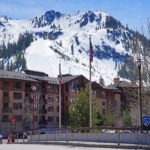
Leavenworth may be famous for its Bavarian-style downtown and winter lights, but its location on the eastern side of Washington’s Cascade Range also makes it an excellent base for a surprisingly varied ski trip.
Within a short drive, winter visitors can choose between the deep Cascade snow and large lift-served terrain of Stevens Pass, the drier eastern-slope conditions and long vertical runs of Mission Ridge, or the relaxed, family-oriented Leavenworth Ski Hill less than two miles from downtown.
Cross-country skiers have even more choices. The nonprofit Leavenworth Winter Sports Club maintains 26 kilometers of Nordic trails around the valley, while nearby Plain Valley adds roughly another 25 kilometers of groomed terrain. Additional cross-country and snowshoe routes extend toward Lake Wenatchee and Stevens Pass.
That variety is what makes Leavenworth such a useful winter base.
You can ski powder at Stevens Pass one day, carve groomers beneath clearer eastern Washington skies at Mission Ridge the next, spend an evening skiing under the lights at the local Ski Hill, and still have time for Nordic skiing, snowshoeing, tubing, restaurants, and a walk through downtown Leavenworth.
Here is how to plan a Leavenworth ski trip—and which mountain is best for you.
⚡ Leavenworth Skiing Quick Guide
| Ski Area | Best For | Approx. Distance From Leavenworth | Key Features |
|---|---|---|---|
| Stevens Pass | Most downhill skiers, powder, advanced terrain | ~35 miles west | 1,125 acres, 52 trails, 1,800-ft vertical, night skiing |
| Mission Ridge | Groomers, drier snow, sunshine, long vertical | ~35 miles southeast | 2,250-ft vertical, 36 trails, snowmaking, night skiing |
| Leavenworth Ski Hill | Beginners, families, quick local skiing | Less than 2 miles | 2 rope tows, moving carpet, lessons, night skiing |
| LWSC Nordic Trails | Cross-country skiing close to town | Around Leavenworth | 26 km across several groomed systems |
| Plain Valley Ski Trails | Longer Nordic outings | North of Leavenworth | Approx. 25 km of groomed classic and skate terrain |
| Stevens Pass Nordic Center | Higher-elevation Nordic skiing | Near Stevens Pass | Groomed cross-country and snowshoe trails |

🏔️ Skiing in the Cascade Range
Leavenworth sits on the eastern side of Washington’s Cascade Range, one of the great mountain systems of western North America.
The Cascades stretch from British Columbia through Washington and Oregon into northern California.
The range contains famous volcanic giants such as Mount Rainier, Mount Baker, Glacier Peak, Mount St. Helens, Mount Adams, Mount Hood, and Mount Shasta.
Around Leavenworth and Stevens Pass, however, much of the landscape consists of rugged North Cascade and central Cascade terrain rather than the enormous isolated volcanoes farther south.
Winter storms moving inland from the Pacific encounter these mountains and are forced upward.
As the air cools, enormous quantities of moisture can fall as snow.
That creates the deep maritime snowpack for which Stevens Pass is famous.
East of the Cascade Crest, precipitation drops sharply.
Mission Ridge consequently has a somewhat different snow climate, with lower annual snowfall but often lighter, drier snow and more sunshine.
Leavenworth sits between those two environments.
That gives skiers an unusual ability to choose between the west-side Cascade snow machine and the drier eastern slopes during the same vacation.
🎿 Stevens Pass
For most visitors planning a serious downhill ski day from Leavenworth, Stevens Pass is the obvious first choice.
The resort sits directly on the Cascade Crest along U.S. Highway 2, approximately 35 miles west of Leavenworth.
It combines substantial snowfall with steep forested terrain, bowls, groomers, learning areas, terrain parks, and extensive night skiing.
⚡ Stevens Pass Quick Facts
| Feature | Details |
|---|---|
| Base Elevation | 4,061 ft / 1,238 m |
| Highest Elevation | 5,845 ft / 1,782 m |
| Maximum Vertical | Approx. 1,800 ft |
| Skiable Terrain | 1,125 acres |
| Trails | 52 |
| Lifts | 13 |
| Average Annual Snowfall | Approx. 460 inches |
| Beginner Terrain | 11% |
| Intermediate Terrain | 54% |
| Advanced Terrain | 35% |
| Terrain Parks | 3 |
| Night Skiing | Yes |
| Distance From Leavenworth | Approx. 35 miles / 45 minutes in good conditions |
Actual winter driving times can be much longer during storms, heavy traffic, chain restrictions, avalanche control, or holiday periods.

❄️ Why Stevens Pass Gets So Much Snow
Stevens Pass averages approximately 460 inches of snow per year.
Its location directly on the Cascade Crest explains much of that total.
Moist Pacific weather systems move eastward toward Washington.
When the air reaches the Cascades, it rises rapidly.
Cooling causes moisture to condense and fall as rain or snow.
Stevens sits high enough for much of the winter precipitation to arrive as snow.
The result can be classic Pacific Northwest conditions:
- Deep powder
- Heavy snowfall
- Rapidly filling tracks
- Wind-affected snow
- Occasional heavy, moisture-rich “Cascade concrete”
Snow quality changes considerably with temperature.
Cold storms can produce excellent powder, while warmer Pacific systems may create much denser snow.
⛷️ Terrain at Stevens Pass
Stevens Pass spreads across several sides of Cowboy Mountain and Big Chief Mountain.
This gives the resort much more variety than a simple front-facing ski hill.
The official terrain breakdown is approximately:
- 11% beginner
- 54% intermediate
- 35% advanced
Intermediate skiers therefore have the largest share of marked terrain.
Wide groomers and progression runs provide plenty of options without forcing visitors onto the resort’s more intimidating terrain.
Advanced skiers can explore steeper areas around lifts such as:
- 7th Heaven
- Double Diamond
- Southern Cross
Depending on conditions and openings, Stevens can offer:
- Steep tree skiing
- Chutes
- Bowls
- Moguls
- Powder lines
- Groomed black runs
The resort also contains more than 200 in-bounds avalanche zones, which gives some indication of how complicated its mountain terrain can be.
Closures should always be respected.
🟢 Is Stevens Pass Good for Beginners?
Yes, but beginners should understand the mountain before simply following more experienced friends.
Only about 11% of Stevens Pass terrain is officially classified as beginner.
Dedicated learning areas and ski-school terrain make it perfectly possible to learn here, but the mountain becomes more complicated once a skier leaves those zones.
Beginners benefit from:
- Lessons
- Designated green terrain
- Rental facilities
- Clearly marked progression areas
A first-time skier staying in Leavenworth may still prefer Leavenworth Ski Hill for the very first lesson because it is smaller, simpler, and much closer to town.
After basic skills improve, Stevens provides far more room to progress.
🔴 Advanced Skiing at Stevens Pass
Experienced skiers are one of Stevens Pass’s strongest audiences.
The resort’s advanced terrain includes steep forests, natural features, bowls, bumps, and technical sections.
7th Heaven is particularly famous.
Its chair accesses steep upper-mountain terrain and has become one of Stevens Pass’s defining lifts.
The backside and Mill Valley also give the resort a very different character from the busier front side.
Conditions determine everything.
A powder morning can transform advanced terrain.
Ice, crust, low visibility, or avalanche closures can make the same slopes dramatically more difficult.
🌙 Night Skiing at Stevens Pass
Night skiing is one of the biggest advantages of using Leavenworth as a ski base.
Stevens Pass operates an extensive night program during the core winter season, typically on selected evenings.
Current operations can include up to five lifts.
For the 2026–27 season, Stevens says night operations are generally planned Wednesday through Sunday from mid-December through mid-March, with skiing continuing as late as 10 p.m. on operating nights.
That opens several interesting trip possibilities.
You can spend the morning exploring Leavenworth, drive to the mountain after lunch, and ski well into the evening.
Night skiing can also help avoid some of the worst morning parking pressure.
Always check that night’s lift and terrain status before leaving town.
🚗 Stevens Pass Parking: Important for 2026–27
Parking deserves its own section because it can determine whether a Stevens Pass ski day starts smoothly or becomes frustrating.
For the 2026–27 ski season, Stevens Pass plans to require parking reservations before 10 a.m. on most weekends and holiday periods.
The system includes:
- Free advance reservations for qualifying carpools
- Paid advance reservations
- Limited free reservations released closer to busy weekends
- Free first-come parking on non-peak weekdays
Current carpool rules provide free reserved parking for vehicles with at least four people or one adult traveling with two children age 12 or younger.
Guests arriving later for night skiing can generally avoid the morning reservation requirement.
Parking policies can change from season to season, so this is one detail worth checking immediately before your trip.
🚙 Driving from Leavenworth to Stevens Pass
The drive follows U.S. Highway 2 west from Leavenworth.
Under dry conditions, it takes approximately 45 minutes.
Winter is different.
Stevens Pass itself reaches 4,061 feet, and heavy snow can create:
- Packed snow
- Ice
- Reduced visibility
- Chain requirements
- Traction-tire restrictions
- Avalanche-control delays
- Temporary closures
Washington State Department of Transportation maintains a dedicated Stevens Pass report during the winter season.
Check it before leaving Leavenworth and again before returning.
Weather can deteriorate rapidly while you are skiing.
🎿 Mission Ridge
Drive in the opposite direction from Leavenworth and you reach another major ski area with a completely different personality.
Mission Ridge Ski & Board Resort lies above Wenatchee on the eastern side of the Cascades.
Mission Ridge is approximately 35 miles from Leavenworth, with a normal drive of roughly 45–50 minutes.
Where Stevens Pass is famous for huge snowfall totals, Mission Ridge is known for:
- Drier snow
- Groomed runs
- More sunshine
- Snowmaking
- A substantial vertical drop
- Eastern Washington views
⚡ Mission Ridge Quick Facts
| Feature | Details |
|---|---|
| Top Elevation | Approx. 6,820 ft |
| Vertical Drop | Approx. 2,250 ft |
| Trails | 36 designated runs |
| Aerial Lifts | 4 |
| Average Annual Snowfall | Approx. 200 inches |
| Snowmaking | Extensive top-to-bottom system |
| Night Skiing | Yes, selected dates |
| Distance From Leavenworth | Approx. 35 miles / 45–50 minutes |
☀️ Stevens Pass vs. Mission Ridge Snow
Choosing between Stevens Pass and Mission Ridge is partly about what kind of winter conditions you prefer.
Stevens Pass
Generally receives substantially more natural snow.
Expect:
- Frequent storms
- Deep snow
- Maritime powder
- Cloudier weather
- More variable road conditions
Mission Ridge
Receives significantly less snowfall but sits on the drier eastern side of the Cascades.
Expect more:
- Sunshine
- Dry snow
- Groomed surfaces
- Snowmaking-supported coverage
- Wide temperature swings
Neither mountain is automatically better.
A storm day may strongly favor Stevens.
After several dry days, Mission Ridge’s grooming and snowmaking may provide the more predictable experience.
That is one of the advantages of staying in Leavenworth: you can check both mountains each morning and choose accordingly.
⛷️ Who Should Choose Mission Ridge?
Mission Ridge is particularly attractive to skiers who enjoy:
- Long groomed runs
- Carving
- Bluebird days
- Drier snow
- Intermediate terrain
- A substantial 2,250-foot vertical
- Less dependence on Pacific storm cycles
The mountain also offers advanced skiing and terrain parks.
Its east-side climate can make the skiing feel very different from Stevens even when the resorts are separated by only about 70 road miles.
🌙 Night Skiing at Mission Ridge
Mission Ridge also offers night skiing on selected dates.
Night products generally begin in the late afternoon and continue until closing.
The schedule varies throughout the season, so visitors should check the current operating calendar rather than assuming lights will be available every night.
For a multi-day Leavenworth vacation, the existence of night skiing at both Stevens Pass and Mission Ridge creates considerable flexibility.
You don’t necessarily have to choose between sightseeing during the day and skiing after dark.
🚗 Driving to Mission Ridge
From Leavenworth, the route travels toward Wenatchee before climbing Mission Ridge Road.
The resort is approximately 12 miles from downtown Wenatchee.
Because Mission Ridge is east of the Cascade Crest, the drive does not require crossing Stevens Pass.
It can therefore be an excellent alternative when severe weather is affecting U.S. 2.
That does not mean the road will always be easy.
Snow, ice, and winter driving conditions can still occur on the climb to the ski area.
Mission Ridge recommends carrying appropriate winter equipment and checking Washington road conditions before traveling.
🎿 Leavenworth Ski Hill
Not every ski day needs 1,000 acres of terrain.
For beginners, young children, families, or anyone wanting a few relaxed runs close to town, Leavenworth Ski Hill may be the most convenient choice of all.
The historic hill is located less than two miles from downtown Leavenworth.
The nonprofit Leavenworth Winter Sports Club has supported winter recreation in the valley since 1928.
Today the Ski Hill offers:
- Two groomed alpine hills
- Two rope tows
- A moving carpet
- Ski and snowboard lessons
- Night skiing
- Nordic skiing
- Tubing
- Snowshoeing
- Fat biking
- Historic Ski Hill Lodge
This is not a miniature Stevens Pass.
It serves a different purpose.
👨👩👧 Why Ski Hill Is Great for Families
Large ski resorts can overwhelm first-time skiers.
There are parking lots, lift tickets, rentals, chairlifts, trail maps, crowds, and dozens of runs to understand.
Leavenworth Ski Hill strips the experience down.
Beginners can practice on manageable terrain without feeling as though they need to explore an entire resort.
The moving carpet is especially useful for children and first-timers.
Rope tows then provide the next step in progression.
Ski and snowboard lessons are available.
One important detail:
Leavenworth Ski Hill does not operate an on-site alpine ski or snowboard rental shop.
If you need downhill equipment, arrange rentals in town before heading to the hill.
🪢 What Is a Rope Tow?
A rope tow is one of the simplest ski lifts.
Instead of sitting on a chair, the skier grabs a continuously moving rope and holds on while being pulled uphill.
They are inexpensive, effective, and historically important to early American ski areas.
They also require some technique.
New skiers may find them awkward at first.
Gloves can experience considerable wear from repeated use, so durable hand protection is helpful.
Ski Hill’s combination of rope tows and a moving carpet preserves the feel of a traditional community ski hill while still giving new skiers an easier learning option.
🌙 Night Skiing at Leavenworth Ski Hill
Ski Hill offers night operations when snow conditions allow.
That makes it particularly convenient for visitors who spend the day elsewhere.
A winter itinerary might include:
- Morning Nordic skiing
- Afternoon in downtown Leavenworth
- Dinner
- A few evening runs at Ski Hill
Or families can ski locally while more advanced members of the group spend another day at Stevens Pass.
Because Ski Hill operates on natural winter conditions at relatively low elevation, always check the current snow report before driving over.
❄️ Snow Conditions at Ski Hill
The biggest limitation of Leavenworth Ski Hill is elevation.
It sits much lower than Stevens Pass.
During a strong winter, that creates a wonderful snowy community ski hill.
During warm or low-snow periods, operations can become limited even while Stevens Pass remains open.
The same issue affects some lower-elevation Nordic trails.
For that reason, travelers planning months in advance should treat local valley skiing as a bonus rather than the only reason for booking a Leavenworth ski vacation.
Stevens Pass and Mission Ridge provide much larger and generally more snow-secure downhill alternatives.
⛷️ Nordic Skiing in Leavenworth
Leavenworth may be even more impressive as a Nordic skiing destination than as an alpine ski town.
The Leavenworth Winter Sports Club maintains approximately 26 kilometers of groomed cross-country trails spread across several locations.
Those systems include:
- Icicle River Trails
- Leavenworth Golf Course
- Ski Hill
- Peshastin Mill Site as conditions allow
Both classic skiing and skate skiing are available.
Each trail system has a different personality.
🌲 Icicle River Trails
The Icicle River Trails are the best starting point for many recreational Nordic skiers.
The network contains approximately 8 kilometers of groomed trails winding through:
- Forest
- Open meadows
- Bridges
- Icicle River scenery
- Mountain views
Terrain is generally gentle.
That makes Icicle River particularly suitable for:
- Beginners
- Families
- Relaxed classic skiing
- First Nordic lessons
The area also has a separate snowshoe route.
Snowshoers should never walk directly on groomed ski tracks.
🌲 Leavenworth Golf Course Nordic Trails
The golf-course trail system offers a slightly more challenging experience.
Trails climb and descend through open pine woodland above the Wenatchee River.
The primary Nordic system is roughly 7–8 kilometers, depending on the current grooming configuration.
This area is especially attractive for intermediate skiers who want more rolling terrain than Icicle River.
A separate snowshoe trail is also available.
🌙 Ski Hill Nordic Trails
Ski Hill contains the most challenging of the main Leavenworth Winter Sports Club Nordic systems.
Trails climb through forest above town before returning to the historic lodge area.
The standout feature is approximately 5 kilometers of illuminated Nordic trail.
During winter operations, those lights can remain on until 10 p.m.
Night Nordic skiing through snowy forest offers one of the most distinctive winter experiences in Leavenworth.
It can also be a practical option after a day spent sightseeing or downhill skiing.
🎿 Plain Valley Ski Trails
Drive north toward the community of Plain and another major cross-country network appears.
Plain Valley Ski Trails maintains approximately 25 kilometers of groomed Nordic terrain during suitable winter conditions.
The system accommodates both:
- Classic skiing
- Skate skiing
Trails wind through forest and open mountain-valley terrain.
Plain provides an excellent option for stronger Nordic skiers wanting more mileage than the individual Leavenworth trail systems offer.
🎫 Valley Pass
The Leavenworth Winter Sports Club and Plain Valley Ski Trails offer a combined Valley Pass.
For the 2026–27 season, the pass provides access to roughly 50 kilometers of groomed Nordic trails between the two organizations.
Depending on membership level, it can also include or connect with activities such as:
- Alpine skiing at Leavenworth Ski Hill
- Tubing
- Snowshoeing
- Fat biking
For someone planning several days of Nordic skiing, this can make Leavenworth an exceptionally flexible base.
Day tickets are still available for visitors who do not need a season-long product.
❄️ Lake Wenatchee Nordic Skiing
The winter-recreation possibilities continue north toward Lake Wenatchee.
Washington State Parks operates several Sno-Park systems around the lake and nearby ridges.
Options include:
Lake Wenatchee Sno-Park
Groomed cross-country skiing, snowshoeing, and a sledding hill.
Nason Ridge
A larger collection of groomed Nordic routes with connections around the Lake Wenatchee area.
Chiwawa Sno-Park
More groomed and ungroomed cross-country terrain plus snowshoe routes.
These areas require the appropriate Washington Sno-Park permit, and some groomed locations require an additional groomed-trail permit.
Always check the exact trailhead requirements before leaving the car.
🎿 Stevens Pass Nordic Center
Stevens Pass also operates a separate Nordic center east of the alpine resort.
The terrain includes groomed trails for:
- Classic cross-country skiing
- Skate skiing
- Snowshoeing
Because the Nordic Center sits at considerably higher elevation than the Leavenworth valley trail systems, it can sometimes retain useful snow when lower-elevation trails are struggling.
That makes it a valuable backup option during warm winters.
The Nordic Center is separate from the main alpine ski slopes and requires its own current access or trail arrangements.
🥾 Snowshoeing Around Leavenworth
Non-skiers are not left out.
The Leavenworth region contains numerous snowshoe opportunities.
Leavenworth Winter Sports Club maintains dedicated snowshoe routes at:
- Icicle River
- Ski Hill
- Golf Course
Additional options extend toward:
- Lake Wenatchee
- Nason Ridge
- Chiwawa
- Icicle Canyon
- Stevens Pass
Snowshoeing is relatively easy to learn, but winter mountain travel still requires preparation.
Trailheads can be icy.
Temperatures change rapidly.
Deep snow makes short distances surprisingly tiring.
And routes leaving developed trail systems may enter avalanche terrain.
Do not treat a summer hiking trail as automatically safe simply because snowshoes make it accessible.
🛷 Tubing and Sledding
Families looking for something less technical can also find tubing and sledding around Leavenworth.
Leavenworth Winter Sports Club operates winter snow-play activities at designated locations when conditions permit.
Ski Hill includes a tubing facility, while the golf-course area has designated sledding opportunities.
Lake Wenatchee State Park also maintains winter recreation facilities, including a sledding hill at its south Sno-Park area.
Rules vary by location.
Never bring a personal sled or tube onto a ski slope unless that location specifically allows it.
🏘️ Après-Ski in Leavenworth
Leavenworth’s biggest advantage over staying at a remote ski lodge is everything available after skiing ends.
Downtown contains a dense collection of:
- Restaurants
- Breweries
- Cafés
- Bakeries
- Shops
- Tasting rooms
- Lodging
- Seasonal entertainment
The Bavarian theme is unmistakable, but a ski trip does not need to revolve around it.
Think of downtown as the après-ski base.
Spend the day in the Cascades, come back for dinner, and walk around town without needing another long drive.
During the holiday and winter season, Leavenworth’s decorative lights add another reason to be downtown after dark.
🛏️ Where to Stay for a Leavenworth Ski Trip
There is no single best part of Leavenworth for every skier.
🏘️ Downtown Leavenworth
Best for:
- First-time visitors
- Restaurants
- Walking to shops
- Holiday atmosphere
- Couples
- Visitors combining skiing with sightseeing
This is the easiest choice if you want the full Leavenworth experience.
🌲 Icicle Road Area
Best for:
- Quieter lodging
- Nordic access
- Outdoor-oriented trips
- Easy access to Icicle Canyon
Properties become more spread out here, so a vehicle is useful.
❄️ Plain and Lake Wenatchee
Best for:
- Nordic skiing
- Snowshoeing
- Cabins
- Quiet winter trips
- Groups prioritizing outdoor recreation over downtown
This area places you farther from Leavenworth’s restaurants but closer to extensive winter trail systems.
🏙️ Wenatchee
Best for:
- Mission Ridge-focused trips
- More conventional hotel options
- Travelers primarily interested in downhill skiing rather than Leavenworth itself
If most of your ski days will be at Mission Ridge, staying in Wenatchee may actually be more convenient.

📅 Best Time for Skiing in Leavenworth
The ideal month depends on what kind of trip you want.
🎄 December
Advantages:
- Holiday atmosphere
- Winter lights
- Early-season skiing
- Festive downtown
Disadvantages:
- Heavy crowds
- Expensive lodging periods
- Early-season snow uncertainty, especially in the valley
Stevens Pass may have substantially better coverage than Ski Hill or lower Nordic trails during early winter.
❄️ January
January is often one of the strongest choices for a dedicated ski trip.
Advantages include:
- Deepening snowpack
- Cold temperatures
- Good chance of valley snow
- Full winter atmosphere
- Nordic skiing
Days are short, however.
Night skiing helps compensate.
❄️ February
February may offer the best overall balance.
Snowpack is usually well established at higher elevations, while days begin getting longer.
Leavenworth remains firmly in winter mode.
🌤️ March
March can deliver excellent spring skiing.
Advantages include:
- Longer daylight
- Warmer temperatures
- Deep high-mountain snowpack
- More comfortable outdoor time
The tradeoff is that low-elevation Leavenworth Nordic systems and Ski Hill can deteriorate earlier than Stevens Pass.
Mission Ridge’s snowmaking can also become useful during dry periods.
🚗 Winter Driving Around Leavenworth
Winter driving is the most important non-skiing skill for a Leavenworth ski vacation.
The region combines mountain roads with rapidly changing Pacific Northwest weather.
🌨️ U.S. 2 and Stevens Pass
U.S. 2 crosses the Cascades directly through Stevens Pass.
During storms, drivers may encounter:
- Heavy snow
- Packed snow
- Ice
- Blowing snow
- Poor visibility
- Avalanche-control closures
- Vehicle spinouts
- Major traffic delays
Washington State Department of Transportation provides real-time mountain-pass reports and webcams.
Winter pass reports are generally maintained through the snow season.
Do not rely solely on a weather app.
Check the actual highway report.
⛓️ Chains and Traction
Washington can impose traction restrictions when mountain roads become hazardous.
The exact requirement depends on:
- Road conditions
- Vehicle type
- Tire equipment
- Current WSDOT restrictions
Carry appropriate traction equipment and know how to install it before you need it.
A snowy highway shoulder at night is not the ideal place to learn how tire chains work.
🚙 Build a Winter Car Kit
Useful items include:
- Tire chains or approved traction devices
- Ice scraper
- Snow brush
- Gloves
- Warm clothing
- Blanket
- Flashlight
- Phone charger
- Water
- Snacks
- Small shovel
- Basic first-aid supplies
Keep the fuel tank comfortably above empty.
Road closures can turn a 45-minute journey into a much longer wait.
🎒 What to Pack for a Leavenworth Ski Trip
For skiing and winter recreation, consider packing:
Clothing
- Waterproof ski jacket
- Ski pants or bibs
- Moisture-wicking base layers
- Insulating midlayer
- Ski socks
- Gloves or mittens
- Warm hat
- Neck gaiter
Ski Equipment
- Helmet
- Goggles
- Skis or snowboard
- Boots
- Poles
- Equipment lock
Off-Mountain Gear
- Winter boots
- Casual warm layers
- Traction cleats for icy sidewalks
- Sunglasses
- Sunscreen
Vehicle Gear
- Chains
- Scraper
- Winter emergency supplies
Remember that Leavenworth may be relatively mild while Stevens Pass is experiencing heavy snow.
Dress for the mountain you are visiting, not merely the weather outside your hotel.
🗓️ Sample 3-Day Leavenworth Ski Trip
A three-day stay gives enough time to experience several sides of the region.
Day 1 — Stevens Pass
Start early and check:
- Highway conditions
- Parking requirements
- Snow report
- Lift status
Spend the day exploring Stevens Pass.
Return to Leavenworth for dinner and an evening walk downtown.
Day 2 — Nordic Skiing + Ski Hill
Spend the morning at Icicle River Trails or the Golf Course Nordic system.
Take an afternoon break in Leavenworth.
If conditions permit, finish the day with night skiing at Leavenworth Ski Hill.
Day 3 — Mission Ridge
Drive toward Wenatchee and spend the final day at Mission Ridge.
This gives you a useful contrast between the wetter western Cascade environment at Stevens and the drier eastern mountain climate at Mission Ridge.
If the weather strongly favors one resort, there is nothing wrong with skiing the same mountain twice.

🎿 Which Leavenworth Ski Area Should You Choose?
Choose Stevens Pass if:
- You want the most extensive downhill terrain
- Natural snowfall is your priority
- You enjoy advanced skiing
- You want powder
- You want substantial night skiing
- You don’t mind mountain-pass driving
Choose Mission Ridge if:
- You prefer groomers
- You want a large vertical drop
- You appreciate drier snow
- You like sunny conditions
- Stevens Pass weather is poor
- You’re combining the trip with Wenatchee
Choose Leavenworth Ski Hill if:
- You’re a beginner
- You have young children
- You only want a few hours of skiing
- You want to stay close to town
- You prefer a traditional community ski hill
- You want a casual night-skiing experience
Choose Leavenworth Nordic trails if:
- Cross-country skiing is the main objective
- You prefer quieter winter recreation
- You want terrain near town
- You want both classic and skate skiing
Choose Plain Valley if:
- You want more Nordic mileage
- You’re staying near Plain or Lake Wenatchee
- You want a dedicated cross-country day
❓ Frequently Asked Questions
Is Leavenworth a ski resort?
No.
Leavenworth is a mountain town that makes an excellent base for several ski areas.
Its local Leavenworth Ski Hill is a small community ski area, while Stevens Pass and Mission Ridge provide much larger downhill terrain.
What is the closest skiing to downtown Leavenworth?
Leavenworth Ski Hill, less than two miles from downtown.
What is the best major ski resort near Leavenworth?
For most visitors, Stevens Pass offers the strongest combination of terrain, snowfall, lifts, and proximity.
Mission Ridge is an excellent alternative and may provide better conditions during some weather patterns.
How far is Stevens Pass from Leavenworth?
Approximately 35 miles, normally around 45 minutes in favorable road conditions.
Winter storms can make the trip considerably longer.
How far is Mission Ridge from Leavenworth?
Approximately 35 miles, normally around 45–50 minutes.
Is Stevens Pass good for beginners?
Yes, with dedicated beginner and lesson areas.
However, much of the mountain is intermediate or advanced.
Complete beginners may find Leavenworth Ski Hill simpler for their first lesson.
Does Leavenworth have night skiing?
Yes.
Both Leavenworth Ski Hill and Stevens Pass offer night skiing when scheduled and conditions permit.
Mission Ridge also operates night skiing on selected dates.
Is there cross-country skiing in Leavenworth?
Yes.
The Leavenworth Winter Sports Club maintains approximately 26 kilometers of Nordic trails around the valley.
Plain Valley adds roughly another 25 kilometers of groomed skiing nearby.
Can beginners cross-country ski in Leavenworth?
Absolutely.
The Icicle River Trails are particularly beginner-friendly.
Lessons are also available through the Leavenworth Winter Sports Club.
Does Leavenworth Ski Hill rent skis?
The Ski Hill does not provide alpine ski or snowboard rentals at the hill itself.
Arrange downhill equipment rentals in town before arriving.
Does Stevens Pass have night skiing?
Yes.
Stevens Pass operates one of the more substantial night-skiing programs in Washington, with up to five lifts available during scheduled night operations.
Do I need a Stevens Pass parking reservation?
For 2026–27, reservations are required before 10 a.m. on most weekends and holiday periods.
Non-peak weekdays remain first-come, first-served.
Parking policy can change annually, so verify it before your trip.
Do I need a Sno-Park permit around Leavenworth?
At many Washington State Sno-Park winter trailheads, yes.
Some high-use groomed areas also require an additional groomed-trails permit.
The Leavenworth Winter Sports Club’s own trail systems use their own trail-ticket system instead.
What month is best for a Leavenworth ski vacation?
January and February generally provide the strongest balance of winter atmosphere and established snowpack.
March can be excellent for Stevens Pass and Mission Ridge but less reliable for lower-elevation Nordic skiing and Leavenworth Ski Hill.
Can you ski and enjoy Leavenworth without a car?
You can enjoy downtown Leavenworth without one, but a car provides far greater flexibility for skiing.
Stevens Pass, Mission Ridge, Plain, Lake Wenatchee, and many Nordic trailheads are outside the walkable downtown area.
⭐ Is Leavenworth Worth It for a Ski Trip?
Leavenworth works especially well for skiers who want options rather than a single resort experience.
Stay at a traditional ski resort and your vacation revolves around one mountain.
Stay in Leavenworth and you can change plans according to weather, snow, ability, and mood.
When Pacific storms bury the Cascade Crest, head to Stevens Pass.
When you want groomers, sunshine, and drier eastern-slope snow, try Mission Ridge.
When the children need their first lesson, spend an afternoon at Leavenworth Ski Hill.
When tired legs need a break from chairlifts, explore the Icicle River on cross-country skis.
Add Plain Valley, Lake Wenatchee, snowshoeing, tubing, and night skiing, and the area becomes much more than a weekend downhill destination.
Leavenworth itself then fills the role of comfortable winter basecamp, with lodging, restaurants, shops, and an unusually lively après-ski atmosphere.
That combination of major alpine skiing, historic community skiing, excellent Nordic trails, Cascade scenery, and a walkable mountain town makes Leavenworth one of Washington’s most versatile winter destinations.
🔗 Related Articles
- Cascade Range
- Mount Rainier
- Mountain Ranges in the U.S.
- Angel Fire Ski Resort Guide: Trails, Snow, Night Skiing & What to Know
📚 Sources
- Leavenworth — Winter Recreation
- Leavenworth — Skiing & Snowboarding
- Leavenworth — Winter Trails
- Leavenworth Winter Sports Club — Alpine Ski & Snowboard
- Leavenworth Winter Sports Club — Nordic Skiing
- Leavenworth Winter Sports Club — Ski Hill
- Leavenworth Winter Sports Club — Icicle River Trails
- Leavenworth Winter Sports Club — Golf Course Nordic Trails
- Leavenworth Winter Sports Club — Valley Pass
- Stevens Pass — Mountain Information
- Stevens Pass — Getting Here & Parking
- Stevens Pass — Trail Maps
- Mission Ridge — Getting Here
- Mission Ridge — Resort Information
- Washington State Department of Transportation — Stevens Pass US 2
- Washington State Parks — Sno-Park Permits
- Washington State Parks — Lake Wenatchee Sno-Park
- Washington State Parks — Nason Ridge Sno-Park
- Washington State Parks — Chiwawa Sno-Park