🏔️ Overview
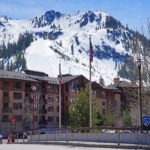
Breckenridge Ski Resort is one of Colorado’s largest and highest ski areas, spreading across five interconnected peaks of the Tenmile Range above the historic town of Breckenridge. Rather than occupying a single mountain, the resort extends across Peaks 6, 7, 8, 9, and 10, creating an unusually varied landscape of groomed slopes, forests, bowls, moguls, terrain parks, and expansive high-alpine terrain.
The resort currently encompasses 2,908 acres of skiable terrain, with 187 marked trails and 35 lifts. Its official base elevation is 9,600 feet, while the highest ski-area elevation reaches 12,998 feet on Peak 8. Approximately 40% of the resort’s terrain lies above treeline, giving Breckenridge one of the most extensive lift-accessible high-alpine environments among major U.S. ski resorts.
Breckenridge is particularly notable for the Imperial Express SuperChair, which reaches approximately 12,840 feet and is recognized as the highest chairlift in North America. From the upper mountain, expert skiers and snowboarders can reach bowls, chutes, steep faces, and additional hike-to terrain.
At lower elevations, however, Breckenridge is much more approachable. Dedicated learning areas on Peaks 8 and 9, long intermediate groomers, professional ski and snowboard lessons, and three major base areas make it possible for beginners through experts to find suitable terrain.
Breckenridge’s setting also distinguishes it from many purpose-built ski destinations. The slopes rise directly above an established Colorado mountain town, allowing visitors to combine skiing with shops, restaurants, lodging, and the historic Main Street district.
⚡ Fast Facts
| Feature | Details |
|---|---|
| Location | Breckenridge, Colorado, United States |
| County | Summit County |
| Mountain Range | Tenmile Range, Southern Rocky Mountains |
| Highest Ski-Area Elevation | 12,998 ft / 3,962 m |
| Base Elevation | 9,600 ft / 2,926 m |
| Vertical Rise | Approximately 3,398 ft / 1,036 m |
| Skiable Terrain | 2,908 acres |
| Trails | 187 |
| Lifts | 35 |
| Average Annual Snowfall | 355 in / 901 cm |
| Terrain Above Treeline | Approximately 40% |
| Beginner Terrain | 11% |
| Intermediate Terrain | 31% |
| Advanced Terrain | 24% |
| Expert Terrain | 34% |
| Terrain Parks | 3 |
| Main Ski Peaks | Peaks 6, 7, 8, 9 and 10 |
| Highest Chairlift | Imperial Express SuperChair — 12,840 ft |
| Main Base Areas | Peaks 7, 8 and 9 |
| Opened | December 16, 1961 |
| Operator | Vail Resorts |
| Pass Network | Epic Pass |
| National Forest | White River National Forest |
Breckenridge lies within the Southern Rocky Mountains, the same enormous mountain system containing many of the peaks discussed in our guide to Mountain Ranges in the U.S..
📍 Location
Breckenridge Ski Resort rises immediately west of the town of Breckenridge in Summit County, central Colorado.
The ski area occupies Peaks 6 through 10 of the Tenmile Range, a high section of the Southern Rocky Mountains extending south from the vicinity of Frisco toward Quandary Peak.
The Tenmile Range forms one of the defining mountain walls of Summit County. From Breckenridge, its ridges rise rapidly from the valley floor toward alpine elevations well above 12,000 feet.
The region sits relatively close to several of Colorado’s most famous mountain areas. The Mosquito Range lies to the east and southeast, while the Sawatch Range rises farther southwest and contains Mount Elbert, the highest mountain in Colorado and the entire Rocky Mountain system.
Breckenridge is also relatively accessible compared with many remote Colorado mountain destinations. Visitors traveling from Denver typically approach Summit County via Interstate 70 before continuing south toward Breckenridge.
Winter weather and mountain traffic can significantly affect driving conditions, so travel times should never be treated as guaranteed during snowstorms, holidays, or busy ski weekends.

🕰️ History of Breckenridge Ski Resort
Breckenridge Ski Resort opened on December 16, 1961.
The original ski area was far smaller than today’s resort. Early operations centered on Peak 8, where a double chairlift served a comparatively small collection of runs.
The creation of the ski area was connected with efforts to strengthen the economy of Breckenridge after the decline of the region’s historic mining industry. Skiing offered the town an opportunity to develop a new tourism economy based on the surrounding mountains and dependable winter snow.
Expansion followed steadily.
Additional lifts and trails pushed the ski area beyond Peak 8 onto neighboring mountains, eventually creating the interconnected Peak 7 through Peak 10 resort familiar to generations of skiers.
Breckenridge also became important in the development of modern lift technology. Over the decades, increasingly fast and high-capacity lifts made it possible to move large numbers of visitors efficiently across the growing ski area.
In 1984, Breckenridge became one of the first major Colorado resorts to welcome snowboarding.
A major milestone arrived in 2005 with the opening of the Imperial Express SuperChair on Peak 8. Reaching an elevation of approximately 12,840 feet, it dramatically improved lift access to Breckenridge’s high-alpine terrain.
Another transformative expansion occurred in 2013, when Peak 6 officially opened for lift-served skiing and riding. Peak 6 extended the ski area northward and added substantial high-alpine terrain.
Today, Breckenridge forms part of the Vail Resorts network alongside other major Colorado ski destinations such as Vail Ski Resort.
🎿 The Five Peaks of Breckenridge
Understanding Breckenridge becomes much easier when the resort is viewed as five individual skiing zones rather than one enormous mountain.
Each peak has a somewhat different character.
Peak 6 — High-Alpine Adventure
Peak 6 is the northernmost of Breckenridge’s five ski peaks and one of the resort’s best areas for experiencing high-alpine terrain.
Unlike Peaks 7, 8, and 9, Peak 6 has no major base village. Skiers generally reach it by traveling across the mountain from Peak 7.
The Kensho SuperChair provides access to high-elevation intermediate and advanced terrain, while additional hiking opens more difficult areas.
Peak 6 is unusual because strong intermediate skiers can experience some above-treeline terrain without immediately entering expert-only slopes. More demanding bowls and steep hike-to lines are available higher on the mountain.
Because of its elevation and exposure, conditions on Peak 6 may differ dramatically from those at the base. Wind, low visibility, firm snow, and sudden weather changes can make terrain considerably more challenging.
Peak 7 — Intermediate Cruising and High-Alpine Access
Peak 7 is particularly well suited to intermediate skiers.
Its lower and middle slopes include broad groomed blue runs served by lifts such as the Independence and Freedom SuperChairs. Skiers can make repeated laps on long cruising terrain without returning to the busier Peak 8 base.
Peak 7 does not offer beginner terrain from its main base, so first-time skiers should generally start elsewhere.
Higher on the mountain, Peak 7 changes character. Access toward the T-Bar and neighboring high-alpine areas leads to much steeper and more demanding terrain.
Peak 7 also provides a convenient route toward Peak 6.
Peak 8 — The Center of the Resort
Peak 8 is the historic and operational heart of Breckenridge.
It contains the resort’s flagship base area, ski and snowboard school facilities, rentals, restaurants, beginner terrain, intermediate runs, terrain parks, and access toward some of Breckenridge’s most demanding high-alpine skiing.
The lower mountain is suitable for learning and progression.
Far above it, the Imperial Express SuperChair climbs to approximately 12,840 feet. From this area, advanced and expert visitors can access steep bowls and chutes as well as routes leading toward additional hike-to terrain.
This extraordinary difference between lower beginner slopes and upper expert terrain makes Peak 8 one of the most varied parts of the resort.
Peak 9 — Best for Beginners and Progression
Peak 9 is one of Breckenridge’s most approachable areas for new skiers and snowboarders.
The Quicksilver area near the base provides learning terrain, while the Quicksilver SuperChair serves beginner and easier intermediate slopes.
As skills improve, visitors can move toward lifts such as Beaver Run and Mercury for longer intermediate terrain.
Peak 9 is also particularly convenient because its base areas sit close to downtown Breckenridge. This makes it a practical starting point for visitors staying near Main Street or the southern portion of town.
Advanced and expert terrain can also be found higher on Peak 9, meaning the mountain is not exclusively a beginner zone.
Peak 10 — Advanced and Expert Terrain
Peak 10 forms the southernmost developed ski peak at Breckenridge.
It is primarily an advanced mountain.
The Falcon SuperChair serves steep groomers, moguls, glades, and tree skiing. Unlike Peaks 8 and 9, Peak 10 is not intended as a learning area.
Strong skiers who enjoy sustained steep terrain can make repeated laps here without traveling into the highest alpine bowls.
Peak 10 can therefore be especially attractive when strong winds or poor visibility make exposed above-treeline terrain less appealing.

🟢 Beginner Skiing at Breckenridge
Only about 11% of Breckenridge’s terrain is officially classified as beginner, but the resort has dedicated areas designed specifically for learning.
The best starting points are Peaks 8 and 9.
Peak 9 provides the Quicksilver learning area and beginner runs served by the Quicksilver SuperChair.
Peak 8 has its own learning terrain near Rip’s Ride and provides additional opportunities for beginners who are ready to progress beyond surface lifts and very gentle slopes.
Beginners should be careful when traveling across the larger resort. Breckenridge’s five-peak layout means that simply following another skier or boarding an unfamiliar lift can lead toward substantially more difficult terrain.
Trail ratings are also relative to Breckenridge itself. A blue, green, or black run at one ski resort is not necessarily equivalent in difficulty to the same symbol at another.
🏔️ Field Guide Tip: First-time skiers should resist the temptation to explore the entire resort immediately. Spend the first part of the day on Peak 8 or Peak 9, learn the trail signs and lift system, and expand into new areas only when everyone in the group is comfortable.
🔵 Intermediate Skiing
Intermediate terrain accounts for approximately 31% of Breckenridge.
Peak 7 is arguably the resort’s strongest conventional intermediate zone, with wide groomers providing long, flowing descents.
Peak 9 also contains extensive intermediate terrain and offers an easy progression from lower beginner slopes.
Peak 6 provides a very different experience. Confident intermediate skiers can venture into designated high-alpine blue terrain, giving them an opportunity to experience open slopes above treeline.
High-alpine intermediate terrain should not automatically be treated like a conventional groomed blue run. Visibility, wind, snow texture, altitude, exposure, and the absence of trees can make the experience feel substantially more difficult.
⚫ Advanced and Expert Terrain
Advanced and expert skiing is one of Breckenridge’s greatest strengths.
Official mountain statistics classify approximately 24% of the resort as advanced and 34% as expert, meaning more than half of Breckenridge’s terrain falls into those two categories.
Expert terrain includes steep bowls, chutes, moguls, glades, cornices, natural features, and hike-to areas.
The Imperial Express area on Peak 8 provides some of the resort’s most famous high-elevation skiing. Nearby terrain includes Imperial Bowl and access toward steeper lines around the upper mountain.
Additional advanced and expert terrain can be found on Peaks 6 and 7, while Peak 10 is particularly well suited to skiers who prefer steep below-treeline groomers, moguls, and trees.
High-alpine conditions can change quickly. Wind can move snow from one slope to another, visibility can deteriorate rapidly, and hard-packed surfaces can replace soft powder within a short distance.
Closures in these areas should always be respected. Ski patrol evaluates terrain for avalanche conditions, snow coverage, weather, and other hazards before opening it to the public.
🚡 Imperial Express SuperChair
One feature distinguishes Breckenridge from every other major ski resort in North America: the Imperial Express SuperChair.
The chair reaches approximately 12,840 feet above sea level, making it the highest chairlift in North America.
It serves the upper slopes of Peak 8 and places experienced skiers and snowboarders close to extensive above-treeline terrain.
The lift should not be confused with the highest point of the ski area itself. Breckenridge lists a highest elevation of 12,998 feet, which is above the top terminal of Imperial.
Additional hiking from upper lift-accessed areas can lead toward even more challenging terrain.
The enormous elevation is part of the attraction, but it also creates genuine physiological challenges. Visitors arriving from low elevations may become short of breath much more quickly than expected.
🫁 High Altitude and Acclimatization
Breckenridge’s elevation should be taken seriously.
The resort’s official base elevation is already approximately 9,600 feet, while its upper terrain approaches 13,000 feet.
People arriving from near sea level may experience headaches, fatigue, dizziness, nausea, shortness of breath, disturbed sleep, or reduced exercise performance while adjusting to the altitude.
Taking the first day relatively easily can help visitors determine how their bodies respond.
Staying hydrated, limiting excessive alcohol consumption, eating properly, resting adequately, and gradually increasing physical effort are sensible precautions.
Severe or worsening symptoms should never be dismissed merely because altitude discomfort is common.
The combination of strenuous skiing and high elevation is one reason good physical preparation matters at Breckenridge.
❄️ Snow and Ski Season
Breckenridge reports an average annual snowfall of approximately 355 inches, or 901 centimeters.
Its very high elevation helps preserve snow and supports a ski season that commonly stretches from November into spring. Exact opening and closing dates vary each year according to snowfall, weather, snowmaking, staffing, and mountain conditions.
Early-season skiing often begins on a limited portion of the mountain before additional terrain opens as the snowpack deepens.
January and February usually bring colder midwinter conditions and opportunities for powder.
March combines a well-developed seasonal snowpack with longer daylight and somewhat warmer temperatures.
Spring can bring some of the resort’s most enjoyable weather, but snow surfaces become increasingly dependent on temperature and sun exposure. Runs may begin firm in the morning and soften considerably during the afternoon.
Higher elevations can remain winterlike even when the town feels relatively mild.
🏂 Terrain Parks
Breckenridge currently lists three terrain parks.
The resort has a long history within freestyle skiing and snowboarding, and park offerings can include jumps, rails, boxes, and other constructed features.
Terrain-park layouts change according to season, snow coverage, events, and maintenance.
Visitors should inspect features before using them and follow the principle of progressing gradually rather than attempting unfamiliar jumps or rails simply because they are open.
🚡 Base Areas and Mountain Access
Breckenridge has three principal base areas at Peaks 7, 8, and 9.
Peak 7 Base is relatively quiet and especially useful for intermediate and advanced skiers who want quick access to Peak 7 or Peak 6.
Peak 8 Base is the main resort hub. It provides extensive guest services and access to terrain ranging from beginner slopes to the upper high alpine.
Peak 9 Base is closest to downtown and is particularly convenient for beginners, ski-school participants, and visitors staying near Main Street.
Another important part of the transportation system is the BreckConnect Gondola, which connects the town with the Peak 7 and Peak 8 base areas.
Its direct connection between town and mountain helps distinguish Breckenridge from ski areas where visitors must drive or take a shuttle to reach every major lift.
Parking rules, fees, lot availability, and transportation arrangements can change, so visitors should check current resort and town information before traveling.
🎟️ Lift Tickets and Epic Pass
Breckenridge is part of the Epic Pass network operated by Vail Resorts.
Access is typically available through season-pass products, multi-day passes, and date-specific lift tickets.
Prices can vary dramatically according to date, product, purchasing time, and demand. Advance planning is particularly important around Christmas, New Year’s, Presidents’ Day weekend, and major spring-break periods.
Visitors should check the current resort policies rather than relying on prices quoted in older travel guides.
Those planning trips to several Colorado resorts may also want to compare Breckenridge with nearby Vail Ski Resort or Aspen Mountain Ski Area.

🏘️ Breckenridge Town
One of the resort’s biggest attractions is the town sitting directly beneath it.
Breckenridge existed long before the modern ski industry. It developed as a mining settlement during Colorado’s nineteenth-century mining era and later transitioned into a major mountain tourism community.
Historic Main Street contains shops, restaurants, lodging, galleries, bars, and other businesses within walking or shuttle distance of portions of the ski area.
That historic-town setting creates a noticeably different atmosphere from completely purpose-built ski villages.
Visitors can therefore spend a day exploring remote-feeling high-alpine terrain and finish it within a compact mountain town.
🚗 Getting to Breckenridge
Most visitors approaching Breckenridge from the Denver metropolitan area use Interstate 70 through the Rocky Mountains before turning south through Summit County.
Denver International Airport is the largest major airport serving visitors to the region.
Options for reaching Breckenridge include rental cars, scheduled mountain shuttles, private transportation, and regional transit.
Driving offers flexibility but also requires preparation for Colorado winter conditions. Heavy snowfall, icy roads, accidents, weekend traffic, and closures along Interstate 70 can substantially extend travel times.
Visitors driving during winter should check road conditions and weather forecasts immediately before departure rather than relying solely on normal navigation estimates.
Once in Breckenridge, local transportation and the gondola can reduce the need to drive between town and the resort.
🌲 White River National Forest
Breckenridge Ski Resort operates partly on public land within White River National Forest under a U.S. Forest Service special-use permit.
White River National Forest encompasses a vast portion of Colorado’s central mountains and contains multiple major ski resorts as well as wilderness areas, trails, campgrounds, rivers, forests, and high peaks.
The resort setting therefore remains part of a much larger public mountain landscape.
Visitors should respect wildlife, closures, posted boundaries, and environmental restrictions both during winter and summer.
Travel beyond controlled ski-area boundaries is fundamentally different from skiing marked resort terrain. Backcountry travelers face avalanche hazards, route-finding challenges, changing weather, and the absence of normal resort patrol and avalanche-control services.
☀️ Breckenridge in Summer
The mountain does not become inactive when the snow melts.
Summer operations are centered primarily around Peak 8 and can include scenic lift rides, hiking, mountain biking, and family-oriented attractions.
Trails extend into the surrounding mountain environment, where visitors can experience forests, wildflowers, open alpine terrain, and broad views of Summit County.
Summer mountain conditions require their own precautions.
Afternoon thunderstorms are common in Colorado’s high country, particularly during the warmer months. Anyone hiking toward exposed ridges or alpine areas should start early and pay close attention to weather development.
Elevation remains a factor in summer as well. A seemingly moderate hike can feel significantly harder at 10,000 to 12,000 feet than an equivalent route closer to sea level.
🧭 Nearby Mountains and Ski Areas
Breckenridge sits within one of Colorado’s most concentrated mountain-recreation regions.
Quandary Peak rises south of the developed ski area and is one of Colorado’s famous fourteeners.
Mount Elbert, farther southwest in the Sawatch Range, is Colorado’s highest mountain. Learn more in our complete Mount Elbert guide.
The surrounding Rocky Mountains contain dozens of additional fourteeners. Our guide to the 10 Highest Peaks in Colorado explains how the state’s tallest summits compare.
Several other major ski areas are also located within the central Colorado mountains, making Summit County and the Interstate 70 corridor one of North America’s most important skiing regions.
For another large Colorado destination with extensive bowl terrain, see our guide to Vail Ski Resort.
💡 Fun Facts
- Breckenridge Ski Resort first opened on December 16, 1961.
- The original ski area was centered on Peak 8.
- The resort now extends across five peaks: Peaks 6, 7, 8, 9, and 10.
- Breckenridge’s highest ski-area elevation is 12,998 feet.
- The Imperial Express SuperChair reaches approximately 12,840 feet and is the highest chairlift in North America.
- Approximately 40% of Breckenridge’s skiable terrain lies above treeline.
- Peak 6 became part of the resort’s lift-served terrain in 2013.
- Breckenridge welcomed snowboarders in 1984, relatively early in the sport’s development at major U.S. resorts.
- The resort contains 2,908 skiable acres and 187 marked trails.
- Breckenridge operates partly on National Forest System land within White River National Forest.
❓ Frequently Asked Questions
How high is Breckenridge Ski Resort?
Breckenridge has an official base elevation of approximately 9,600 feet and a highest ski-area elevation of 12,998 feet.
How big is Breckenridge?
The resort currently lists 2,908 acres of skiable terrain, 187 trails, and 35 lifts across Peaks 6 through 10.
What is the highest lift at Breckenridge?
The Imperial Express SuperChair reaches approximately 12,840 feet above sea level. It is recognized as the highest chairlift in North America.
Is Breckenridge good for beginners?
Yes. Although only about 11% of the resort is classified as beginner terrain, Peaks 8 and 9 contain dedicated learning areas, beginner lifts, ski-school facilities, and suitable progression terrain.
Peak 9 is particularly well suited to beginners.
Which Breckenridge peak is best for intermediate skiers?
Peak 7 is one of the strongest areas for intermediate skiing because of its wide groomed blue runs. Peak 9 also offers extensive intermediate terrain, while Peak 6 provides high-alpine terrain for stronger intermediates.
Which peak is best for advanced skiers?
It depends on the type of terrain desired. Peak 10 is excellent for steep below-treeline runs, moguls, and trees. Peaks 6, 7, and 8 provide extensive high-alpine advanced and expert terrain.
Does Breckenridge allow snowboarding?
Yes. Breckenridge welcomes both skiers and snowboarders.
How much snow does Breckenridge receive?
The resort reports average annual snowfall of approximately 355 inches, or 901 centimeters.
When does Breckenridge usually open?
The winter ski season generally begins in November, although exact opening dates depend on weather, snowmaking, and snow conditions.
How late does Breckenridge stay open?
The resort frequently operates into spring. Exact closing dates vary according to conditions and annual operating plans.
Is Breckenridge part of the Epic Pass?
Yes. Breckenridge is operated by Vail Resorts and participates in the Epic Pass system.
Is Breckenridge located on public land?
A substantial portion of the resort operates on National Forest System land within White River National Forest under a special-use permit issued by the U.S. Forest Service.
Can you visit Breckenridge in summer?
Yes. Summer recreation can include hiking, mountain biking, scenic lift rides, and attractions around Peak 8, although specific operations and schedules vary by year.
🏔️ Field Guide Tip
Breckenridge is large enough that trying to ski all five peaks in a single day can turn into more traversing than skiing. Choose terrain according to ability: Peaks 8 and 9 for beginners, Peak 7 for intermediates, Peak 10 for advanced below-treeline skiing, and Peaks 6 through 8 for high-alpine exploration. Check the day’s lift and terrain status before heading toward the upper mountain because wind and weather can affect high-elevation operations even when conditions at the base appear calm.
🔗 Related Articles
- Vail Ski Resort
- Aspen Mountain Ski Area
- Palisades Tahoe Ski Resort
- Deer Valley Resort
- Mount Elbert
- The 10 Highest Peaks in Colorado
- Mountain Ranges in the U.S.
📚 Sources
- Breckenridge Ski Resort — Mountain Information & Statistics — Official acreage, elevation, trails, lifts, snowfall, terrain distribution, terrain parks, gondola, and Imperial Express information.
- Breckenridge Ski Resort — Base Areas & Five Peaks — Official information about Peaks 6–10, beginner areas, intermediate terrain, major lifts, and progression around the resort.
- Breckenridge Ski Resort — Five Peaks — Official descriptions of Peak 6, Peak 7, Peak 8, Peak 9, and Peak 10 and the 2013 Peak 6 expansion.
- Breckenridge Ski Resort — Trail Map — Official winter trail and mountain-layout information.
- Breckenridge Ski Resort — High Alpine Skiing — Official information about Imperial Express and Breckenridge’s above-treeline terrain.
- Breckenridge Ski Resort — History of the Names of Breckenridge Ski Runs — Information about the resort’s 1961 opening and early Peak 8 ski area.
- Breckenridge Ski Resort — Capital Investments — Resort history, opening date, snowboarding history, major lift developments, and Peak 6 expansion.
- White River National Forest — Ski Area Master Development Plans — U.S. Forest Service information about Breckenridge and other commercial ski areas operating on National Forest System lands.
- White River National Forest — Winter Sports — Forest Service information about permitted ski resorts and winter recreation within White River National Forest.
- Vail Resorts — Mountain Resorts — Corporate history and information about Breckenridge’s place within the Vail Resorts portfolio.