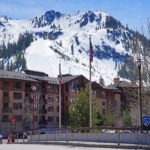
The Apennines, or Appennini in Italian, form the long mountainous backbone of the Italian Peninsula. Stretching from northwestern Italy almost to the toe of the country, the range passes through a remarkable variety of landscapes: forested ridges, limestone massifs, high grasslands, karst plateaus, deep gorges, isolated villages, and some of the wildest country in Italy.
Although the Apennines do not reach the extreme elevations of the Alps, they extend for roughly 1,350 kilometers (839 miles) and dominate much of central and southern Italy. Their highest point is Corno Grande, a 2,912-meter (9,554-foot) summit in the Gran Sasso massif of Abruzzo.
🏔️ Overview
The Apennines begin conventionally near Colle di Cadibona, also known as Bocchetta di Altare, north of the Gulf of Genoa. From there, the mountains curve southeastward through the Italian Peninsula to the Strait of Messina, with related mountain structures continuing into northern Sicily. Because of this long, narrow alignment, the range has often been described as the spine or backbone of Italy.
Geographically, the Apennines are normally divided into three broad sections:
- Northern Apennines — Ligurian and Tuscan-Emilian mountains
- Central Apennines — including the Sibillini, Gran Sasso, Majella, and other high massifs
- Southern Apennines — extending through Campania, Basilicata, and Calabria
The Central Apennines contain the range’s highest and most rugged terrain. Gran Sasso, Majella, and the surrounding mountains of Abruzzo have broad high plateaus, steep limestone walls, glacial landforms, and summits well above 2,000 meters.
⚡ Fast Facts
| Fact | Details |
|---|---|
| Continent | Europe |
| Country | Italy |
| Mountain Range | Apennines |
| Highest Peak | Corno Grande |
| Highest Elevation | 2,912 m (9,554 ft) |
| Corno Grande Prominence | Approximately 2,476 m (8,123 ft) |
| Approximate Length | 1,350 km (839 mi) |
| Northern Limit | Colle di Cadibona / Bocchetta di Altare |
| Southern Limit | Strait of Messina |
| Main Divisions | Northern, Central, and Southern Apennines |
| Major Rock Types | Limestone, sandstone, marl, clay-rich sedimentary rocks, and localized metamorphic and igneous rocks |
| Major Activities | Hiking, climbing, skiing, cycling, wildlife watching, and long-distance trekking |
Corno Grande is not only the highest point in the Apennines but also one of Europe’s more prominent non-Alpine mountains, with approximately 2,476 meters of topographic prominence.
📍 Location and Geography
Running lengthwise through Italy, the Apennines create a natural divide between watersheds draining toward the Adriatic Sea in the east and those flowing toward the Tyrrhenian Sea in the west.
The mountains are not one continuous wall. Instead, they consist of numerous parallel ridges, individual massifs, high basins, broad plateaus, and valleys. This structure has strongly influenced transportation, settlement, agriculture, and regional culture throughout Italian history.
Northern Apennines
The Northern Apennines begin in Liguria and extend through Emilia-Romagna and Tuscany. They include the Ligurian Apennines and Tuscan-Emilian Apennines.
Compared with the Central Apennines, much of this area is heavily forested and somewhat lower in elevation. Nevertheless, several summits rise above 2,000 meters. Monte Cimone, at 2,165 meters (7,103 feet), is among the most prominent mountains of the northern section.
Long ridgelines, beech forests, mountain lakes, grassy summits, and historic passes make this region particularly attractive for trekking.
Central Apennines
The Central Apennines are the highest part of the entire chain.
Abruzzo contains several enormous mountain groups, including:
- Gran Sasso d’Italia
- Majella
- Sirente-Velino
- Monti della Laga
Farther north, the Sibillini Mountains rise between Marche and Umbria.
Gran Sasso contains Corno Grande, while the Majella massif reaches 2,793 meters (9,163 feet) at Monte Amaro. Other major central Apennine summits include Monte Velino and Monte Vettore. Peakbagger lists Corno Grande and Monte Amaro among Europe’s exceptionally prominent mountains.
Southern Apennines
South of central Italy, the Apennines continue through Campania, Basilicata, and Calabria.
Important southern groups include the Matese Mountains, Lucanian Apennines, Pollino massif, Sila, and Aspromonte. The terrain changes noticeably toward the Mediterranean, with a mixture of high limestone peaks, broad forested plateaus, steep valleys, and dry mountain landscapes.
Serra Dolcedorme, reaching 2,267 meters (7,438 feet) in the Pollino massif, is the highest summit in Calabria and one of the most prominent mountains of the Southern Apennines.

📏 Highest Mountains of the Apennines
Some of the most important high summits of the range include:
| Mountain | Elevation | Region/Group |
|---|---|---|
| Corno Grande | 2,912 m (9,554 ft) | Gran Sasso |
| Monte Amaro | 2,793 m (9,163 ft) | Majella |
| Monte Velino | 2,487 m (8,159 ft) | Sirente-Velino |
| Monte Vettore | 2,476 m (8,123 ft) | Sibillini Mountains |
| Serra Dolcedorme | 2,267 m (7,438 ft) | Pollino |
| Monte Cimone | 2,165 m (7,103 ft) | Tuscan-Emilian Apennines |
The concentration of the highest summits in central Italy makes Abruzzo and its neighboring regions the most alpine-looking portion of the range.
🪨 Geology
The Apennines are a relatively young mountain system created during the complex tectonic evolution of the Mediterranean region.
Much of the chain developed as sedimentary rocks were compressed, folded, faulted, and thrust upward during interactions involving the Adria microplate and the larger African and Eurasian plate system. Mountain building began during the Cenozoic Era and has continued through multiple phases of compression and extension. The region remains tectonically active today.
Rock types vary considerably from north to south.
The Northern Apennines contain extensive sandstone, marl, clay-rich sedimentary formations, and more complex zones containing ophiolites and metamorphic rocks. Central and southern sections contain enormous quantities of limestone and other carbonate rocks deposited in ancient marine environments.
Limestone has produced some of the Apennines’ most distinctive scenery. Water dissolving the carbonate bedrock has created:
- Sinkholes
- Caves
- Underground drainage systems
- Karst plateaus
- Deep gorges
- Springs
- Rocky limestone ridges
Past glaciation also shaped the higher Central Apennines, leaving cirques, moraines, and glacial valleys around mountains such as Gran Sasso and the Sibillini.
🧊 The Calderone Glacier Remnants
Below Corno Grande lies one of the most unusual features of the Apennines: the remnants of the Calderone ice body.
For many years Calderone was described as the only glacier in the Apennines and one of Europe’s southernmost glaciers. Severe retreat, however, has reduced it so much that researchers now generally describe the surviving Upper and Lower Calderone bodies as glacierets rather than a normal flowing glacier.
A 2024 study in the Journal of Glaciology investigated the remaining ice using ground-penetrating radar, describing the Calderone glacierets as the last remnants of the glaciers of the Italian Apennines.

🌿 Flora and Fauna
One of the great strengths of the Apennines is their ecological diversity.
Vegetation changes dramatically with elevation, latitude, rainfall, and exposure. Lower slopes may contain Mediterranean vegetation and oak woodland, while cooler elevations support extensive European beech forests. Fir, pine, mountain grasslands, shrubs, wildflowers, and exposed high-elevation plant communities appear elsewhere.
The central mountains preserve particularly important wildlife habitat.
Among the animals associated with the Apennines are:
- Italian wolf
- Marsican brown bear
- Apennine chamois
- Red deer
- Roe deer
- Wild boar
- Golden eagle
- Numerous raptors, reptiles, amphibians, and smaller mammals
Abruzzo, Lazio and Molise National Park alone reports dozens of mammal species and hundreds of bird species, with the Marsican brown bear, wolf, Apennine chamois, and golden eagle among its best-known inhabitants.
The Marsican brown bear is especially significant. Its surviving population is centered in the Central Apennines and represents a distinctive, long-isolated brown bear population of major conservation importance.

🥾 Hiking and Climbing Routes
The Apennines contain thousands of kilometers of trails, ranging from woodland walks and pilgrimage routes to exposed summit scrambles and multi-day mountain traverses.
Sentiero Italia CAI
The Sentiero Italia CAI is the great long-distance route of the Italian mountains. Rather than being one short trail, it is an enormous interconnected journey crossing the Italian Peninsula and linking mountain landscapes throughout the country.
The route provides an excellent framework for exploring different parts of the Apennines in individual stages rather than attempting the entire journey.
Alta Via dei Parchi
The Alta Via dei Parchi crosses a long section of the Northern Apennines through Emilia-Romagna, Tuscany, and Marche.
The official Tuscan-Emilian Apennine National Park itinerary describes a 27-stage route passing through protected landscapes, high ridges, forests, lakes, and mountain passes.
Grande Anello dei Sibillini
The Sibillini Mountains offer another exceptional multi-day trek.
The Grande Anello dei Sibillini is approximately 120 kilometers long and normally divided into nine walking stages. It circles much of the mountain group, connecting historic settlements with high grasslands and limestone landscapes.
Corno Grande
For experienced mountain hikers, climbing Corno Grande is one of the classic objectives of the Apennines.
The mountain can be approached from the Campo Imperatore area, but summit routes vary greatly in difficulty. Some involve steep, exposed, loose, or scrambling terrain rather than ordinary trail walking.
Majella
Majella National Park offers a different experience, with enormous limestone plateaus, deep ravines, remote valleys, caves, hermitages, and long mountain routes.
Several trails are strenuous enough to be classified for expert hikers, so distance alone should never be used to judge difficulty.
Pollino and Aspromonte
Farther south, Pollino and Aspromonte offer long ridges and heavily forested mountain country that feels very different from Gran Sasso.
Aspromonte includes more than 100 kilometers of the historic Brigante Path, along with stages of the Sentiero Italia and numerous shorter hiking routes.

🌤️ Best Time to Visit
The best time to explore the Apennines varies considerably by latitude and elevation.
Late spring through early autumn is generally the principal hiking season, although snow can remain on high Central Apennine routes well into spring.
For high summits such as Corno Grande, Monte Amaro, and Monte Vettore, July through September usually provides the greatest likelihood of snow-free hiking conditions. Afternoon thunderstorms, heat, fog, and rapid weather changes are still possible.
May, June, September, and October can be particularly attractive at moderate elevations, with cooler temperatures, flowering landscapes in spring, and colorful forests in autumn.
Winter transforms many parts of the range. Snowshoeing, ski touring, downhill skiing, and winter mountaineering are possible, especially in Abruzzo and the Northern Apennines, but conditions vary dramatically from year to year.
🧭 National Parks and Notable Areas
An unusually large portion of the Apennines is protected in national and regional parks.
Gran Sasso and Monti della Laga National Park
This park protects the highest section of the range, including Corno Grande and the Campo Imperatore plateau.
The combination of high limestone peaks, open grasslands, villages, wildlife habitat, and extensive hiking terrain makes Gran Sasso one of the defining landscapes of the Apennines.
Majella National Park
Majella protects one of the largest limestone massifs in central Italy. Its combination of deep valleys, caves, high plateaus, remote hermitages, and peaks above 2,700 meters creates a distinctive wilderness landscape.
Abruzzo, Lazio and Molise National Park
One of Italy’s most important wildlife refuges, this protected area is particularly famous for the Marsican brown bear, wolf, and Apennine chamois.
Monti Sibillini National Park
Straddling Marche and Umbria, the Sibillini Mountains combine high limestone ridges, rolling uplands, glacial landforms, and mountain villages. Monte Vettore is the highest summit in the group.
Tuscan-Emilian Apennine National Park
This northern park protects long ridges, forests, mountain lakes, and habitats lying between Tuscany and Emilia-Romagna.
Pollino National Park
Pollino protects a vast area of the Southern Apennines between Basilicata and Calabria. The park is particularly famous for its high mountains, forests, and ancient Bosnian pines.
Aspromonte National Park
Near the southern end of mainland Italy, Aspromonte contains deep valleys, waterfalls, forested ridges, dramatic rock formations, and views toward the Mediterranean.

💡 Fun Facts
- The Apennines extend for approximately 1,350 kilometers, roughly the same overall length as the Alps.
- Corno Grande is the highest point in the range at 2,912 meters.
- Corno Grande has approximately 2,476 meters of prominence, making it one of Europe’s major ultra-prominent summits.
- The highest mountains are found in the Central Apennines, especially in Abruzzo.
- The former Calderone Glacier below Corno Grande has been reduced to small glacierets and perennial ice remnants.
- The Apennines contain important populations of wolves, Apennine chamois, and the exceptionally rare Marsican brown bear.
- Historic shepherding and transhumance helped shape many of the grasslands and cultural landscapes of the Central Apennines.
- The mountain chain remains geologically active, and earthquakes have repeatedly affected communities throughout central and southern Italy.
❓ Frequently Asked Questions
What is the highest mountain in the Apennines?
Corno Grande is the highest mountain in the Apennines at 2,912 meters (9,554 feet). It forms part of the Gran Sasso massif in Abruzzo.
How long are the Apennines?
The main Apennine chain extends for approximately 1,350 kilometers (839 miles) from northwestern Italy to the Strait of Messina.
Are the Apennines part of the Alps?
No. The Alps and Apennines are separate mountain systems, although they meet in northwestern Italy near Colle di Cadibona. The precise dividing line is geographic and somewhat conventional.
Where are the highest parts of the Apennines?
The highest mountains are found in the Central Apennines, especially around Gran Sasso and Majella in Abruzzo.
Do the Apennines extend into Sicily?
The main mainland chain reaches the Strait of Messina. Geographically and geologically related mountain structures continue into northern Sicily, although classifications of the Sicilian ranges vary.
Are there glaciers in the Apennines?
The Apennines once contained much more extensive glacial ice. Today, the remaining Calderone ice beneath Corno Grande has diminished so greatly that researchers describe its surviving portions as glacierets or perennial ice remnants rather than a conventional active glacier.
Are there bears in the Apennines?
Yes. The Marsican brown bear survives in parts of the Central Apennines, particularly around Abruzzo, Lazio and Molise National Park and surrounding mountain habitat. It is one of Europe’s rarest bear populations.
Can you hike across the Apennines?
Yes. The extensive Sentiero Italia CAI follows and connects mountain routes along much of the Italian Peninsula, while regional long-distance trails such as the Alta Via dei Parchi and Grande Anello dei Sibillini provide shorter multi-day options.
🏔️ Field Guide Tip
The Apennines should not be underestimated simply because their elevations are lower than those of the Alps. High routes can involve exposed limestone, loose scree, lingering snow, strong winds, fog, thunderstorms, and surprisingly remote terrain. Check current park or CAI trail information before leaving, especially after winter weather, storms, earthquakes, or periods of heavy rainfall.
For a first visit, Gran Sasso offers perhaps the most dramatic introduction to the high Apennines, while the Tuscan-Emilian Apennines are excellent for forest and ridge hiking and Abruzzo, Lazio and Molise National Park is particularly rewarding for wildlife and quieter mountain landscapes.
🔗 Related Articles
- Mountains in Italy
- Corno Grande
- Mountains in Europe
- The World’s Top 100 Mountain Ranges
- Marmolada
- Punta La Marmora
📚 Sources
- Treccani — Appennino
- Gran Sasso and Monti della Laga National Park
- Peakbagger — Ultras of Europe
- Club Alpino Italiano — Sentiero Italia CAI
- Tuscan-Emilian Apennine National Park — Itineraries
- Monti Sibillini National Park — Itineraries
- Abruzzo, Lazio and Molise National Park — Fauna
- Pollino National Park
- Aspromonte National Park — Itineraries
- Journal of Glaciology — The Last Remnants of the Italian Apennine Glaciers
- AGU — A New Active Tectonic Model for the Northern Apennines
- Ciucci & Boitani — The Apennine Brown Bear: A Critical Review of Its Status and Conservation Problems