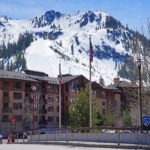
Mount Buffalo | The Hump | Buffalo Plateau

Mount Buffalo is a massive granite plateau rising above the Ovens Valley in northeastern Victoria, Australia. Its highest point, The Horn, reaches 1,723 meters (5,653 feet) and provides sweeping views across the Victorian Alps and the wider Great Dividing Range.
Unlike the sharper profile of nearby Mount Feathertop or the broad alpine summit of Mount Bogong, Mount Buffalo is an enormous elevated plateau surrounded by granite cliffs, deep gorges, waterfalls, weathered tors, Snow Gum woodlands, and alpine meadows.
The mountain forms the heart of Mount Buffalo National Park, established in 1898 and one of Victoria’s oldest national parks. More than 550 native plant species have been recorded here, including the rare Buffalo Sallee, which is closely associated with the mountain.
⚡ Fast Facts
| Feature | Details |
|---|---|
| Mountain | Mount Buffalo / Buffalo Plateau |
| Highest Point | The Horn |
| Country | Australia |
| State | Victoria |
| Mountain Range | Victorian Alps |
| Parent Range | Great Dividing Range |
| Elevation | 5,653 feet / 1,723 meters |
| Prominence | Approximately 2,438 feet / 743 meters |
| Isolation | Approximately 21.54 miles / 34.67 kilometers |
| Nearest Higher Neighbor (NHN) | Little Mount Feathertop |
| Key Col | Approximately 3,215 feet / 980 meters |
| Coordinates | Approximately 36.777°S, 146.767°E |
| Mountain Type | Granite plateau |
| Protected Area | Mount Buffalo National Park |
| National Park Established | 1898 |
| Highest Summit Walk | The Horn Walk |
| Primary Rock | Granite |
| Native Plant Species | More than 550 |
| Best Hiking Season | Generally late spring through autumn |
| Winter Activities | Snow play, cross-country skiing, snowshoeing |
Peakbagger treats the landform officially as Buffalo Plateau, with Mount Buffalo as a historical or commonly used name and The Horn as its highest summit. It gives the plateau 743 meters of clean prominence and 34.67 kilometers of isolation.
🌎 Where Is Mount Buffalo?
Mount Buffalo rises in northeastern Victoria, roughly 325 kilometers northeast of Melbourne, near the towns of Bright, Porepunkah, and Myrtleford.
Its huge granite plateau stands dramatically above the surrounding valleys.
From lower elevations, the mountain often appears less like a conventional single summit and more like an immense elevated fortress of cliffs and rounded granite domes.
Mount Buffalo belongs to the Victorian Alps, the southwestern portion of Australia’s high-country mountain system.
That makes it part of the enormous Great Dividing Range, which extends thousands of kilometers along eastern Australia.
Unlike many high peaks in Alpine National Park, Mount Buffalo is protected within its own Mount Buffalo National Park.

🏔️ The Horn: The Highest Point
The highest point of Mount Buffalo is The Horn, reaching 1,723 meters (5,653 feet).
The Horn rises from the southern portion of the plateau as an impressive mass of exposed granite.
Its unusual shape and open setting make it one of the mountain’s most recognizable landmarks.
Parks Victoria maintains a short summit route beginning from the Horn Picnic Area.
The Horn Walk is approximately 800 meters return and normally takes around 45 minutes. The final section climbs through granite terrain to a lookout providing 360-degree views across the plateau and Australian Alps.
Despite being Mount Buffalo’s highest point, The Horn is comparatively easy to reach when the seasonal access road is open.
🏔️ Little Mount Feathertop: Mount Buffalo’s Nearest Higher Neighbor
Mount Buffalo’s nearest higher neighbor is Little Mount Feathertop, approximately 34.67 kilometers away toward the east-southeast.
Little Mount Feathertop rises on the shoulder of Mount Feathertop.
Although Little Mount Feathertop itself has very little prominence, its elevation exceeds The Horn.
The considerable distance to higher terrain gives Mount Buffalo impressive geographic independence.
Its approximately 743 meters of prominence is substantially greater than the figure sometimes quoted for individual subsidiary summits such as The Hump.
📏 A Highly Prominent Victorian Mountain
Mount Buffalo’s 743 meters of topographic prominence makes it one of Victoria’s more independent major mountains.
Peakbagger ranks Buffalo Plateau among mainland Australian mountains with at least 600 meters of prominence.
This prominence helps explain why the mountain appears so dominant from the Ovens and Buckland valleys.
Although nearby Mount Bogong and Mount Feathertop are higher, Mount Buffalo rises more abruptly from much lower surrounding terrain.
Its plateau rim contains enormous cliffs that amplify this sense of height.
🪨 A Giant Granite Plateau
Granite is the defining feature of Mount Buffalo.
Hundreds of millions of years ago, molten rock pushed upward through older rocks beneath the region but did not erupt at the surface.
Instead, the magma cooled extremely slowly underground.
Slow cooling allowed large interlocking mineral crystals to form, producing the granite now exposed across Mount Buffalo.
Over immense spans of geological time, erosion removed the overlying rock and revealed the huge granite body beneath. Parks Victoria describes Mount Buffalo as one of the Victorian Alps’ great granite landscapes.
Today, visitors see this granite almost everywhere.
It forms:
- The Horn
- The Gorge
- The Cathedral
- The Hump
- Giant boulder fields
- Rounded tors
- Cliffs
- Rock slabs
- Narrow galleries and passages

🪨 How Mount Buffalo’s Granite Tors Formed
Mount Buffalo’s strange rounded rocks are the products of exceptionally long weathering.
Granite naturally contains joints and fractures.
Water penetrates these weaknesses and gradually alters the minerals around them.
Weathering attacks corners and edges more quickly than the interiors of blocks, slowly producing rounded forms.
When erosion removes the surrounding weathered material, large granite blocks remain exposed.
This process created Mount Buffalo’s characteristic:
- Rounded boulders
- Domes
- Tors
- Deep grooves
- Rock galleries
Parks Victoria notes that weathering along granite’s mineral and structural weaknesses contributes to the rounded forms seen throughout the national park.
⛰️ The Hump
One of Mount Buffalo’s other major summits is The Hump, which reaches approximately 1,695 meters (5,561 feet).
It is the second-highest major point on the plateau.
The Hump has around 175 meters of prominence, significantly less than the 743-meter prominence of the entire Buffalo Plateau.
This distinction is important because older Mount Buffalo profiles sometimes mistakenly use The Hump’s 175-meter prominence for Mount Buffalo as a whole.
The Hump is reached using the popular Cathedral–Hump Walk.
The route passes dramatic granite formations before reaching high rocky terrain with views toward Cresta Valley and the wider plateau.
🪨 The Cathedral
Beside The Hump stands The Cathedral, one of Mount Buffalo’s most photographed granite formations.
Its steep rock walls rise dramatically from the surrounding plateau.
The Cathedral is especially striking during sunrise and sunset, when warm light emphasizes the fractured granite.
The Cathedral–Hump route crosses exposed rock slabs and provides close views of these enormous formations.
Rock climbers have also explored many of the cliffs and formations around Mount Buffalo, helping establish the mountain as one of Victoria’s important climbing destinations.
🌄 The Gorge
The Gorge is one of Mount Buffalo’s most spectacular natural features.
Near the northern edge of the plateau, granite cliffs plunge hundreds of meters toward the valleys below.
Parks Victoria describes the principal visitor area as sitting above approximately 200-meter sheer cliffs.
Numerous lookouts provide views across:
- Ovens Valley
- Buckland Valley
- Australian Alps
- Granite cliffs
- Waterfalls
- Forested foothills
The Gorge is also home to the famous Mount Buffalo Chalet.
🏨 Mount Buffalo Chalet
The Mount Buffalo Chalet is one of Australia’s most important historic alpine buildings.
The Victorian Government built the Chalet in the early 20th century as part of efforts to establish Mount Buffalo as a major tourism destination.
The present complex dates primarily to 1910 and later expansions.
For generations, visitors traveled up the mountain to stay at the Chalet and enjoy:
- Walking
- Scenic views
- Snow sports
- Horseback riding
- Mountain holidays
The building is included on the Victorian Heritage Register and is significant for its architectural, historical, and social importance.
Mount Buffalo therefore played an important role in the early development of Australian alpine tourism.
🏞️ Mount Buffalo National Park
Mount Buffalo National Park was established in 1898, making it one of Victoria’s oldest national parks.
The protected area encompasses the granite plateau and large portions of its forested slopes.
Visitors encounter an extraordinary diversity of landscapes, including:
- Alpine meadows
- Snow Gum woodland
- Tall eucalyptus forest
- Granite tors
- Waterfalls
- Cliffs
- Gorges
- Wetlands
- Lakes
The mountain is sometimes described as an “island in the sky” because its elevated plateau supports habitats that differ substantially from the lower country surrounding it.

🪶 Taungurung Country
Mount Buffalo lies on Taungurung Country.
Taungurung people have deep and continuing cultural connections with the mountain and wider Australian Alps.
Long before modern roads or tourism facilities existed, Aboriginal peoples traveled through the high country for gatherings, trade, ceremony, resource collection, and seasonal foods.
One of the most important of these resources was the Bogong moth.
Large numbers of Bogong moths historically migrated to high mountain areas during warmer months and sheltered among cool granite rocks.
Parks Victoria recognizes the Bogong moth as particularly significant to Taungurung people.
🦋 Bogong Moth Gatherings
Bogong moths historically arrived in the Australian Alps in extraordinary numbers.
During summer, the moths sheltered within:
- Granite cracks
- Caves
- Boulder fields
- Rock crevices
Aboriginal peoples traveled into the mountains during seasonal gatherings connected with the moths.
These journeys were not simply food-gathering expeditions. They also provided opportunities for social gatherings, trade, ceremony, and cultural exchange.
Today, Bogong moth numbers have declined substantially, creating ecological concerns because numerous alpine predators depend on them.
At The Horn, Australian kestrels can sometimes be seen hunting Bogong moths around sunset.
🥾 Hiking Mount Buffalo
Mount Buffalo offers an unusually large network of walking routes.
Unlike many mountain profiles where a single summit trail dominates, hiking here can involve anything from a 20-minute waterfall walk to overnight journeys across the plateau.
Popular routes include:
- The Horn Walk
- The Big Walk
- Cathedral–Hump Walk
- Lakeside Walk
- Chalwell Galleries
- Gorge Heritage Walk
- Mount Dunn
- Mount McLeod
- South Buffalo
- Back Wall
- Rollasons Falls
- Ladies Bath and Eurobin Falls
The diversity makes Mount Buffalo suitable for everything from family walks to demanding backcountry trips.
🚶 The Big Walk
The Big Walk provides one of the best ways to experience Mount Buffalo’s enormous vertical range.
The route begins near the park entrance and climbs from lower forest through changing vegetation and granite terrain to The Gorge on the plateau.
Parks Victoria lists the walk at approximately 10.2 kilometers one way, with a typical time of four to five hours.
The route is particularly interesting because hikers experience dramatic changes in:
- Forest composition
- Temperature
- Vegetation
- Rock exposure
- Views
Parks Victoria also notes that the route follows country traversed by Aboriginal people traveling toward the plateau and Bogong moth gathering areas.
🚶 The Horn Walk
For visitors whose main goal is simply to stand on Mount Buffalo’s highest point, The Horn Walk is the obvious choice.
The walk is approximately 800 meters return and generally requires about 45 minutes.
A short climb through granite blocks reaches the summit lookout.
On clear days, views extend across enormous portions of the Victorian Alps.
The relatively short route should not encourage visitors to ignore the weather.
The summit remains exposed alpine terrain where cold, wind, fog, and even snow can develop rapidly.
🧗 Chalwell Galleries
The Chalwell Galleries provide one of Mount Buffalo’s more unusual short walks.
The approximately 1.8-kilometer circuit passes among enormous granite blocks and through narrow passages between rocks.
Some sections require visitors to squeeze, scramble, or descend through confined spaces.
Parks Victoria describes parts of the route as steep, narrow, and challenging, particularly for visitors uncomfortable with heights or enclosed areas.
The walk offers a close-up look at the extraordinary weathering that created Mount Buffalo’s granite landscape.
💧 Ladies Bath and Eurobin Falls
Waterfalls provide another major attraction.
Ladies Bath Falls and Eurobin Falls lie along the road climbing toward the plateau.
Crystal-clear water flows across smooth granite, forming pools and cascades.
The beauty can be deceptive.
Parks Victoria specifically warns that apparently clean granite can become extremely slippery because of nearly invisible algae. Visitors should remain on the designated track.
Farther into the park, Rollasons Falls provides another popular waterfall hike.
🌊 Lake Catani
Lake Catani sits high on the Mount Buffalo plateau surrounded by Snow Gum woodland.
Despite its natural appearance, the lake is actually human-made.
It was completed in 1910 and named for Carlo Catani, the Public Works Department engineer closely associated with the development of Mount Buffalo as a tourist destination.
Today, Lake Catani is used for:
- Camping
- Walking
- Picnicking
- Swimming
- Canoeing
- Nature watching
The Lakeside Walk makes a roughly 3.2-kilometer circuit around the lake.
🏕️ Camping
Lake Catani Campground is the park’s principal developed campground.
Its high plateau setting provides easy access to numerous walks.
Remote hike-in camping is also available at areas such as:
- Mount McLeod
- Rocky Creek
These destinations allow experienced hikers to explore quieter sections of the plateau.
Visitors should always check current Parks Victoria conditions because road access, campground availability, fire restrictions, and track closures can change.
❄️ Winter on Mount Buffalo
Mount Buffalo transforms dramatically during winter.
Snow covers the plateau, turning summer meadows and granite formations into a cold alpine landscape.
Popular winter activities include:
- Tobogganing
- Snow play
- Cross-country skiing
- Snowshoeing
- Backcountry skiing
Dingo Dell and Cresta Valley are two of the best-known snow-play areas.
Mount Buffalo no longer operates as a conventional downhill ski resort, but it retains an important place in the history of Australian skiing.
🎿 Backcountry Skiing
Experienced skiers explore sections of the plateau when snow conditions permit.
There are no modern lift-served ski slopes, so winter travelers must rely on their own skills and equipment.
Parks Victoria warns of hazards including:
- Deep or unstable snow
- Steep icy slopes
- Cornices
- Avalanches
- Extreme weather
Backcountry travelers should carry navigation and emergency equipment and understand that conditions can differ dramatically from maintained snow-play areas.
🚗 Winter Road Conditions
The Mount Buffalo Road provides excellent access compared with many alpine mountains, but winter creates additional requirements.
Snow may cover substantial portions of the road.
Parks Victoria requires vehicles to carry snow chains when directed during the declared snow season, including four-wheel-drive vehicles.
Horn Road, Lake Catani Road, and Reservoir Road also have seasonal closures.
Anyone planning a winter trip should check current access conditions immediately before traveling.
🌤️ Weather
Mount Buffalo’s elevated plateau experiences substantially colder conditions than the valleys below.
Weather can change extraordinarily quickly.
Visitors may encounter:
- Strong winds
- Rain
- Fog
- Snow
- Hail
- Ice
- Lightning
- Intense summer sunshine
Parks Victoria notes that snow can occur at any time of year and that conditions can shift from sunshine to blizzard-like weather within only a few hours.
That unpredictability is especially important on exposed routes such as The Horn, South Buffalo, and the plateau’s backcountry tracks.
🔥 Bushfire
Fire has profoundly shaped Mount Buffalo’s modern landscape.
Snow Gum woodland around parts of the plateau contains obvious evidence of past bushfires.
Some trees survive and resprout.
Others remain as pale, twisted trunks among the granite.
High-intensity or repeated fire can threaten slow-growing alpine vegetation and rare plant communities.
Fire also affects visitor access, soil stability, erosion, wildlife habitat, and historic buildings.
During hot weather, visitors should check fire danger ratings and park closures before entering the mountain.
🌿 Flora and Fauna
Mount Buffalo is extraordinarily rich biologically.
Despite its comparatively small area, the national park supports more than 550 species of native plants.
Its isolated high plateau has also allowed unusual plant communities to develop, including species with extremely restricted distributions.
🌱 Buffalo Sallee
Perhaps the mountain’s most famous plant is the Buffalo Sallee (Eucalyptus mitchelliana).
This unusual eucalyptus has an extremely limited natural distribution centered on Mount Buffalo.
It grows within parts of the rocky plateau where harsh conditions limit larger forest development.
The species is currently listed as Vulnerable in Victoria.
Its restricted range makes Mount Buffalo particularly important for conservation.
If significant populations were lost here, there would be few alternative locations from which the species could recover.
🌲 Snow Gums
Snow Gums (Eucalyptus pauciflora) dominate many of the plateau’s woodland communities.
These trees survive remarkably harsh conditions including:
- Heavy snow
- Frost
- Strong winds
- Ice
- Poor soils
Near the most exposed locations they often become twisted and stunted.
Their pale, multicolored bark provides one of the characteristic sights of the Australian high country.
Fire has heavily affected some Snow Gum stands, leaving striking bleached trunks among younger recovering vegetation.
🌼 Alpine Wildflowers
Summer produces some of Mount Buffalo’s most colorful landscapes.
From roughly December through March, grassy areas and open plateau communities can support diverse wildflower displays.
Plants include combinations of:
- Alpine daisies
- Billy buttons
- Heaths
- Grasses
- Herbs
- Cushion plants
- Snow-patch vegetation
Many alpine species grow close to the ground, helping them tolerate cold temperatures and powerful winds.
Because these plants grow slowly, walkers should remain on established tracks whenever practical.
🐾 Wombats
Common wombats are among Mount Buffalo’s most recognizable mammals.
They are frequently associated with grassy areas and woodland around Lake Catani.
Parks Victoria even describes visitors as being able to camp “in the company of wombats” near the lake.
Wombats feed primarily on grasses and other vegetation.
Although they often appear slow and peaceful, visitors should avoid approaching or feeding them.
Wild animals can behave unpredictably when cornered or accustomed to human food.
🦋 Bogong Moths
The Bogong moth is among the mountain’s most ecologically and culturally significant animals.
Moths migrate from lower regions toward Australia’s high country and shelter in cool rocky locations during the warmer season.
Mount Buffalo’s vast collection of granite cracks and boulders provides ideal shelter.
The moths are consumed by birds and other predators and have profound cultural importance to Aboriginal peoples of the Australian Alps.
Their declining numbers have therefore created concern well beyond the species itself.
🦅 Birds
Mount Buffalo’s forests, cliffs, open plateau, wetlands, and alpine meadows support numerous birds.
Species that visitors may encounter include:
- Australian kestrels
- Wedge-tailed eagles
- Superb lyrebirds
- Crimson rosellas
- Ravens
- Flame robins
- Honeyeaters
- Parrots
Australian kestrels can sometimes be seen hunting Bogong moths around The Horn.
Superb lyrebirds are more likely in the forested lower elevations.
The dramatic change in habitat from foothill forest to alpine plateau allows a wide variety of birds to live within a relatively compact area.

🦘 Other Wildlife
The wider Mount Buffalo ecosystem supports mammals and reptiles including:
- Wombats
- Wallabies
- Kangaroos
- Echidnas
- Possums
- Native rodents
- Skinks
Introduced species such as deer, foxes, rabbits, and other animals also occur within the Victorian Alps and can damage native ecosystems.
The greatest diversity occurs below the highest exposed granite summits, where forests and vegetation provide more shelter and food.

🏞️ An “Island in the Sky”
Mount Buffalo’s ecological importance comes partly from its unusual geography.
The plateau rises abruptly above surrounding valleys.
As elevation increases, temperature falls and vegetation changes.
The summit therefore contains cool-climate habitats separated from similar alpine environments elsewhere by warmer, lower country.
This creates something resembling a biological island.
Species adapted to cool conditions may have few opportunities to move elsewhere as climate and habitat conditions change.
That makes conservation of Mount Buffalo’s high-elevation ecosystems particularly important.
🌄 Views From Mount Buffalo
Few Australian mountains provide such a variety of easily accessible viewpoints.
The Horn
The highest point provides 360-degree views across the Australian Alps.
The Gorge
Lookouts beside the Chalet provide dramatic perspectives over sheer granite cliffs and the Ovens Valley.
The Hump
The Hump provides excellent views of The Cathedral, plateau, and surrounding mountain country.
Mount Dunn
Mount Dunn offers another elevated perspective from the central plateau.
South Buffalo
Longer walks toward South Buffalo explore the quieter southern portion of the mountain.
In clear conditions, distant peaks of the Victorian Alps form layer after layer along the horizon.
🌎 Nearby Mountains
Little Mount Feathertop
Little Mount Feathertop is Mount Buffalo’s nearest higher neighbor according to Peakbagger.
Mount Feathertop
Mount Feathertop reaches 1,922 meters and is Victoria’s second-highest mountain.
Its sharply defined summit contrasts dramatically with Mount Buffalo’s broad granite plateau.
Mount Bogong
Mount Bogong reaches 1,986 meters and is the highest mountain in Victoria.
Rams Head
Farther northeast, Rams Head rises above 2,190 meters in New South Wales’ Snowy Mountains.
Mount Kosciuszko
Mount Kosciuszko reaches 2,228 meters and is the highest mountain on mainland Australia.
All form part of the greater Great Dividing Range system.
💡 Interesting Facts About Mount Buffalo
- Mount Buffalo is an enormous granite plateau rather than a conventional pointed mountain.
- Its highest point is The Horn at 1,723 meters (5,653 feet).
- Peakbagger officially labels the landform Buffalo Plateau, with Mount Buffalo as an alternate historical name.
- Mount Buffalo has approximately 743 meters (2,438 feet) of topographic prominence.
- Its nearest higher neighbor is Little Mount Feathertop.
- Higher terrain begins roughly 34.67 kilometers away.
- The mountain consists predominantly of ancient granite.
- The Hump is the plateau’s second-highest major summit at approximately 1,695 meters.
- Mount Buffalo National Park was established in 1898.
- More than 550 native plant species occur within the park.
- The Buffalo Sallee is a rare eucalyptus closely associated with Mount Buffalo.
- The Mount Buffalo Chalet was built by the Victorian Government in the early 20th century.
- Lake Catani is an artificial lake completed in 1910.
- Bogong moths have major ecological and cultural significance on the mountain.
- The Big Walk climbs approximately 10.2 kilometers from the lower park to the plateau.
- The Horn can be reached by an approximately 800-meter return walk from its picnic area.
- Winter recreation includes snow play, cross-country skiing, and snowshoeing.
- Snow can occur on Mount Buffalo at any time of year.
❓ Frequently Asked Questions
How high is Mount Buffalo?
Mount Buffalo’s highest point, The Horn, reaches 1,723 meters (5,653 feet).
Where is Mount Buffalo?
Mount Buffalo is in northeastern Victoria, Australia, near Bright and Porepunkah.
What mountain range is Mount Buffalo in?
It belongs to the Victorian Alps, part of the Great Dividing Range.
What is the highest point of Mount Buffalo?
The highest point is The Horn, at 1,723 meters.
What is Mount Buffalo’s nearest higher neighbor?
Peakbagger identifies Little Mount Feathertop as the nearest higher neighbor, approximately 34.67 kilometers away.
How prominent is Mount Buffalo?
Buffalo Plateau has approximately 743 meters (2,438 feet) of topographic prominence.
Is Mount Buffalo a volcano?
No. Mount Buffalo is primarily an enormous granite plateau. Its granite formed when magma cooled slowly deep underground rather than erupting as a volcano.
How old is Mount Buffalo’s granite?
The granite exposed in the Victorian Alps formed hundreds of millions of years ago. Parks Victoria describes major regional granite bodies as more than 420 million years old.
Can you drive up Mount Buffalo?
Yes. Mount Buffalo Road climbs from the lower park to the plateau and provides road access to many major attractions. Seasonal closures and winter snow-chain requirements apply.
Can you hike to the top of Mount Buffalo?
Yes. When Horn Road is open, the shortest summit route is The Horn Walk, an approximately 800-meter return hike.
For a much longer experience, The Big Walk climbs roughly 10.2 kilometers from near the park entrance to the plateau.
Does Mount Buffalo get snow?
Yes. Mount Buffalo receives regular winter snow and supports snow play, cross-country skiing, and snowshoeing. Snow can occasionally fall outside the conventional winter season.
Can you ski Mount Buffalo?
Yes, primarily through cross-country and backcountry skiing. Mount Buffalo does not currently operate as a conventional lift-served downhill ski resort.
Is Mount Buffalo National Park worth visiting?
Yes. The park combines short summit walks, major hiking routes, waterfalls, camping, granite cliffs, historic sites, winter recreation, wildflowers, and some of Victoria’s most unusual alpine ecosystems.
🔗 Related Articles
- Little Mount Feathertop
- Mount Feathertop
- Mount Bogong
- Rams Head
- Mount Kosciuszko
- The Great Dividing Range
- Highest Peaks of the Great Dividing Range
📚 Sources
- Parks Victoria — Mount Buffalo National Park
- Parks Victoria — The Horn
- Parks Victoria — Mount Buffalo National Park Visitor Guide
- Parks Victoria — The Gorge and Mount Buffalo Chalet
- Parks Victoria — Ladies Bath and Eurobin Falls
- Parks Victoria — Geology of the Victorian Alps
- Parks Victoria — Flora and Fauna of the Victorian Alps
- Victorian Government — Flora and Fauna Guarantee Threatened List
- Australian Government — Australian Alps National Parks and Reserves
- Peakbagger — Buffalo Plateau