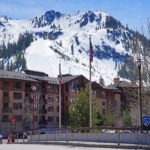
The highest mountains in the Alps rise above an extraordinary landscape of glaciers, steep rock walls, narrow ridges, and deep valleys. Although the Alpine system crosses eight European countries, nearly all its 4,000-meter summits are concentrated in France, Italy, and Switzerland.
Mont Blanc is the highest mountain in the Alps, while the neighboring Pennine Alps contain the greatest concentration of exceptionally high summits. Monte Rosa, Dom, Liskamm, Weisshorn, and the Matterhorn all rise within a relatively compact area around the Swiss canton of Valais and Italy’s Aosta Valley.
The International Climbing and Mountaineering Federation recognizes 82 Alpine summits above 4,000 meters. However, that list includes secondary summits, shoulders, and closely connected tops. To avoid counting several summits belonging to the same mountain, the ranking below concentrates on major mountains with at least approximately 300 meters of topographic prominence.
⚡ The Ten Highest Major Mountains in the Alps
| Rank | Mountain | Elevation | Location | Alpine Region |
|---|---|---|---|---|
| 1 | Mont Blanc | About 4,806 m / 15,766 ft | France–Italy border region | Mont Blanc Massif |
| 2 | Dufourspitze, Monte Rosa | 4,634 m / 15,203 ft | Switzerland, near the Italian border | Pennine Alps |
| 3 | Dom | 4,545 m / 14,911 ft | Switzerland | Mischabel Massif |
| 4 | Liskamm | 4,527 m / 14,852 ft | Switzerland–Italy | Pennine Alps |
| 5 | Weisshorn | 4,505 m / 14,780 ft | Switzerland | Pennine Alps |
| 6 | Matterhorn | 4,478 m / 14,692 ft | Switzerland–Italy | Pennine Alps |
| 7 | Dent Blanche | 4,357 m / 14,295 ft | Switzerland | Pennine Alps |
| 8 | Grand Combin | 4,314 m / 14,154 ft | Switzerland | Pennine Alps |
| 9 | Finsteraarhorn | 4,274 m / 14,022 ft | Switzerland | Bernese Alps |
| 10 | Zinalrothorn | 4,221 m / 13,848 ft | Switzerland | Pennine Alps |
Mont Blanc’s summit consists of snow and ice covering a lower rock summit. Its measured height therefore changes as snow accumulation, wind, and temperature alter the summit dome. A September 2023 survey measured the mountain at 4,805.59 meters.
🏔️ 1. Mont Blanc

Mont Blanc is the highest mountain in the Alps and the highest summit in Western Europe. It rises from the Mont Blanc Massif between France’s Haute-Savoie region and Italy’s Aosta Valley.
The exact position of the international boundary near the summit is shown differently on French and Italian maps. France generally places the summit within French territory, while Italy depicts the boundary crossing the summit. Regardless of the cartographic interpretation, the mountain dominates both the Chamonix and Courmayeur sides of the massif.
Mont Blanc was first climbed in 1786 by Jacques Balmat and Michel-Gabriel Paccard. Their ascent helped establish the mountain as one of the birthplaces of modern mountaineering.
The most frequently attempted route approaches from the French side through the Goûter corridor, Dôme du Goûter, and the Bosses Ridge. Another major route begins near the Aiguille du Midi and crosses Mont Blanc du Tacul and Mont Maudit.
Neither route should be mistaken for a conventional hike. Crevasses, falling rock, ice, storms, altitude sickness, and extreme cold make Mont Blanc a serious mountaineering objective.
Visitors who do not intend to climb can see the mountain from Chamonix, Courmayeur, Lac Blanc, the Aiguille du Midi, and numerous trails around the massif.
🏔️ 2. Dufourspitze and the Monte Rosa Massif

At 4,634 meters, Dufourspitze is the highest summit of the Monte Rosa massif, the second-highest mountain in the Alps, and the highest point in Switzerland.
Unlike the isolated pyramid of the Matterhorn, Monte Rosa is an enormous glaciated massif containing numerous summits above 4,000 meters. These include Nordend, Zumsteinspitze, Signalkuppe, Parrotspitze, Ludwigshöhe, and several smaller tops.
The summit of Dufourspitze lies within Switzerland, although much of the Monte Rosa massif extends across the Swiss–Italian border. The mountain’s immense east face drops toward Italy above Macugnaga and is one of the greatest mountain walls in the Alps.
The first ascent took place in 1855 when a party of British climbers and Swiss guides reached the summit from the Zermatt side.
Today, the normal route usually approaches across the Monte Rosa Glacier from the Monte Rosa Hut. It involves extensive glacier travel, considerable elevation gain, and a final exposed summit ridge.
Some of the finest public views of Monte Rosa are available from Gornergrat, which can be reached by railway from Zermatt.
🏔️ 3. Dom
The Dom rises to 4,545 meters in Switzerland’s Mischabel Massif. It is commonly described as the highest mountain located entirely within Switzerland because the complete mountain, rather than merely its summit, lies within Swiss territory.
The Dom stands between the Mattertal and Saastal valleys, with Randa on its western side and Saas-Fee to the east. Its enormous relief is especially apparent from the Mattertal, where the summit rises more than 3,000 meters above the valley floor.
John Llewelyn Davies and the guides Johann Zumtaugwald, Johann Krönig, and Hieronymous Brantschen completed the first ascent in 1858.
The normal route begins near Randa and passes the Dom Hut before crossing the Festi Glacier and Hohberg Glacier. Although the route is sometimes described as technically moderate by Alpine standards, it is physically demanding and involves a very large amount of elevation gain.
The Dom is surrounded by other major summits of the Mischabel group, including Täschhorn, Nadelhorn, Lenzspitze, Alphubel, and Dürrenhorn.
🏔️ 4. Liskamm
Liskamm, also spelled Lyskamm, forms a long, heavily corniced ridge between Switzerland and Italy. Its eastern summit reaches 4,527 meters, while its western summit rises to 4,479 meters.
The mountain is closely associated with Monte Rosa but has enough topographic separation to be treated as an independent mountain in prominence-based rankings.
Liskamm was first climbed in 1861 by a large international party. Its long ridge, unstable snow cornices, avalanches, and steep slopes soon gave the mountain a fearsome reputation. It became known by the German nickname Menschenfresser, meaning “people eater.”
The complete traverse between the eastern and western summits is a celebrated Alpine expedition. It requires careful assessment of snow stability because cornices may extend far beyond the solid ground beneath them.
Liskamm can be seen particularly well from Gornergrat, the Gorner Glacier area, and high routes around the Monte Rosa massif.
🏔️ 5. Weisshorn
The Weisshorn rises to 4,505 meters west of the Mattertal in Switzerland. Its three steep faces and three sharply defined ridges produce an exceptionally symmetrical pyramid.
Although it receives fewer visitors than the nearby Matterhorn, many mountaineers consider the Weisshorn one of the most beautiful mountains in the Alps.
John Tyndall reached the summit in 1861 with guides Johann Joseph Bennen and Ulrich Wenger. Their route followed the east ridge, which remains the mountain’s normal route.
The ascent is long, exposed, and technically demanding. It involves rock climbing, snow travel, route-finding, and substantial elevation gain from the Weisshorn Hut.
The mountain is visible from several parts of the Valais region, including Randa, Zinal, the Val d’Anniviers, and viewpoints above Zermatt.
🏔️ 6. Matterhorn

At 4,478 meters, the Matterhorn is not the highest mountain in the Alps, but it is probably the range’s most recognizable summit.
Its four steep faces rise above Zermatt in Switzerland and Breuil-Cervinia in Italy. The mountain’s distinctive shape was created through glacial erosion acting on resistant metamorphic rock.
Edward Whymper and six companions completed the first ascent by the Hörnli Ridge in July 1865. Four members of the party died in a fall during the descent, making the achievement one of the most famous and tragic events in mountaineering history.
The Hörnli Ridge remains the standard route, while the Lion Ridge approaches from Italy. Both involve exposed scrambling and climbing, rapid changes in weather, rockfall, and serious objective hazards.
Excellent views are available from Zermatt, Gornergrat, Sunnegga, Stellisee, and the trails around the Five Lakes Walk.
🏔️ 7. Dent Blanche
Dent Blanche rises to 4,357 meters between the valleys of Zinal, Zermatt, and Hérens. Despite its French name, meaning “white tooth,” much of the mountain consists of dark rock.
Its isolated position and four steep ridges give Dent Blanche an imposing pyramidal appearance. The mountain has a topographic prominence of approximately 900 meters, making it one of the more independent summits of the Pennine Alps.
Thomas Stuart Kennedy and his companions made the first ascent in 1862.
The normal route follows the south ridge from the Dent Blanche Hut. It is a long, sustained climb involving exposed rock, route-finding, and sections that may be complicated by snow or ice.
Dent Blanche can be viewed from the Val d’Hérens, Val d’Anniviers, and several high trails around Zinal and Evolène.
🏔️ 8. Grand Combin
The Grand Combin is a broad, glaciated massif in the western Pennine Alps. Its highest point, Combin de Grafeneire, reaches 4,314 meters.
The massif rises between the valleys of Bagnes and Entremont in southwestern Switzerland. Other important summits include Combin de Valsorey and Combin de la Tsessette.
Charles Sainte-Claire Deville and a group of local guides reached the highest summit in 1859.
Historically, the normal approach from the Panossière Hut crossed a dangerous area known as the Corridor, which is exposed to falling ice from hanging glaciers. Changing glacier conditions have altered route choices, and climbers must obtain current local information before attempting the mountain.
The Grand Combin is highly prominent and stands apart from many of the crowded groups of 4,000-meter peaks farther east.
🏔️ 9. Finsteraarhorn
The Finsteraarhorn reaches 4,274 meters and is the highest mountain in the Bernese Alps. It is also Switzerland’s most topographically prominent summit.
The mountain rises in a remote, heavily glaciated region between the cantons of Bern and Valais. Unlike the Matterhorn or Mont Blanc, it cannot be seen easily from a major resort town, adding to its isolated character.
An ascent claimed in 1812 remains disputed. The first generally accepted ascent occurred in 1829, when guides Jakob Leuthold and Johann Währen reached the summit during an expedition organized by Franz Joseph Hugi.
The normal route is commonly approached from the Finsteraarhorn Hut. Climbers must cross glaciers before ascending the mountain’s steep summit ridge.
Finsteraarhorn overlooks part of the Swiss Alps Jungfrau-Aletsch World Heritage region, which contains the largest concentration of glaciers in the Alps.
🏔️ 10. Zinalrothorn
Zinalrothorn rises to 4,221 meters between Zinal and Zermatt. Its name combines the village of Zinal with the German word Rothorn, meaning “red horn.”
The mountain is known for its steep ridges and comparatively sound rock. Although it is lower than nearby Täschhorn and several subsidiary Alpine summits, its greater topographic independence earns it a place in a prominence-based ranking of major mountains.
Leslie Stephen and Florence Crauford Grove reached the summit in 1864 with guides Melchior Anderegg and Jakob Anderegg.
Common approaches begin at the Rothorn Hut above Zermatt or the Mountet Hut above Zinal. All established routes are technical alpine climbs requiring experience on exposed rock and mixed terrain.
📏 Why Do Lists of the Highest Alpine Mountains Differ?
Lists of the highest mountains in the Alps can look very different because they do not always use the same definition of a mountain.
The UIAA recognizes 82 Alpine summits above 4,000 meters. Its classification uses topographic, morphological, and mountaineering criteria. A summit may be included when it rises only about 30 meters above the adjoining notch, provided it has sufficient individuality or historical importance.
Under that system, several Monte Rosa summits—including Nordend, Zumsteinspitze, and Signalkuppe—rank above Dom. Mont Blanc de Courmayeur also appears immediately below Mont Blanc.
A list of independent mountains usually applies a larger prominence threshold, commonly 300 meters. This removes many secondary summits and produces a clearer comparison between major mountain masses.
Readers unfamiliar with topographic prominence may find it helpful to compare mountain elevation and prominence. Elevation measures height above sea level, while prominence measures how far a summit rises above the lowest connecting saddle leading to higher terrain.
🧭 Where to See the Highest Mountains in the Alps
Several Alpine destinations provide exceptional access to these peaks without requiring a technical ascent.
Chamonix, France: The Chamonix Valley offers views of Mont Blanc and access to the Aiguille du Midi, Mer de Glace, and trails around Lac Blanc.
Courmayeur, Italy: Courmayeur provides a dramatic view of the Italian side of the Mont Blanc Massif and its steep southern walls.
Zermatt, Switzerland: Zermatt is surrounded by the Matterhorn, Monte Rosa, Liskamm, Weisshorn, Dom, and numerous other 4,000-meter summits.
Gornergrat, Switzerland: The Gornergrat Railway reaches a panoramic ridge overlooking the Gorner Glacier, Monte Rosa, Liskamm, and Matterhorn.
Saas-Fee, Switzerland: Saas-Fee lies beneath the Mischabel Massif and provides access to viewpoints facing Dom, Täschhorn, Alphubel, and other major summits.
Zinal, Switzerland: Zinal is an excellent base for seeing the Weisshorn, Zinalrothorn, Dent Blanche, and other mountains of the Val d’Anniviers.
Jungfrau-Aletsch region: Trails and railways around Grindelwald, Lauterbrunnen, Jungfraujoch, and the Aletsch Glacier reveal the glaciated heart of the Bernese Alps.
🌤️ Best Time to Explore the High Alps
June through September is generally the most accessible period for hiking and sightseeing in the high Alps. Lower valley trails may open earlier, while high passes can retain snow well into summer.
July and August usually provide the broadest selection of open trails, mountain huts, railways, and cable cars. They are also the busiest months in famous destinations such as Chamonix and Zermatt.
The most suitable period for technical climbing depends on the route. Early-season snow may cover loose rock and help bridge crevasses, while later-season conditions can expose more rockfall and open glacier crevasses. Conditions increasingly vary from year to year, so historical climbing seasons should not replace current local reports.
🏔️ Field Guide Tip: The mountains in this ranking are technical alpine objectives rather than hiking summits. Travelers can enjoy outstanding views from nearby trails, railways, and cable cars without entering glaciated or climbing terrain. Summit attempts require acclimatization, specialist equipment, glacier and rope skills, and often the assistance of a qualified local mountain guide.

💡 Fun Facts
- The UIAA recognizes 82 Alpine summits above 4,000 meters.
- Mont Blanc’s snow summit changes height and position over time.
- Dufourspitze is the highest point in Switzerland.
- Dom is the highest major mountain located completely within Switzerland.
- Liskamm has two principal summits connected by a long corniced ridge.
- The Matterhorn was one of the last great Alpine peaks to be climbed during the Golden Age of Alpinism.
- Finsteraarhorn is the highest summit in the Bernese Alps.
- Most of the Alps’ highest independent mountains are located in Switzerland’s Valais region.
- Piz Bernina, at 4,049 meters, is the only 4,000-meter summit in the Eastern Alps.
- Großglockner, Austria’s highest mountain, reaches 3,798 meters and is therefore substantially lower than the great peaks of the Western Alps.
❓ Frequently Asked Questions
What is the highest mountain in the Alps?
Mont Blanc is the highest mountain in the Alps. Its snow-and-ice summit was measured at 4,805.59 meters in September 2023, although its elevation changes over time.
What is the second-highest mountain in the Alps?
Dufourspitze, the highest summit of Monte Rosa, is the second-highest mountain in the Alps at 4,634 meters.
How many mountains in the Alps exceed 4,000 meters?
The UIAA recognizes 82 individual Alpine summits above 4,000 meters. The number of independent mountains is considerably smaller because the UIAA list includes secondary summits and closely connected tops.
Which Alpine country has the most high mountains?
Switzerland contains most of the highest independent Alpine mountains. Many are concentrated in Valais and along the borders with France and Italy.
Is the Matterhorn one of the five highest mountains in the Alps?
No. The Matterhorn ranks below Mont Blanc, Dufourspitze, Dom, Liskamm, and Weisshorn when major independent mountains are compared by elevation.
Why is Täschhorn not included in the top ten?
Täschhorn is higher than the Matterhorn, but it is connected closely to Dom and has less than 300 meters of topographic prominence. It appears in summit-based rankings but is excluded from this list’s prominence-based definition of a major independent mountain.
Can beginners climb any of these mountains?
None of the ten should be treated as a beginner hike. Some normal routes are less technically difficult than others, but every summit involves altitude, exposure, rapidly changing weather, and potentially dangerous snow, ice, rock, or glacier terrain.
What is the highest mountain entirely within Switzerland?
Dom is generally described as the highest mountain situated completely within Switzerland. Dufourspitze is higher, but it belongs to the Monte Rosa massif, which extends across Switzerland and Italy.
Where is the best place to see several high Alpine peaks at once?
Gornergrat above Zermatt offers one of the finest panoramas. It overlooks the Matterhorn, Monte Rosa, Liskamm, and many other 4,000-meter peaks.
🔗 Related Articles
- The Alps
- The Swiss Alps
- Mont Blanc
- The Highest Mountain in the Alps: Mont Blanc
- Monte Rosa
- Matterhorn
- Weisshorn
- Finsteraarhorn
- Aletschhorn
- Mountains in Europe
- What Is Mountain Prominence?
- Mountain Elevation vs. Prominence
📚 Sources
- UIAA – 4,000-Meter Summits in the Alps
- Peakbagger – Alps
- Peakbagger – Alpine 4,000-Meter Peaks
- Swiss Alpine Club – Dufourspitze
- Swisstopo – Maps of Switzerland
- TF1 Info – Mont Blanc’s 2023 Measurement