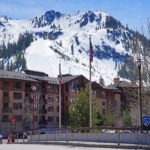
Pic Luigi Amedeo | Pic Luigi Amadeo

Rising from one of the wildest ridges on the Italian side of Mont Blanc, Pic Luigi Amedeo—Picco Luigi Amedeo in Italian—is a 4,469-meter (14,662-foot) summit in the Mont Blanc massif of the Alps. Although its topographic prominence is modest, the peak holds an important place in Alpine mountaineering history and is officially recognized by the UIAA as one of the Alps’ 4,000-meter summits.
Pic Luigi Amedeo stands entirely within Italy’s Aosta Valley, high above Val Veny near Courmayeur. It forms part of the celebrated Brouillard Ridge, an enormous southwesterly ridge leading toward Mont Blanc de Courmayeur and ultimately Mont Blanc.
The summit was first climbed in 1901 by the brothers Giovanni Battista and Giuseppe Fortunato Gugliermina with Joseph Brocherel of Courmayeur. The climbers named their newly reached summit in honor of Prince Luigi Amedeo, Duke of the Abruzzi, one of the most accomplished explorers and mountaineers of his era.
Today, Pic Luigi Amedeo remains far removed from ordinary mountain tourism. Reaching it requires serious high-altitude alpinism involving glaciers, exposed granite, steep mixed terrain, route-finding, and a considerable commitment above some of the most dramatic valleys in the Alps.
⚡ Fast Facts
| Feature | Details |
|---|---|
| Country | Italy |
| Region | Aosta Valley |
| Municipality | Courmayeur |
| Mountain Range | Mont Blanc Massif, Alps |
| Elevation | 4,469 m / 14,662 ft |
| Prominence | Approx. 39 m / 128 ft |
| Isolation | Approx. 0.73 km / 0.45 mi |
| Nearest Higher Neighbor (NHN) | Mont Blanc de Courmayeur |
| Parent Peak | Mont Blanc de Courmayeur |
| Coordinates | Approx. 45.8219° N, 6.8651° E |
| Major Ridge | Brouillard Ridge |
| UIAA 4,000er | Yes |
| First Ascent | July 20, 1901 |
| First Ascenders | Giovanni Battista Gugliermina, Giuseppe Fortunato Gugliermina, Joseph Brocherel |
| Named For | Prince Luigi Amedeo, Duke of the Abruzzi |
| Notable Distinction | One of the highest summits lying entirely within Italy |
🗺️ Where Is Pic Luigi Amedeo?
Pic Luigi Amedeo lies on the Italian side of the Mont Blanc massif in the Aosta Valley.
The peak rises southwest of Mont Blanc de Courmayeur and north of Mont Brouillard, forming part of a chain of high granite summits and ridges above Val Veny.
The surrounding terrain is among the most dramatic in the entire Mont Blanc massif.
Two great glacier systems flank the high ridge:
- Glacier du Brouillard
- Glacier du Mont Blanc
Below them, the mountain falls toward Val Veny, while immediately north the ridge climbs toward Mont Blanc de Courmayeur and the enormous summit complex of Mont Blanc.
Although Courmayeur is one of the best-known mountain resorts in the Alps, Pic Luigi Amedeo itself feels remarkably remote.
There is no hiking trail leading to the summit and no cable car providing convenient access. It belongs to a high-altitude world reserved primarily for experienced alpinists.
🏔️ Part of the Brouillard Ridge
Pic Luigi Amedeo’s identity is inseparable from the Brouillard Ridge, or Cresta del Brouillard.
This enormous ridge rises from the Val Veny side of Mont Blanc and ultimately joins Mont Blanc de Courmayeur.
Moving upward along the greater ridge system, important features include:
- Punta Baretti
- Mont Brouillard
- Col Émile Rey
- Pic Luigi Amedeo
- Mont Blanc de Courmayeur
- Mont Blanc
The ridge is celebrated in Alpine mountaineering because of its length, isolation, exposure, and dramatic position above the Italian glaciers.
Pic Luigi Amedeo forms one of the ridge’s most important upper obstacles.
Immediately below the summit lies Col Émile Rey, while beyond Pic Luigi Amedeo the ridge continues upward toward the much higher Mont Blanc de Courmayeur.
The result is an unusual geographical situation: Pic Luigi Amedeo rises above 4,400 meters yet remains closely attached to an even larger neighboring mountain.
🧭 Nearest Higher Neighbor: Mont Blanc de Courmayeur
Pic Luigi Amedeo’s Nearest Higher Neighbor is Mont Blanc de Courmayeur, approximately 0.73 kilometers (0.45 miles) away.
Mont Blanc de Courmayeur rises to approximately 4,748 meters (15,577 feet).
Only a relatively short section of high ridge separates the two summits.
Pic Luigi Amedeo has approximately 39 meters (128 feet) of topographic prominence, meaning that it would not normally qualify as an independent mountain under stricter prominence-based definitions.
Yet Alpine summit classification involves more than prominence alone.
The International Climbing and Mountaineering Federation (UIAA) recognizes Picco Luigi Amedeo as one of the official 4,000-meter summits of the Alps because of its topographic, morphological, and mountaineering importance.
That distinction explains why Pic Luigi Amedeo appears on many classic lists of Alpine 4,000ers despite its close connection with Mont Blanc de Courmayeur.
🇮🇹 One of Italy’s Highest Summits
Pic Luigi Amedeo occupies an interesting position in rankings of Italy’s mountains.
At 4,469 meters, it is higher than many famous independent Italian peaks.
The UIAA lists it as an Italian summit, unlike many of the other exceptionally high Alpine peaks that sit along international borders.
On the UIAA list of Alpine 4,000ers, only a handful of summits associated with Italy rise higher, including:
- Mont Blanc
- Mont Blanc de Courmayeur
- Nordend
- Zumsteinspitze
- Signalkuppe
- Liskamm East
- Liskamm West
- Matterhorn
Most of those are boundary summits or belong to cross-border massifs.
Picco Luigi Amedeo is therefore one of the highest recognized Alpine summits lying completely within Italian territory.
There is an important distinction, however.
It should not be described as Italy’s highest independent mountain located entirely within the country. That title belongs to Gran Paradiso at 4,061 meters because Gran Paradiso possesses far greater topographic independence.
Pic Luigi Amedeo is higher in elevation but is a subsidiary summit within the Mont Blanc massif.
You can see how these distinctions affect mountain rankings in our guide to the Mountains in Italy.
🪨 Geology of Pic Luigi Amedeo
Pic Luigi Amedeo is built primarily from the hard crystalline rocks characteristic of the Mont Blanc massif.
Much of the central massif consists of granite and related crystalline rocks.
These rocks formed deep underground when magma cooled and crystallized millions of years before the modern Alps existed.
Later tectonic forces dramatically changed the region.
The collision between the African and European tectonic plates compressed the crust, folded rock layers, produced major faults, and helped raise the Alps.
Over millions of years, erosion stripped away overlying material and exposed the resistant granitic core of the Mont Blanc massif.
Today, that granite forms many of the area’s most spectacular towers and ridges.
Pic Luigi Amedeo is part of that rugged architecture.
🌍 How the Alps Rose
The formation of Pic Luigi Amedeo is part of the much larger geological story of the Alps.
Before the Alps existed, an ocean separated portions of the African and European continental systems.
As tectonic plates moved toward one another, sediments and fragments of crust were compressed between them.
Rock layers folded, faulted, metamorphosed, and were pushed upward.
The mountain-building process unfolded over tens of millions of years.
The Mont Blanc massif represents part of the crystalline internal structure exposed during this prolonged uplift and erosion.
Tectonic movement continues in the Alps today, although erosion relentlessly works in the opposite direction.
Water, ice, frost, rockfall, and glaciers gradually dismantle the same mountains tectonic forces created.
🧊 Glaciers Around Pic Luigi Amedeo
Glaciers have played an enormous role in shaping Pic Luigi Amedeo.
The summit rises between high glacier basins associated with the Brouillard and Mont Blanc glaciers.
For thousands of years, moving ice has:
- Deepened valleys
- Steepened mountain walls
- Transported broken rock
- Widened fractures
- Created moraines
- Exposed granite cliffs
The contrast between dark rock and brilliant glacier ice is one of the defining features of the Italian side of Mont Blanc.
These glaciers are also central to climbing Pic Luigi Amedeo.
Routes may require travel over crevassed ice before climbers ever reach the granite ridge itself.
Glacier conditions can change significantly from one season to the next, making historical route descriptions useful for understanding the mountain but insufficient for evaluating present-day safety.
🌡️ A Changing High-Alpine Environment
The Mont Blanc massif is experiencing significant glacier retreat as the Alpine climate warms.
Researchers have documented shrinking glaciers throughout the range.
Changes in permanent snow and ice affect much more than scenery.
As glacier surfaces fall, approaches can become steeper or more complicated. Previously buried rock can become exposed. Crevasse patterns change.
Warming can also destabilize high mountain rock.
Many cracks in the highest Alps contain ice or permafrost that helps hold fractured rock together.
When that frozen material thaws, rockfall can become more frequent.
These processes are particularly important on technical routes such as the Brouillard Ridge, where climbers move through steep rock, snow, and glacier terrain.
Conditions described in older guidebooks may therefore differ substantially from those encountered today.
📜 The First Ascent
The first ascent of Pic Luigi Amedeo formed part of a landmark expedition on the Italian side of Mont Blanc.
Brothers Giovanni Battista Gugliermina and Giuseppe Fortunato Gugliermina had spent several years exploring difficult routes around Mont Blanc and Monte Rosa.
They became particularly interested in three great ridges rising from the Italian side of Mont Blanc:
- Brouillard
- Innominata
- Peuterey
In July 1901, the Gugliermina brothers set out with Joseph Brocherel of Courmayeur.
Their expedition lasted from July 18 through July 20 and involved multiple high-altitude bivouacs.
Rather than simply climbing Pic Luigi Amedeo and descending, they continued upward along the great southwest side of Mont Blanc.
On July 20, 1901, they built a cairn on the previously unnamed 4,469-meter summit and gave it the name Picco Luigi Amedeo.
They then continued upward to Mont Blanc de Courmayeur and Mont Blanc.
The expedition became one of the most important achievements in Italian alpinism at the beginning of the 20th century.
🧗 The Gugliermina Brothers
Giuseppe Fortunato and Giovanni Battista Gugliermina were among the leading Italian climbers of their generation.
Born in Borgosesia in Piedmont, the brothers began exploring the mountains around Monte Rosa before turning their attention toward Mont Blanc.
Their climbing style was noteworthy for its independence.
Rather than relying heavily on the established guide networks of the era, they increasingly planned and executed difficult exploratory routes themselves.
Their achievements included new routes and traverses throughout the:
- Mont Blanc massif
- Monte Rosa massif
- Matterhorn region
By 1899, they had already made the first crossing of Col Émile Rey, which would later become an important feature of the Brouillard Ridge route.
Their work helped establish the difficult southern ridges of Mont Blanc as major objectives in serious Alpine mountaineering.
Pic Luigi Amedeo remains one of the most visible monuments to their exploration.
👑 Who Was Luigi Amedeo?
The summit was named for Prince Luigi Amedeo of Savoy, Duke of the Abruzzi, born in 1873.
Luigi Amedeo was a member of Italy’s royal House of Savoy, a naval officer, explorer, and exceptionally accomplished mountaineer.
His expeditions took him far beyond the Alps.
Among his most famous achievements were:
- Leading the first ascent of Mount Saint Elias in 1897
- Organizing a major Arctic expedition in 1899–1900
- Exploring and climbing in Africa’s Rwenzori Mountains
- Leading a major Karakoram expedition in 1909
- Attempting K2
- Establishing a world altitude record on Chogolisa/Bride Peak during the Karakoram expedition
The famous Abruzzi Spur on K2 is named for him.
At the beginning of the 20th century, Luigi Amedeo was one of the most celebrated Italian explorers alive.
Naming the new Mont Blanc summit for him was therefore a significant tribute from the Gugliermina brothers.
🏔️ The 1901 Brouillard Achievement
There is a small but interesting historical complication concerning the “first complete ascent” of the Brouillard Ridge.
The Gugliermina brothers and Brocherel climbed Pic Luigi Amedeo in 1901 and then continued to Mont Blanc de Courmayeur and Mont Blanc.
Their line reached the upper Brouillard Ridge from the Glacier du Mont Blanc rather than following every portion of what later became the standard ridge approach from Col Émile Rey.
Historical Italian sources therefore regard the 1901 expedition as the first ascent of Mont Blanc by the Brouillard side or ridge.
A later party climbed the route differently.
On August 9, 1911, Karl Blodig, Humphrey Owen Jones, Geoffrey Winthrop Young, and guide Josef Knubel climbed Pic Luigi Amedeo from Col Émile Rey and continued along the ridge.
Their route established the line that became more closely associated with the classic upper Brouillard Ridge traverse.
Both expeditions are therefore important to understanding the route’s history.
🧗 Climbing Pic Luigi Amedeo Today
Pic Luigi Amedeo is a technical alpine climbing objective, not a hiking summit.
Even its comparatively standard approaches require substantial mountaineering experience.
Climbers may encounter:
- Crevassed glaciers
- Steep snow
- Ice
- Exposed granite
- Mixed climbing
- Rockfall
- Route-finding challenges
- High-altitude bivouacs
- Rapid weather changes
- Difficult retreat
The peak is commonly reached as part of an ascent of the Brouillard Ridge toward Mont Blanc rather than as an isolated summit objective.
One approach gains Col Émile Rey before climbing steep terrain toward Pic Luigi Amedeo.
Beyond the summit, the ridge continues upward toward Mont Blanc de Courmayeur.
The climb is therefore highly committing.
Once high on the ridge, retreat can be significantly more complicated than simply continuing upward.
🧗 Brouillard Ridge
The Brouillard Ridge is regarded as one of the great mountaineering ridges of the Mont Blanc massif.
The complete or Brouillard Intégrale begins far lower on the mountain and follows the extraordinary ridge system upward through several summits.
Climbers attempting the integral ridge may cross:
- Punta Baretti
- Mont Brouillard
- Col Émile Rey
- Pic Luigi Amedeo
- Mont Blanc de Courmayeur
- Mont Blanc
It is a huge undertaking involving thousands of meters of elevation gain.
A shorter version can approach the upper ridge through the high glacier basin and reach Col Émile Rey before climbing toward Pic Luigi Amedeo.
Even this shorter approach remains a serious high-Alpine route.
The exact difficulty can change dramatically according to snow, ice, rockfall, and glacier conditions.
🧗♂️ Walter Bonatti and the Pic
Pic Luigi Amedeo later attracted some of the greatest climbers of the 20th century.
In 1959, legendary Italian alpinist Walter Bonatti and Andrea Oggioni climbed a new variation on the Pic Luigi Amedeo section of the Brouillard system.
Their line tackled steeper rock above the upper Brouillard Glacier before joining the ridge.
Bonatti’s involvement is fitting.
Few climbers became more closely associated with the difficult Italian side of Mont Blanc, where he established a remarkable collection of routes on some of the massif’s most intimidating walls and pillars.
The history of Pic Luigi Amedeo therefore connects two distinct generations of Italian alpinism: the exploratory era of the Gugliermina brothers and the technically revolutionary climbing of Bonatti’s generation.
⚠️ Major Hazards
Pic Luigi Amedeo’s relatively low prominence should never be mistaken for low difficulty.
🧊 Crevasses
Glacier approaches contain crevasses that may be hidden beneath snow bridges.
🪨 Rockfall
The steep southern side of Mont Blanc is particularly vulnerable to falling rock during warm conditions.
❄️ Mixed Terrain
Routes can shift between rock, ice, snow, and mixed climbing in short distances.
🌩️ Weather
Storms can develop rapidly around Mont Blanc.
Lightning, snowfall, strong winds, and whiteouts can make ridge travel extremely dangerous.
🧭 Route Finding
The Brouillard side is complicated and much less straightforward than heavily traveled normal routes on Mont Blanc.
🏔️ Altitude
At nearly 4,500 meters, altitude can significantly affect climbers who are not adequately acclimatized.
🌡️ Heat
Increasing temperatures can weaken snow bridges, accelerate rockfall, and destabilize frozen terrain.
🌤️ Best Season for Climbing
The traditional high-Alpine climbing season around Mont Blanc generally falls during the summer months, particularly from late June through September.
That does not mean conditions are consistently favorable.
Snowfall, temperature, glacier conditions, rockfall, and thunderstorms vary dramatically between years.
A route can be in excellent condition one season and extremely hazardous at the same time the following year.
For technical peaks such as Pic Luigi Amedeo, climbers should obtain current route and glacier information rather than relying solely on a calendar.
Professional local mountain guides and current mountain-hut reports can be especially valuable when evaluating conditions.
🌿 Flora and Fauna
Virtually no conventional vegetation grows on the summit of Pic Luigi Amedeo.
At 4,469 meters, the environment consists primarily of:
- Bare granite
- Snow
- Glacier ice
- Wind
- Extreme temperature fluctuations
Yet descend toward Val Veny and the landscape becomes surprisingly rich.
The Italian side of the Mont Blanc massif contains alpine grasslands, shrub communities, larch forests, wetlands, glacial forelands, and high-altitude ecosystems supporting specialized plants and animals.
The protected Ambienti Glaciali del Monte Bianco Natura 2000 area encompasses much of this extraordinary environment.
🌸 Plant Life
At lower elevations around Val Veny, alpine grasslands support a wide range of flowers and low-growing plants.
Species characteristic of the wider Mont Blanc region include:
- Alpine columbine
- Saxifrages
- Gentians
- Alpine rhododendron
- Grasses and sedges
- Mosses
- Lichens
- Larch in lower forested zones
Plants become smaller and more scattered as elevation increases.
Some high-alpine species survive in tiny pockets of soil between rocks, where they must withstand strong ultraviolet radiation, wind, frost, drought, and an extremely short growing season.
Eventually vegetation disappears entirely into the nival zone.
Pic Luigi Amedeo’s summit lies well within that extreme environment.
🐐 Wildlife
The wider Italian side of the Mont Blanc massif supports many characteristic Alpine animals.
These include:
- Alpine ibex
- Chamois
- Alpine marmots
- Mountain hares
- Red deer
- Roe deer
- Golden eagles
- Bearded vultures
- Rock ptarmigan
- Red-billed choughs
Alpine ibex and chamois are especially well adapted to steep rocky terrain.
Ibex can spend summer at very high elevations, while chamois use forests, shrublands, grasslands, and rocky slopes according to the season.
Marmots occupy lower alpine meadows where sufficient vegetation exists.
Birds can range much higher than terrestrial mammals.
Golden eagles and bearded vultures may soar over the valleys and ridges, while choughs sometimes appear around remarkably high alpine terrain.
The summit of Pic Luigi Amedeo itself, however, offers essentially no permanent habitat for large animals.
🧊 The Mont Blanc Glacial Environment
The Italian side of Mont Blanc has exceptional ecological importance because glaciers descend through a wide elevation range.
Glacial environments create a continually changing sequence of habitats.
When a glacier retreats, newly exposed ground initially contains almost no soil.
Lichens and pioneer plants gradually colonize the barren surfaces.
Mosses and grasses follow.
Over decades and centuries, increasingly complex plant communities can develop.
These newly exposed landscapes provide scientists with natural laboratories for studying ecological succession.
At the same time, rapid glacier retreat is fundamentally changing the Mont Blanc environment.
The transformation affects climbing, water resources, ecosystems, tourism, and the appearance of the mountains themselves.
👀 Can You See Pic Luigi Amedeo Without Climbing It?
Yes, although identifying it can be more difficult than spotting Mont Blanc itself.
From the Italian side, Pic Luigi Amedeo is surrounded visually by much larger summits and ridges.
The Val Veny and Courmayeur region provides views toward the Brouillard side of the Mont Blanc massif when skies are clear.
From certain angles, Pic Luigi Amedeo appears as a rocky prominence along the ridge below Mont Blanc de Courmayeur.
It is easiest to identify when viewers already know the sequence of peaks along the Brouillard Ridge.
Unlike the Matterhorn or Mont Blanc, the Pic does not dominate the skyline as a completely independent mountain.
Its beauty comes from its position within the greater architecture of Mont Blanc.
🇮🇹 Pic Luigi Amedeo and the Italian Side of Mont Blanc
The Italian side of Mont Blanc is dramatically steeper and more complex than many visitors expect.
Huge ridges descend toward Val Veny and Val Ferret.
Among the great ridge systems are:
- Brouillard
- Innominata
- Peuterey
These ridges are separated by enormous glaciers and steep rock walls.
The result is a darker and more rugged mountain landscape than the broad snow slopes visible from some viewpoints on the French side.
Pic Luigi Amedeo occupies a particularly important position within this terrain because it sits directly on one of the classic ridges leading toward Mont Blanc.
Understanding the Pic therefore helps explain the geography of Mont Blanc’s entire southern side.
🔤 Pic Luigi Amedeo or Picco Luigi Amedeo?
Both names appear in English-language references.
The standard Italian name is Picco Luigi Amedeo.
French-language sources may use Pointe Louis-Amédée, while English sources often shorten the name to Pic Luigi Amedeo.
Mountain Field Guide uses Pic Luigi Amedeo as the primary page title while recognizing Picco Luigi Amedeo as the formal Italian form.
The summit should also not be confused with another, much lower Picco Luigi Amedeo in the Masino-Bregaglia region of northern Italy.
The Mont Blanc summit discussed here is the 4,469-meter UIAA 4,000er in the Aosta Valley.
📏 Why Prominence Doesn’t Tell the Whole Story
Pic Luigi Amedeo provides an excellent example of why mountain classifications can be complicated.
Its summit elevation is extremely high: 4,469 meters.
Yet it rises only about 39 meters above the connecting saddle leading toward higher terrain.
Under a ranking that requires 300 meters of prominence, it would not count as an independent mountain.
Under the UIAA’s classification of Alpine 4,000-meter summits, however, it does count.
The UIAA considers several factors when evaluating summits:
- Topography
- Morphology
- Mountaineering importance
That method recognizes features that have played major roles in Alpine climbing history even when they are closely attached to larger mountains.
Pic Luigi Amedeo is exactly that kind of summit.
Its significance comes not from geographical independence but from its position, altitude, climbing difficulty, distinctive form, and history.
⭐ Why Pic Luigi Amedeo Is Special
Pic Luigi Amedeo can easily disappear from lists dominated by more famous Alpine names.
It does not possess the isolation of the Matterhorn.
It is not the highest point of a major independent massif.
Its prominence is only 39 meters.
Yet few secondary Alpine summits have such a rich story.
The peak occupies one of the great ridges of Mont Blanc, almost 4,500 meters above sea level.
Its first ascent formed part of an extraordinary 1901 exploration of Mont Blanc’s wild Italian side.
Its name honors Luigi Amedeo, Duke of the Abruzzi—an explorer whose expeditions stretched from Mount Saint Elias to the Arctic, Rwenzori, and Karakoram.
Later generations of climbers, including Walter Bonatti, continued exploring its walls and ridges.
The summit also illustrates why the highest mountains in the Alps cannot always be understood through elevation alone.
Pic Luigi Amedeo may be a subsidiary summit geographically.
In the history of alpinism, it is anything but insignificant.
🔗 Related Articles
- Mont Blanc
- The Highest Mountain in the Alps: Mont Blanc
- Exploring the Highest Mountains in the Alps
- The Alps
- Mountains in Italy
- Mount Saint Elias
📚 Sources
- UIAA — 4,000-Meter Summits of the Alps
- Treccani — Giuseppe Fortunato Gugliermina
- Treccani — Monte Bianco
- Club Alpino Italiano — Historical Account of the 1901 Brouillard Ascent
- Club Alpino Italiano — Mont Blanc and Picco Luigi Amedeo Historical Notes
- American Alpine Club — The Duke of the Abruzzi, 1873–1933
- Alpine Journal — Mont Blanc, Brouillard Ridge
- Aosta Valley Biodiversity Observatory — Mont Blanc Glacial Environments
- Aosta Valley — Geology and Landscape
- ATLAS Mont-Blanc — Glaciers
- ATLAS Mont-Blanc — Alpine Herbivores
- Peakbagger — Picco Luigi Amedeo