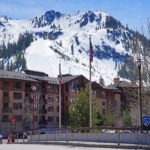
Australia may be the world’s lowest continent by average elevation, but its mountains are remarkably varied. Snow-covered alpine summits rise above New South Wales and Victoria, ancient folded ranges cross the dry interior, deeply eroded sandstone plateaus overlook the east coast, and rugged dolerite peaks dominate western Tasmania.
The country’s highest mainland summit is Mount Kosciuszko, which reaches 2,228 meters (7,310 feet) in the Snowy Mountains. Although Australia lacks the extreme elevations of the Himalayas, Andes, or European Alps, its highlands support distinctive ecosystems, important river catchments, Indigenous cultural landscapes, ski areas, and some of the country’s finest walking trails.
🏔️ Overview
Most of Australia’s highest mountains are concentrated in the southeast, where the Great Dividing Range follows the eastern side of the continent. Its southern highlands include the Australian Alps, Snowy Mountains, Victorian Alps, and Brindabella Range.
Other important mountain regions are found throughout the country:
- The Flinders Ranges in South Australia
- The MacDonnell Ranges in the Northern Territory
- The Hamersley Range in Western Australia
- The Stirling Range in southwestern Western Australia
- The Blue Mountains west of Sydney
- The Grampians, traditionally known as Gariwerd, in Victoria
- The Central Highlands and western mountains of Tasmania
Australia’s mountains are generally much older and more eroded than the towering ranges found along active continental collision zones. Their appeal comes less from extreme altitude and more from ancient geology, unusual wildlife, dramatic escarpments, remote wilderness, and cultural significance.
⚡ Fast Facts
| Fact | Details |
|---|---|
| Continent | Australia, within the wider Oceania region |
| Country | Australia |
| Highest mainland mountain | Mount Kosciuszko |
| Mainland high-point elevation | 2,228 m (7,310 ft) |
| Highest mountain in an external Australian territory outside Antarctica | Mawson Peak, Heard Island |
| Mawson Peak elevation | Approximately 2,745 m (9,006 ft) |
| Highest mountain in Tasmania | Mount Ossa |
| Mount Ossa elevation | 1,617 m (5,305 ft) |
| Largest mountain system | Great Dividing Range |
| Highest mountain region | Snowy Mountains |
| Highest mountain in Victoria | Mount Bogong |
| Highest mountain in Western Australia | Mount Meharry |
| Highest mountain in Queensland | Bartle Frere South Peak |
| Main mountain activities | Hiking, bushwalking, climbing, skiing, snowshoeing, camping and mountain biking |
📍 Where Are Australia’s Mountains?
Australia’s mountains are widely distributed, but the most extensive highlands lie along the eastern and southeastern margins of the continent.
Eastern Australia
The Great Dividing Range extends for more than 3,000 kilometers through Queensland, New South Wales and Victoria. Rather than forming one continuous line of sharp summits, it consists of ranges, plateaus, escarpments, volcanic remnants and elevated tablelands.
Its many subdivisions include:
- Australian Alps
- Snowy Mountains
- Victorian Alps
- Blue Mountains
- New England Range
- Liverpool Range
- Brindabella Range
- Main Range of southeastern Queensland
- Grampians or Gariwerd
These eastern highlands form an important watershed. Rivers on their eastern slopes generally drain toward the Pacific Ocean, while rivers on the western side flow toward inland basins or the Murray–Darling river system.
Central Australia
Central Australia contains older desert ranges separated by broad plains. The MacDonnell Ranges extend east and west of Alice Springs and contain steep-sided ridges, quartzite peaks, narrow gaps and permanent waterholes.
Other central mountain regions include the Petermann Ranges, Harts Range, Davenport Range and the uplands around Uluṟu and Kata Tjuṯa. Uluṟu itself is generally classified as an inselberg rather than a conventional mountain, while Kata Tjuṯa is a group of large conglomerate domes.
Western Australia
Western Australia’s ranges are lower than the Australian Alps but include some of the continent’s oldest exposed rocks. The Hamersley Range contains the state’s highest summit, Mount Meharry, while the Stirling Range rises abruptly from the surrounding lowlands near the southern coast.
Tasmania
Tasmania has some of Australia’s wildest and most rugged mountain scenery. Its mountains are frequently steep, rocky and heavily glaciated in appearance, despite remaining below 1,700 meters.
Major Tasmanian mountain areas include:
- Central Highlands
- Pelion Range
- Cradle Mountain region
- Du Cane Range
- Western Arthur Range
- Eastern Arthur Range
- Ben Lomond Plateau
- Walls of Jerusalem
Mount Ossa, in the Pelion Range, is Tasmania’s highest peak at 1,617 meters.
🗺️ Major Mountain Ranges in Australia
Great Dividing Range
The Great Dividing Range is Australia’s largest and most influential mountain system. It extends along much of the eastern side of the continent and includes high plateaus, forested ranges, escarpments and volcanic uplands.
The range affects rainfall by forcing moisture-bearing air from the Pacific Ocean to rise. Its eastern slopes tend to receive more precipitation, while some inland areas lie within a rain shadow.
The Great Dividing Range also contains the sources of major rivers, including tributaries of the Murray, Darling, Murrumbidgee, Snowy and several coastal river systems.
Australian Alps
The Australian Alps extend across southeastern New South Wales, northeastern Victoria and the Australian Capital Territory. They cover approximately 1.6 million hectares of protected public land across eleven national parks and reserves.
The region contains:
- Australia’s highest mainland peaks
- Glacial lakes and cirques
- Alpine and subalpine grasslands
- Snow-gum woodlands
- Ski resorts
- Important water catchments
- Rare high-elevation plants and animals
Although the Australian Alps are much lower than mountain systems on other continents, they contain nearly all of mainland Australia’s true alpine environment.
Snowy Mountains
The Snowy Mountains form the highest part of the Australian Alps. They are located primarily within Kosciuszko National Park in southern New South Wales.
The range contains Mount Kosciuszko, Mount Townsend, Mount Twynam and most of the other summits exceeding 2,100 meters. Its broad, rounded mountaintops differ from the jagged profiles commonly associated with younger mountain ranges.
During the Pleistocene, small glaciers and persistent snowfields helped create cirques, moraines, tarns and other glacial features. Blue Lake is one of the best-known examples of a glacial lake in mainland Australia.
Victorian Alps
The Victorian Alps form the southern continuation of the Australian Alps. Their highest summit is Mount Bogong at 1,986 meters.
Other notable Victorian mountains include:
- Mount Feathertop
- Mount Hotham
- Mount Baw Baw
- Mount Buller
- Mount Howitt
- Mount Stirling
- Mount Buffalo
The Victorian Alps are generally more deeply dissected than the high plateaus surrounding Mount Kosciuszko. Their long ridges, steep spurs and forested valleys create challenging hiking terrain.
Blue Mountains
The Blue Mountains are a dissected sandstone plateau west of Sydney. They are part of the Great Dividing Range but are better known for cliffs, gorges, waterfalls and forested valleys than for individual high peaks.
Millions of years of erosion carved deeply into the elevated sandstone surface, producing landmarks such as the Three Sisters, Jamison Valley and Grose Valley.
The Greater Blue Mountains Area is a UNESCO World Heritage Site recognized for its extensive eucalypt-dominated ecosystems and exceptional biological diversity.
Flinders Ranges
The Flinders Ranges extend for more than 400 kilometers across South Australia. Their folded ridges were created from sediments deposited in an ancient basin hundreds of millions of years ago.
Important features include:
- Ikara, also known as Wilpena Pound
- St Mary Peak
- Rawnsley Bluff
- Brachina Gorge
- Vulkathunha–Gammon Ranges
- Ediacaran fossil sites
The ranges lie on the traditional lands of the Adnyamathanha people. Their cultural importance is inseparable from the region’s geological and ecological significance.
MacDonnell Ranges
The MacDonnell Ranges extend east and west of Alice Springs in the Northern Territory. They consist largely of resistant quartzite, sandstone and other ancient rocks that have survived while the softer surrounding landscape eroded away.
The ranges are divided into:
- East MacDonnell Ranges
- West MacDonnell Ranges
Mount Zeil, the Northern Territory’s highest summit, rises within the western section. The ranges also contain dramatic gaps and gorges, including Simpsons Gap, Standley Chasm, Ormiston Gorge and Glen Helen Gorge.
Hamersley Range
The Hamersley Range lies in the Pilbara region of Western Australia. It is known for ancient banded iron formations, rugged gorges and mineral-rich landscapes.
Mount Meharry is Western Australia’s highest mountain. Nearby Karijini National Park protects some of the range’s most spectacular scenery, including deep slot-like gorges, waterfalls and layered red-rock cliffs.
Stirling Range
The Stirling Range rises sharply from the plains of southwestern Western Australia. Its highest summit, Bluff Knoll, reaches approximately 1,099 meters.
Despite its modest elevation, Bluff Knoll occasionally receives light snowfall. The range is also known for exceptional plant diversity, steep quartzite ridges and rapidly changing weather.
Grampians or Gariwerd
Gariwerd, widely known as the Grampians, is a series of sandstone ranges in western Victoria. The landscape contains long ridges, waterfalls, rock shelters and panoramic lookouts.
Gariwerd has been a living cultural landscape for Traditional Owners for tens of thousands of years. It contains the largest concentration of known Aboriginal rock-art sites in Victoria.
⛰️ Ten Highest Mountains in Australia
The following table uses Geoscience Australia’s national list of the ten highest mainland mountain ranks. All are located in the Snowy Mountains of New South Wales.
Because nearby ridges can contain several high points, lists may differ over whether a feature qualifies as a separate mountain. Recreational maps may also report elevations that vary by several meters.
| Rank | Mountain | Elevation | Range |
|---|---|---|---|
| 1 | Mount Kosciuszko | 2,228 m (7,310 ft) | Main Range, Snowy Mountains |
| 2 | Mount Townsend | 2,209 m (7,247 ft) | Main Range, Snowy Mountains |
| 3 | Mount Twynam | 2,195 m (7,201 ft) | Main Range, Snowy Mountains |
| 4 | Rams Head | 2,190 m (7,185 ft) | Rams Head Range, Snowy Mountains |
| 5 | Unnamed peak on Etheridge Ridge | 2,180 m (7,152 ft) | Main Range, Snowy Mountains |
| 6 | Rams Head North | 2,177 m (7,142 ft) | Rams Head Range, Snowy Mountains |
| 7 | Alice Rawson Peak | 2,160 m (7,087 ft) | Main Range, Snowy Mountains |
| 8 | Unnamed peak southwest of Abbott Peak | 2,159 m (7,083 ft) | Main Range, Snowy Mountains |
| 9 | Abbott Peak and Carruthers Peak | 2,145 m (7,037 ft) | Main Range, Snowy Mountains |
| 10 | Mount Northcote | 2,131 m (6,991 ft) | Main Range, Snowy Mountains |
These peaks can also be explored in the guide to the highest peaks of the Great Dividing Range.
🌋 What Is the Highest Mountain in Australian Territory?
The answer depends on the geographic definition being used.
Highest Mountain on Mainland Australia
Mount Kosciuszko is the highest mountain on the Australian mainland at 2,228 meters.
It is also the summit used to represent Australia on the original Bass version of the Seven Summits.
Highest Mountain in Australia Including Tasmania
Mount Kosciuszko remains the highest mountain when Tasmania and Australia’s ordinary coastal islands are included. Tasmania’s Mount Ossa reaches 1,617 meters.
Highest Mountain in an External Territory Outside Antarctica
Mawson Peak rises to approximately 2,745 meters on Heard Island, a remote Australian external territory in the southern Indian Ocean.
Mawson Peak is the summit of Big Ben, an active volcanic massif covered partly by glaciers. Because volcanic activity can alter its summit, different surveys and official pages occasionally report slightly different elevations.
Australian Antarctic Territory
Australia also claims a large sector of Antarctica known as the Australian Antarctic Territory. Mountains there exceed both Mount Kosciuszko and Mawson Peak.
Antarctic territorial claims operate under the Antarctic Treaty system and are normally treated separately from conventional lists of mountains within Australia.
🏔️ Field Guide Tip: When comparing Australia’s highest mountains, check whether the list refers to the mainland, the country and its islands, external territories, or the wider Oceania region. Each definition can produce a different answer.
🪨 Geology
Australia’s mountain landscapes reflect an exceptionally long geological history.
Unlike the Himalayas, which continue to rise through an active continental collision, most Australian ranges are remnants of ancient uplift, folding, faulting, volcanic activity and erosion. Over immense spans of time, wind, rivers, weathering and changes in climate wore down once-higher landscapes.
Ancient Eastern Highlands
Much of the Great Dividing Range developed through several episodes of mountain building, volcanic activity and uplift. Granite, sandstone, basalt, slate and metamorphic rocks occur in different sections.
The Australian Alps contain extensive granite formations, along with older sedimentary and metamorphic rocks. During colder periods, limited glaciation reshaped the highest areas.
Sandstone Plateaus
The Blue Mountains and Gariwerd contain resistant sandstone layers. Streams cut deeply into these elevated surfaces, leaving cliffs, narrow ridges and isolated rock formations.
Folded Desert Ranges
The Flinders and MacDonnell ranges contain rocks that were folded, faulted and tilted during ancient mountain-building events. Continued erosion exposed their internal structure, producing parallel ridges and dramatic gaps.
Tasmanian Dolerite
Many Tasmanian summits are capped by Jurassic dolerite. This hard igneous rock forms cliffs, columns, block fields and steep summit plateaus around mountains such as Mount Ossa and Cradle Mountain.
Volcanic Landscapes
Australia contains many extinct or dormant volcanic landforms, including the Glass House Mountains, Warrumbungles, Mount Warning region and volcanic plains of Victoria.
The country’s presently active volcanic centers are associated with the remote Heard and McDonald Islands rather than the mainland.
🌿 Flora and Fauna
Australia’s mountains support ecosystems that change dramatically with elevation, latitude, geology and rainfall.
Australian Alpine Vegetation
The highest mainland areas contain:
- Alpine herbfields
- Heathlands
- Tussock grasslands
- Sphagnum bogs
- Snow-gum woodlands
- Wetlands and peatlands
- Seasonal wildflower meadows
Plants growing above the tree line must survive frost, strong wind, snow cover, intense sunlight and a short growing season.
Mountain Wildlife
Animals associated with Australian mountain environments include:
- Mountain pygmy-possum
- Southern and northern corroboree frogs
- Broad-toothed rat
- Alpine she-oak skink
- Bogong moth
- Wombats
- Wallabies
- Echidnas
- Lyrebirds
- Wedge-tailed eagles
The mountain pygmy-possum is especially unusual because it is one of the few Australian mammals adapted to prolonged seasonal snow.
Tasmanian Mountain Ecosystems
Tasmania’s mountains contain alpine moorlands, cushion plants, pencil pines, King Billy pines, deciduous beech and extensive buttongrass landscapes.
Many of these plant communities developed from ancient Gondwanan lineages and differ considerably from the alpine vegetation of mainland Australia.
Conservation Challenges
Mountain environments are often sensitive to disturbance. Major pressures include:
- Climate change and declining snow duration
- Severe bushfires
- Feral horses and other introduced animals
- Weeds and plant diseases
- Trampling of fragile vegetation
- Erosion around popular trails
- Habitat fragmentation
- Inappropriate climbing or recreation in culturally sensitive areas
Staying on designated tracks is particularly important in alpine wetlands, where damaged vegetation can take many years to recover.
🥾 Hiking and Climbing
Australia offers mountain routes ranging from short summit walks to remote multi-day wilderness journeys.
Mount Kosciuszko
Mount Kosciuszko can be approached from Thredbo or Charlotte Pass. The shortest popular route uses the Kosciuszko Express chairlift from Thredbo, followed by a maintained elevated walking track.
The longer Summit Trail from Charlotte Pass follows an old management road before reaching Rawson Pass and the summit.
Main Range Walk
The Main Range Walk is one of Australia’s finest alpine day hikes. It crosses the high country near Blue Lake, Carruthers Peak and Mount Kosciuszko.
Although the trail does not reach extreme altitude, it is exposed to wind, fog, snow and sudden temperature changes.
Mount Bogong
Mount Bogong is Victoria’s highest mountain and a considerably steeper hike than Mount Kosciuszko. Routes such as Staircase Spur and Eskdale Spur involve sustained climbing and exposed alpine conditions.
Mount Feathertop
Mount Feathertop is known for its narrow summit ridge and sharp profile. The Razorback route from Mount Hotham is especially popular, but snow, ice and strong winds can make the mountain dangerous in winter.
Overland Track and Mount Ossa
Tasmania’s Overland Track passes through Cradle Mountain–Lake St Clair National Park. A side route from Pelion Gap leads toward Mount Ossa.
The summit approach is steep and exposed, with boulder fields that can become hazardous during rain, ice or snow.
Larapinta Trail
The Larapinta Trail crosses the West MacDonnell Ranges near Alice Springs. It passes desert ridges, gorges and waterholes before reaching Mount Sonder.
Heat, limited water and long distances make preparation essential.
Flinders Ranges
The Flinders Ranges contain day walks, ridge routes and sections of the long-distance Heysen Trail. Visitors should follow cultural guidance and observe restrictions around culturally significant places.
Gariwerd and the Grampians Peaks Trail
Gariwerd offers sandstone ridge walks, waterfalls and the multi-day Grampians Peaks Trail. Some cliffs and climbing locations are closed or restricted to protect Aboriginal cultural heritage and sensitive environments.
🌤️ Best Time to Visit
The best season depends heavily on the mountain region.
Australian Alps
December through March generally provides the best conditions for walking in the high country. Snow can still occur outside winter, and strong winds or fog may develop at any time.
June through September is the main season for skiing and other snow activities.
Tasmania
December through March usually offers longer daylight and somewhat milder conditions. Nevertheless, Tasmania’s mountain weather is unpredictable throughout the year.
Flinders and MacDonnell Ranges
April through October is normally preferable because temperatures are cooler. Summer heat can make exposed desert walks dangerous.
Western Australian Ranges
Autumn, winter and early spring generally provide comfortable walking conditions. Spring can be particularly attractive because of wildflowers.
Always check park alerts, fire conditions, road closures and weather forecasts immediately before entering a mountain area.
🧑🤝🧑 Indigenous Heritage
Australia’s mountain landscapes are part of living Aboriginal cultural Country rather than empty wilderness.
Kosciuszko National Park lies on Country connected with the Wiradjuri, Wolgalu, Ngunnawal and Monaro Ngarigo peoples. Gariwerd has deep cultural importance to its Traditional Owners and contains numerous rock-art shelters and ceremonial places.
The Flinders Ranges are the traditional lands of the Adnyamathanha people, while the MacDonnell Ranges contain places of profound significance to Arrernte communities. Tasmanian Aboriginal people have maintained connections with the island’s mountain country for tens of thousands of years.
Visitors should respect:
- Traditional place names
- Cultural closures
- Requests not to climb certain formations
- Restrictions around rock art and heritage sites
- Guidance provided by Traditional Owners and park authorities
Understanding cultural connections to Country provides a much richer perspective than viewing mountains only as physical objects or recreational destinations.
💡 Fun Facts
- Australia is the lowest continent, with an average elevation of approximately 330 meters.
- Only a very small proportion of the mainland rises above 2,000 meters.
- All ten of the highest mainland mountain ranks are in the Snowy Mountains of New South Wales.
- Mount Kosciuszko is one of the easiest summits on the original Seven Summits list.
- The alternative Messner Seven Summits list uses Puncak Jaya in Indonesia to represent the wider Oceania region.
- Mawson Peak is higher than Mount Kosciuszko and is an active volcanic summit.
- Tasmania’s mountains are lower than the Australian Alps but often appear more rugged because of their steep cliffs and glacial landforms.
- Snow occasionally falls on lower mountains such as Bluff Knoll in Western Australia.
- The Blue Mountains are predominantly an elevated sandstone plateau dissected by erosion rather than a single chain of pointed summits.
- The headwaters of several economically and ecologically important Australian rivers originate in the southeastern mountains.
❓ Frequently Asked Questions
What is the highest mountain in Australia?
Mount Kosciuszko is the highest mountain on mainland Australia at 2,228 meters.
Mawson Peak on Heard Island is higher, reaching approximately 2,745 meters, but it is located in a remote external Australian territory.
What is the highest mountain in Tasmania?
Mount Ossa is Tasmania’s highest mountain at 1,617 meters. It is located in the Pelion Range within Cradle Mountain–Lake St Clair National Park.
Does Australia have real alpine mountains?
Yes. The highest parts of the Australian Alps contain genuine alpine environments above the natural tree line. These areas support specialized vegetation, seasonal snow and cold-adapted wildlife.
Does Australia have snow-covered mountains?
The Australian Alps and parts of Tasmania receive regular winter snow. The mainland’s main ski areas are located in New South Wales and Victoria.
Snow cover is generally seasonal rather than permanent.
Is Mount Kosciuszko difficult to climb?
Under favorable summer conditions, the standard Mount Kosciuszko routes are nontechnical walks. The shortest approach from Thredbo uses a chairlift followed by a maintained trail.
Weather can still make the mountain hazardous, particularly during winter or sudden storms.
Is Mount Kosciuszko one of the Seven Summits?
Yes. Mount Kosciuszko represents Australia on the original Bass version of the Seven Summits.
Many modern climbers instead use Puncak Jaya to represent Oceania on the Messner list. Learn more in the complete Seven Summits guide.
Is Puncak Jaya in Australia?
No. Puncak Jaya is in Indonesia, on the island of New Guinea. It is considered the highest mountain in Oceania under a broader regional definition, but it is not located within the country of Australia.
Are there active volcanoes in Australia?
Australia’s mainland has no currently active volcanoes. Active volcanic activity occurs on the remote Heard and McDonald Islands, where Mawson Peak forms the summit of the Big Ben volcanic massif.
Which Australian state has the highest mountains?
New South Wales contains Australia’s ten highest mainland mountain ranks, including Mount Kosciuszko, Mount Townsend and Mount Twynam.
🔗 Related Articles
- Mount Kosciuszko
- The Great Dividing Range
- Snowy Mountains
- Highest Peaks of the Great Dividing Range
- Mount Feathertop
- Mount Buffalo
- Seven Summits
- Puncak Jaya
- Highest Mountains by Continent
- Mountains by Country
- Mountain Ranges
📚 Sources
- Geoscience Australia – Highest Mountains
- Geoscience Australia – Elevations
- Australian Government – Australian Alps National Parks and Reserves
- NSW National Parks – Mount Kosciuszko Summit Walk
- Tasmania Parks and Wildlife Service – Overland Track Walk Notes
- Australian Antarctic Program – Landforms of Heard Island and McDonald Islands
- UNESCO – Greater Blue Mountains Area
- South Australian Department for Environment and Water – Cultural Heritage and First Nations Involvement
- Parks Victoria – Rock Climbing in Gariwerd