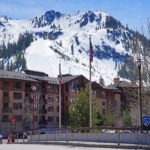
Cristallo

Cristallo is one of the great mountain massifs of the Italian Dolomites, rising immediately northeast of Cortina d’Ampezzo in Veneto. Its highest summit, Monte Cristallo, reaches 3,221 meters (10,568 feet) and towers over the Ampezzo Valley in a spectacular collection of vertical walls, deeply cut gullies, narrow ridges, and pale Dolomite towers.
The Cristallo group contains four principal summits above 3,000 meters: Monte Cristallo at 3,221 meters, Cristallo di Mezzo at 3,154 meters, Piz Popena at 3,152 meters, and Cristallino d’Ampezzo at 3,008 meters. Together they form one of the defining mountain skylines surrounding Cortina.
Monte Cristallo is also unusually independent for a Dolomite summit. With approximately 1,416 meters (4,646 feet) of topographic prominence and 10.66 kilometers (6.62 miles) of isolation, it ranks among the more prominent mountains of the Dolomites. Its Nearest Higher Neighbor is Tofana di Dentro, while its broader topographic parent is Antelao.
Cristallo’s human history is equally significant. On September 14, 1865, pioneering Austrian mountaineer Paul Grohmann reached the main summit with Ampezzo guides Angelo Dimai and Santo Siorpaes. Less than a decade later, Anna Ploner became the first known woman to climb Monte Cristallo.
During World War I, soldiers occupied the high ridges of the massif under extraordinary conditions. Today their tunnels, shelters, barracks, and positions remain visible along some of the most famous via ferratas in the Dolomites.
⚡ Fast Facts
| Feature | Details |
|---|---|
| Mountain | Cristallo / Monte Cristallo |
| Country | Italy |
| Region | Veneto |
| Province | Belluno |
| Nearest major town | Cortina d’Ampezzo |
| Mountain group | Cristallo Group |
| Greater range | Dolomites / The Alps |
| Highest summit | Monte Cristallo |
| Elevation | 3,221 m / 10,568 ft |
| Prominence | Approx. 1,416 m / 4,646 ft |
| Isolation | Approx. 10.66 km / 6.62 mi |
| Key saddle | Passo Tre Croci |
| Key saddle elevation | Approx. 1,805 m / 5,922 ft |
| Topographic parent | Antelao |
| Nearest Higher Neighbor (NHN) | Tofana di Dentro |
| NHN elevation | Approx. 3,238 m / 10,623 ft |
| Coordinates | Approx. 46.5757° N, 12.2005° E |
| Group high point | Monte Cristallo |
| Other 3,000 m peaks | Cristallo di Mezzo, Piz Popena, Cristallino d’Ampezzo |
| Rock | Primarily stratified dolomite and related sedimentary rocks |
| Geologic age | Mostly Triassic |
| Protected area | Parco Naturale delle Dolomiti d’Ampezzo |
| UNESCO status | Part of The Dolomites World Heritage Site |
| UNESCO system | Northern Dolomites |
| Western landscape | Cortina d’Ampezzo / Ampezzo Valley |
| Eastern landscape | Val d’Ansiei and Misurina |
| Northern pass | Passo Cimabanche |
| Southern pass | Passo Tre Croci |
| First recorded ascent | September 14, 1865 |
| First ascenders | Paul Grohmann, Angelo Dimai and Santo Siorpaes |
| First known female ascent | Anna Ploner, 1874 |
| Normal-route starting point | Passo Tre Croci |
| Normal-route difficulty | Approximately UIAA II, with a passage of III |
| Typical total time | Roughly 9–10 hours |
| Typical elevation gain | Approx. 1,400–1,600 m |
| Major via ferrata | Ivano Dibona |
| Cristallo di Mezzo ferrata | Marino Bianchi |
| Historic suspension bridge | Ponte Cristallo |
| Nearby mountains | Tofana di Mezzo, Sorapiss, Antelao |
| Nearby landmark | Tre Cime di Lavaredo |
Cristallo’s large prominence is controlled by Passo Tre Croci, rather than one of the high notches between the individual peaks of the massif. The summit must descend more than 1,400 meters before connecting through the surrounding landscape to a higher mountain.
📍 Where Is Cristallo?
Cristallo rises directly northeast of Cortina d’Ampezzo, one of the best-known mountain towns in the Dolomites.
The massif occupies an important position between the Ampezzo Valley on the west and Val d’Ansiei toward Misurina on the east.
Two important passes help define the group.
Passo Tre Croci, at approximately 1,805 meters, lies to the south between Cristallo and Sorapiss.
Passo Cimabanche, at roughly 1,530 meters, lies north of the massif on the route connecting Cortina with the Dobbiaco area.
The mountains of the Tofane rise west of Cristallo, while Tre Cime di Lavaredo and the Sesto Dolomites lie farther east.
This location places Cristallo at the center of an exceptional concentration of major Dolomite landscapes.
🏔️ Monte Cristallo: Highest Peak of the Group
The main summit reaches 3,221 meters and is the highest point in the Cristallo group.
It is sometimes important to specify Monte Cristallo rather than simply Cristallo because the latter name is also used for the entire massif.
The four principal 3,000-meter peaks are:
| Peak | Elevation |
|---|---|
| Monte Cristallo | 3,221 m |
| Cristallo di Mezzo | 3,154 m |
| Piz Popena | 3,152 m |
| Cristallino d’Ampezzo | 3,008 m |
Several additional towers and subsidiary summits give the massif its remarkably complicated skyline.
From Cortina, these individual points often merge visually into a single enormous wall.
📏 Elevation, Prominence and Isolation
Monte Cristallo’s accepted elevation is 3,221 meters (10,568 feet).
Peakbagger currently gives its prominence as approximately:
1,416 meters / 4,646 feet
Its true isolation is approximately:
10.66 kilometers / 6.62 miles
Those numbers are unusually substantial for the Dolomites.
Many famous Dolomite summits rise only slightly above connecting saddles because neighboring mountains are so closely packed.
Cristallo is different.
Passo Tre Croci descends to approximately 1,805 meters, giving the massif considerable topographic independence.
🧭 Tofana di Dentro: Nearest Higher Neighbor
Higher terrain is first encountered roughly 10.6 kilometers west on Tofana di Dentro, one of the three major Tofana summits.
Tofana di Dentro reaches approximately 3,238 meters, only about 17 meters higher than Monte Cristallo.
Nearby Tofana di Mezzo rises still higher at approximately 3,244 meters.
The broad topographic relationship, however, ultimately connects Cristallo through its key saddle toward Antelao, which serves as its island or prominence parent.
Antelao reaches approximately 3,263 meters and is one of the most independent mountains in the eastern Dolomites.
⛰️ Nearly 2,000 Meters Above Cortina
Cristallo’s visual dominance comes not only from elevation but from enormous local relief.
The upper summits stand close to 2,000 vertical meters above portions of the Cortina d’Ampezzo basin.
Forests rise from the lower valley slopes, then give way to scree fans and finally immense vertical rock walls.
From Cortina, the change from populated valley to 3,000-meter summit occurs over remarkably little horizontal distance.
This creates one of the defining mountain panoramas of the Ampezzo Valley.
Cristallo is especially impressive in morning and evening light, when the layered rock catches low-angle sunlight while the forests below remain in shadow.
🪨 Geology of Cristallo
Cristallo consists predominantly of stratified dolomite, along with limestone, marl, clay, and other sedimentary formations found throughout the Ampezzo Dolomites.
Much of this rock originated during the Triassic Period, more than 200 million years ago.
At that time, northern Italy looked nothing like it does today.
Warm shallow seas covered the region.
Carbonate sediments accumulated in lagoons, tidal flats, marine platforms, and deeper basins.
Over immense periods, these deposits hardened into limestone and dolomite.
The mountain that now rises above Cortina therefore began as sediment beneath a prehistoric sea.
🌊 Ancient Seas Beneath the Dolomites
The lower geological formations around Cristallo and the Tofane include clay and marl containing abundant fossil material.
Above them lie enormous layers of more resistant carbonate rock.
Within the Ampezzo Dolomites, stratified dolomite can exceed one kilometer in thickness.
These resistant layers form the gigantic towers and walls associated with Cristallo, Piz Popena, and the neighboring Tofane.
The visible bedding of the mountain is essentially a geological archive.
Each layer records an ancient environment that existed long before the Alps rose.
🌎 Building the Alps
The marine rocks remained buried for tens of millions of years.
The landscape began changing dramatically as tectonic collision compressed the region during formation of the Alps.
Ancient seabed deposits were faulted, folded, fractured, and uplifted.
Eventually they rose thousands of meters above sea level.
Erosion then began carving the uplifted rock.
Rivers cut valleys.
Water entered cracks.
Ice expanded within fractures.
Gravity removed unstable blocks.
Glaciers later widened valleys and steepened rock faces.
The present Cristallo massif is the surviving architecture created by this combination of deposition, uplift, and erosion.
🧊 Glaciers of Cristallo
Small glaciers and permanent ice bodies historically occupied shaded recesses of the Cristallo group.
The colder northern faces provided particularly favorable conditions for preserving ice.
These glaciers were never comparable in size with the great Alpine glaciers farther west, but they played an important role in the local mountain landscape.
Like other small glaciers in the Dolomites, they have undergone substantial retreat.
Some remaining ice is partly covered by rock debris, which can make it difficult to distinguish glacier ice from ordinary scree.
The retreat continues exposing moraines, unstable rock, and terrain that had previously remained beneath permanent snow and ice.
🧊 Ice Age Sculpture
The modern remnants represent only a tiny fraction of the glacial ice that once occupied the region.
During colder periods of the Pleistocene, glaciers flowed through the Ampezzo Valley, Val d’Ansiei, Val Padeon, and surrounding basins.
Moving ice excavated valleys and steepened the mountain walls.
As glaciers retreated, they left behind enormous quantities of debris.
The giant scree fans below Cristallo are partly the continuing result of this steep glacially modified landscape.
Freeze-thaw weathering still sends fresh material downward each year.
🏞️ Parco Naturale delle Dolomiti d’Ampezzo
Much of Cristallo lies within the Parco Naturale Regionale delle Dolomiti d’Ampezzo.
The protected area was established in 1990 and covers approximately 11,200 hectares north of Cortina d’Ampezzo.
It includes the Cristallo, Tofane, Fanes, Col Bechei, and Croda Rossa d’Ampezzo mountain groups.
Cristallo is particularly characteristic of the park because its high rock walls descend almost directly toward the subalpine forest.
Other areas of the park contain broader karst plateaus and alpine grasslands.
Together, these environments create exceptional ecological variety within a relatively compact area.
🌍 UNESCO World Heritage Site
Cristallo belongs to The Dolomites UNESCO World Heritage Site, inscribed in 2009.
It forms part of the enormous Northern Dolomites system.
This is the largest of the nine component systems making up the World Heritage property and covers more than 53,000 hectares.
The system contains several famous mountain groups, including:
- Cristallo
- Tofane
- Fanes–Senes–Braies
- Sesto Dolomites
- Cadini di Misurina
- Tre Cime di Lavaredo
UNESCO recognizes these landscapes for both outstanding natural beauty and their extraordinary record of Dolomite geology.
📜 Paul Grohmann and the First Ascent
The first documented ascent of Monte Cristallo took place on September 14, 1865.
Austrian mountaineering pioneer Paul Grohmann climbed with two of the most accomplished Ampezzo guides of the period:
Angelo Dimai and Santo Siorpaes.
Grohmann had already become one of the defining explorers of the Dolomites.
His first ascents and early routes helped establish many of the mountains that remain major Alpine objectives today.
Cristallo was among his important achievements.
🧗 An Earlier Attempt
Grohmann had previously attempted the mountain with Georg Ploner, the hotelier at Schluderbach, accompanied by Dimai and Siorpaes.
The attempt ended after Ploner suffered a minor accident.
Grohmann returned soon afterward with the same two guides.
On September 14, the three reached the summit using a line that corresponds broadly with the modern normal route.
Their success opened another of the great high Dolomite summits during the Golden Age of Alpinism.

👩 Anna Ploner and the First Female Ascent
Cristallo also occupies an important place in the early history of women in Dolomite mountaineering.
In September 1874, Anna Ploner became the first known woman to reach the summit.
Ploner was the daughter of Georg Ploner, whose hotel at Schluderbach had become an important gathering place for early mountaineers exploring the eastern Dolomites.
She was only in her early twenties.
The achievement came just nine years after the mountain’s first recorded ascent and during a period when social conventions severely restricted women’s participation in mountaineering.
Anna Ploner later climbed Cima Grande di Lavaredo as well, becoming one of the pioneering female climbers of the Dolomites.
🥾 The Normal Route to Monte Cristallo
The ordinary route to the main summit begins at Passo Tre Croci, approximately 1,805 meters above sea level.
From the pass, climbers initially follow established trails before entering the enormous scree basin beneath the mountain.
The route eventually reaches Passo del Cristallo, a deep notch separating Monte Cristallo from the Piz Popena side of the massif.
From there, the real climbing begins.
The normal route uses a surprisingly intricate system of ledges, gullies, ramps, and short rock walls on the southeast face before reaching the upper ridge.
🧗 Normal-Route Difficulty
Historic CAI descriptions rate the route at approximately:
UIAA Grade II, with one passage of Grade III
Modern descriptions may use PD or PD+ as the overall Alpine grade.
The numbers can make the route sound easier than it really is.
The main challenges include:
- Rough route finding
- Loose scree
- Exposed ledges
- Rock climbing
- Long ascent
- Long descent
- Rappelling
- Rockfall
- High altitude
- Few easy escape options
The mountain is therefore intended for mountaineers, not ordinary hikers.
⏱️ A Long Day From Passo Tre Croci
Traditional CAI guidance gives approximately 5½ to 6¾ hours for the ascent, followed by another 3¼ to 4¼ hours for descent.
Modern GPS-based descriptions similarly suggest a total outing of roughly 9–10 hours.
Depending on the exact line and measurements used, the total elevation gain is approximately 1,400–1,600 meters.
There is no convenient mountain hut high on the normal route.
Climbers must therefore be prepared for a long, self-contained day.
An early start is particularly valuable.
🪨 A Labyrinth of Ledges
The upper route is notable for its complexity.
Rather than following one obvious ridge directly to the summit, the normal route takes advantage of weaknesses hidden within the southeast face.
A ledge may disappear around a corner and reveal a gully.
A short climbing step may lead to another traverse.
Some passages look improbable until viewed from exactly the right angle.
Cairns, faded paint, and occasional fixed protection help, but they do not eliminate the need for route-finding ability.
In cloud or fog, the route can become substantially more difficult.
⬇️ The Descent
The descent generally reverses the normal route.
Rappel anchors are available at several steeper passages.
Descending loose Dolomite terrain is often more difficult than climbing it.
Climbers must also remain alert late in the day when fatigue can affect judgment and foot placement.
For this reason, reaching the summit should never be treated as the end of the objective.
A successful Monte Cristallo ascent requires enough time, energy, and good weather to complete the entire descent safely.
⚠️ Rockfall
Rockfall is a significant hazard throughout the Cristallo group.
The combination of steep terrain, fractured carbonate rock, frost action, and loose debris constantly changes the mountain.
Warm temperatures can loosen stones previously held by ice.
Heavy rainfall can trigger debris movement.
Climbers may also dislodge stones onto parties below.
Helmets are essential on climbing routes and advisable on many steep approaches beneath major cliffs.
Even established historic routes can change after significant rockfall events.
🏔️ Cristallo di Mezzo
Cristallo di Mezzo, at approximately 3,154 meters, is the second or third highest major summit of the massif depending on the exact mapping of nearby Piz Popena.
It is particularly important recreationally because of the Via Ferrata Marino Bianchi.
The route climbs high along exposed ridges and equipped rock sections to reach the summit.
Cortina’s official guidance classifies the ferrata for experts and gives a total outing of about five hours from Rifugio Son Forca, though the complete approach from the hut includes a strenuous climb through the Staunies scree.
One important distinction should be clear:
The Marino Bianchi via ferrata reaches Cristallo di Mezzo, not the 3,221-meter summit of Monte Cristallo.
🏔️ Piz Popena
Piz Popena, approximately 3,152 meters high, rises immediately east of Monte Cristallo.
A deep notch at Passo del Cristallo separates the two main sections.
Topographically, Piz Popena is a subsidiary summit of Monte Cristallo, but its dramatic shape and climbing history give it a strong identity of its own.
The mountain was first climbed in 1870 by a party including Edward Robson Whitwell, Santo Siorpaes, and Christian Lauener.
Its summit requires technical mountaineering rather than a protected via ferrata.
🏔️ Cristallino d’Ampezzo
Cristallino d’Ampezzo rises to approximately 3,008 meters on the western side of the high Cristallo ridge.
It is one of the four principal 3,000-meter summits recognized within the massif.
Its closeness to the historic Forcella Staunies area places it near some of Cristallo’s best-known via ferrata terrain.
Although lower than the main peak, Cristallino offers extremely exposed high-Dolomite scenery.
Like the rest of the upper massif, changing snow conditions and weather can dramatically alter the seriousness of any route.
🧗 Via Ferrata Marino Bianchi
The Via Ferrata Marino Bianchi is one of the best-known protected routes on Cristallo.
It climbs from the Forcella Staunies area toward Cristallo di Mezzo.
The route uses:
- Steel cables
- Ladders
- Exposed ridge sections
- Natural rock passages
The highest sections approach 3,154 meters.
That altitude makes snow and ice important concerns even during the normal hiking season.
Cortina’s tourism authority rates the ferrata for expert users.
The descent retraces much of the same route, adding to the physical and mental demands.
🧗 Via Ferrata Ivano Dibona
The Via Ferrata Ivano Dibona is perhaps the most famous protected traverse in the Cristallo group.
Rather than climbing the main summit, it follows a long system of high ridges through terrain rich in both natural scenery and World War I history.
The complete modern itinerary is serious.
Cortina rates it as an expert route, with approximately:
- 9 hours
- 1,300 meters of ascent
- 1,720 meters of descent
The route crosses long exposed ridges and passes military ruins left by Italian positions during the First World War.
🌉 Ponte Cristallo
One of the best-known features of the Ivano Dibona route is the Ponte Cristallo, a spectacular suspension bridge approximately 30 meters long.
The bridge spans a deep notch high in the massif.
Its dramatic setting has made it one of the most recognizable via ferrata features in the Dolomites.
The bridge is only a small part of a much longer outing.
Its popularity in photographs should not obscure the seriousness of reaching it, particularly now that the former upper lift system no longer carries visitors directly to Forcella Staunies.
🏠 Rifugio Lorenzi
The historic Rifugio Lorenzi stood at Forcella Staunies and once provided an extraordinary high-altitude base for the Cristallo via ferratas.
It is now closed.
The former lift that brought visitors directly to the high saddle is also no longer operating.
Modern visitors generally reach the area from Rifugio Son Forca, climbing the steep scree channel toward Forcella Staunies on foot.
The ascent involves roughly 900 meters of elevation gain and can take around two hours before the via ferrata even begins.
This has significantly changed the character and commitment of the high Cristallo routes.
🏠 Rifugio Son Forca
Rifugio Son Forca serves as the principal modern support point for several Cristallo itineraries.
It can be reached from the Rio Gere area using the operating chairlift or by hiking.
From the hut, trails enter Val Padeon, climb toward Forcella Staunies, and provide access to the massif’s surrounding hiking routes.
The setting offers excellent views even for visitors who have no intention of climbing technical terrain.
For many hikers, Son Forca provides the closest practical experience of Cristallo’s high walls without committing to a via ferrata or summit route.
⚔️ Cristallo During World War I
The Cristallo massif became part of the high-altitude front during World War I.
Italy entered the war against Austria-Hungary in 1915, transforming the Dolomites into a mountain battlefield.
Italian forces occupied several of Cristallo’s eastern, western, and southern ridges.
Austro-Hungarian positions controlled other parts of the surrounding mountain terrain.
Combat was only one source of danger.
Soldiers endured storms, snow, avalanches, extreme cold, rockfall, and prolonged exposure above 2,500 and even 3,000 meters.
🪖 Military Life Above the Clouds
Soldiers constructed an extraordinary network of shelters, paths, trenches, tunnels, observation positions, and barracks across the massif.
Many remain visible today.
The difficulty of simply keeping men supplied in such terrain was enormous.
Food, ammunition, timber, fuel, and equipment had to be transported through terrain that would be considered a serious mountain outing even under peaceful conditions.
Winter made the situation considerably worse.
The high-altitude military history of Cristallo is preserved most clearly along the Ivano Dibona route.
🏚️ Bivacco Buffa di Perrero
One of the most remarkable surviving structures is Bivacco Buffa di Perrero, near Forcella Padeon at approximately 2,760 meters.
The structure originated as a wartime military barracks dating to 1915.
It appears almost suspended against the cliff.
The bivouac was restored in 2022, preserving one of the most unusual architectural remnants of the Dolomite front.
It is named for Colonel Carlo Buffa di Perrero, who commanded operations in this section of the front.
The building provides a striking reminder that Cristallo was once not merely climbed for recreation but occupied continuously by soldiers.
🌿 Flora and Fauna
Cristallo contains an enormous vertical range of habitats.
Near the summit, conditions are too harsh for substantial vegetation.
The landscape consists primarily of exposed rock, scree, snow, and ice.
Lower slopes support much richer ecosystems.
Forests around Cortina contain Norway spruce, European larch, Swiss stone pine, mountain pine, and other Alpine trees.
At intermediate elevations, grasslands and open slopes support flowers adapted to carbonate soils.
The transition from forest to rock occurs very rapidly beneath Cristallo’s steep walls.
🐐 Chamois
The Alpine chamois is one of the characteristic large mammals of the Ampezzo Dolomites.
Chamois can live at elevations approaching 3,000 meters and are exceptionally well adapted to steep rocky ground.
Their specialized hooves provide traction on narrow ledges and rough slopes.
The broader natural park supports a substantial chamois population.
Other mammals include red deer, roe deer, marmots, squirrels, foxes, and numerous smaller species.
Wildlife may move between elevations seasonally depending on snow, food availability, and human activity.
🦅 Golden Eagles
Golden eagles also inhabit the Ampezzo landscape.
The huge cliffs surrounding Cristallo provide excellent conditions for soaring.
Warm air rising along the rock walls allows these large raptors to gain altitude while using relatively little energy.
Open alpine grasslands provide hunting habitat, while inaccessible cliffs can offer secure resting and nesting areas.
Their presence reflects the ecological importance of protecting large connected mountain landscapes.
🌄 Enrosadira
Cristallo displays the celebrated Dolomite phenomenon known as enrosadira.
At sunrise and sunset, the pale carbonate walls can change from gray to gold, orange, pink, and red.
The effect is particularly striking from Cortina because the massif occupies such a large portion of the eastern skyline.
The rock’s layered structure creates additional visual complexity.
Individual towers may catch sunlight while nearby gullies remain dark.
The changing light can make the mountain appear completely different within only a few minutes.
🌩️ Weather
Cristallo is exposed to rapidly changing Alpine weather.
Summer thunderstorms are particularly dangerous on technical routes.
Lightning poses an obvious threat on ridges and via ferrata cables.
Rain can make Dolomite rock slippery and increase rockfall.
Fog creates serious route-finding problems on the main summit’s labyrinthine normal route.
Snow and ice can remain on high north-facing terrain well into summer.
Above 3,000 meters, fresh snow is possible outside the core summer season.
⚠️ Mountaineering Safety
The main Monte Cristallo summit should be treated as a serious Alpine climb.
Important hazards include:
- More than 1,400 meters of elevation gain
- Long approach and descent
- Loose scree
- UIAA Grade II–III climbing
- Exposed ledges
- Complex navigation
- Rappelling
- Rockfall
- Snow and ice
- Thunderstorms
- Lightning
- Fog
- High winds
- Limited shelter
Even experienced climbers should allow generous time.
Anyone uncertain about independent climbing, rappelling, or route finding should consider using a qualified local mountain guide.
🏔️ Cristallo and Tofana di Mezzo
Tofana di Mezzo rises west of Cristallo and reaches approximately 3,244 meters.
It is one of the few Dolomite summits higher than Monte Cristallo.
The two mountains dominate opposite sides of the Ampezzo Valley.
Tofana di Mezzo is considerably easier to access because a cable-car system reaches close to its summit.
Monte Cristallo remains far more isolated from mechanical access at its highest point.
Their contrasting accessibility provides two very different ways to experience a 3,200-meter Dolomite mountain.
🏔️ Cristallo and Tofana di Rozes
Tofana di Rozes rises southwest of Cristallo.
It reaches approximately 3,225 meters—almost exactly the same elevation as Monte Cristallo.
Both mountains possess large, visually dominant walls and important climbing histories.
The Tofane and Cristallo groups stand on opposite sides of Cortina, effectively framing the Ampezzo basin.
From viewpoints around town, their pale cliffs form one of the grandest mountain amphitheaters in the Alps.
🏔️ Cristallo and Sorapiss
Sorapiss rises south of Cristallo beyond Passo Tre Croci.
The pass is more than a convenient geographic landmark—it is Cristallo’s key col and therefore controls the mountain’s remarkable topographic prominence.
Sorapiss reaches approximately 3,205 meters.
Despite being only slightly lower than Cristallo, it presents a dramatically different system of towers, ridges, basins, and glacial terrain.
The two massifs frame the route from Cortina toward Misurina.
🏔️ Cristallo and Antelao
Antelao rises south-southeast of Cristallo and reaches approximately 3,263 meters.
Known traditionally as the King of the Dolomites, Antelao is one of the most topographically independent summits in the entire range.
It also serves as Cristallo’s broader topographic parent.
Both mountains are large, independent massifs rather than minor summits embedded within a densely packed ridge.
From high points around Cristallo, Antelao is one of the dominant features of the southern horizon.
🏔️ Cristallo and Tre Cime di Lavaredo
Tre Cime di Lavaredo lies east of Cristallo within the Northern Dolomites UNESCO system.
Tre Cime is lower, with Cima Grande reaching just under 3,000 meters.
Its three towers are far more internationally recognizable.
Cristallo, however, is higher, larger, and considerably more prominent.
Both played major roles in the development of Dolomite mountaineering and later became high-altitude battlefields during World War I.
🏔️ Cristallo and Marmolada
Farther southwest, Marmolada reaches 3,343 meters, making it the highest mountain in the Dolomites.
Cristallo stands approximately 120 meters lower.
The two mountains nevertheless share substantial topographic independence.
Marmolada is famous for its glacier and enormous south face.
Cristallo is characterized by a maze of towers and high ridges surrounding multiple 3,000-meter summits.
Together they demonstrate how varied the architecture of the Dolomites can be.
🏔️ Cristallo From Giau Pass
Cristallo can also be seen from viewpoints around Giau Pass.
The pass lies southwest of Cortina and provides a broad panorama across the surrounding Dolomite groups.
From there, Cristallo appears as part of the immense ring of mountains enclosing the Ampezzo Valley.
The perspective is particularly useful because it allows the massif to be compared with the Tofane, Sorapiss, Croda da Lago, and other nearby groups within a single panorama.

🌄 Why Cristallo Stands Out
Cristallo is far more than a backdrop to Cortina d’Ampezzo.
Its 3,221-meter summit, 1,416 meters of prominence, and 10.66 kilometers of isolation make Monte Cristallo one of the most significant mountains in the Dolomites.
Its massif contains four summits exceeding 3,000 meters.
Its walls descend nearly 2,000 vertical meters toward the Ampezzo basin.
Its rocks preserve a geological history beginning in Triassic seas, while its sharp towers, glacial basins, and scree slopes record millions of years of uplift and erosion.
Its climbing history began during the Golden Age of Alpinism.
Paul Grohmann, Angelo Dimai, and Santo Siorpaes reached the main summit in 1865. Anna Ploner followed in 1874, becoming the first known woman to stand on Monte Cristallo.
Then came another remarkable chapter.
During World War I, soldiers transformed the high ridges into a fortified mountain landscape. Tunnels, shelters, military paths, and barracks remain embedded in the rock, and the modern Ivano Dibona via ferrata passes directly through this extraordinary history.
Cristallo also provides an important lesson in understanding mountain routes. The famous Marino Bianchi ferrata reaches Cristallo di Mezzo, not Monte Cristallo’s highest summit. The true 3,221-meter peak remains a genuine mountaineering objective reached through a long, intricate Grade II–III route from Passo Tre Croci.
For anyone exploring the mountains of Italy, Cristallo offers an exceptional combination of topographic importance, 3,000-meter summits, ancient geology, pioneering mountaineering, wartime history, protected Alpine ecosystems, and one of the most dramatic skylines in the Dolomites.
🔗 Related Articles
- Antelao
- Tofana di Mezzo
- Tofana di Rozes
- Sorapiss
- Tre Cime di Lavaredo
- Marmolada
- Giau Pass
- The Alps
- Mountains in Italy
📚 Sources
- Peakbagger — Monte Cristallo
- Club Alpino Italiano — Monte Cristallo Normal Route
- Club Alpino Italiano Digital Archive — Monte Cristallo Climbing History
- Cortina d’Ampezzo — Cristallo: History and World War I
- Cortina d’Ampezzo — Via Ferrata Ivano Dibona
- Cortina d’Ampezzo — Via Ferrata Marino Bianchi
- Parco Naturale delle Dolomiti d’Ampezzo — Geography and Mountains
- Parco Naturale delle Dolomiti d’Ampezzo — Fauna and Habitats
- Parks.it — Parco Naturale Regionale delle Dolomiti d’Ampezzo
- Dolomites UNESCO — Northern Dolomites
- Outdooractive / Alpenvereinaktiv — Monte Cristallo Normal Route
- Tiroler Photoarchiv — Early Women Mountaineers in the Dolomites